
Erkan, Turan Erman
Loading...
Profile URL
Name Variants
Turan Erman Erkan
Erkan T.
Erkan,T.E.
T.E.Erkan
E., Turan Erman
Turan Erman, Erkan
Erkan, Turan Erman
E.,Turan Erman
Erkan,Turan Erman
T. E. Erkan
T.,Erkan
T., Erkan
Erkan, E. T.
Erkan T.
Erkan,T.E.
T.E.Erkan
E., Turan Erman
Turan Erman, Erkan
Erkan, Turan Erman
E.,Turan Erman
Erkan,Turan Erman
T. E. Erkan
T.,Erkan
T., Erkan
Erkan, E. T.
Job Title
Profesör Doktor
Email Address
erman.erkan@atilim.edu.tr
Main Affiliation
Industrial Engineering
Status
Website
ORCID ID
Scopus Author ID
Turkish CoHE Profile ID
Google Scholar ID
WoS Researcher ID
Sustainable Development Goals
14
LIFE BELOW WATER

0
Research Products
2
ZERO HUNGER

0
Research Products
11
SUSTAINABLE CITIES AND COMMUNITIES

3
Research Products
1
NO POVERTY

1
Research Products
12
RESPONSIBLE CONSUMPTION AND PRODUCTION

2
Research Products
7
AFFORDABLE AND CLEAN ENERGY

0
Research Products
5
GENDER EQUALITY

0
Research Products
3
GOOD HEALTH AND WELL-BEING

4
Research Products
9
INDUSTRY, INNOVATION AND INFRASTRUCTURE

5
Research Products
13
CLIMATE ACTION

0
Research Products
6
CLEAN WATER AND SANITATION

0
Research Products
10
REDUCED INEQUALITIES

1
Research Products
4
QUALITY EDUCATION

4
Research Products
15
LIFE ON LAND

0
Research Products
16
PEACE, JUSTICE AND STRONG INSTITUTIONS

1
Research Products
17
PARTNERSHIPS FOR THE GOALS

1
Research Products
8
DECENT WORK AND ECONOMIC GROWTH

3
Research Products

Documents
16
Citations
329
h-index
9

Documents
21
Citations
507

Scholarly Output
63
Articles
18
Views / Downloads
5/0
Supervised MSc Theses
28
Supervised PhD Theses
7
WoS Citation Count
476
Scopus Citation Count
695
WoS h-index
9
Scopus h-index
10
Patents
0
Projects
0
WoS Citations per Publication
7.56
Scopus Citations per Publication
11.03
Open Access Source
9
Supervised Theses
35
Google Analytics Visitor Traffic
| Journal | Count |
|---|---|
| Tehnicki Vjesnik | 4 |
| 5th World Conference on Educational Sciences (WCES) -- FEB 05-08, 2013 -- Rome Sapienza Univ, Rome, ITALY | 2 |
| 3rd International Conference on Information Management and Evaluation (ICIME) -- APR 16-17, 2012 -- Atilim Univ, Performance Management & Applicat Res Ctr, Ankara, TURKEY | 2 |
| Gazi Üniversitesi İktisadi ve İdari Bilimler Fakültesi Dergisi | 2 |
| Developing Dynamic and Sustainable Supply Chains to Achieve Sustainable Development Goals | 1 |
Current Page: 1 / 5
Scopus Quartile Distribution
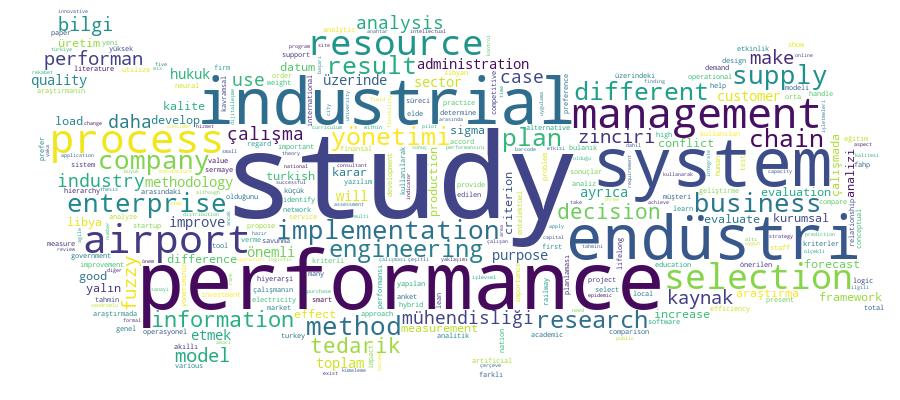
Competency Cloud
40 results
Scholarly Output Search Results
Now showing 1 - 10 of 40
Master Thesis Savunma sanayinde kurumsal kaynak planlaması gereksinimleri, uygulamaları ve seçimi(2012) Alagöz, Gizem; Erkan, Turan ErmanBu calışma, Kurumsal Kaynak Planlamasının (KKP) Savunma Sanayindeki gereksinimlerini, uygulamalarını ve seçimini kapsamaktadır. KKP programının Türk Savunma Sanayindeki kullanımı detaylı bir şekilde anlatılmaktadır. Türkiye'de savunma sanayinin gelişimine kısaca değinilmiştir. KKP uygulaması sürecinde, milyon doları bulan pahalı projeleri etkileyen önemli bir bulunmaktadır. Bu adım da Teklife Çağrı Dosyasının hazırlanmasıdır ve tezin içeriğinde bu konu detaylı bir şekilde anlatılmaktadır. KKP programları bu denli önem taıdıklarından dolayı, şirketler için uygun olan KKP yazılımlarını seçmek çok büyük önem arz etmektedir. Bu seçim konusunda en iyi sonucu verebilecek çok kriterli karar verme tekniklerinden biri olan Analitik Hiyerarşi Süreci (AHS) seçilmiştir. KKP yazılımı ve çözüm ortaklığı seçiminde en öne çıkan kriterler ve bu kriterlere bağlı olarak yapılanuygulamalar, Savunma Sanayi çalışanları ve Akademisyenler tarafından tartışılarak yapılmıştır. Anahtar Kelimeler: Kurumsal Kaynak Planlaması, Teklife Çağrı Dosyası, Analitik Hiyerarşi SürecArticle Citation - WoS: 9Citation - Scopus: 10Coherent System With Standby Components(Wiley, 2018) Eryilmaz, Serkan; Erkan, T. ErmanA coherent system that consists of n independent components and equipped with r cold standby components is considered. A generalized mixture representation for the survival function of such a system is obtained, and it is used to examine reliability properties of the system. In particular, the effect of adding r standby components to a given set of original components is measured by computing mean time to failure of the system. The limiting behavior of the failure rate of the system is also examined using the mixture representation. The results are illustrated for a bridge system. A case study that is concerned with an oil pipeline system is also presented.Conference Object Citation - WoS: 1Lifelong Learning Case Study From Turkish Public Sector: Business Process Management in Social Security Operations(Elsevier Science Bv, 2014) Akkoyun, Yilmaz; Erkan, Turan ErmanThe importance of Lifelong Learning is increasing in the international competitive environment. Many companies and public administration try to identify and modify their Lifelong Learning strategies for their sustainability. The purpose of this Lifelong Learning case study is underlying the importance of the phenomena in the Turkish public sector. Business process management was used as a tool for designing and improving the operations in the center and rural area offices of Social Security Institution. The case study was held by an expert of the institution in terms of Lifelong Learning. The improved and managed business processes was clarified in the study in detail. The study states that if there were not Lifelong Learning phenomena in action there would not be any improvement and evaluation of this improvement in the system. (C) 2013 The Authors. Published by Elsevier Ltd. Selection and/or peer-review under responsibility of Academic World Education and Research Center.Conference Object Citation - WoS: 6Curriculum Change Parameters Determined by Multi Criteria Decision Making (mcdm)(Elsevier Science Bv, 2014) Erkan, Turan Erman; Rouyendegh, Babak DaneshvarCurriculum, research, instruction, learning and assessment are the pulse of the university. The main purpose of this study is to fill a substantial knowledge gap regarding reaching a uniform group decision in Industrial engineering curriculum design and planning. A comprehensive quality based course criterion model extracted from existing literature and expert opinions was developed. Multi Criteria Decision Making (MCDA) was used to identify the relative importance of course criteria for the purpose of tailoring an optimal four Industrial engineering curriculum for Bachelor's Degree students in Turkey.. The hierarchical model and analysis utilized in the present study will be useful for resolving several important multi-criteria decision-making issues in planning and evaluating Industrial Engineering programs. (C) 2013 The Authors. Published by Elsevier Ltd. Selection and/or peer-review under responsibility of Academic World Education and Research Center.Article Bütünleşik Tedarik Zinciri Yaklaşımı ve Bir Lastik Ana Bayii Uygulaması(2011) Erkan, Turan Erman; Özdemir, Yavuz SelimGünümüz rekabetçi piyasasında, işletmelerin hayatta kalabilmesi ve rekabet edebilmesi için maliyetlerin düşürülmesi giderek daha büyük bir önem kazanmaktadır. Azaltılabilecek en önemli maliyet kalemlerinden bir tanesi de stok maliyetleridir. Bu çalışmada, bir satıcı ile birden çok alıcı arasındaki malzeme tedarik zinciri ilişkileri incelenmiştir. Çalışmanın amacı, alıcılar ile satıcının ortak bir yaklaşım benimseyerek, her alıcının siparişlerini satıcının belirlediği belirli zaman aralıklarında vermesi ve böylece satıcı ile alıcılardan oluşan sistemin ortak stok maliyetlerinin en aza indirilmesidir. Ancak bu durumda alıcıların maliyetlerinde belli bir miktar artış meydana gelmektedir. Bunu dengeleyebilmek için, satıcının alıcılara iskonto yapması gerekmektedir. Bu araştırmada, doğrusal olmayan bir model ile en küçük stok ve sistem maliyetleri elde edilmeye çalışılmıştır. Araştırmada kullanılan model, Ankara'da bir lastik bölge bayisinden ve onun alt bayilerinden alınan gerçek veriler üzerinde uygulanmıştır. Çalışmada kullanılan modelin uygulanması durumunda, lastik bölge bayiliğinin, alt bayilerinin ihtiyaçlarına daha hızlı cevap vermesi sağlanabilir. Ayrıca sistemin genel maliyetlerinde de önemli bir azalma oluşacaktır.Conference Object Intellectual Capital Management's Effects on Enterprise Resource Planning Implementation(Acad Conferences Ltd, 2012) Erkan, Turan Erman; Ozdemir, Yavuz Selim; Bac, UgurThe implementation of an Enterprise Resource Planning (ERP) system can be one of the most important strategic decisions an organization undertakes. An implementation of ERP system has effects on improving all over system performance. However, there are many factors affecting the performance of ERP implementation and these factors have to be inspected in accordance to some performance measurements and metrics. Intellectual Capital Management (ICM) is one of the most important factors of ERP implementation. The ICM literature has produced tens of models to support the various ICM activities, such as identification, measurement, valuation, acquisition and reporting of intellectual capital. However, the practice of applying various ICM models seems to be a fairly new issue in many countries and organizations. Turkey is one of those countries that has just been introduced with ICM. Using an ICM system has different effects on the implementation of an ERP system. In this study, a questionnaire based research has been made on Turkish enterprises to analyze ICM'S effects on ERP implementation. Also, we made a cross industrial research and determined those effects in different manufacturing sectors such as electronics and food sectors. Questionnaire results have been analyzed with statistical methods to summarize the current situation. The results of this study can be used to compare the effects of implementation of ERP systems in different industries in Turkey. Understanding of this relationship is very important for current or future ERP implementations. Also these results can be used in the comparison of international differences of the effects of ICM on ERP implementation process.Article Citation - WoS: 67Citation - Scopus: 91An Application of the Fuzzy Electre Method for Academic Staff Selection(Wiley, 2013) Rouyendegh, Babak Daneshvar; Erkan, Turan ErmanThere are various methods regarding staff selection in different fields. Thanks to the increasing improvements in the field of education, universities around the world tend to demand high -quality and professional academic staff. Staff selection is a multi-criteria decision-making processes, and of strategic importance for most universities. This study deals with actual application of academic of staff selection using the opinion of experts to be applied into a model of group decision - making called the Fuzzy ELECTRE (Elimination Et Choix Traduisant la REaite) method. There are ten qualitative criteria for selecting the best candidate amongst five prospective applications. (c) 2012 Wiley Periodicals, Inc.Conference Object Enterprise Resource Planning Implementation Differences Within the Same Methodology - Case Study From West Europe and Turkey(Acad Conferences Ltd, 2011) Erkan, Turan ErmanEnterprise Resource Planning (ERP) systems are vital for competitive edge in today's business world. ERP is an integrated information system that serves all departments within an enterprise. Therefore, business processes should be optimised before ERP implementation in order to catch a perfect implementation. Before year 2000 all the giant firms realised their ERP projects and after that best practises took place. After those trial and error based experiences, ERP vendors need to form an ERP implementation methodology. Big ERP vendors developed implementation methodologies, they were almost the same; starting from project preparation to selection, implementation to maintenance and control. Those project methodologies improved the success rate of ERP implementations. This research is both empirical and qualitative. In fact it consists of two monographic researches. They are both about ERP implementations in the same sector. One of the firms is a national one and other one is a multinational one. Both implementations done by the same consultant team with the same methodology, so the evaluation of the project is more objective than any other questionnaire based ones, which are filled by different implementation teams. The findings of the comparison are surprisingly different from each other within the implementations, although they both used the same methodology. Basic steps of the ERP implementation such as: project preparation, business blueprint, realization, final preparation and go live & support differs from each other both in national and multinational firms. The major difference is seen in the first steps which are project preparation and business blueprint. Multinational firm seems to have more chance than the national one in achieving organisational efficiency through successful ERP implementation. The research outcome is useful for professionals running implementation projects and those making decisions on ERP implementation. The results can also be used by practitioners managing ERP projects in order to avoid from implementation methodology illusion.Doctoral Thesis Yalın Altı Sigma, Çevik Yazılım Geliştirme Metodolojisi ile Entegre Etmek(2019) Badwe, Safıa; Erkan, Turan Erman; Erkan, Turan Erman; Erkan, Turan Erman; Industrial Engineering; Industrial EngineeringSon yirmi yıl içinde, uslubu daha verimli hale getirmek için yeni bir paradigma olarak ortaya çıkan yalın düşünceyle, Altı Sigma yaklaşımı da yazılım geliştirme sektörüne uzun bir giriş yaşadı. Bazı yazılım şirketleri, iş ve geliştirme girişimleri için Altı Sigma'yı ve Yalını uyarlamaya çalışıyorlardı. Yalın Altı Sigma (YAS), madde ilerlemesinin test ve uzlaşma yönlerini hızlandırır ve alıcılara birinci sınıf ürünler sunmak için alan sağlar.Yine de, sürekli bir değişim ve dönüşüm ihtiyacı kurumları karmaşık ve yeni çalışma ortamlarını benimsemeye zorladı.Bu durum programların planlanması koordine edilmesi ve müşterileriyle iletişim kurmak için gereksinimleri geliştirmek üzere için yazılım geliştirme metodolojilerine yönlendirdi. Bu bağlamda, YAS ve Çevik yazılım metodolojileri talepleri erken bir aşamada karşılamak ve yazılım geliştirme sürecine yüksek kalitede değişiklikleri dâhil etmek için bir dizi geliştirme girişimi olarak kabul edilmektedir. Bu nedenle mevcut çalışma, yazılım geliştirmede yukarıda bahsedilen metodolojiler arasındaki ilişkiyi araştırmaktadır. Bu tez çalışmsında teorik ve deneysel çalışmalardan elde edilen sonuçlar sunulmuştur.İlk kısım, ―YAS-Çevik Metodolojisi‖ adlı yeni bir yaklaşımı denemek ve uygulamak için Altı Sigma, Yalın, Yalın Altı Sigma, Çevik ve Scrum Metodolojilerini incelemek için operasyonel aşamayı birleştiren bir model sunmaktadır. İkinci bölüm ise, yazılım geliştirme şirketleri üzerinde Türkiye'de ve yurtdışında yapılan anket çalışmasının sonuçlarını sunmaktadır.Anket, birkaç önemli konular üzerinde durmaktadır. Bunların en önemlileri: faydaların olması, kritik başarı faktörleri, memnuniyet, değişim ihtiyaçları tecrübeler ve metodolojiyi uygularken karşılaşılan sorunlar. Ampirik bakış açısı, metodolojileri inceleyen kavramlar, faktörler ve bunların yazılım geliştirme üzerindeki etkileri hakkında hipotezler geliştirilerek analiz edilmektedir. Sonuçlar, yazılım geliştirmenin başarısına ve başarısızlığına ve metodolojilerin performansınınen faydalı yönlerine yol açan en önemli faktörleri vurgulamaktadır.Bu amaçla YAS ve Çevik metodolojilerininve bunların birbirleri arasındaki ilişkinin bu metodolojilerin birleştirme fikrinin anlaşılmasını kolaylaştıracaktır. Bu alanda uzmanlaşmış bir dizi Türk ve Kanadalı şirket arasında karşılaşmalar yapılmıştır.Sonuçlar, yazılım geliştirme sektöründeki Türk firmalarının dünya pazarına en geniş çapta ulaştığını ve bu alandaki en rekabetçi ülkelerden biri haline geldiğini göstermektedir.Article TEDARİK ZİNCİRİ PERFORMANSININ ENTEGRE İKİ AŞAMALI KÜMELEME VE ARALIK TİP-2 BULANIK TOPSİS YÖNTEMİ KULLANARAK DEĞERLENDİRİLMESİ: BİR VAKA ÇALIŞMASI(2019) Erdem, Mehmet; Erkan, Turan ErmanTedarik zinciri (TZ) yönetiminde birçok araştırmacı ve kuruluş sistemin performansını iyileştirmek için farklı perspektiflerde çaba sarfetmektedir. Farklı sektörlerde TZ performansını değerlendirmek için çeşitli metrikler ve karar verme metodolojileri önerilmiştir. Bu çalışmada, TZ performans değerlendirme süreçleri için bütünleşik iki aşamalı kümeleme ve aralık tip-2 bulanık TOPSIS yöntemi önerilmektedir. Önerilen bu yaklaşımın ilk adımında, iki aşamalı kümeleme analizi ile sektörlerin homojen olarak bölümlendirilmesi ve aynı zamanda problemin boyutunun azaltılması sağlanmaktadır. İkinci adımda, bulanık TOPSIS ile oluşturulan kümeler değerlendirilmektedir. Yaklaşımın sonuçları, örgütsel etkinlik ve şirket performansı gibi konularda makro bakış açısı sağlamaktadır. Ayrıca sonuçlar, her şirketin bulunduğu kümelerdeki rakipleri arasında ve diğer sektörlerdeki rakiplere karşı kendini değerlendirme fırsatı sağlamaktadır.
