
This item is non-discoverable
Qasrawı, Atef Fayez Hasan
Loading...

Profile URL
Name Variants
Qasrawi, Atef Fayez
Atef Fayez Hasan, Qasrawı
Qasrawı,A.F.H.
Qasrawi,A.F.H.
Q., Atef Fayez Hasan
Q.,Atef Fayez Hasan
Atef Fayez Hasan, Qasrawi
Qasrawi, Atef Fayez Hasan
A.F.H.Qasrawı
A.F.H.Qasrawi
A., Qasrawi
A.,Qasrawı
Qasrawı, Atef Fayez Hasan
Qasrawi, A. F.
Qasrawi,A.F.
Qasrawi, AF
Qasrawi, Atef F.
Qasrawi, Atef A.
Qasrawi, Atef Fayez
Qasrawi, Atef F.
Qasrawi, Atef A.
Qasrawi, Atef
Atef Fayez Hasan, Qasrawı
Qasrawı,A.F.H.
Qasrawi,A.F.H.
Q., Atef Fayez Hasan
Q.,Atef Fayez Hasan
Atef Fayez Hasan, Qasrawi
Qasrawi, Atef Fayez Hasan
A.F.H.Qasrawı
A.F.H.Qasrawi
A., Qasrawi
A.,Qasrawı
Qasrawı, Atef Fayez Hasan
Qasrawi, A. F.
Qasrawi,A.F.
Qasrawi, AF
Qasrawi, Atef F.
Qasrawi, Atef A.
Qasrawi, Atef Fayez
Qasrawi, Atef F.
Qasrawi, Atef A.
Qasrawi, Atef
Job Title
Doçent Doktor
Email Address
atef.qasrawi@atilim.edu.tr
Main Affiliation
Department of Electrical & Electronics Engineering
Status
Former Staff
Website
ORCID ID
Scopus Author ID
Turkish CoHE Profile ID
Google Scholar ID
WoS Researcher ID
Sustainable Development Goals
2
ZERO HUNGER

0
Research Products
11
SUSTAINABLE CITIES AND COMMUNITIES

0
Research Products
14
LIFE BELOW WATER

0
Research Products
6
CLEAN WATER AND SANITATION

0
Research Products
1
NO POVERTY

0
Research Products
5
GENDER EQUALITY

0
Research Products
9
INDUSTRY, INNOVATION AND INFRASTRUCTURE

0
Research Products
16
PEACE, JUSTICE AND STRONG INSTITUTIONS

1
Research Products
17
PARTNERSHIPS FOR THE GOALS

0
Research Products
15
LIFE ON LAND

0
Research Products
10
REDUCED INEQUALITIES

0
Research Products
7
AFFORDABLE AND CLEAN ENERGY

17
Research Products
8
DECENT WORK AND ECONOMIC GROWTH

0
Research Products
4
QUALITY EDUCATION

0
Research Products
12
RESPONSIBLE CONSUMPTION AND PRODUCTION

0
Research Products
3
GOOD HEALTH AND WELL-BEING

0
Research Products
13
CLIMATE ACTION

0
Research Products

This researcher does not have a Scopus ID.

This researcher does not have a WoS ID.

Scholarly Output
222
Articles
218
Views / Downloads
639/0
Supervised MSc Theses
0
Supervised PhD Theses
0
WoS Citation Count
1886
Scopus Citation Count
1906
WoS h-index
21
Scopus h-index
21
Patents
0
Projects
0
WoS Citations per Publication
8.50
Scopus Citations per Publication
8.59
Open Access Source
17
Supervised Theses
0
Google Analytics Visitor Traffic
| Journal | Count |
|---|---|
| Journal of Electronic Materials | 15 |
| Crystal Research and Technology | 13 |
| physica status solidi (a) | 12 |
| Journal of Alloys and Compounds | 11 |
| Materials Science in Semiconductor Processing | 11 |
Current Page: 1 / 11
Scopus Quartile Distribution
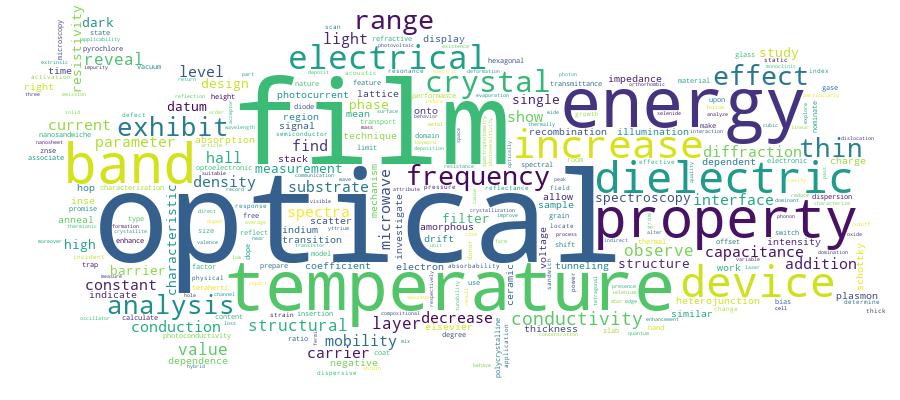
Competency Cloud
20 results
Scholarly Output Search Results
Now showing 1 - 10 of 20
Article Citation - WoS: 19Citation - Scopus: 19Effect of Indium Nano-Sandwiching on the Structural and Optical Performance of Znse Films(Elsevier Science Bv, 2017) Al Garni, S. E.; Qasrawi, A. F.In the current study, we attempted to explore the effects of the Indium nanosandwiching on the mechanical and optical properties of the physically evaporated ZnSe thin films by means of X-ray diffractions and ultraviolet spectrophotometry techniques. While the thickness of each layer of ZnSe was fixed at 1.0 mu m, the thickness of the nanosandwiched Indium thin films was varied in the range of 25- 100 nm. It was observed that the as grown ZnSe films exhibits cubic and hexagonal nature of crystallization as those of the ZnSe powders before the film deposition. The cubic phases weighs similar to 70% of the structure. The analysis of this phases revealed that there is a systematic variation process presented by the decreasing of; the lattice constant, compressing strain, stress, stacking faults and dislocation intensity and increasing grain size resulted from increasing the Indium layer thickness in the range of 50-100 nm. In addition, the nanosandwiching of Indium between two layers of ZnSe is observed to enhance the absorbability of the ZnSe. Particularly, at incident photon energy of 2.38 eV the absorbability of the ZnSe films which are sandwiched with 100 nm Indium is increased by 13.8 times. Moreover, increasing the thickness of the Indium layer shrinks the optical energy band gap. These systematic variations in mechanical and optical properties are assigned to the better recrystallization process that is associated with Indium insertion which in turn allows total internal energy redistribution in the ZnSe films through the enlargement of grains. (C) 2017 The Authors. Published by Elsevier B.V. This is an open access article under the CC BY license.Article Citation - WoS: 6Citation - Scopus: 6Physical Properties of the Bi1.5zn0.92-2x< Solid Solutions(Elsevier Sci Ltd, 2016) Al Garni, S. E.; Qasrawi, A. F.; Mergen, A.The Hf doping effect on the structural, compositional, optical, electrical and dielectric properties of the bismuth-zinc-niobium oxide pyrochlore ceramics is explored by means of scanning electron microscopy, energy dispersive X-ray spectroscopy, ultraviolet-visible light spectroscopy in the wavelength range of 200-1100 nm, temperature dependent electrical resistivity measurements in the range of 300-460 K and dielectric spectroscopy in the frequency range of 0.1-1.0 GHz. The optimum solubility limit in the Bi1.5Zn0.92-2xHfxNb1.5O6.92 solid solution is observed for the Hf content of 0.06. Increasing the Hf content from 0.03 to 0.06 decreased the room temperature, lattice constant, strain, dislocation density, optical energy band gap and electrical resistivity. It also increased the crystallite size and the dielectric constant. The energy band gap of the pure BZN (3.30 eV) decreased to 2.21 and reached 2.10 eV as the Hf content increased from 0.03 to 0.06. This behavior of the BZN suggests its suitability for optical applications of the visible region of light like photovoltaic devices. In addition, the remarkable increase in the dielectric constant from 258 to 280 and 456 nominates the Hf doped pyrochlore for passive mode operation devices like microwave capacitors. (C) 2015 Elsevier Ltd and Techna Group S.r.l. All rights reserved.Article Citation - WoS: 8Citation - Scopus: 8Effect of Lithium Nanosandwiching on the Structural, Optical and Dielectric Performance of Moo3(Elsevier, 2019) Al Garni, S. E.; Qasrawi, A. F.In this article, we discuss the effects of lithium nanosheets on the structural, optical, dielectric and optical conductivity parameters of the MoO3 films. The nanosandwiching of Li layers between two layers of MoO3 of thicknesses larger than 20 nm induced the crystallization process of the amorphous MoO3. Namely, MoO3 thin films that are nanosandwiched with Li sheets of thicknesses larger than 50 nm, exhibit structural phase transitions from hexagonal to monoclinic and reveals larger crystallite sizes. The possible formation of Li2O at the MoO3/Li/MoO3 interfaces is simulated and discussed. Optically, the Li nanosandwiching is observed to enhance the light absorbability by 11.0 times at 2.0 eV and successfully engineered the energy bands gap in the range of 3.05-0.45 eV. It also enhances the dielectric performance. In addition, relatively thick layers of lithium (200 nm) succeeds in converting the conductivity type from n-to p-type. The modeling of the dielectric spectra in accordance with the Drude- Lorentz approach have shown that the presence of Li in the structure of MoO(3 )significantly increases the drift mobility values of electrons from 5.86 to 11.40 cm(2)/V. The plasmon frequency range for this system varies in the frequency domain of 0.32-5.94 GHz. The features of MoO3/Li/MoO3 interfaces make them attractive for thin film transistor technology as optical receivers being promising for use in optical communications.Article Citation - WoS: 10Citation - Scopus: 10Fabrication and Characterization of Yb/Moo3< Devices(Elsevier Science Bv, 2019) Al Garni, S. E.; Qasrawi, A. F.In this study we have explored some of the properties of Yb/MoO3/(C, Yb) thin films as a multifunctional optoelectronic device. While the MoO3 films which are deposited onto glass substrate are found to be of amorphous nature, the Yb metal induced the growth of orthorhombic phase of MoO3. The films are high transparent and exhibit energy band gap value of 3.0 eV which make it sensitive to light signals in the near ultraviolet range of light. In addition, the frequency dependent capacitance-voltage characteristics of Yb/MoO3/(C,Yb) structure display pronounced accumulation, depletion and inversion regions that nominate it for use as tunable metal-oxide-semiconductor MOS device. The physical parameters including the built in voltage, barrier height, flat band and threshold voltages of the MOS capacitors are also determined. Furthermore, the current-voltage characteristics displayed high rectification ratio that could reach 1.26 x 10(4) at biasing voltage of 0.5 V nominating the Yb/MoO3/C device for use as electronic switches. On the other hand, the impedance spectroscopy analysis in the frequency domain of 0.01-1.80 GHz, have shown that the Yb/MoO3/Yb structures are more appropriate for microwave applications than Yb/MoO3/C device. The microwave cutoff frequency for the Yb sandwiched MoO3 exceeds 140 GHz. The return loss for the Yb/MoO3/Yb reaches 26 dB at 1.8 GHz. These values are attractive as they suit microwave low/high pass band fillers.Article Citation - Scopus: 1Structural and Electrical Performance of Moo3 Films Designed as Microwave Resonators(inst Materials Physics, 2020) Al Garni, S. E.; Qasrawi, A. F.; Alharbi, S. R.; Department of Electrical & Electronics EngineeringIn this work, the effect of the insertion of lithium slabs of thicknesses of 50 nm between stacked layers of MoO3 is considered. Stacked layers of MoO3 comprising lithium slabs are prepared by the thermal evaporation technique onto Au substrates under vacuum pressure of 10(-5) mbar. The effects of Li slabs are explored by the X-ray diffraction, scanning electron microscopy, current-voltage characteristics and impedance spectroscopy techniques in the frequency domain of 0.01-1.80 GHz. While the presence of Li slabs did not alter the amorphous nature of structure, it forced the growth of rod-like grains of diameters of 100-160 nm and lengths of 1.5 mu m. Electrically, the presence of Li in the samples enhanced the rectifying properties of the devices and force reverse to forward current ratios larger than 60 times. Li slabs also controlled the negative capacitance effect and resonance -antiresonance regions in the Au/MoO3/MoO3/C stacked layers. While the Au/MoO3/MoO3/C devices displayed high conductance and low impedance values in the studied frequency domain, the Au/MoO3/Li/MOO3/C devices exhibited low conductance and high impedance mode in the frequency domain of 0.01-0.59 GHz. It is also found that the presence of Li slabs improved the performance of the devices through driving it to exhibit lower reflection coefficient and high return loss values near 0.80 GHz. The features of the devices nominate them for use as RF-Microwave traps or resonators.Article Citation - WoS: 9Citation - Scopus: 8Exploring the Optical Dynamics in the Ito/As2< Interfaces(Springer, 2019) Al Garni, S. E.; Qasrawi, A. F.In this work, the effects of indium tin oxide (ITO) substrates on the structural, compositional, optical dielectric and optical conduction properties of arsenic selenide thin films are investigated. The As2Se3 films which are prepared by the thermal deposition technique under vacuum pressure of 10(-5) mbar exhibit an induced crystallization process, improved stoichiometry, increased optical transmittance in the visible range of light and increased dielectric response in the infrared range of light upon replacement of glass substrates by ITO. The ITO/As2Se3 interfaces exhibit conduction and valence band offset values of 0.46 eV and 0.91 eV, respectively. The experimental optical conductivity spectra are theoretically reproduced with the help of the Drude-Lorentz approach for optical conduction. In accordance with this approach, owing to the improved crystallinity of the arsenic selenide, the deposition of As2Se3 onto ITO substrates increases the drift mobility value from similar to 17.6 cm(2)/Vs to 34.6 cm(2)/Vs. It also reduces the density of free carriers by one order of magnitude. The ITO/As2Se3/C heterojunction devices which are tested as band filters which may operate in the frequency domain of 0.01-3.0 GHz revealed low pass filter characteristics below 0.35 GHz and band pass filter characteristics in the remaining spectral range.Article Citation - WoS: 9Absorption and Optical Conduction in Inse/Znse Thin Film Transistors(World Scientific Publ Co Pte Ltd, 2016) Al Garni, S. E.; Qasrawi, A. F.In this work, (n)InSe/(p)ZnSe and (n)InSe/(p)ZnSe/(n)InSe heterojunction thin film transistor (TFT) devices are produced by the thermal evaporation technique. They are characterized by means of X-ray diffraction (XRD), scanning electron microscopy (SEM), energy dispersion X-ray spectroscopy and optical spectroscopy techniques. While the InSe films are found to be amorphous, the ZnSe and InSe/ZnSe films exhibited polycrystalline nature of crystallization. The optical analysis has shown that these devices exhibit a conduction band offsets of 0.47 and valence band offsets of 0.67 and 0.74 eV, respectively. In addition, while the dielectric spectra of the InSe and ZnSe displayed resonance peaks at 416 and 528 THz, the dielectric spectra of InSe/ZnSe and InSe/ZnSe/InSe layers indicated two additional peaks at 305 and 350 THz, respectively. On the other hand, the optical conductivity analysis and modeling in the light of free carrier absorption theory reflected low values of drift mobilities associated with incident alternating electric fields at terahertz frequencies. The drift mobility of the charge carrier particles at femtoseconds scattering times increased as a result of the ZnSe sandwiching between two InSe layers. The valence band offsets, the dielectric resonance at 305 and 350 THz and the optical conductivity values nominate TFT devices for use in optoelectronics.Article Citation - WoS: 16Citation - Scopus: 15Design and Characterization of the Ge/Ga2< Heterojunction(Springer, 2017) Al Garni, S. E.; Qasrawi, A. F.In this work, the formation and properties of Ga2S3 thin films deposited onto polycrystalline Ge substrates are studied by means of scanning electron microscopy, energy dispersive x-ray analyzer, Raman spectroscopy, x-ray diffraction techniques, ultraviolet-visible light spectrophotometry in the range of 300-1100 nm and by ac signal power spectroscopy in the range of 0.2-3.0 GHz. The first four techniques allowed the determining of the stoichiometry, the vibrational frequencies, the lattice parameters, the plane orientations, the strain and the defect density for the interface. In addition, it was observed that the Ge/Ga2S3 interface exhibited conduction and valence band offsets of 0.83 eV and 0.82 eV, respectively, and the real part of the dielectric spectra experimentally exhibited four resonance peaks centered at frequencies above 357 THz. Moreover, the computational analysis of the imaginary part of the dielectric constant via the Drude-Lorentz model has shown that the interface wave filtering properties are controlled by the electron-plasmon coupling with plasma frequencies in the range of 1.33-2.30 GHz. The drift mobility of electrons in this range was found to be 15.61 cm(2)/Vs. The real ability of the interface to control wave propagation was confirmed with ac signals propagating tests. The plasmonic features of the interface nominate it for use in microwave cavities and as wireless terahertz receivers.Article Citation - WoS: 9Citation - Scopus: 10Growth and Characterization of Inse/Ge Interfaces(Elsevier Gmbh, Urban & Fischer verlag, 2017) Al Garni, S. E.; Omareye, Olfat A.; Qasrawi, A. F.In the current study, we report the effect of insertion of a 200 nm thick Ge film between two layers of InSe. The Ge sandwiched InSe films are studied by means of X-ray diffraction technique, energy dispersion X-ray spectroscopy attached to a scanning electron microscope, optical spectrophotometry and light power dependent photoconductivity. It was observed that, The InSe prefers the growth of InSe monophase when deposited onto glass and the growth of gamma-In2Se3 when deposited onto InSe/Ge substrate. The three layers interface (InSe/Ge/gamma-In2Se3) exhibits a Ge induced crystallization process at annealing temperature of 200 degrees C. The optical analysis has shown that the InSe films exhibit a redshift upon Ge sandwiching. In addition, the conduction and valence bands offsets at the first interface (InSe/Ge) and at the second (Ge/gamma-In2Se3) interface are found to be 0.55 eV and 1.0 eV, and 0.40eVand 1.38 eV, respectively. Moreover, the photocurrent of the Ge sandwiched InSe exhibited higher photocurrent values as compared to those of InSe. On the other hand, the dielectric spectral analysis and modeling which lead to the identifying of the optical conduction parameters presented by the plasmon frequency, electron scattering time, free electron density and drift mobility have shown that the Ge sandwiching increased the drift mobility values from 10 cm(2)/Vs to 42 cm(2)/Vs. The main plasmon frequency also increased from 1.08 to 1.68 GHz. (C) 2017 Elsevier GmbH. All rights reserved.Article Citation - WoS: 14Citation - Scopus: 15Investigation of the Physical Properties of the Yb Nanosandwiched Cds Films(Elsevier Science Sa, 2018) Abed, Tamara Y.; Qasrawi, A. F.; Al Garni, S. E.In this study, the effects of the sandwiching of a 70 nm thick ytterbium film between two layers of CdS on the structural, compositional, optical and electrical properties are investigated. The X-ray diffraction, scanning electron microscopy, energy dispersion X-ray, visible light spectroscopy and impedance spectroscopy techniques are employed to achieve these effects. It was observed that, the nanosandwiching of Yb between two 500 nm thick films of CdS enhances the crystalline nature of the films without altering the lattice parameters. Particularly, the grain size is increased by 25%, the strain, the defect density and the stacking faults are reduced by 31.5%, 43.7% and 25%, respectively. Optically, the Yb nanosandwiching is observed to enhance the visible light absorbability by at least 2.7 times of the whole range and by 8 times at 1.64 eV. The enhancement of the absorbability is associated with shrinking in the band gap and more interband states. In addition, an increase in the real part of the dielectric constant by 54% is observed when Yb was nanosandwiched in the CdS structure. The modeling of the imaginary part allowed exploring the electron-plasmon interaction parameters. A remarkable increase in the drift mobility from 281 to 996 cm2/Vs associated with plasmon frequency enhancement from 0.84 to 1.38 GHz was determined upon Yb nanosandwiching. The effectiveness of this modeling was verified from the impedance spectra in the frequency domain of 0.01-1.80 GHz, which revealed wave trapping property of ideal values of return loss at notch frequency of 1.35 GHz. Furthermore, the electrical resistivity measurements on the studied samples have shown that the presence of Yb reduced the electrical resistivity and shifts the donor level closer to the conduction band of CdS. The studies nominate the nanosandwiched CdS for use in optical and microwave technologies as dual devices. (C) 2017 Elsevier B.V. All rights reserved.
