
This item is non-discoverable
Işık, Mehmet
Loading...

Profile URL
Name Variants
Mehmet, Işık
M.,Işık
Isik, Mehmet
Mehmet, Isik
I., Mehmet
I.,Mehmet
Işık,M.
Isik,M.
I.,Mehmet
M.,Isik
Işık, Mehmet
M., Isik
Isik, M.
M.,Işık
Isik, Mehmet
Mehmet, Isik
I., Mehmet
I.,Mehmet
Işık,M.
Isik,M.
I.,Mehmet
M.,Isik
Işık, Mehmet
M., Isik
Isik, M.
Job Title
Profesör Doktor
Email Address
mehmet.isik@atilim.edu.tr
Main Affiliation
Department of Electrical & Electronics Engineering
Status
Former Staff
Website
ORCID ID
Scopus Author ID
Turkish CoHE Profile ID
Google Scholar ID
WoS Researcher ID
Sustainable Development Goals
2
ZERO HUNGER

0
Research Products
11
SUSTAINABLE CITIES AND COMMUNITIES

0
Research Products
14
LIFE BELOW WATER

1
Research Products
6
CLEAN WATER AND SANITATION

0
Research Products
1
NO POVERTY

0
Research Products
5
GENDER EQUALITY

0
Research Products
9
INDUSTRY, INNOVATION AND INFRASTRUCTURE

0
Research Products
16
PEACE, JUSTICE AND STRONG INSTITUTIONS

0
Research Products
17
PARTNERSHIPS FOR THE GOALS

0
Research Products
15
LIFE ON LAND

1
Research Products
10
REDUCED INEQUALITIES

0
Research Products
7
AFFORDABLE AND CLEAN ENERGY

11
Research Products
8
DECENT WORK AND ECONOMIC GROWTH

0
Research Products
4
QUALITY EDUCATION

0
Research Products
12
RESPONSIBLE CONSUMPTION AND PRODUCTION

0
Research Products
3
GOOD HEALTH AND WELL-BEING

1
Research Products
13
CLIMATE ACTION

0
Research Products

This researcher does not have a Scopus ID.

This researcher does not have a WoS ID.

Scholarly Output
173
Articles
169
Views / Downloads
442/794
Supervised MSc Theses
3
Supervised PhD Theses
0
WoS Citation Count
1806
Scopus Citation Count
1862
WoS h-index
20
Scopus h-index
20
Patents
0
Projects
0
WoS Citations per Publication
10.44
Scopus Citations per Publication
10.76
Open Access Source
11
Supervised Theses
3
Google Analytics Visitor Traffic
| Journal | Count |
|---|---|
| Optical Materials | 17 |
| Physica B: Condensed Matter | 16 |
| Journal of Luminescence | 15 |
| Materials Science in Semiconductor Processing | 14 |
| Journal of Materials Science: Materials in Electronics | 12 |
Current Page: 1 / 10
Scopus Quartile Distribution
Competency Cloud
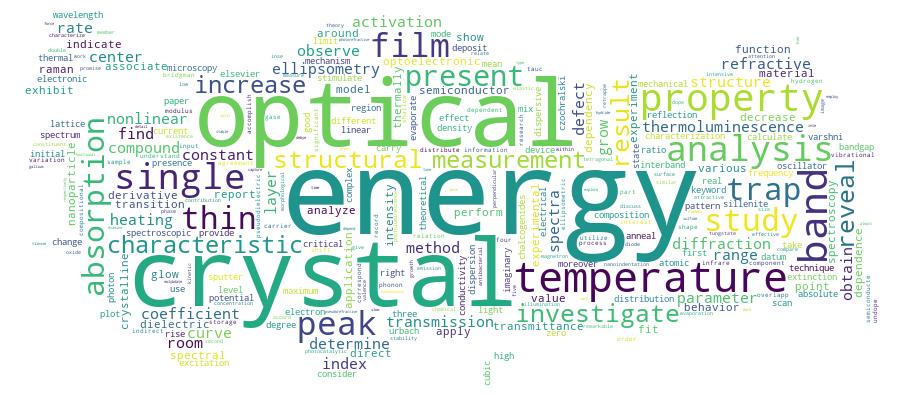
129 results
Scholarly Output Search Results
Now showing 1 - 10 of 129
Article Citation - WoS: 8Citation - Scopus: 10Temperature Effects on Optical Characteristics of Cdse Thin Films(Elsevier Sci Ltd, 2021) Gullu, H. H.; Isik, M.; Surucu, O.; Gasanly, N. M.; Parlak, M.CdSe is one of the significant members of II-VI type semiconducting family and it has a wide range of technological applications in which optoelectronic devices take a special position. The present paper reports the structural and optical characteristics of thermally evaporated CdSe thin films. XRD pattern exhibited preferential orientation along (111) plane while atomic composition analyses resulted in the ratio of Cd/Se as closer to 1.0. Temperature-dependent band gap characteristics of CdSe thin films were investigated for the first time by carrying out transmission experiments in the 10-300 K range. The analyses showed that direct band gap energy of the compound decreases from 1.750 (at 10 K) to 1.705 eV (at 300 K). Varshni model was successfully applied to the temperature-band gap energy dependency and various optical constants were determined. Raman spectrum of CdSe thin films was also presented to understand the vibrational characteristics of the compound. The present paper would provide worthwhile data to researchers especially studying on optoelectronic device applications of CdSe thin films.Article Citation - WoS: 9Citation - Scopus: 9Optical Band Gap and Dispersion of Optical Constants of Cu-Ga Thin Films(Elsevier Gmbh, 2019) Isik, M.; Gullu, H. H.; Coskun, E.; Gasanly, N. M.Thermally deposited Cu-Ga-S thin films were optically characterized by means of experimental techniques of transmission measurements. The analyses of transmittance spectra were accomplished by derivative spectrophotometry analyses to get gap energies of thin films. The transmittance spectra of thin films annealed at different temperatures presented interference fringes which were analyzed by Swanepoel envelope method. The wavelength dependencies of optical parameters; refractive index (n), real part of complex dielectric function (epsilon(re)) and extinction coefficient (k) were reported in the weak absorption region. The photon energy dependencies of n and epsilon(re) were analyzed using single-oscillator and Spitzer-Fan models, respectively.Article Citation - WoS: 8Citation - Scopus: 9Electronic, Optical and Thermodynamic Characteristics of Bi12sio20 Sillenite: First Principle Calculations(Elsevier Science Sa, 2021) Isik, M.; Surucu, G.; Gencer, A.; Gasanly, N. M.Bi12XO20 (X: Si, Ge, Ti) ternary semiconducting compounds are known as sillenites and take a remarkable attention thanks to their attractive photorefractive properties. The present paper reports electronic, optical and thermodynamic characteristics of Bi12SiO20 by means of density functional theory (DFT) calculations. The crystalline structure of the compound was revealed as cubic with lattice constant of 10.135 angstrom. XRD pattern obtained from DFT calculations were compared with experimental data and there is a good consistency between them. The electronic band structure and density of state plots were presented in detail. The band gap energy of the compound was determined from electronic band structure and spectra of optical constants. The spectral dependencies of real and imaginary components of dielectric function, refractive index, extinction coefficient, absorption coefficient and loss function were plotted in the 0-12 eV spectral range. The revealed structural, electronic and optical characteristics were discussed taking into account the previously reported theoretical and experimental studies on the Bi12SiO20 sillenite.Article Citation - WoS: 7Citation - Scopus: 7Interband Critical Points in Tlgax< Layered Mixed Crystals (0 ≤ x ≤ 1)(Elsevier Science Sa, 2013) Isik, M.; Işık, Mehmet; Gasanly, N. M.; Işık, Mehmet; Department of Electrical & Electronics Engineering; Department of Electrical & Electronics EngineeringThe layered semiconducting TlGaxIn1-xS2 mixed crystals (0 <= x <= 1) were studied by spectroscopic ellipsometry measurements in the 1.2-6.2 eV spectral range at room temperature. The spectral dependence of the components of the complex dielectric function, refractive index and extinction coefficient were revealed using an optical model. The interband transition energies in the studied samples were found from the analysis of the second-energy derivative spectra of the complex dielectric function. The variation of the obtained energies with composition were plotted to see the effect of the substitution of indium with gallium. Moreover, a simple diagram showing the revealed transitions in the available electronic band structure was given for TlGaS2 single crystals. (C) 2013 Elsevier B.V. All rightsArticle Citation - WoS: 5Citation - Scopus: 5Absorption Edge and Optical Constants of Tl2ga2< Crystals From Reflection and Transmission, and Ellipsometric Measurements(Elsevier, 2012) Isik, M.; Gasanly, N. M.The optical properties of Tl2Ga2S3Se layered crystalline semiconductors were investigated from transmission, reflection and ellipsometric measurements. The experimental results of the room temperature transmission and reflection measurements performed in the wavelength range of 400-1100 nm showed the presence of both indirect and direct transitions in the band structure of the crystals with 2.38 and 2.62 eV band gap energies. Spectroscopic ellipsometry measurements on Tl2Ga2S3Se crystals were carried out on the layer-plane (0 0 1) surfaces with light polarization E perpendicular to c* in the 1.20-4.70 eV spectral range at room temperature. The real and imaginary parts of the dielectric function as well as refractive and absorption indices were found as a result of analysis of ellipsometric data. The Wemple-DiDomenico single-effective-oscillator model was used to study the dispersion of the refractive index in the below band gap energy range. The structures of critical points have been characterized from the second derivative spectra of the dielectric function. The analysis revealed four interband transition structures with 3.14, 3.40, 3.86 and 4.50 eV critical point energies. (C) 2012 Elsevier B.V. All rights reserved.Article Citation - WoS: 5Citation - Scopus: 5Determination of Trapping Parameters of Thermoluminescent Glow Peaks of Semiconducting Tl2ga2< Crystals(Pergamon-elsevier Science Ltd, 2015) Isik, M.; Yildirim, T.; Gasanly, N. M.Thermoluminescence (TL) properties of Tl2Ga2S3Se layered single crystals were researched in the temperature range of 290-770 K. U glow curve exhibited two peaks with maximum temperatures of similar to 373 and 478 K. Curve fitting, initial rise and peak shape methods were used to determine the activation energies of the trapping centers associated with these peaks. Applied methods were in good agreement with the energies of 780 and 950 meV. Capture cross sections and attempt-to-escape frequencies of the trapping centers were reported. An energy level diagram showing transitions in the band gap of the crystal was plotted under the light of the results of the present work and previously reported papers on photoluminescence, thermoluminescence and thermally stimulated current measurements carried out below room temperature. (C) 2015 Elsevier Ltd. All rights reserved.Article Citation - WoS: 11Citation - Scopus: 12The Defect State of Yb-Doped Zno Nanoparticles Using Thermoluminescence Study(Elsevier Sci Ltd, 2019) Isik, M.; Gasanly, N. M.Shallow trapping centers in Yb-doped ZnO nanoparticles were determined using thermoluminescence (TL) measurements applied in the 10-300 K temperature region. Undoped and Yb-doped ZnO nanoparticles were synthesized by sol-gel method. TL glow curve of undoped nano-particles presented three peaks around 56, 108 and 150 K whereas one additional peak around 83 K was observed in the TL curve of Yb-doped ZnO nano-particles. The increase of Yb concentration in the nanoparticles increased the TL intensity of this additional peak. Activation energies of interstitial defect centers were found as 20, 82 and 105 meV while energy of trapping center existing due to Yb-doping was obtained as 72 meV using curve fitting and initial rise methods.Article Citation - WoS: 25Citation - Scopus: 25Temperature-Tuned Band Gap Properties of Mos2 Thin Films(Elsevier, 2020) Surucu, O.; Isik, M.; Gasanly, N. M.; Terlemezoglu, M.; Parlak, M.MoS2 is one of the fascinating members of transition metal dichalcogenides and has attracted great attention due to its various optoelectronic device applications and its characteristic as two-dimensional material. The present paper reports the structural and temperature tuned optical properties of MoS2 thin films grown by RF magnetron sputtering technique. It was observed that the atomic composition ratio of Mo:S was nearly equal to 1:2 and the deposited thin films have hexagonal crystalline structure exhibiting Raman peaks around 376 and 410 cm(-1). The band gap energies were determined as 1.66 and 1.71 eV at 300 and 10 K, respectively and temperature dependency of band gap energy was analyzed by means of Varshni and O'Donnell-Chen models. (C) 2020 Elsevier B.V. All rights reserved.Article Citation - WoS: 9Citation - Scopus: 9TL and TSC studies on TlGaSe2 layered single crystals(Elsevier, 2013) Isik, M.; Bulur, E.; Gasanly, N. M.Defects in - as grown - TlGaSe2 layered single crystals were investigated using Thermoluminescence (TL) and Thermally Stimulated Currents (TSC) techniques in the temperature range 10-300 K. TL and TSC curves of samples illuminated using a light with energy greater than the band gap of the material, i.e. blue light (similar to 470 nm) at 10 K, exhibited peaks around 27 and 28 K, respectively, when measured by heating up the samples at a rate of 1 K/s. TL and TSC curves were analyzed to characterize the defects responsible for the peaks. Both TL and TSC peaks were observed to be obeying first order kinetics. Thermal activation energies of the peaks were determined using various methods: curve fitting, initial rise, peak shape and different heating rates. For both TL and TSC peaks, thermal activation energy was determined as around 8 meV, implying that they may originate from similar kinds of trapping centers. A distribution of traps (in terms of energy) was experimentally verified by illuminating the sample at different temperatures and measuring the TL curves. As a result of this, the apparent thermal energies were observed to be shifted from similar to 8 to similar to 17 meV by increasing the illumination temperature from 10 to 16 K. (C) 2013 Elsevier B.V. All rights reserved.Article Citation - WoS: 11Citation - Scopus: 11Structural and Temperature-Tuned Optical Characteristics of Bi12geo20< Sillenite Crystals(Elsevier, 2020) Delice, S.; Isik, M.; Gasanly, N. M.; Darvishov, N. H.; Bagiev, V. E.Sillenite compounds exhibit unique photorefractive and electro-optic characteristics providing attractiveness to these materials in various optoelectronic applications. The present paper aims at investigating one of the members of this family. Structural and optical characteristics of Bi12GeO20 (BGO) were studied by means of x-ray diffraction, Raman spectroscopy and temperature-dependent transmittance measurements. Obtained transmission curves in the wavelength range of 350-1100 nm and at different applied temperatures between 10 and 300 K were employed to find out the absorption coefficient dependence on the photon energy. Tauc relation revealed the presence of an energy gap of 2.49 eV at room temperature. Extension of energy gap up to 2.57 eV due to decreased temperature down to 10 K was deduced by the analysis. In order to have reliable results, the energy gap value was corroborated by utilizing derivative spectral method and well consistency between both methods was indicated. Energy gap change with temperature was also discussed in the study using an empirical formula developed by Varshni. Energy gap at absolute zero and rate of band gap alteration with temperature were determined as 2.57 eV and -2.4 x 10(-4) eV K (- 1), respectively. Taking into account the previously reported studies on investigation of band gap characteristics of BGO, intrinsic Bi-Ge(3+) + V-O(+) defect could be responsible for the revealed energy value of 2.49 eV which is much lower than reported band gap energy of similar to 3.2 eV.
