Khan, Muhammad Umer

Loading...
Profile Picture
Name Variants
Khan, Muhammad Umer
K.,Muhammad Umer
Muhammad Umer, Khan
Khan,Muhammad Umer
M.U.Khan
M., Khan
M.,Khan
Khan U.
Khan M.
Khan,M.U.
M. U. Khan
Umer Khan M.
K., Muhammad Umer
Muhammad Umer Khan
Khan, Umer
Khan, Muhammed Umer
Khan, M. U.
Khan, M.U
Job Title
Yardımcı Doçent
Email Address
umer.khan@atilim.edu.tr
Main Affiliation
Mechatronics Engineering
Status
Website
Scopus Author ID
Turkish CoHE Profile ID
Google Scholar ID
WoS Researcher ID

Sustainable Development Goals

2

ZERO HUNGER
ZERO HUNGER Logo

4

Research Products

11

SUSTAINABLE CITIES AND COMMUNITIES
SUSTAINABLE CITIES AND COMMUNITIES Logo

0

Research Products

14

LIFE BELOW WATER
LIFE BELOW WATER Logo

0

Research Products

6

CLEAN WATER AND SANITATION
CLEAN WATER AND SANITATION Logo

0

Research Products

1

NO POVERTY
NO POVERTY Logo

0

Research Products

5

GENDER EQUALITY
GENDER EQUALITY Logo

0

Research Products

9

INDUSTRY, INNOVATION AND INFRASTRUCTURE
INDUSTRY, INNOVATION AND INFRASTRUCTURE Logo

1

Research Products

16

PEACE, JUSTICE AND STRONG INSTITUTIONS
PEACE, JUSTICE AND STRONG INSTITUTIONS Logo

0

Research Products

17

PARTNERSHIPS FOR THE GOALS
PARTNERSHIPS FOR THE GOALS Logo

1

Research Products

15

LIFE ON LAND
LIFE ON LAND Logo

0

Research Products

10

REDUCED INEQUALITIES
REDUCED INEQUALITIES Logo

0

Research Products

7

AFFORDABLE AND CLEAN ENERGY
AFFORDABLE AND CLEAN ENERGY Logo

4

Research Products

8

DECENT WORK AND ECONOMIC GROWTH
DECENT WORK AND ECONOMIC GROWTH Logo

0

Research Products

4

QUALITY EDUCATION
QUALITY EDUCATION Logo

0

Research Products

12

RESPONSIBLE CONSUMPTION AND PRODUCTION
RESPONSIBLE CONSUMPTION AND PRODUCTION Logo

0

Research Products

3

GOOD HEALTH AND WELL-BEING
GOOD HEALTH AND WELL-BEING Logo

1

Research Products

13

CLIMATE ACTION
CLIMATE ACTION Logo

0

Research Products
Documents

37

Citations

625

h-index

13

Documents

30

Citations

463

Scholarly Output

36

Articles

14

Views / Downloads

178/1580

Supervised MSc Theses

10

Supervised PhD Theses

0

WoS Citation Count

240

Scopus Citation Count

358

WoS h-index

7

Scopus h-index

8

Patents

0

Projects

0

WoS Citations per Publication

6.67

Scopus Citations per Publication

9.94

Open Access Source

10

Supervised Theses

10

Google Analytics Visitor Traffic

JournalCount
2018 14th IEEE/ASME International Conference on Mechatronic and Embedded Systems and Applications, MESA 2018 -- 14th IEEE/ASME International Conference on Mechatronic and Embedded Systems and Applications, MESA 2018 -- 2 July 2018 through 4 July 2018 -- Oulu -- 1391112
Applied Sciences2
2019 2nd International Conference on Communication, Computing and Digital Systems, C-CODE 2019 -- 2nd International Conference on Communication, Computing and Digital Systems, C-CODE 2019 -- 6 March 2019 through 7 March 2019 -- Islamabad -- 1469971
2020 7th International Conference on Electrical and Electronics Engineering, ICEEE 2020 -- 7th International Conference on Electrical and Electronics Engineering, ICEEE 2020 -- 14 April 2020 through 16 April 2020 -- Antalya -- 1604501
2021 IEEE International Conference on Robotics, Automation and Artificial Intelligence, RAAI 2021 -- 2021 IEEE International Conference on Robotics, Automation and Artificial Intelligence, RAAI 2021 -- 21 April 2021 through 23 April 2021 -- Virtual, Online -- 1767941
Current Page: 1 / 5

Scopus Quartile Distribution

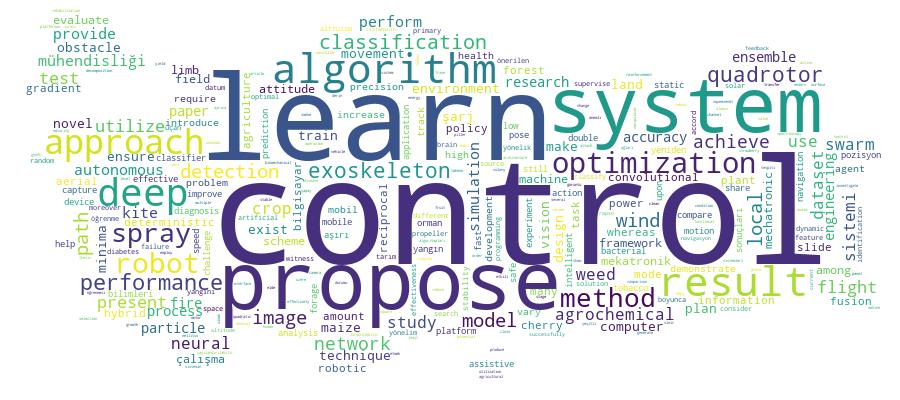
Competency Cloud

GCRIS Competency Cloud

Scholarly Output Search Results

Now showing 1 - 10 of 15
  • Article
    Citation - WoS: 25
    Citation - Scopus: 33
    Hybrid Eeg-Fnirs Bci Fusion Using Multi-Resolution Singular Value Decomposition (msvd)
    (Frontiers Media Sa, 2020) Khan, Muhammad Umer; Hasan, Mustafa A. H.
    Brain-computer interface (BCI) multi-modal fusion has the potential to generate multiple commands in a highly reliable manner by alleviating the drawbacks associated with single modality. In the present work, a hybrid EEG-fNIRS BCI system-achieved through a fusion of concurrently recorded electroencephalography (EEG) and functional near-infrared spectroscopy (fNIRS) signals-is used to overcome the limitations of uni-modality and to achieve higher tasks classification. Although the hybrid approach enhances the performance of the system, the improvements are still modest due to the lack of availability of computational approaches to fuse the two modalities. To overcome this, a novel approach is proposed using Multi-resolution singular value decomposition (MSVD) to achieve system- and feature-based fusion. The two approaches based up different features set are compared using the KNN and Tree classifiers. The results obtained through multiple datasets show that the proposed approach can effectively fuse both modalities with improvement in the classification accuracy.
  • Article
    Citation - WoS: 25
    Citation - Scopus: 34
    Tobset: a New Tobacco Crop and Weeds Image Dataset and Its Utilization for Vision-Based Spraying by Agricultural Robots
    (Mdpi, 2022) Alam, Muhammad Shahab; Khan, Muhammad Umer; Alam, Mansoor; Tufail, Muhammad; Güneş, Ahmet; Khan, Muhammad Umer; Gunes, Ahmet; Salah, Bashir; Khan, Muhammad Tahir; Khan, Muhammad Umer; Güneş, Ahmet; Mechatronics Engineering; Department of Mechatronics Engineering; Mechatronics Engineering; Department of Mechatronics Engineering
    Selective agrochemical spraying is a highly intricate task in precision agriculture. It requires spraying equipment to distinguish between crop (plants) and weeds and perform spray operations in real-time accordingly. The study presented in this paper entails the development of two convolutional neural networks (CNNs)-based vision frameworks, i.e., Faster R-CNN and YOLOv5, for the detection and classification of tobacco crops/weeds in real time. An essential requirement for CNN is to pre-train it well on a large dataset to distinguish crops from weeds, lately the same trained network can be utilized in real fields. We present an open access image dataset (TobSet) of tobacco plants and weeds acquired from local fields at different growth stages and varying lighting conditions. The TobSet comprises 7000 images of tobacco plants and 1000 images of weeds and bare soil, taken manually with digital cameras periodically over two months. Both vision frameworks are trained and then tested using this dataset. The Faster R-CNN-based vision framework manifested supremacy over the YOLOv5-based vision framework in terms of accuracy and robustness, whereas the YOLOv5-based vision framework demonstrated faster inference. Experimental evaluation of the system is performed in tobacco fields via a four-wheeled mobile robot sprayer controlled using a computer equipped with NVIDIA GTX 1650 GPU. The results demonstrate that Faster R-CNN and YOLOv5-based vision systems can analyze plants at 10 and 16 frames per second (fps) with a classification accuracy of 98% and 94%, respectively. Moreover, the precise smart application of pesticides with the proposed system offered a 52% reduction in pesticide usage by spotting the targets only, i.e., tobacco plants.
  • Conference Object
    Citation - Scopus: 3
    Reciprocal Altruism-Based Path Planning Optimization for Multi-Agents
    (Institute of Electrical and Electronics Engineers Inc., 2022) Maeedi,A.; Khan,M.U.; Irfanoglu,B.
    This paper investigates solutions for the fundamental yet challenging problem of path planning of autonomous multi-agents. The novelty of the proposed algorithm, reciprocal altruism-based particle swarm optimization (RAPSO), lies in the introduction of information sharing among the agents. The RAPSO utilizes kinship relatedness among the agents during the optimization process to reciprocate the significant data. The concept of reciprocation is introduced to ensure that all agents remain in close contact through information exchange. The amount of exchange depends upon their physical location in the search space and their associated health indicator. Agents are classified as donors, recipients, or un-active concerning their health indicator and their positions. The ability of RAPSO to keep all agents closer to local optima through reciprocal altruism is evaluated for path planning optimization problem. Simulation results show that the RAPSO is very competitive when compared with the canonical PSO. The results of the generalized simulation scenario also prove its potential in solving path planning problems in robotics. © 2022 IEEE.
  • Article
    Citation - WoS: 31
    Citation - Scopus: 38
    A Computationally Efficient Method for Hybrid Eeg-Fnirs Bci Based on the Pearson Correlation
    (Hindawi Ltd, 2020) Hasan, Mustafa A. H.; Khan, Muhammad U.; Mishra, Deepti
    A hybrid brain computer interface (BCI) system considered here is a combination of electroencephalography (EEG) and functional near-infrared spectroscopy (fNIRS). EEG-fNIRS signals are simultaneously recorded to achieve high motor imagery task classification. This integration helps to achieve better system performance, but at the cost of an increase in system complexity and computational time. In hybrid BCI studies, channel selection is recognized as the key element that directly affects the system's performance. In this paper, we propose a novel channel selection approach using the Pearson product-moment correlation coefficient, where only highly correlated channels are selected from each hemisphere. Then, four different statistical features are extracted, and their different combinations are used for the classification through KNN and Tree classifiers. As far as we know, there is no report available that explored the Pearson product-moment correlation coefficient for hybrid EEG-fNIRS BCI channel selection. The results demonstrate that our hybrid system significantly reduces computational burden while achieving a classification accuracy with high reliability comparable to the existing literature.
  • Article
    Citation - WoS: 21
    Citation - Scopus: 35
    Deep Learning-Based Computer-Aided Diagnosis (cad): Applications for Medical Image Datasets
    (Mdpi, 2022) Kadhim, Yezi Ali; Khan, Muhammad Umer; Mishra, Alok
    Computer-aided diagnosis (CAD) has proved to be an effective and accurate method for diagnostic prediction over the years. This article focuses on the development of an automated CAD system with the intent to perform diagnosis as accurately as possible. Deep learning methods have been able to produce impressive results on medical image datasets. This study employs deep learning methods in conjunction with meta-heuristic algorithms and supervised machine-learning algorithms to perform an accurate diagnosis. Pre-trained convolutional neural networks (CNNs) or auto-encoder are used for feature extraction, whereas feature selection is performed using an ant colony optimization (ACO) algorithm. Ant colony optimization helps to search for the best optimal features while reducing the amount of data. Lastly, diagnosis prediction (classification) is achieved using learnable classifiers. The novel framework for the extraction and selection of features is based on deep learning, auto-encoder, and ACO. The performance of the proposed approach is evaluated using two medical image datasets: chest X-ray (CXR) and magnetic resonance imaging (MRI) for the prediction of the existence of COVID-19 and brain tumors. Accuracy is used as the main measure to compare the performance of the proposed approach with existing state-of-the-art methods. The proposed system achieves an average accuracy of 99.61% and 99.18%, outperforming all other methods in diagnosing the presence of COVID-19 and brain tumors, respectively. Based on the achieved results, it can be claimed that physicians or radiologists can confidently utilize the proposed approach for diagnosing COVID-19 patients and patients with specific brain tumors.
  • Conference Object
    Citation - Scopus: 4
    Convolution Neural Network (cnn) Based Automatic Sorting of Cherries
    (Institute of Electrical and Electronics Engineers Inc., 2021) Park,H.; Khan,M.U.
    Cherries are spring fruits enriched with nutrients, and are easily available in food markets around the world. Due to their excess demand, many enterprises solely focused on their processing. Cherries are especially susceptible to pathological-, physiological-diseases and structural degradation due to their soft outer skin. The post-harvest life of the fruit is limited by various characteristics. The agricultural industry has also been at the forefront to get benefits from the advanced machine learning tools. This study presents an image processing-based system for sorting cherries using the convolutional neural network (CNN). For this study, Prunus avium L cherries of export quality, available in Turkey, tagged as ‘0900 Ziraat’, are used. Surprisingly, there exists no dataset for these cherries; hence, we developed our dataset. Through the proposed approach based upon U-Net, the binary classification accuracy of 99% is achieved. Clear identification is demonstrated by the test results of varying mixture ratios of good and bad cherries. It can therefore be said that for cherry sorting and grading, U-Net can be applied as a reliable and promising machine learning tool. ©2021 IEEE
  • Conference Object
    Citation - WoS: 4
    Sliding Mode Control for Autonomous Flight of Tethered Kite Under Varying Wind Speed Conditions
    (Ieee, 2020) Bari, Salman; Khan, Muhammad Umer
    High altitude wind is an energy-abundant source, representing the next generation of wind power technology. The power that can be extracted from wind grows cubically with wind speed, making higher altitudes a desirable choice to harvest wind energy. In this respect, large and fully-automated kites or planes can be used to capture such energy. Flight control is a key research area for using fully-automated kite power systems at utility scale. In this study, a novel control architecture is proposed for autonomous pattern 8 flight of tethered kites under varying wind speed conditions. The proposed scheme does not require a separate control system for turn maneuvers and straight flight path sections. Exponential reaching law-based Sliding Mode Control (SMC) and adaptive sliding mode control schemes are tested for flight control of a kite given a pre-specified trajectory. In this approach, the inversion of plant model is not required to address the problem of possible system instability, thus making the scheme proposed here more resilient towards system perturbations.
  • Article
    Citation - WoS: 6
    Citation - Scopus: 6
    Ensemble Transfer Learning Using Maizeset: a Dataset for Weed and Maize Crop Recognition at Different Growth Stages
    (Elsevier Sci Ltd, 2024) Das, Zeynep Dilan; Alam, Muhammad Shahab; Khan, Muhammad Umer
    Maize holds significant importance as a staple food source globally. Increasing maize yield requires the effective removal of weeds from maize fields, as they pose a detrimental threat to the growth of maize plants. In recent years, there has been a drive towards Precision Agriculture (PA), involving the integration of farming methods with artificial intelligence and advanced automation techniques. In the realm of PA, deep learning techniques present a promising solution for addressing the complex challenge of classifying maize plants and weeds. In this work, a deep learning method based on transfer learning and ensemble techniques is developed. The proposed method is implementable on any number of existing CNN models irrespective of their architecture and complexity. The developed ensemble model is trained and tested on our custom-built dataset, namely MaizeSet, comprising 3330 images of maize plants and weeds under varying environmental conditions. The performance of the ensemble model is compared against individual pre-trained VGG16 and InceptionV3 models using two experiments: the identification of weeds and maize plants, and the identification of the various vegetative growth stages of maize plants. VGG16 attained an accuracy of 83% in Experiment 1 and 71% in Experiment 2, while InceptionV3 showcased improved performance, boasting an accuracy of 98% in Experiment 1 and 81% in Experiment 2. With the proposed ensemble approach, VGG16 when combined with InceptionV3, achieved an accuracy of 90% for Experiment 1 and 80% for Experiment 2. The findings demonstrate that integrating a suboptimal pre-defined classifier, specifically VGG16, with a more proficient model like InceptionV3, yields enhanced performance across various analytical metrics. This underscores the efficacy of ensemble techniques in the context of maize classification and analogous applications within the agricultural domain.
  • Article
    Citation - Scopus: 1
    Investigation of Harmonic Losses To Reduce Rotor Copper Loss in Induction Motors for Traction Applications
    (Multidisciplinary Digital Publishing Institute (MDPI), 2025) Siddique, M.S.; Ertan, H.B.; Alam, M.S.; Khan, M.U.
    The focus of this paper is to seek means of increasing induction motor efficiency to a comparable level to a permanent magnet motor. Harmonic and high-frequency losses increase the rotor core and copper loss, often limiting IM efficiency. The research in this study focuses on reducing rotor core and copper losses for this purpose. An accurate finite element model of a prototype motor is developed. The accuracy of this model in predicting the performance and losses of the prototype motor is verified with experiments over a 32 Hz–125 Hz supply frequency range. The verified model of the motor is used to identify the causes of the rotor core and copper losses of the motor. It is found that the air gap flux density of the motor contains many harmonics, and the slot harmonics are dominant. The distribution of the core loss and the copper loss is investigated on the rotor side. It is discovered that up to 35% of the rotor copper losses and 90% rotor core losses occur in the regions up to 4 mm from the airgap where the harmonics penetrate. To reduce these losses, one solution is to reduce the magnitude of the air gap flux density harmonics. For this purpose, placing a sleeve to cover the slot openings is investigated. The FEA indicates that this measure reduces the harmonic magnitudes and reduces the core and bar losses. However, its effect on efficiency is observed to be limited. This is attributed to the penetration depth of flux density harmonics inside the rotor conductors. To remedy this problem, several FEA-based modifications to the rotor slot shape are investigated to place rotor bars deeper than the harmonic penetration. It is found that placing the bars further away from the rotor surface is very effective. Using a 1 mm sleeve across the stator’s open slots combined with a rotor tapered slot lip positions the bars slightly deeper than the major harmonic penetration depth, making it the optimal solution. This reduces the bar loss by 70% and increases the motor efficiency by 1%. Similar loss reduction is observed over the tested supply frequency range. © 2025 by the authors.
  • Conference Object
    Citation - WoS: 84
    Real-Time Machine-Learning Based Crop/Weed Detection and Classification for Variable-Rate Spraying in Precision Agriculture
    (Ieee, 2020) Alam, Mansoor; Alam, Muhammad Shahab; Roman, Muhammad; Tufail, Muhammad; Khan, Muhammad Umer; Khan, Muhammad Tahir
    Traditional agrochemical spraying techniques often result in over or under-dosing. Over-dosing of spray chemicals is costly and pose a serious threat to the environment, whereas, under-dosing results in inefficient crop protection and thereby low crop yields. Therefore, in order to increase yields per acre and to protect crops from diseases, the exact amount of agrochemicals should be sprayed according to the field/crop requirements. This paper presents a real-time computer vision-based crop/weed detection system for variable-rate agrochemical spraying. Weed/crop detection and classification were performed through the Random Forest classifier. The classification model was first trained offline with our own created dataset and then deployed in the field for testing. Agrochemical spraying was done through application equipment consisting of a PWM-based fluid flow control system capable of spraying the desired amounts of agrochemical directed by the vision-based feedback system. The results obtained from several field tests demonstrate the effectiveness of the proposed vision-based agrochemical spraying framework in real-time.