
Güllü, Hasan Hüseyin
Loading...

Profile URL
Name Variants
Gullu,H.H.
H.,Güllü
H.H.Güllü
G., Hasan Huseyin
Güllü, Hasan Hüseyin
H., Gullu
G.,Hasan Huseyin
H.H.Gullu
Hasan Hüseyin, Güllü
G.,Hasan Hüseyin
Hasan Huseyin, Gullu
Gullu, Hasan Huseyin
Güllü,H.H.
Gullu, H. H.
Gullu, Hasan H.
H.,Güllü
H.H.Güllü
G., Hasan Huseyin
Güllü, Hasan Hüseyin
H., Gullu
G.,Hasan Huseyin
H.H.Gullu
Hasan Hüseyin, Güllü
G.,Hasan Hüseyin
Hasan Huseyin, Gullu
Gullu, Hasan Huseyin
Güllü,H.H.
Gullu, H. H.
Gullu, Hasan H.
Job Title
Doktor Öğretim Üyesi
Email Address
hasan.gullu@atilim.edu.tr
Main Affiliation
Department of Electrical & Electronics Engineering
Status
Former Staff
Website
ORCID ID
Scopus Author ID
Turkish CoHE Profile ID
Google Scholar ID
WoS Researcher ID
Sustainable Development Goals
2
ZERO HUNGER

0
Research Products
14
LIFE BELOW WATER

0
Research Products
17
PARTNERSHIPS FOR THE GOALS

0
Research Products
5
GENDER EQUALITY

0
Research Products
16
PEACE, JUSTICE AND STRONG INSTITUTIONS

0
Research Products
8
DECENT WORK AND ECONOMIC GROWTH

0
Research Products
4
QUALITY EDUCATION

0
Research Products
6
CLEAN WATER AND SANITATION

0
Research Products
7
AFFORDABLE AND CLEAN ENERGY

5
Research Products
10
REDUCED INEQUALITIES

0
Research Products
11
SUSTAINABLE CITIES AND COMMUNITIES

0
Research Products
9
INDUSTRY, INNOVATION AND INFRASTRUCTURE

0
Research Products
1
NO POVERTY

0
Research Products
3
GOOD HEALTH AND WELL-BEING

0
Research Products
12
RESPONSIBLE CONSUMPTION AND PRODUCTION

0
Research Products
13
CLIMATE ACTION

0
Research Products
15
LIFE ON LAND

0
Research Products

This researcher does not have a Scopus ID.

This researcher does not have a WoS ID.

Scholarly Output
55
Articles
52
Views / Downloads
7/0
Supervised MSc Theses
1
Supervised PhD Theses
0
WoS Citation Count
881
Scopus Citation Count
899
WoS h-index
16
Scopus h-index
16
Patents
0
Projects
0
WoS Citations per Publication
16.02
Scopus Citations per Publication
16.35
Open Access Source
8
Supervised Theses
1
Google Analytics Visitor Traffic
| Journal | Count |
|---|---|
| Journal of Materials Science: Materials in Electronics | 16 |
| Physica B: Condensed Matter | 7 |
| Bulletin of Materials Science | 3 |
| Materials Science in Semiconductor Processing | 3 |
| Optik | 3 |
Current Page: 1 / 5
Scopus Quartile Distribution
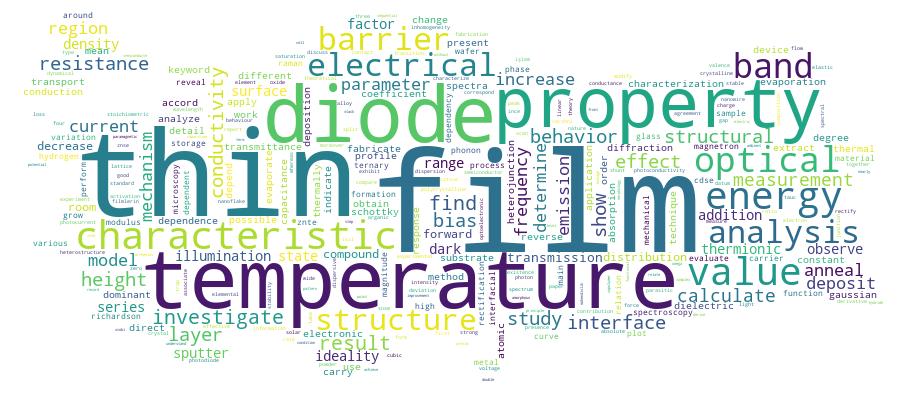
Competency Cloud
29 results
Scholarly Output Search Results
Now showing 1 - 10 of 29
Article Citation - WoS: 22Citation - Scopus: 24Synthesis and Temperature-Tuned Band Gap Characteristics of Magnetron Sputtered Znte Thin Films(Elsevier, 2020) Isik, M.; Gullu, H. H.; Parlak, M.; Gasanly, N. M.Zinc telluride (ZnTe) is one of the attractive semiconducting compounds used in various optoelectronic devices. The usage of ZnTe in optoelectronic applications directs researchers to search its optical characteristics in great detail. For this purpose, structural and optical properties of magnetron sputtered ZnTe thin films were studied by means of x-ray diffraction and transmission spectroscopy measurements. Structural analyses indicated that ZnTe thin films having cubic crystalline structure were successfully grown on soda-lime glass substrates. Transmittance spectra in the 400-1000 nm were recorded in between 10 and 300 K temperature region. The analyses of absorption coefficient spectra resulted in band gap energies decreasing from around 2.31 (10 K) to 2.26 eV (300 K). Temperature dependency of gap energy was studied by Varshni and O'Donnell-Chen relations to determine various optical parameters like absolute zero temperature band gap energy, change of gap energy with temperature, phonon energy.Article Citation - WoS: 77Citation - Scopus: 79Electrical Properties of Al/Pcbm:zno Heterojunction for Photodiode Application(Elsevier Science Sa, 2020) Gullu, H. H.; Yildiz, D. E.; Kocyigit, A.; Yildirim, M.In this paper, the electrical characteristics of spin-coated PCBM:ZnO interlayered Al/PCBM:ZnO/Si diode are investigated under the aim of photodiode application. Under dark condition, the diode shows about four orders in magnitude rectification rate and diode illumination results in efficient rectification with increase in intensity. The analysis of current-voltage curve results a non-ideal diode characteristics according to the thermionic emission model due to the existence of parasitic resistances and interface states. The measured current-voltage values are used to extract the barrier height and ideality factor under dark and illumination conditions. Under illumination, photo-generated carriers contribute to the current flow and linear photo-conductivity behavior in photo-current measurements with illumination shows the possible use of hybrid PCBM:ZnO layer in Si-based photodiodes. In addition, change in the series and shunt resistance values under illumination is found to be effective in this light-sensing behavior of the diode. This characteristic is also observed from the typical on/off illumination switching behavior for the photodiodes in transient photo-current, photo-capacitance and photo-conductance measurements with the quick response to the illumination. The deviations from ideality are also discussed by means of distribution of interface states and series resistance depending on the applied frequency and bias voltage. (C) 2020 Elsevier B.V. All rights reserved.Article Citation - WoS: 32Citation - Scopus: 32Capacitance, Conductance, and Dielectric Characteristics of Al/Tio2< Diode(Springer, 2021) Gullu, H. H.; Yildiz, D. E.In this study, electrical properties of the Al/TiO2/p-Si diode structure with an atomic layer deposited TiO2 interface layer are investigated by current-voltage (I-V), capacitance-voltage (C - V), and conductance-voltage (G - V) measurements. It shows a rectifying behavior with about four order of rectification factor, and barrier height and ideality factor are calculated from the rectification curve. Dielectric parameters are determined from frequency-dependent C - V and G - V relations. The experimental results show that both of these curves are in a strong response to the frequency and bias voltage. They are found in decreasing behavior with increasing frequency, and both of them increase with increase in bias voltage although there are different increasing trends. At reversed bias voltage region, barrier potential, Fermi level energy, and interface charge carrier contribution are evaluated by using 1/C-2 - V plot. Series resistance values are also calculated under the variation of frequency and voltage. Thus, the capacitive characteristics of the diode are corrected by eliminating series resistance contribution together with the possible effect on interface charge carriers. Detailed information is obtained by determining electronic parameters affected by interface states over a wide frequency range (1 kHz to 1 MHz). At this point, strong response to the frequency is observed for the dielectric constant. Under the effect of interfacial polarization at low-frequency region, interface charge contribution to the capacitive response of the diode is obtained. Further analysis is performed on electrical modulus and impedance values derived from experimental dielectric data. Existence of interfacial layer capacitance is detailed by extracting distribution of interface charges from capacitance and conductance profiles of the diode under the effect of frequency.Article Citation - WoS: 3Citation - Scopus: 3Fabrication of Cdsexte1-X Thin Films by Sequential Growth Using Double Sources(Elsevier, 2021) Demir, M.; Gullu, H. H.; Terlemezoglu, M.; Parlak, M.CdSexTe(1-x) (CST) ternary thin films were fabricated by stacking thermally evaporated CdSe and electron beam evaporated CdTe layers. The final structure was achieved in a stoichiometric form of approximately Cd:Se:Te = 50:25:25. The post-annealing processes at 300, 400, and 450 degrees C were applied to trigger the compound formation of CST thin films. The X-ray diffraction (XRD) profiles revealed that CdTe and CdSe have major peaks at 23.9 degrees and 25.5 degrees corresponds to (111) direction in cubic zinc-blend structure. Raman modes of CdTe were observed at 140 and 168 cm(-1), while Raman modes of CdSe films were detected at 208 and 417 cm(-1). The post-annealing process was found to be an effective method in order to combine both diffraction peaks and the vibrational modes of CdTe and CdSe, consequently to form CST ternary alloy. Transmission spectroscopy analysis revealed that CST films have direct band gap value of 1.6 eV.Article Citation - WoS: 2Citation - Scopus: 1Investigation of Conductivity Characteristics of Zn-In Thin Films(World Scientific Publ Co Pte Ltd, 2020) Gullu, H. H.; Parlak, M.Zn-In-Se thin films were fabricated on the ultrasonically cleaned glass substrates masked with clover-shaped geometry by thermal evaporation of its elemental sources. Temperature-dependent conductivity characteristics of the films were investigated under dark and illuminated conditions. The semiconductor type of the films was found as n-type by thermal probe test. According to the van der Pauw technique, the dark electrical conductivity analyses showed that the variations of conductivity of unannealed and annealed at 300 degrees C samples are in exponential dependence of temperature. These conductivity profiles were found to be dominated by the thermionic emission at high temperature region whereas their behaviors at low temperatures were modeled by hopping theory. On the contrary, as a result of the further annealing temperatures, the surface of the samples showed semi-metallic characteristics with deviating from expected Arrhenius behavior. In addition, the temperature-dependent photoconductivity of the films was analyzed under different illumination intensities and the results were explained by the supra-linear characteristic based on the two-center recombination model.Article Citation - WoS: 47Citation - Scopus: 44Investigation of Structural, Electronic, Magnetic and Lattice Dynamical Properties for Xcobi (x: Ti, Zr, Hf) Half-Heusler Compounds(Elsevier, 2020) Surucu, Gokhan; Isik, Mehmet; Candan, Abdullah; Wang, Xiaotian; Gullu, Hasan HuseyinStructural, electronic, magnetic, mechanical and lattice dynamical properties of XCoBi (X: Ti, Zr, Hf) Half-Heusler compounds have been investigated according to density functional theory and generalized gradient approximation. Among alpha, beta and gamma structural phases, gamma-phase structure has been found as the most stability characteristics depending on the calculated formation enthalpies, energy-volume dependencies and Cauchy pressures. Energy-volume plots of possible magnetic orders of gamma-phase XCoBi compounds have been analyzed and the most stable order has been found as paramagnetic nature. The theoretical studies on gamma-phase structures resulted in band gap energies of 0.96, 0.99 and 0.98 eV for TiCoBi, ZrCoBi and HfCoBi semiconducting compounds, respectively. Born-Huang criteria applied on elastic constants of interest compounds has indicated that gamma-phase is also mechanically stable for all studied compounds. In addition, various mechanical, lattice dynamical and thermodynamical parameters of XCoBi compounds have been calculated in the present study.Article Citation - WoS: 8Citation - Scopus: 9First-principles studies of Tin+1SiNn (n=1, 2, 3) MAX phase(Taylor & Francis Ltd, 2020) Surucu, Gokhan; Gullu, Hasan Huseyin; Candan, Abdullah; Yildiz, Bugra; Erkisi, AytacIn this study, the structural, electronic, mechanical, lattice dynamical and thermodynamic characteristics of ( 1, 2 and 3) phase compounds were investigated using the first principle calculations. These ternary nitride compounds were found to be stable and synthesisable, and the results on the stability nature of them were also evaluated for the possible and phases. -was found to be the most stable one among these new class of layered phases for which limited works are available in the literature. The band structures, that are essential for the electronic properties, were determined along with the partial density of states (PDOS) indicating the metallic behaviour of these compounds. The polycrystalline elastic moduli were calculated based on the single-crystal elastic constants and the mechanical stabilities were verified. Some basic physical parameters, such as bulk modulus, shear modulus, Young's modulus, Poisson's ratio, Debye temperature, and sound velocities, were also predicted. Furthermore, the anisotropic elastic properties were visualised in three dimensions (3D) for Young's modulus, linear compressibility, shear modulus and Poisson's ratio as well as with the calculation of the anisotropic factors. - phase showed the most isotropic characteristics with minimum deviations. These theoretical values were also used to identify the stiffness and ionic characteristics. The phonon dispersion curves and corresponding PDOS indicated that compounds were dynamically stable. Moreover, thermodynamic properties obtained from phonon dispersion curves were investigated in detail.Article Citation - WoS: 13Citation - Scopus: 12A Study on Electrical Properties of Au/4h-sic Schottky Diode Under Illumination(Springer, 2021) Yildiz, D. E.; Karadeniz, S.; Gullu, H. H.Y In this work, a metal-semiconductor diode in the form of Au/4H-SiC is fabricated, and the electrical properties of this device are systematically examined under dark and different illumination intensities. To perform this, the currentvoltage (I-V) characteristics of the Schottky-type diode are analyzed at room temperature. The performance parameters such as saturation current (I-0), barrier height (Phi(B)), ideality factor (n) and series resistance (R-s) are found to be illumination dependent. The reverse biased I - V characteristics under incident light indicate high photo-sensitivity as compared to the response at forward bias. Thus, this result is investigated in detail according to both Schottky and Poole-Frenkel effects. It is found that the Poole-Frenkel mechanism is dominant in the reverse biased region. The Au/4H-SiC Schottky junction has a strong photo-current response to the different illumination intensities and transient photocurrent characteristics of the fabricated device are studied at the illumination intensities of 50 and 100 mW/cm(2). All experimental results indicate that the Au/4H-SiC Schottky diode, with a valuable response to the illumination together with change in illumination intensity, can be used for optoelectronic applications.Article Citation - WoS: 14Citation - Scopus: 14Analysis of Temperature-Dependent Forward and Leakage Conduction Mechanisms in Organic Thin Film Heterojunction Diode With Fluorine-Based Pcbm Blend(Springer, 2020) Yildiz, D. E.; Gullu, H. H.; Toppare, L.; Cirpan, A.The forward and reversed biased current-voltage behaviors of the organic diode were detailed in a wide range of temperatures. In this diode, a donor-acceptor-conjugated copolymer system was constructed with poly((9,9-dioctylfluorene)-2,7-diyl-(2-dodecyl-benzo[1,2,3]triazole)) as a partner of [6,6]-phenyl-C61-butyric acid methyl ester (PCBM). Two-order of magnitude rectification ratio was achieved, and the temperature-dependent values of saturation current, zero-bias barrier height, and ideality factor were extracted according to the thermionic emission model. The temperature responses of these diode parameters showed an existence of inhomogeneity in the barrier height formation. As a result, the observed non-ideal behavior was explained by Gaussian distribution of barrier height where low-barrier regions are effective in the forward biased conduction mechanism at low temperatures. Together with this analysis, series resistances were evaluated using Cheung's functions and also density of interface states were investigated. On the other hand, reverse biased current flow was found under the dominant effect of Poole-Frenkel effects associated with these interfacial traps. The reverse current conduction mechanism was detailed by calculating characteristic field-lowering coefficients and barrier height values in the emission process from the trapped state in the range of temperatures of interest.Article Citation - WoS: 13Citation - Scopus: 14Analysis of Double Gaussian Distribution on Barrier Inhomogeneity in a Au/n-4H SiC Schottky Diode(Springer, 2021) Gullu, H. H.; Sirin, D. Seme; Yildiz, D. E.A n-4H SiC based diode is fabricated by an Au front metal contact to provide rectification at the metal-semiconductor (MS) junction, and a back ohmic contact is also obtained using Au metal with post-thermal heating. MS diode characteristics are investigated by current-voltage (I - V) measurements with a wide range of temperature from 80 K to 300 K. At each temperature, rectifying behavior is achieved and it is improved with an increase in temperature. Barrier height and ideality factor are calculated according to the thermionic emission (TE) model from linearity in the forward bias region of the ln(I) versus V plot. The experimental zero-bias barrier height (Phi(b0)) values are in a good agreement with literature, and at around room temperature the ideality factor (n) reaches unity. At saturation regions in I - V curves, parasitic resistance values are derived by Ohm's law and the series resistance values are also reevaluated by Cheung's relation. Detailed I - V analysis is performed by modifying the TE model with an approximation of low barrier patches embedded in the main barrier height. Two linear relations in the characteristic plots of Phi(b0) and n indicate that double Gaussian distribution is a suitable current conduction model via localized barrier patches at low temperatures. Additionally, reverse bias current flow is analyzed under the dominant effect of Poole-Frenkel emission associated with the interfacial traps. According to the characteristic electric field-dependent current density plot, emission barrier height and relative dielectric constant for n-4H SiC are calculated.

- «
- 1 (current)
- 2
- 3
- »