
Çiğdemoğlu, Ceyhan
Loading...
Profile URL
Name Variants
Ceyhan, Çiğdemoğlu
Çiğdemoğlu C.
C.,Ceyhan
Çiğdemoğlu,C.
Çiğdemoğlu, Ceyhan
Cigdemoglu, Ceyhan
C., Ceyhan
C.,Çiğdemoğlu
C.,Cigdemoglu
Ceyhan, Cigdemoglu
Ç.,Ceyhan
Cigdemoglu C.
C., Cigdemoglu
Ç., Ceyhan
C., Çiğdemoğlu
Cigdemoglu,C.
Çığdemoğlu, Ceyhan
Cigdemoglu, C.
Çiğdemoğlu C.
C.,Ceyhan
Çiğdemoğlu,C.
Çiğdemoğlu, Ceyhan
Cigdemoglu, Ceyhan
C., Ceyhan
C.,Çiğdemoğlu
C.,Cigdemoglu
Ceyhan, Cigdemoglu
Ç.,Ceyhan
Cigdemoglu C.
C., Cigdemoglu
Ç., Ceyhan
C., Çiğdemoğlu
Cigdemoglu,C.
Çığdemoğlu, Ceyhan
Cigdemoglu, C.
Job Title
Doçent Doktor
Email Address
ceyhan.cigdemoglu@atilim.edu.tr
Main Affiliation
Public Relations and Advertising
Status
Website
ORCID ID
Scopus Author ID
Turkish CoHE Profile ID
Google Scholar ID
WoS Researcher ID
Sustainable Development Goals
 1
1NO POVERTY
0
Research Products
 2
2ZERO HUNGER
0
Research Products
 3
3GOOD HEALTH AND WELL-BEING
1
Research Products
 4
4QUALITY EDUCATION
5
Research Products
 5
5GENDER EQUALITY
0
Research Products
 6
6CLEAN WATER AND SANITATION
0
Research Products
 7
7AFFORDABLE AND CLEAN ENERGY
0
Research Products
 8
8DECENT WORK AND ECONOMIC GROWTH
2
Research Products
 9
9INDUSTRY, INNOVATION AND INFRASTRUCTURE
0
Research Products
 10
10REDUCED INEQUALITIES
0
Research Products
 11
11SUSTAINABLE CITIES AND COMMUNITIES
0
Research Products
 12
12RESPONSIBLE CONSUMPTION AND PRODUCTION
3
Research Products
 13
13CLIMATE ACTION
3
Research Products
 14
14LIFE BELOW WATER
0
Research Products
 15
15LIFE ON LAND
0
Research Products
 16
16PEACE, JUSTICE AND STRONG INSTITUTIONS
0
Research Products
 17
17PARTNERSHIPS FOR THE GOALS
1
Research Products

Documents
16
Citations
458
h-index
9

Documents
10
Citations
187

Scholarly Output
52
Articles
30
Views / Downloads
223/1610
Supervised MSc Theses
17
Supervised PhD Theses
0
WoS Citation Count
275
Scopus Citation Count
458
Patents
0
Projects
0
WoS Citations per Publication
5.29
Scopus Citations per Publication
8.81
Open Access Source
13
Supervised Theses
17
| Journal | Count |
|---|---|
| Chemistry Education Research and Practice | 3 |
| World Conference on Educational Technology Researches (WCETR) -- JUL 05-09, 2011 -- East Univ, Nicosia, CYPRUS | 2 |
| İşletme Araştırmaları Dergisi | 2 |
| Science & Education | 2 |
| Science Education International | 2 |
Current Page: 1 / 4
Scopus Quartile Distribution
Competency Cloud
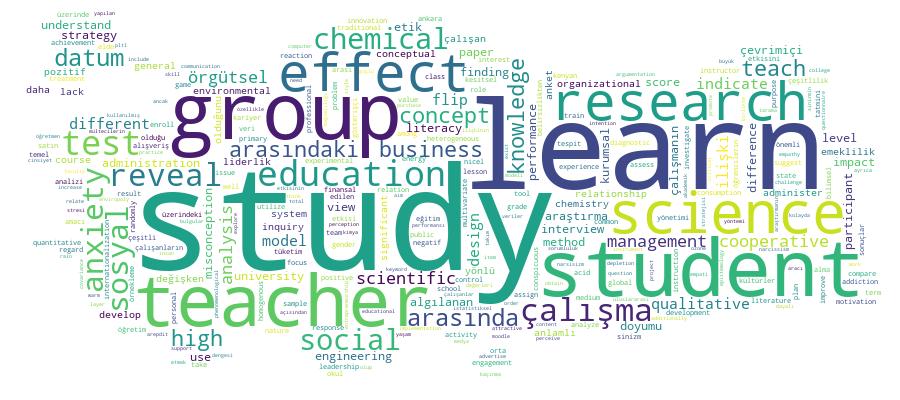
35 results
Scholarly Output Search Results
Now showing 1 - 10 of 35
Article Citation - WoS: 5Heterogeneity in Classes: Cooperative Problem-Solving Activities Through Cooperative Learning(Fac Teacher Education, 2014) Cigdemoglu, Ceyhan; Kapusuz, Kamil Yavuz; Kara, AliTeachers, from primary schools to college, experience challenges regarding both increased class sizes and a greater diversity of students having a broad spectrum of abilities, interests, needs, and goals. The aim of this paper is to investigate the effect of cooperative learning through Cooperative Problem-Solving (CPS) activities on homogenous and heterogeneous grouping in an engineering course. As a mixed method design, the study utilized both quantitative and qualitative data. The participants, 47 engineering students selected conveniently, were enrolled in a communication systems course. The analysis of the quantitative data indicated that no significant difference (p=.791) exists between the ways in which the students in homogenous and the students in heterogeneous group understand communication systems. In order to reveal the perceptions of students regarding the implementation, they were interviewed at the end of the semester. The qualitative data obtained from these interviews suggests that students prefer heterogeneous to homogenous grouping. The findings also imply that further research should concentrate on heterogeneous grouping strategies and more detailed qualitative data in order to reveal what kind of patterns emerge from students' interactions in different groupings.Article Separating the Biased Perceptions From Lack of Knowledge on Entrepreneurship Through a Diagnostic Instrument: Ledi(2018) Kalaycı, Elif; Çiğdemoğlu, CeyhanStudents of entrepreneurship either have ‘biased perceptions’ and/or they lackknowledge. The literature states that biased perceptions can have lasting effect evenafter the training (von Graevenitz, et.al, 2010). Lack of knowledge hinders the decisionmaking of nascent entrepreneurs when they rely on personal opinions or pastexperiences as heuristics derived from small samples or non-random samples. Currentlyentrepreneurship education is not designed to address the impact of biased perceptionsand lack of knowledge. There is a need to separate biased perceptions from ‘lack ofknowledge’ so that entrepreneurship training could be implemented on a more tailoredmanner. It is the goal of this paper to devise such an instrument in the lean start upcontext which is a widely used model of entrepreneurship training. The proposedinstrument is tested on a convenience-based sample composed of 212 people.Employment of a three-tiered instrument in this context is a first of its kind. Knowledgeor lack of knowledge is checked in the first tier, relevant reasoning is assessed in thesecond and certainty is evaluated in the third tier.Article Citation - WoS: 3Context-Based Lessons With 5e Model To Promote Conceptual Understanding of Chemical Reactions and Energy Concepts(Sci Methodical Ctr-sci Educologica, 2015) Cigdemoglu, Ceyhan; Geban, OmerThis study explores whether the context-based approach with 5E model (CBA-5E) can lead to better understanding of chemical reactions and energy concepts when compared to conventional instruction (CI). Additionally, the study delves into the effect of treatment with regards to gender. Eleventh grade science-major classes with 175 students from two public high schools were enrolled. The experimental groups were treated with CBA-5E, the control groups as CI, the treatments were randomly assigned to the groups. The chemical reactions and energy concepts test, including the common alternative conceptions, was administered as pre- and post-test. The chemical reactions and energy achievement test, including conceptual and algorithmic problems, was administered as a post-test to the groups. Multivariate Analysis of Covariance (MANCOVA) was used for the analysis of the data, and the results revealed that CBA-5E was superior to CI on the students' conceptual understanding regarding these concepts regardless of gender difference.Article Citation - Scopus: 5Flipped Learning Model - Learning Style Interaction: Supporting Pre-Service Teachers on Science Teaching Methods and Personal Epistemologies(International Council of Associations for Science Education (ICASE), 2022) Cam,A.; Arslan,H.O.; Cigdemoglu,C.This study revealed how the flipped learning model interacted with the learning styles of primary pre-service teachers. In addition, the impact of the flipped model on participants' science teaching course achievement and personal epistemologies was investigated. A mixed-method research design was conducted with 27 primary pre-service teachers enrolled in a Science Teaching Course. The flipped classroom model was applied for 15 weeks. The Kolb Learning Style Inventory was distributed to categorize participants under learning styles. Midterm and final exam scores were used as an indicator of course achievement and compared with 30 primary pre-service teachers' achievement from the previous semester. Lesson plans of the participants were analyzed qualitatively to investigate the personal epistemologies of the participants. Analysis indicated that flip learning environment supported "divergers" more than the others on course achievement. The level of sophistication on personal epistemologies changed across learning styles and the method of teaching differed across learning styles. Further studies need to be conducted to reveal how teacher education programs help pre-service teachers improve personal epistemologies and transfer them to their instruction. © 2022 Journal of Open Humanities Data. All rights reserved.Article Citation - Scopus: 6Context-based lessons with 5E model to promote conceptual understanding of chemical reactions and energy concepts(Scientific Methodical Center, 2015) Cigdemoglu,C.; Geban,O.This study explores whether the context-based approach with 5E model (CBA-5E) can lead to better understanding of chemical reactions and energy concepts when compared to conventional instruction (CI). Additionally, the study delves into the effect of treatment with regards to gender. Eleventh grade science-major classes with 175 students from two public high schools were enrolled. The experimental groups were treated with CBA-5E, the control groups as CI, the treatments were randomly assigned to the groups. The chemical reactions and energy concepts test, including the common alternative conceptions, was administered as pre- and post-test. The chemical reactions and energy achievement test, including conceptual and algorithmic problems, was administered as a post-test to the groups. Multivariate Analysis of Covariance (MANCOVA) was used for the analysis of the data, and the results revealed that CBA-5E was superior to CI on the students’ conceptual understanding regarding these concepts regardless of gender difference. © 2015, Scientific Methodical Center. All right resurved.Article Citation - WoS: 1Citation - Scopus: 1An examination of the relationship among conspicuous consumption, social media addiction, narcissism, and empathy: a research on university students(inderscience Enterprises Ltd, 2024) Akbulut, Ayse; Esiyok, Elif; Cigdemoglu, Ceyhan; Ozgen, OzlenThe purpose of this study is to reveal the relationship between conspicuous consumption behaviour, social media addiction, narcissistic characteristics, and empathy for university students. Using a cross-sectional survey design, with a non-random sampling strategy, a total of 1,215 participants completed the online survey. Data were analysed through the structural equation modelling technique using the AMOS statistical analysis package to discover the relationship among variables. Findings indicated that social media addiction has a moderately positive relationship with conspicuous consumption, a weak negative relationship with empathy, and a moderately positive relationship with narcissism. As a result, both empathy and narcissism have an impact on conspicuous consumption, and social media addiction affects empathy. This study contributes to the literature in terms of exploring the relationship between empathy and conspicuous consumption together for young consumers.Article Citation - WoS: 39Citation - Scopus: 50Individual Flipped Learning and Cooperative Flipped Learning: Their Effects on Students' Performance, Social, and Computer Anxiety(Routledge Journals, Taylor & Francis Ltd, 2019) Eryilmaz, Meltem; Cigdemoglu, CeyhanThe purpose of this study is to differentiate the effect of cooperative learning strategy integrated with a flipped learning (FL) model from sole FL implementation in promoting students' performances while decreasing their social and computer anxiety in an undergraduate course. As a method, a classical experimental design is used. The participants were from the department of English Language and Literature, and Translation and Interpretation. Students were randomly assigned to individual FL (the control group) class; and FL with cooperative activities (experimental group) class. The groups were randomly assigned as experimental and control by tossing a coin. The implementation took 10 weeks. Students' performances (grades), social anxiety, and computer anxiety were dependent variables of the study and they were compared through multivariate analysis of variance. The results indicated that there is no significant mean difference between groups' performances; however; the group of FL with cooperative activities had less social anxiety, but no significant change occurred at their computer anxiety level.Conference Object INSTRUCTOR'S VIEWS ON DIGITALIZATION OF CAMPUS; ROLES AND RECOMMENDATIONS(Iated-int Assoc Technology Education A& development, 2016) Cigdemoglu, Ceyhan; Akay, Hasan U.; Tekin, YucelThis study delve into determine the faculty members' opinions on digitalization and their views on roles and recommendations to create a digital campus. An open-ended questionnaire was answered by eleven participants, and then semi-structured interviews are conducted with volunteers. In this qualitative research, the participants were purposively selected. All interview sessions were type recorded and the data was transcribed verbatim. Lack of a comprehensive project with its budgets and action plans, job descriptions are perceived as an obstacle to create a digital campus. Lack of motivation is perceived as another obstacle to design digital course contents. The respondents consider that lessons should be designed in more attractive ways through innovative teaching methods through online tools. Faculty members using more digital tools could suggest more accountable action plans for digitalization.Article Bilimsel Okuryazarlık(Bilim ve Teknoloji, 2012) Çiğdemoğlu, CeyhanFen ve matematik alanları eğitimi yüksek öğretime geçişte özellikle temel bilimler ve mühendislik gibi alanların alt yapısını oluşturduğu için önemlidir. Son zamanlarda bilim ve teknolojideki yüksek ivmeli gelişmeler özellikle bu alanlardaki bilgi birikiminin ürünü olarak düşünülebilir. Bilimsel bilginin, teknoloji ile birlikte hızla ilerlemesinde;araştıran, sorgulayan, problemlere çözümler arayan bireylerin rolü yadsınamaz. Çağın gereksinimleri doğrultusunda bireyler yetiştirmeyi hedefleyen tüm öğretim kurumlarının temel amaçlarından biri de öğrencileri bilimsel okuryazar olarak yetiştirmektir. Genellikle modern toplumlarda bireylerin sadece belirli uzmanlık alanları dışında, bazı temel konularda akılcı yorumlar yapabilmesi de beklenir. Bybee (1997) ye göre bilimsel okuryazarlık, bilimsel bilgiyi kullanabilmeyi, problemleri tanımlayıp kanıta dayalı sonuçlar çıkararak dünyayı anlamayı ve insan faaliyetlerinin neden olduğu değişimler konusunda karar verebilmeyi gerektirir. Öğrencilerin doğal çevrelerinde karşılaştıkları olayları merak etmesi, bu olaylara karşı duyarlı olup uygun davranışlar sergilemesi, sorunlara akılcı çözümler bulabilmesi, bilgiye ulaşıp onu kullanmayı bilmesi, bilimsel okuryazar bireylerin özelliklerindendir. Örneğin bilimsel okuryazar olan bir birey, küresel ısınma, kanser, kök hücre, asit yağmurları, ve enerji kaynakları gibi konularda açıklamalarda bulunabilir, bilimsel bilgisi doğrultusunda yorumlar yapabilir. Aslında “bilimsel-okuryazarlık” toplumda çoğu zaman “genel kültür” olarak kullanılan kavramın bilimle ilgili olan kısmı olarak da açıklanabilir.Article Akran-liderliğinde Takım Öğrenmesi Modelinin Üniversite Öğrencilerinin Genel Kimya Sınav Başarısı Üzerindeki Etkisinin İncelenmesi(2018) Şişman, Ece N. Eren; Çiğdemoğlu, Ceyhan; Geban, ÖmerBu çalışmanın amacı, mühendislik fakültesi birinci sınıf öğrencilerinin genel kimya ders başarısını akran liderliğinde takım öğrenmesi modeli ve geleneksel öğretim modeli kullanılan durumlarda karşılaştırmak ve yöntemin farklı başarı seviyelerindeki öğrenciler üzerinde etkisini incelemektir. Çalışmaya aynı öğretim üyesinin okuttuğu toplam 128 öğrenci katılmıştır. Deney grubu bir dönem boyunca Akran Liderliğinde Takım Öğrenmesi (ALTÖ) modeli ile ders yaparken kontrol grubunda geleneksel öğretim uygulanmıştır. Daha önceden bu dersi başarı ile tamamlamış 14 takım lideri dönem boyunca hem temel iletişim ve pedagoji konularında eğitilmiş, hem de takımlarına problem çözme konusunda destek olmuştur. Deney ve kontrol grubu aynı ara sınavlara ve final sınavına girmiştir. Veriler iki yönlü varyans analizi (two-way ANOVA) ile incelenmiştir. Sonuç olarak, her ne kadar öğretim yöntemlerinin istatistiksel olarak anlamlı bir etkisi olmasa da, istatistiksel olarak anlamlı çıkan ortak etki faktörüne bağlı olarak, düşük ve orta düzey başarılı öğrencilerinden ALTÖ modeliyle öğretim alanların geleneksel öğretim alan gruba göre genel kimya sınav başarı notlarının istatistiksel olarak daha iyi olduğu bulunmuş, ancak ALTÖ modeli ve geleneksel öğretim gruplarındaki yüksek başarılılar karşılaştırıldıklarında genel kimya başarıları açısından bir farklılık olmadığı saptanmıştır.
