
This item is non-discoverable
Çağıltay, Nergiz
Loading...

Profile URL
Name Variants
Çağıltay, Nergis E.
Nergiz, Çağıltay
Çağıltay, Nergiz
Nergiz, Cagiltay
Ç.,Nergiz
C.,Nergiz
N., Cagiltay
N.,Çağıltay
Cagiltay, Nergiz
Cagiltay,N.
Çağıltay,N.
N.,Cagiltay
C., Nergiz
Çağıltay, Nergiz Ercil
Cagiltay, Nergiz Ercil
Çağıltay, Nergiz E.
Nergiz, Çağıltay
Çağıltay, Nergiz
Nergiz, Cagiltay
Ç.,Nergiz
C.,Nergiz
N., Cagiltay
N.,Çağıltay
Cagiltay, Nergiz
Cagiltay,N.
Çağıltay,N.
N.,Cagiltay
C., Nergiz
Çağıltay, Nergiz Ercil
Cagiltay, Nergiz Ercil
Çağıltay, Nergiz E.
Job Title
Profesör Doktor
Email Address
nergiz.cagiltay@atilim.edu.tr
Main Affiliation
Software Engineering
Status
Former Staff
Website
ORCID ID
Scopus Author ID
Turkish CoHE Profile ID
Google Scholar ID
WoS Researcher ID
Sustainable Development Goals
4
QUALITY EDUCATION

33
Research Products
7
AFFORDABLE AND CLEAN ENERGY

1
Research Products
9
INDUSTRY, INNOVATION AND INFRASTRUCTURE

1
Research Products
11
SUSTAINABLE CITIES AND COMMUNITIES

1
Research Products
16
PEACE, JUSTICE AND STRONG INSTITUTIONS

3
Research Products
17
PARTNERSHIPS FOR THE GOALS

3
Research Products

This researcher does not have a Scopus ID.

This researcher does not have a WoS ID.

Scholarly Output
137
Articles
79
Views / Downloads
544/3630
Supervised MSc Theses
26
Supervised PhD Theses
3
WoS Citation Count
1157
Scopus Citation Count
1469
WoS h-index
17
Scopus h-index
20
Patents
0
Projects
0
WoS Citations per Publication
8.45
Scopus Citations per Publication
10.72
Open Access Source
17
Supervised Theses
29
Google Analytics Visitor Traffic
| Journal | Count |
|---|---|
| 18th IEEE International Symposium on Personal, Indoor and Mobile Radio Communication -- SEP 03-07, 2007 -- Athens, GREECE | 7 |
| IEEE Access | 5 |
| Computers & Education | 3 |
| International Journal of Human–Computer Interaction | 3 |
| Surgical Innovation | 3 |
Current Page: 1 / 10
Scopus Quartile Distribution
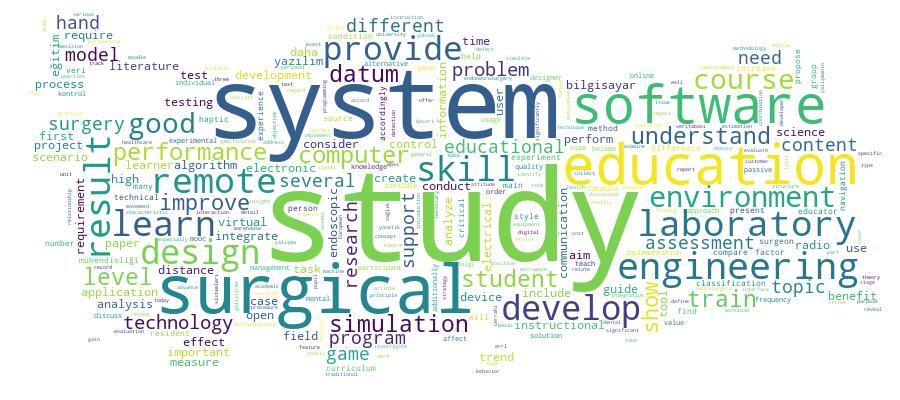
Competency Cloud
21 results
Scholarly Output Search Results
Now showing 1 - 10 of 21
Article Citation - WoS: 22Citation - Scopus: 34An Analysis of Course Characteristics, Learner Characteristics, and Certification Rates in MITx MOOCs(Athabasca Univ Press, 2020) Cagiltay, Nergiz Ercil; Cagiltay, Kursat; Celik, Berkan; Software EngineeringMassive Open Online Courses (MOOCs), capable of providing free (or low cost) courses for millions of learners anytime and anywhere, have gained the attention of researchers, educational institutions, and learners worldwide. Even though they provide several benefits, there are still some criticisms of MOOCs. For instance, MOOCs' high dropout rates or predominantly elite participation are considered to be important problems. In order to develop solutions for these problems, a deeper understanding of MOOCs is required. Today, despite the availability of several research studies about MOOCs, there is a shortage of in-depth research on course characteristics, learner characteristics, and predictors of certification rates. This study examined MOOC and learner characteristics in detail and explored the predictors of course certification rates based on data from 122 Massachusetts Institute of Technology MOOCs (MITx) on edX platform as well as data about the 2.8 million participants registered in these MOOCs. The results indicated that as the number of courses offered and the number of learners enrolled increased in years, there was a decrease in the certification rates among enrolled learners. According to our results, the number of average chapters completed, total forum messages, and mean age predicted course certification rates positively. On the other hand, the total number of chapters in a course predicted the course certification rates negatively. Based on these results, shorter and more interactive MOOCs are recommended by considering the needs of the learners, course content design, and strategies encouraging the enrolled students to enter the courses.Master Thesis Göz İzlemenin Program Anlaşılırlığında Kullanılması Üzerine Sistematik Bir Haritalama Çalışması(2021) Atıed, Shukrullah; Çağıltay, Nergiz; Topallı, DamlaGöz izleme teknolojisi, bir kişinin vizyonu hakkında fikir edinmek ve nereye baktıklarını belirlemek ve görsel davranışları hakkında veri toplamak için kullanılır. Araştırmacılar, göz izleme teknolojisini kullanarak Yazılım Mühendisliği'ndeki çeşitli görevleri analiz etmek ve anlamak için göz hareketi verileri toplamaktadır. Ancak, Yazılım Mühendisliği alanında göz izleme teknolojisinin kullanımını inceleyen ve bu açıdan genel bir tablo sunan çok sınırlı sayıda çalışma bulunmaktadır. Dolayısıyla, bu tez çalışmasında, bir Sistematik Haritalama çalışması yürüterek, tüm kanıtları bir araya getirmeyi ve özellikle programı anlaşılabilirliği için Yazılım Mühendisliği'nde göz izleme kullanımına genel bir bakış sunmayı amaçlıyoruz. İlgisiz çalışmaları dikkatlice gözden geçirdikten ve çıkardıktan sonra 121 ilgili makaleyi seçtik. Elde ettiğimiz sonuçlara göre, son yıllarda Yazılım Mühendisliği'nde göz takibi üzerine yapılan çalışmaların arttığını ve farklı aktiviteler üzerinde çalışıldığını görülmektedir. Ayrıca, programı anlaşılabilirliği üzerine farklı faktörlerin etkisi olduğu görülmüştür. Bu faktörler kod öğeleri ve varlıkları, araçlar, geliştiricinin geçmişi ve göz hareketi ve okuma davranışları olarak belirtilmiştir. Bu bulguların, geliştiricilerin program anlaşılabilirliği üzerine etkin faktörleri benimsemelerine yardımcı olarak gelişimlerine katkı sağlaması beklenmektedir.Article Citation - WoS: 53Investigation of Emerging Trends in the E-Learning Field Using Latent Dirichlet Allocation(Athabasca Univ Press, 2021) Gurcan, Fatih; Ozyurt, Ozcan; Cagiltay, Nergiz ErcilE-learning studies are becoming very important today as they provide alternatives and support to all types of teaching and learning programs. The effect of the COVID-19 pandemic on educational systems has further increased the significance of e-learning. Accordingly, gaining a full understanding of the general topics and trends in e-learning studies is critical for a deeper comprehension of the field. There are many studies that provide such a picture of the e-learning field, but the limitation is that they do not examine the field as a whole. This study aimed to investigate the emerging trends in the e-learning field by implementing a topic modeling analysis based on latent Dirichlet allocation (LDA) on 41,925 peer-reviewed journal articles published between 2000 and 2019. The analysis revealed 16 topics reflecting emerging trends and developments in the e-learning field. Among these, the topics "MOOC," "learning assessment," and "elearning systems" were found to be key topics in the field, with a consistently high volume. In addition, the topics of "learning algorithms," "learning factors," and "adaptive learning" were observed to have the highest overall acceleration, with the first two identified as having a higher acceleration in recent years. Going by these results, it is concluded that the next decade of e-learning studies will focus on learning factors and algorithms, which will possibly create a baseline for more individualized and adaptive mobile platforms. In other words, after a certain maturity level is reached by better understanding the learning process through these identified learning factors and algorithms, the next generation of e-learning systems will be built on individualized and adaptive learning environments. These insights could be useful for e-learning communities to improve their research efforts and their applications in the field accordingly.Article Citation - WoS: 20Citation - Scopus: 25Detecting Latent Topics and Trends in Software Engineering Research Since 1980 Using Probabilistic Topic Modeling(Ieee-inst Electrical Electronics Engineers inc, 2022) Gurcan, Fatih; Dalveren, Gonca Gokce Menekse; Cagiltay, Nergiz Ercil; Soylu, AhmetThe landscape of software engineering research has changed significantly from one year to the next in line with industrial needs and trends. Therefore, today's research literature on software engineering has a rich and multidisciplinary content that includes a large number of studies; however, not many of them demonstrate a holistic view of the field. From this perspective, this study aimed to reveal a holistic view that reflects topics, trends, and trajectories in software engineering research by analyzing the majority of domain-specific articles published over the last 40 years. This study first presents an objective and systematic method for corpus creation through major publication sources in the field. A corpus was then created using this method, which includes 44 domain-specific conferences and journals and 57,174 articles published between 1980 and 2019. Next, this corpus was analyzed using an automated text-mining methodology based on a probabilistic topic-modeling approach. As a result of this analysis, 24 main topics were found. In addition, topical trends in the field were revealed. Finally, three main developmental stages of the field were identified as: the programming age, the software development age, and the software optimization age.Article Citation - WoS: 10Citation - Scopus: 12Distinguishing Intermediate and Novice Surgeons by Eye Movements(Frontiers Media Sa, 2020) Menekse Dalveren, Gonca Gokce; Cagiltay, Nergiz ErcilSurgical skill-level assessment is key to collecting the required feedback and adapting the educational programs accordingly. Currently, these assessments for the minimal invasive surgery programs are primarily based on subjective methods, and there is no consensus on skill level classifications. One of the most detailed of these classifications categorize skill levels as beginner, novice, intermediate, sub-expert, and expert. To properly integrate skill assessment into minimal invasive surgical education programs and provide skill-based training alternatives, it is necessary to classify the skill levels in as detailed a way as possible and identify the differences between all skill levels in an objective manner. Yet, despite the existence of very encouraging results in the literature, most of the studies have been conducted to better understand the differences between novice and expert surgical skill levels leaving out the other crucial skill levels between them. Additionally, there are very limited studies by considering the eye-movement behaviors of surgical residents. To this end, the present study attempted to distinguish novice- and intermediate-level surgical residents based on their eye movements. The eye-movement data was recorded from 23 volunteer surgical residents while they were performing four computer-based simulated surgical tasks under different hand conditions. The data was analyzed using logistic regression to estimate the skill levels of both groups. The best results of the estimation revealing a 91.3% recognition rate of predicting novice and intermediate surgical residents on one scenario were selected from four under the dominant hand condition. These results show that the eye-movements can be potentially used to identify surgeons with intermediate and novice skills. However, the results also indicate that the order in which the scenarios are provided, and the design of the scenario, the tasks, and their appropriateness with the skill levels of the participants are all critical factors to be considered in improving the estimation ratio, and hence require thorough assessment for future research.Doctoral Thesis Cerrahi Asistanların Beceri Düzeylerinin Anlaşılması Amacıyla Bilgisayar Tabanlı Simülasyon Eğitim Ortamlarının Oluşturduğu El Hareketleri Verisine Makine Öğrenme Yöntemlerinin Uygulanması(2023) Tonbul, Gökçen; Çağıltay, Nergiz; Topallı, DamlaTıp disiplinleri, yeni teknolojilerin gelişimine paralel olarak kendi mevcut karmaşık yapısı içinde büyük zorluklar yaşamaktadır. Klasik yaklaşımlar, adaptasyon sürecine girerek modern çözümlere evrilmekte hatta bazıları tamamen geçerliliğini yitirmektedir. Sıradan bir açık ameliyatın doğal olarak ortaya çıkan komplikasyonları, minimal invaziv ameliyatların gelişmesine yol açmıştır. Minimal invaziv cerrahi ile istenen vücut bölgesine ulaşmak için gerekli aletler yardımıyla, küçük kesiler açılarak vücuttaki boşluklar kullanılır veya yenisi oluşturulur. Böylece daha az kesi ve doku hasarı sayesinde hastanın da daha hızlı ve rahat bir iyileşme süreci geçirmesi amaçlanır. Bununla birlikte, ilgili cerrahi işlemlerin eğitim programlarında hala çeşitli sorunlar bulunmaktadır. Örneğin, cerrahi beceri düzeylerinin tanımlanması ve objektif olarak ölçülmesi zorlu bir süreçtir. Bu bağlamda, öncelikle cerrahi beceri düzeyi sınıflandırma yaklaşımlarını daha iyi anlamak için sistematik bir derleme çalışması yapılmıştır. Daha sonra deneysel bir çalışmada sanal gerçeklik ortamları aracılığıyla elde edilen el hareket verileri kullanılarak orta ve acemi cerrahi becerilerin önceki sınıflandırma çabalarına göre daha yüksek doğrulukla sınıflandırılması amaçlanmaktadır. Sonuçlar, yeniden üretilebilir uyarlanmış bir çerçeveye dayalı olarak farklı veri mühendisliği teknikleri kullanılarak sınıflandırmanın daha iyi hale getirilmesinin mümkün olduğunu göstermektedir. Gelecekte bu araştırma çalışmasını, uygun bir araç seti, veri bilimi muhakemesinin üzerine inşa edilen yazılım mühendisliği çabaları ve muhtemel yenilikçi makine öğrenimi yaklaşımları ile herhangi bir sanal ortama uyarlamanın mümkün olduğuna inanılmaktadır.Review Citation - WoS: 7Citation - Scopus: 7A Systematic Review on Classification and Assessment of Surgical Skill Levels for Simulation-Based Training Programs(Elsevier Ireland Ltd, 2023) Tonbul, Gokcen; Topalli, Damla; Cagiltay, Nergiz ErcilBackground: Nowadays, advances in medical informatics have made minimally invasive surgery (MIS) procedures the preferred choice. However, there are several problems with the education programs in terms of surgical skill acquisition. For instance, defining and objectively measuring surgical skill levels is a challenging process. Accordingly, the aim of this study is to conduct a literature review for an investigation of the current approaches for classifying the surgical skill levels and for identifying the skill training tools and measurement methods.Materials and Methods: In this research, a search is conducted and a corpus is created. Exclusion and inclusion criteria are applied by limiting the number of articles based on surgical education, training approximations, hand movements, and endoscopic or laparoscopic operations. To satisfy these criteria, 57 articles are included in the corpus of this study.Results: Currently used surgical skill assessment approaches have been summarized. Results show that various classification approaches for the surgical skill level definitions are being used. Besides, many studies are con-ducted by omitting particularly important skill levels in between. Additionally, some inconsistencies are also identified across the skill level classification studies.Conclusion: In order to improve the benefits of simulation-based training programs, a standardized interdisci-plinary approach should be developed. For this reason, specific to each surgical procedure, the required skills should be identified. Additionally, appropriate measures for assessing these skills, which can be defined in simulation-based MIS training environments, should be refined. Finally, the skill levels gained during the developmental stages of these skills, with their threshold values referencing the identified measures, should be redefined in a standardized manner.Article Citation - WoS: 2Citation - Scopus: 4Mobile Application Software Requirements Specification From Consumption Values(Mdpi, 2023) Derawi, Mohammad; Dalveren, Gonca Gokce Menekse; Cagiltay, Nergiz ErcilIn today's society, mobile applications are becoming more popular and providing several advantages. However, users will resist using a product regardless of how well-tested or solid it is if the wrong requirements are implemented. Understanding the factors that influence the purchase of mobile applications can provide useful information for mobile application design and development. Hence, the purpose of this research is to better understand the impact of consumption values on customers in order to identify the software requirements for a mobile application. This study analyzes the possible behavioral changes of similar groups of university students in a five-year period. For this purpose, a questionnaire is administered to engineering faculty students in 2017 (46 females and 66 males) and 2021 (45 females and 90 males) to better understand customer behavioral changes. The findings highlight the significance of conditional value in customer behavior when purchasing mobile applications. Even though the other consumption values were found to have a negligible effect, there is some evidence indicating that the impact of consumption values on different target customer groups may vary considering their gender and familiarity with apps. Further research needs to be conducted to better understand the possible impact of age, cultural differences, education levels, and special considerations such as visually impaired people. Therefore, this study encourages mobile application designers and developers to raise awareness for the effect of consumption values such as conditional value on their customers' mobile application purchasing behaviors. The possible impact of the consumption values needs to be deeply understood, specifically for the target customer groups, and it should be considered in the software requirements specification (SRS), which is one of the important principles that allow software under consideration for development to function. As a result, a better understanding of consumption values will help developers design and develop better applications by specifying software requirements and marketing strategies.Article Citation - WoS: 10Citation - Scopus: 16Student Engagement Research Trends of Past 10 Years: a Machine Learning-Based Analysis of 42,000 Research Articles(Springer, 2023) Gurcan, Fatih; Erdogdu, Fatih; Cagiltay, Nergiz Ercil; Cagiltay, KursatStudent engagement is critical for both academic achievement and learner satisfaction because it promotes successful learning outcomes. Despite its importance in various learning environments, research into the trends and themes of student engagement is scarce. In this regard, topic modeling, a machine learning technique, allows for the analysis of large amounts of content in any field. Thus, topic modeling provides a systematic methodology for identifying research themes, trends, and application areas in a comprehensive framework. In the literature, there is a lack of topic modeling-based studies that analyze the holistic landscape of student engagement research. Such research is important for identifying wide-ranging topics and trends in the field and guiding researchers and educators. Therefore, this study aimed to analyze student engagement research using a topic modeling approach and to reveal research interests and trends with their temporal development, thereby addressing a lack of research in this area. To this end, this study analyzed 42,517 peer-reviewed journal articles published from 2010 to 2019 using machine learning techniques. According to our findings, two new dimensions, "Community Engagement" and "School Engagement", were identified in addition to the existing ones. It is also envisaged that the next period of research and applications in student engagement will focus on the motivation-oriented tools and methods, dimensions of student engagement, such as social and behavioral engagement, and specific learning contexts such as English as a Foreign Language "EFL" and Science, Technology, Engineering and Math "STEM".Article Moocs and Economic Disadvantage: a Path Analysis of 3.5 Million Mitx Learners(Routledge Journals, Taylor & Francis Ltd, 2025) Cagiltay, Nergiz Ercil; Toker, Sacip; Cagiltay, KursatMassive Online Open Courses (MOOCs) are offered by universities and companies to provide quality education to anyone, anyplace and at any time. The impact of economic disadvantage on these courses has not been fully explored despite several studies. This study aimed to investigate the impact of country's income level on the success of 3,523,692 learners from 204 countries enrolled in 174 MITx MOOCs. The countries were classified as low- and lower-middle-income (L&LM) or high- and upper-middle-income (H&UM). A structural equation modelling with multigroup analysis conducted. The findings revealed that learners in the L&LM group performed better academically. Completion rates were 66% for L&LM and 25% for H&UM, and certification rates were 95% for L&LM and 99% for H&UM. This shows that L&LM learners may be more motivated because they believe MOOCs might help their careers. These results are essential for creating MOOCs that fit diverse learner demographics.

- «
- 1 (current)
- 2
- 3
- »