
Doruk, Reşat Özgür
Loading...
Profile URL
Name Variants
R.Ö.Doruk
Reşat Özgür Doruk
D.,Resat Ozgur
R. Ö. Doruk
R., Doruk
Doruk, Resat Ozgur
Doruk,R.O.
R.,Doruk
Doruk R.
D.,Reşat Özgür
özgür Doruk R.
Reşat Özgür, Doruk
R. O. Doruk
Özgür Doruk R.
R.O.Doruk
Doruk,R.Ö.
D., Reşat Özgür
D., Resat Ozgur
Resat Ozgur, Doruk
Doruk,Resat Ozgur
Doruk, Reşat Özgür
Doruk, R. Ozgur
Reşat Özgür Doruk
D.,Resat Ozgur
R. Ö. Doruk
R., Doruk
Doruk, Resat Ozgur
Doruk,R.O.
R.,Doruk
Doruk R.
D.,Reşat Özgür
özgür Doruk R.
Reşat Özgür, Doruk
R. O. Doruk
Özgür Doruk R.
R.O.Doruk
Doruk,R.Ö.
D., Reşat Özgür
D., Resat Ozgur
Resat Ozgur, Doruk
Doruk,Resat Ozgur
Doruk, Reşat Özgür
Doruk, R. Ozgur
Job Title
Profesör Doktor
Email Address
resat.doruk@atilim.edu.tr
Main Affiliation
Electrical-Electronics Engineering
Status
Website
ORCID ID
Scopus Author ID
Turkish CoHE Profile ID
Google Scholar ID
WoS Researcher ID
Sustainable Development Goals
2
ZERO HUNGER

0
Research Products
11
SUSTAINABLE CITIES AND COMMUNITIES

0
Research Products
14
LIFE BELOW WATER

0
Research Products
6
CLEAN WATER AND SANITATION

0
Research Products
1
NO POVERTY

0
Research Products
5
GENDER EQUALITY

0
Research Products
9
INDUSTRY, INNOVATION AND INFRASTRUCTURE

0
Research Products
16
PEACE, JUSTICE AND STRONG INSTITUTIONS

0
Research Products
17
PARTNERSHIPS FOR THE GOALS

0
Research Products
15
LIFE ON LAND

0
Research Products
10
REDUCED INEQUALITIES

0
Research Products
7
AFFORDABLE AND CLEAN ENERGY

1
Research Products
8
DECENT WORK AND ECONOMIC GROWTH

0
Research Products
4
QUALITY EDUCATION

0
Research Products
12
RESPONSIBLE CONSUMPTION AND PRODUCTION

0
Research Products
3
GOOD HEALTH AND WELL-BEING

0
Research Products
13
CLIMATE ACTION

1
Research Products

This researcher does not have a Scopus ID.

Documents
20
Citations
78

Scholarly Output
33
Articles
16
Views / Downloads
171/2205
Supervised MSc Theses
10
Supervised PhD Theses
7
WoS Citation Count
40
Scopus Citation Count
51
WoS h-index
4
Scopus h-index
5
Patents
0
Projects
0
WoS Citations per Publication
1.21
Scopus Citations per Publication
1.55
Open Access Source
11
Supervised Theses
17
Google Analytics Visitor Traffic
| Journal | Count |
|---|---|
| Turkish Journal of Electrical Engineering and Computer Sciences | 2 |
| Computer Methods and Programs in Biomedicine | 2 |
| Journal of Biological Physics | 2 |
| Süleyman Demirel Üniversitesi Fen Bilimleri Enstitüsü Dergisi | 2 |
| Gazi Üniversitesi Mühendislik Mimarlık Fakültesi Dergisi | 1 |
Current Page: 1 / 3
Scopus Quartile Distribution
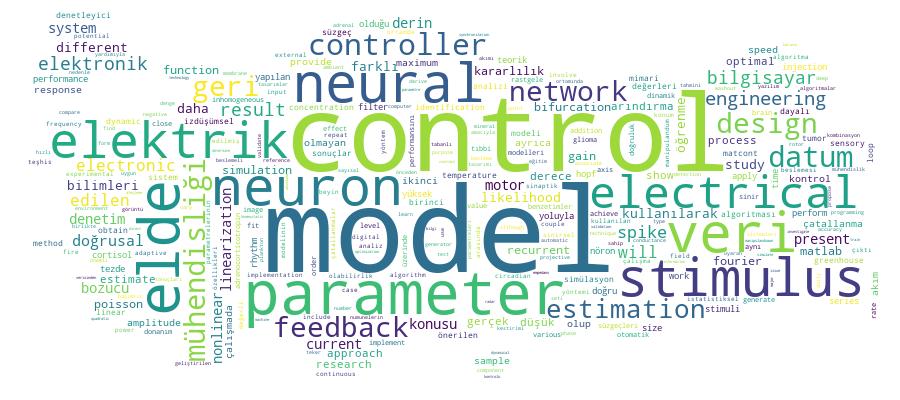
Competency Cloud
15 results
Scholarly Output Search Results
Now showing 1 - 10 of 15
Article Automatic Control of Hypothalamus-Pituitary Axis Dynamics(Elsevier Ireland Ltd, 2019) Doruk, R. Ozgur; Mohsin, Ahmed H.Background and Objective: In this study, a presentation is made for the automatic control of the hypothalamus-pituitary-adrenal axis which plays an important role in the immune stress responses and the circadian rhythms of mammalian organisms. Methods: Control approaches are implemented on a novel second order nonlinear system which accepts adrenocorticotropin hormone as an input and models the variation of plasma concentrations of adrenocorticotropin and cortisol respectively. The control methods are based on back-stepping and input-output feedback linearization techniques. The controllers adjust the adrenocorticotropin injection to maintain the daily rhythm of the cortisol concentration. In accordance with the periodicity of biological clock mechanism, we provide a sinusoidally varying cortisol reference to the controllers. Results: Numerical simulations are performed (on MATLAB) to demonstrate the closed loop performance of the controllers. Major concerns in the selection of the control gains are chattering and negative concentration in responses. The simulation results showed that one can successfully find gain levels which do not lead to those issues. However, the gains lie in different ranges for back-stepping and feedback linearization based controllers. Conclusion: The results showed that, both back-stepping and feedback linearization based controllers fulfilled their duty of synchronization of the cortisol concentration to a reference daily periodic rhythm. In addition to that, the risk of negative valued adrenocorticotropin injection can be eliminated by properly choosing the controller gains. (C) 2019 Elsevier B.V. All rights reserved.Article Citation - WoS: 1Citation - Scopus: 1Bozucu Torklar Altında İzdüşümsel Doğru Akım Motoru Kontrolü(Gazi Univ, Fac Engineering Architecture, 2018) Doruk, Reşat Özgür; Zuglam, İsmailBu çalışmada, izdüşümsel doğrusal kareselservo geri beslemesi (P-LQSF) yöntemiyle tasarlanmış bir birdoğru akım (DC) motoru denetim yaklaşımı sunulmaktadır. Tasarlanan denetleyicinin kararlılığı girdidenhale-kararlılıkyaklaşımından yola çıkarak incelenmektedir. İzdüşümsel kontrol yöntemi, tam durumdeğişkeni geri beslemeli bir denetleyicinin özdeğer spektrumunu çıktı geri beslemesi kullanarak yaklaşıkolarak elde etmeyi amaçlar. Tasarlanan denetleyicilerin kararlılık analizi hem teorik hem de sayısalbenzetim yoluyla incelenecektir. Temel doğrusal kararlılığın yanı sıra, bozucu etkilerin kapalı döngüyü birdış girdi olarak etkilemesinden yola çıkarak girdiden-çıktıya-kararlılık kavramından yararlanılması olanaklıolabilmektedir. Sonuç olarak bir bozucu etkiden-hale-kararlılık yaklaşımı ortaya çıkmaktadır. Tasarımlar,elde edilen bu yaklaşımla incelenecektir. Performanslar ise sayısal benzetimler yoluyla görülecektir.Article Neuron Modeling: Estimating the Parameters of a Neuron Model From Neural Spiking Data(Tubitak Scientific & Technological Research Council Turkey, 2018) Doruk, Resat OzgurWe present a modeling study aiming at the estimation of the parameters of a single neuron model from neural spiking data. The model receives a stimulus as input and provides the firing rate of the neuron as output. The neural spiking data will be obtained from point process simulation. The resultant data will be used in parameter estimation based on the inhomogeneous Poisson maximum likelihood method. The model will be stimulated by various forms of stimuli, which are modeled by a Fourier series (FS), exponential functions, and radial basis functions (RBFs). Tabulated results presenting cases with different sample sizes (# of repeated trials), stimulus component sizes (FS and RBF), amplitudes, and frequency ranges (FS) will be presented to validate the approach and provide a means of comparison. The results showed that regardless of the stimulus type, the most effective parameter on the estimation performance appears to be the sample size. In addition, the lowest variance of the estimates is obtained when a Fourier series stimulus is applied in the estimation.Article Minimization of Greenhouse Effects by Optimal Plankton Feeding: A Simulation-Based Study(Springer Science and Business Media B.V., 2025) Doruk, R.O.Global warming and related greenhouse effects possess significant threats to environmental sustainability. This research investigates the possibility of reducing the greenhouse gas levels and associated ambient temperature by manipulating the plankton population in a given forecasting period. To achieve this goal, an optimal control strategy is developed by Pontryagin’s minimum principle, and it is applied to a recently derived nonlinear marine ecosystem model describing the variation of greenhouse gas levels, ambient temperature, and fish interactions. The main goal is to determine an external plankton generation profile that is expected to reduce the greenhouse gas levels and associated ambient temperature to the highest possible extent. The simulation results reveal that the optimal feeding strategy enables one to achieve a reduction of 54% in greenhouse gas levels and 95% in the associated ambient temperature. This research proposes a biological-based novel control approach that can serve as an alternative solution to environmental degradation. © 2025 Elsevier B.V., All rights reserved.Article Fitzhugh-nagumo Modelleri İçin Çatallanma Denetimi(2018) Doruk, Reşat Özgür; Ihnısh, HamzaBu yazıda tekil Fitzhugh-Nagumo (FN) nöron modelleri için teorik bir çatallanma denetim çalışması sunulmaktadır. Değişmekte olan parametreler için çatallanma analizleri MATLAB üzerinde çalışan MATCONT uygulaması ile yapılmıştır. Söz konusu analizde 5 Hopf (H) ve 1 adette Sınır Noktası/Eyer Dü˘gümü (LP) olgusuna rastlanmıştır. Hopf tipi çatallanmalar izdüşümsel denetim ile desteklenmiş arındırma süzgeçleri kullanılarak sağlanmıştır. Arındırma süzgeçleri birinci ve ikinci derece olarak uygulanmıştır. Birinci derece süzgeç ikinci dereceye göre daha avantajlı oldu˘gu anlaşılmıştır. Birinci derece süzgeç hem daha uygulanabilir olmakta hem de daha hızlı davranmaktadır. LP türü çatallanmalar için derecesinden bağımsız olarak arındırma süzgecinden yapılan çıktı geri beslemesi başarılı olamamakta ve bu nedenle birini derece süzgecle beraber birde zar potansiyelinden ek bir geri besleme alınmaktadır. Bunun dezavantajı süzgecin yüksek geçirgen niteli˘ginin bozulmasına neden olmakta ve LP denge noktasının korunmasına olanak vermemektedir. Bu soruna çözüm olması için doğrusal olmayan bir denetleyici tasarımıda gösterilmektedir. Bunun tek dezavantajı orjinal denge noktaları korunamaktadır. Sonuçlar benzetimlerle desteklenmektedir.Article Geri Adımlama Tekni˘gi ile Bir Dc Motorun Konum ve Hız Kontrolü(2018) Doruk, Reşat Özgür; Zuglem, AhmedBu çalışmada Lyapunov’un ikinci kararlılık yönteminin bir özyinelemeli biruyarlaması olan geri adımlama yöntemi fırçalı bir doğru akım motorunun denetimineuygulanmaktadır. Bozucu etkilerden bağımsız bir ortamda hem hız, hem de konumdenetiminde başarı ile uygulanabildiği görülen yöntemin bozucu etkiler altındakiperformasını inceleyebilmek için hem teorik hem de benzetim tabanlı analizler yapılmıştır.Teorik incelemede girdiden-duruma kararlılık kuramından yararlanılmıştır. Bu noktadagirdi bozucu etkileri (bozucu torklar) temsil etmektedir. Yöntem uygulandığında, denetimkazançlarının seçiminde bir alt sınırın var olduğu ve bozucu etkilerden bağışık ortamdaolduğu gibi serbest seçilmesinin uygun olmayabileceği anlaşılmaktadır. Benzetimlerdeise bozucu etkiler rastgele sinyaller olarak modellenmiş olup, denetim kazançlarıyükseltildiğinde bozucu etkilerin baskılanabildiği gözlemlenmektedir. Geri adımlamatekniğinin bozucu etkiler altında kararlılık analizi ile birlikte doğru akım motorunundenetimine uygulanması literatüre önemli bir katkı sunmaktadır.Article Citation - WoS: 8Citation - Scopus: 8Parameter Identification and Speed Control of a Small-Scale BLDC Motor: Experimental Validation and Real-Time PI Control with Low-Pass Filtering(MDPI, 2025) Abouseda, Ayman Ibrahim; Doruk, Resat Ozgur; Amini, AliThis paper presents a structured and experimentally validated approach to the parameter identification, modeling, and real-time speed control of a brushless DC (BLDC) motor. Electrical parameters, including resistance and inductance, were measured through DC and AC testing under controlled conditions, respectively, while mechanical and electromagnetic parameters such as the back electromotive force (EMF) constant and rotor inertia were determined experimentally using an AVL dynamometer. The back EMF was obtained by operating the motor as a generator under varying speeds, and inertia was identified using a deceleration method based on the relationship between angular acceleration and torque. The identified parameters were used to construct a transfer function model of the motor, which was implemented in MATLAB/Simulink R2024b and validated against real-time experimental data using sinusoidal and exponential input signals. The comparison between simulated and measured speed responses showed strong agreement, confirming the accuracy of the model. A proportional-integral (PI) controller was developed and implemented for speed regulation, using a low-cost National Instruments (NI) USB-6009 data acquisition (DAQ) and a Kelly controller. A first-order low-pass filter was integrated into the control loop to suppress high-frequency disturbances and improve transient performance. Experimental tests using a stepwise reference speed profile demonstrated accurate tracking, minimal overshoot, and robust operation. Although the modeling and control techniques applied are well known, the novelty of this work lies in its integration of experimental parameter identification, real-time validation, and practical hardware implementation within a unified and replicable framework. This approach provides a solid foundation for further studies involving more advanced or adaptive control strategies for BLDC motors.Article Fitting a Recurrent Dynamical Neural Network To Neural Spiking Data: Tackling the Sigmoidal Gain Function Issues(Tubitak Scientific & Technological Research Council Turkey, 2019) Doruk, Reşat ÖzgürThis is a continuation of a recent study (Doruk RO, Zhang K. Fitting of dynamic recurrent neural networkmodels to sensory stimulus-response data. J Biol Phys 2018; 44: 449-469), where a continuous time dynamical recurrentneural network is fitted to neural spiking data. In this research, we address the issues arising from the inclusion ofsigmoidal gain function parameters to the estimation algorithm. The neural spiking data will be obtained from the samemodel as that of Doruk and Zhang, but we propose a different model for identification. This will also be a continuoustime recurrent neural network, but with generic sigmoidal gains. The simulation framework and estimation algorithmsare kept similar to that of Doruk and Zhang so that we can have a solid base to compare the results. We evaluatethe estimation performance in two different ways. First, we compare the firing rate responses of the original and theestimated model. We find that responses of both models to the same stimuli are similar. Secondly, we evaluate variationsof the standard deviations of the estimates against a number of samples and stimulus parameters. They show a similarpattern to that of Doruk and Zhang. We thus conclude that our model serves as a reasonable alternative provided thatfiring rate is the response of interest (to any stimulus).Article Citation - WoS: 5Citation - Scopus: 10Control of Hopf Bifurcations in Hodgkin-Huxley Neurons by Automatic Temperature Manipulation(Anka Publisher, 2018) Doruk, Resat OzgurThe purpose of this research is to revisit the bifurcation control problem in Hodgkin-Huxley neurons. As a difference from the classical membrane potential feedback to manipulate the external current injection, we will actuate the temperature of the neural environment to control the bifurcations. In order to achieve this a linear feedback from the membrane potential is established to generate a time varying temperature profile. The considered bifurcating parameter is the external current injection. Upon finishing the controllers, the bifurcation analysis against the changes in external current injection is repeated in order to see the possibility of relapse of any bifurcation phenomena at nearby points. In addition to that, simulations are also provided to show the performances of the controllers.Article Citation - WoS: 6Citation - Scopus: 6Fitting of Dynamic Recurrent Neural Network Models To Sensory Stimulus-Response Data(Springer, 2018) Doruk, R. Ozgur; Zhang, KechenWe present a theoretical study aiming at model fitting for sensory neurons. Conventional neural network training approaches are not applicable to this problem due to lack of continuous data. Although the stimulus can be considered as a smooth time-dependent variable, the associated response will be a set of neural spike timings (roughly the instants of successive action potential peaks) that have no amplitude information. A recurrent neural network model can be fitted to such a stimulus-response data pair by using the maximum likelihood estimation method where the likelihood function is derived from Poisson statistics of neural spiking. The universal approximation feature of the recurrent dynamical neuron network models allows us to describe excitatory-inhibitory characteristics of an actual sensory neural network with any desired number of neurons. The stimulus data are generated by a phased cosine Fourier series having a fixed amplitude and frequency but a randomly shot phase. Various values of amplitude, stimulus component size, and sample size are applied in order to examine the effect of the stimulus to the identification process. Results are presented in tabular and graphical forms at the end of this text. In addition, to demonstrate the success of this research, a study involving the same model, nominal parameters and stimulus structure, and another study that works on different models are compared to that of this research.
