Ertan, Hulusi Bülent

Loading...
Profile Picture
Name Variants
Bülent Ertan H.
Ertan, HB
Ertan,H.B.
Ertan, H. B.
E.,Hulusi Bülent
Ertan, Hulusi Bulent
H.,Ertan
Bulent Ertan H.
ERTAN, HB
H. B. Ertan
H., Ertan
Ertan, H. Bulent
Hulusi Bulent, Ertan
Hulusi Bülent, Ertan
Ertan, Hulusi Bülent
E.,Hulusi Bulent
H.B.Ertan
E., Hulusi Bulent
Ertan H.
E., Hulusi Bülent
Bulent Ertan,H.
Job Title
Profesor Doktor
Email Address
bulent.ertan@atilim.edu.tr
Main Affiliation
Electrical-Electronics Engineering
Status
Website
Scopus Author ID
Turkish CoHE Profile ID
Google Scholar ID
WoS Researcher ID

Sustainable Development Goals

2

ZERO HUNGER
ZERO HUNGER Logo

0

Research Products

11

SUSTAINABLE CITIES AND COMMUNITIES
SUSTAINABLE CITIES AND COMMUNITIES Logo

0

Research Products

14

LIFE BELOW WATER
LIFE BELOW WATER Logo

0

Research Products

6

CLEAN WATER AND SANITATION
CLEAN WATER AND SANITATION Logo

0

Research Products

1

NO POVERTY
NO POVERTY Logo

0

Research Products

5

GENDER EQUALITY
GENDER EQUALITY Logo

0

Research Products

9

INDUSTRY, INNOVATION AND INFRASTRUCTURE
INDUSTRY, INNOVATION AND INFRASTRUCTURE Logo

0

Research Products

16

PEACE, JUSTICE AND STRONG INSTITUTIONS
PEACE, JUSTICE AND STRONG INSTITUTIONS Logo

0

Research Products

17

PARTNERSHIPS FOR THE GOALS
PARTNERSHIPS FOR THE GOALS Logo

0

Research Products

15

LIFE ON LAND
LIFE ON LAND Logo

0

Research Products

10

REDUCED INEQUALITIES
REDUCED INEQUALITIES Logo

0

Research Products

7

AFFORDABLE AND CLEAN ENERGY
AFFORDABLE AND CLEAN ENERGY Logo

15

Research Products

8

DECENT WORK AND ECONOMIC GROWTH
DECENT WORK AND ECONOMIC GROWTH Logo

0

Research Products

4

QUALITY EDUCATION
QUALITY EDUCATION Logo

0

Research Products

12

RESPONSIBLE CONSUMPTION AND PRODUCTION
RESPONSIBLE CONSUMPTION AND PRODUCTION Logo

0

Research Products

3

GOOD HEALTH AND WELL-BEING
GOOD HEALTH AND WELL-BEING Logo

1

Research Products

13

CLIMATE ACTION
CLIMATE ACTION Logo

0

Research Products
This researcher does not have a Scopus ID.
Documents

46

Citations

254

Scholarly Output

29

Articles

3

Views / Downloads

132/794

Supervised MSc Theses

1

Supervised PhD Theses

4

WoS Citation Count

58

Scopus Citation Count

81

WoS h-index

3

Scopus h-index

4

Patents

0

Projects

0

WoS Citations per Publication

2.00

Scopus Citations per Publication

2.79

Open Access Source

2

Supervised Theses

5

Google Analytics Visitor Traffic

JournalCount
EPE 2018 - Proceedings of the 2018 10th International Conference and Expositions on Electrical And Power Engineering -- 10th International Conference and Expositions on Electrical And Power Engineering, EPE 2018 -- 18 October 2018 through 19 October 2018 -- Iasi -- 1434542
2018 7th International Conference on Reliability, Infocom Technologies and Optimization: Trends and Future Directions, ICRITO 2018 -- 7th International Conference on Reliability, Infocom Technologies and Optimization: Trends and Future Directions, ICRITO 2018 -- 29 August 2018 through 31 August 2018 -- Noida -- 1491672
Proceedings - 2017 International Conference on Optimization of Electrical and Electronic Equipment, OPTIM 2017 and 2017 Intl Aegean Conference on Electrical Machines and Power Electronics, ACEMP 2017 -- 2nd International Conference on Optimization of Electrical and Electronic Equipment, OPTIM 2017 and Intl Aegean Conference on Electrical Machines and Power Electronics, ACEMP 2017 -- 25 May 2017 through 27 May 2017 -- Brasov -- 1291452
Proceedings 2019 International Aegean Conference on Electrical Machines and Power Electronics, ACEMP 2019 and 2019 International Conference on Optimization of Electrical and Electronic Equipment, OPTIM 2019 -- 2019 International Aegean Conference on Electrical Machines and Power Electronics, ACEMP 2019 and 2019 International Conference on Optimization of Electrical and Electronic Equipment, OPTIM 2019 -- 27 August 2019 through 29 August 2019 -- Istanbul -- 1580262
Proceedings of the International Conference on Optimisation of Electrical and Electronic Equipment, OPTIM -- 2023 International Aegean Conference on Electrical Machines and Power Electronics and 2023 International Conference on Optimization of Electrical and Electronic Equipment, ACEMP-OPTIM 2023 -- 1 September 2023 through 2 September 2023 -- Istanbul -- 1940652
Current Page: 1 / 4

Scopus Quartile Distribution

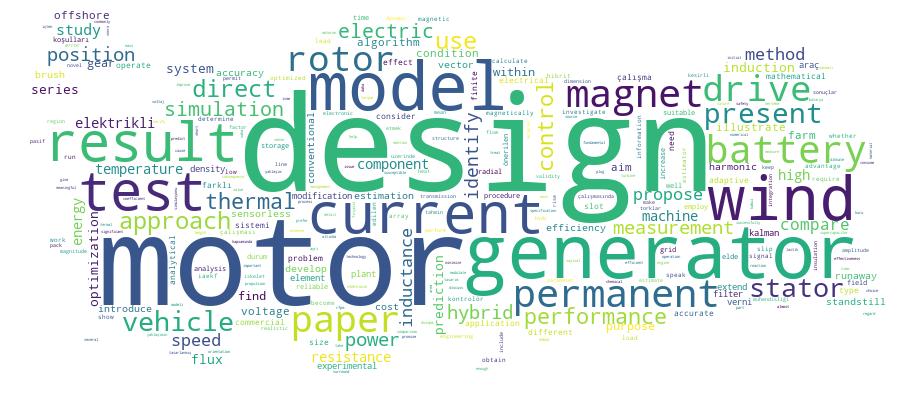
Competency Cloud

GCRIS Competency Cloud

Scholarly Output Search Results

Now showing 1 - 10 of 12
  • Doctoral Thesis
    Elektrikli Otomobillerdeki Li-ion Bataryaların Termal Davranışının Tahmin Edilmesi
    (2024) Berbecı, Bernardo Jose Azuaje; Ertan, Hulusi Bülent
    Elektrikli araçların popülaritesi artmaya devam ettikçe, lityum-iyon bataryalar (LIBs) üzerindeki araştırma çabaları da yoğunlaşmaktadır. LIB'lerdeki termal kaçak (TR), bu yüksek enerji yoğunluklu pillerin güvenli çalışması için henüz üstesinden gelinmemiş ciddi bir endişe kaynağıdır. EV'nin bataryası kritik bir bileşendir ve arızaya en duyarlı bileşen olarak kabul edilir. LIB arızalanırsa, elektrikli araç hareketsiz hale gelir. Aşırı ısınma ve TR, elektrikli aracın çalışma koşullarından, soğutma sistemindeki bir arızadan veya bazı LIB'lerdeki hatalı çalışmalardan kaynaklanabilir. TR'yi tahmin etmek ve yolcuları uyarmak, elektrikli araçlarda TR kaynaklı LIB arızasından kaynaklanan yaralanmaları azaltmak için kritik öneme sahiptir. Bu tez çalışması, voltaj değişimini, ısı üretimini, sıcaklık artışını ve birLIB'nin çalışma koşulları altında (şarj-deşarj) TR'ye yol açan süreci tahmin etmek için güvenilir bir model önermektedir. Böyle bir model, TR'ye karşı daha dirençli batarya paketleri tasarlamak veya bir batarya paketinin tehlikeli koşullar altında nasıl performans göstereceğini değerlendirmek için kullanılabilir. Bu tezde benimsenen yaklaşım, LIB'nin çok katmanlı bir elektrokimyasal-termal modelinin sayısal analizine dayanmaktadır. Bu kapsamda, ilk olarak modelin geliştirilmesi (Newman ve Hatchard'ın modellerinin entegre edilmesi) ele alınmaktadır. Bu sayısal modelden doğru sonuçlar elde etmek için bir LIB'nin parametrelerinin ayarlanması ve tezdeki yaklaşımın ayrıntıları sunulmuştur. Çeşitli LIB'ler üzerinde deneyler gerçekleştirilmiş ve TR de dahil olmak üzere çeşitli çalışma koşulları altında voltaj ve yüzey sıcaklığı değişimleri ölçülmüştür. Test edilen LIB için voltaj ve sıcaklık ölçümleri, önerilen modelden elde edilen sayısal tahminlerle karşılaştırılmıştır. Önerilen yaklaşımın doğruluğunu kanıtlayan deneysel sonuçlarla mükemmel bir uyum gözlemlenmiştir. Daha sonra, TR başlangıcını tetikleyen koşulları araştırmak ve tanımlamak için önerilen model kullanılarak iki kapsamlı vaka simülasyonu seti gerçekleştirilmiştir. İlk vaka simülasyonu setinde sabit bir çalışma akımı koşulu ve açık hava ortam sıcaklığı varsayılmıştır. İkinci vaka simülasyonu seti, soğutma sistemi arızası durumunda LIB'nin termal tepkisini tahmin etmek için batarya paketinin ortam sıcaklığını da içeren gerçekçi elektrikli araç çalışma koşullarını dikkate almıştır. Bu tezdeki yaklaşım birkaç dakika içinde sonuç verecek şekilde yapılandırılabilir. Tezde ayrıca, geliştirilen yaklaşımın çalışma koşulları sırasında bir TR uyarısı oluşturmak veya bir tehlike meydana gelmeden önce bir LIB'nin çalışma modunu değiştirmek için nasıl kullanılabileceği tartışılmaktadır.
  • Article
    Citation - Scopus: 2
    An Approach for Performance Prediction of Saturated Brushed Permanent Magnet\rdirect Current (dc) Motor From Physical Dimensions
    (Tubitak Scientific & Technological Research Council Turkey, 2022) Asl, Rasul Tarvirdilu; Zeinali, Reza; Ertan, Hulusi Bulent
    An analytical approach for performance prediction of saturated brushed permanent magnet direct current\r(DC) motors is proposed in this paper. In case of a heavy saturation in the stator back core of electrical machines, some\rflux completes its path through the surrounding air, and the conventional equivalent circuit cannot be used anymore.\rThis issue has not been addressed in the literature. The importance of considering the effect of the flux penetrating\rthe surrounding air is shown in this paper using finite element simulations and experimental results, and an analytical\rapproach is proposed to consider this effect on magnet operating point determination and performance prediction of\rsaturated brushed permanent magnet DC motors. An analytical method is also presented to determine the boundary\rradius of the surrounding air for obtaining accurate results in finite element (FE) solutions and analytical calculations.\rAn analytical approach based on Carter’s coefficient is also proposed to calculate the effective length of the magnet when\rthe length of the magnet and rotor length are not the same. The accuracy of the proposed analytical model is illustrated\rusing finite element simulations and experimental results. With this accuracy, this analytical model is very suitable to\rbe used for reliable and quick mathematical design optimization.
  • Conference Object
    Driving Conditions Leading To Thermal Runaway in Li-Ion Battery EV's
    (IEEE, 2024) Ertan, H. Bulent; Azuaje-Berbeci, Bernardo J.
    The adoption of high-energy-density lithium-ion batteries (LIB) as the energy source in electric vehicles (EV) introduces significant safety concerns. Thermal runaway (TR), a self-accelerating rise in battery temperature resulting in catastrophic failure, is a significant safety concern. Cooling system failure within the EV's thermal management system is one of several factors that can trigger TR. Typically, TR is initiated by exceeding a critical temperature threshold under abusive conditions. Understanding the operating conditions that lead to the path of TR is essential for ensuring EV and occupant safety. Recently, a detailed electrochemical-thermal model that incorporates the chemical reactions within the battery until TR is introduced. This paper aims to illustrate how this model can be used to identify the conditions leading to TR under realistic EV driving scenarios. For this purpose, an Advisor/Matlab-based model of a hybrid EV is developed and verified by tests, is used to estimate the current required from the vehicle's battery pack at a given driving condition. This is followed by the prediction of battery thermal response using the mentioned finite-element-analysis-based battery model. Several scenarios are tested in this paper to determine whether TR occurs and to identify the factors contributing to TR. This study aids in comprehending the factors that contribute to TR and the development of preventative measures for battery management system design.
  • Conference Object
    Citation - Scopus: 2
    Predicting Thermal Behavior of Lithium-Ion Batteries for Electric Car Applications
    (Transilvania University of Brasov 1, 2023) Azuaje-Berbeci,B.J.; Ertan,H.B.
    As the popularity of electric vehicles increases, significant research is being performed on lithium-ion batteries (LIB). Safety is a serious issue in the applications using high energy-density LIBs. A phenomenon known as thermal runaway (TR) is the major exothermal process that may cause a LIB's catastrophic failure. It is very important to predict TR conditions in order to prevent an uncontrollable chemical reaction caused by TR. For this purpose, a reliable model is needed. This paper constructs an electrochemical-thermal model, which includes the effects of the chemical reactions during TR, for a commercially available pouch L i F e P O4 (LFP) battery. A detailed analysis of the proposed models is performed and then validated against experimental results. Simulation results showed good agreement with the experimental data. The study presented here helps identify conditions at which TR may occur and provides a guide to the safe design of battery management systems. © 2023 IEEE.
  • Conference Object
    Rotor Resistance Estimation of Induction Motors With a Novel Innovation-Based Adaptive Extended Kalman Filter for Self-Tuning
    (Transilvania University of Brasov 1, 2023) Inan,R.; Bulent Ertan,H.
    In this study a novel estimator is developed to identify the rotor resistance of the induction motor (IM) at standstill for self-tuning. For this purpose, an innovation-based adaptive extended Kalman (IAEKF) filter estimator is designed. IAEKF provides a more dynamic estimation compared to the conventional extended Kalman filter (EKF), as they have a mechanism where the system noise covariance matrix can be updated continuously, unlike conventional EKF. To increase estimation stability and also for position and amplitude information of the motor flux required for the dynamic control methods, stator stationary axis (-αβ) components of stator current and -αβ components of stator flux are estimated with rotor resistance by using the correlation between states and parameters defined as nonlinear inputs. The estimation performance of the proposed IAEKF algorithm is tested both in the simulation and on the real-time IM experimental setup at standstill. Simulation and real-time results show that the estimation achievement of the proposed IAEKF algorithm is quite impressive. © 2023 IEEE.
  • Conference Object
    Citation - Scopus: 2
    Standstill Estimation of Stator Resistance of Induction Motors with Novel Innovation-Based Adaptive Extended Kalman Filter
    (Institute of Electrical and Electronics Engineers Inc., 2021) Inan,R.; Yirtar,M.Z.; Bulent Ertan,H.
    In this study, a method is developed to identify stator resistance of an induction motor (IM) at standstill in the self-tuning. An innovation-based adaptive extended Kalman filter (IAEKF) estimator in which the process noise is dynamically updated with an adaptive mechanism different from the conventional extended Kalman filter (EKF) is designed to estimate stator resistance with αβ- stator stationary axis components of stator current and αβ- components of stator flux of an IM. The reason for estimating the stator flux and stator current together with the stator resistance is to both increase the stability of the proposed estimator algorithm by using the correlation between the parameters and states in the non-linear inputs applied to the estimator and obtain the motor flux information needed by the control system. In the proposed IAEKF algorithm, a stator flux-based IM model is used for prediction purposes. The standstill estimation performance of the proposed novel IAEKF is tested with both sinusoidal and PWM power supplies, The real-time estimation results show the effectiveness and prediction accuracy of the proposed stochastic-based estimator. © 2021 IEEE.
  • Conference Object
    Citation - WoS: 3
    Citation - Scopus: 5
    Designing High Power Density Induction Motors for Electric Propulsion
    (Ieee, 2022) Ertan, H. Bulent; Siddique, M. Salik; Koushan, Salar; Azuaje-Berbeci, Bernardo J.
    Designing high-power-density electric motors for propulsion has become an increasingly important issue in the past few decades. This is not only because electric vehicles are projected to become the main private transportation means in near future, but also because of the ever so important metro and railway transport requirements. Along with these application areas, electric aircraft propulsion is also coming into focus in recent years. Electric motors for traction are required to have high torque density, high efficiency over a wide speed range and are required to be robust. In recent years, permanent magnet (PM) motors became the favorite choice for such applications because of their higher efficiency than other types of motors. Increasing demand for permanent magnets is likely to cause supply problems. Therefore, permanent magnet-free alternative motor types are of much interest. In this paper, the authors present the design of a 125 kW induction motor for railway application. This design has 3-times the power density of a commercial induction motor. The designed motor is manufactured and its test results are used for establishing an accurate finite-element model for the prediction of its performance. This model is used to investigate the effect of magnetic loading choice, slot shape and magnetic material choice on the efficiency of the motor. It is shown that with the same basic dimensions the efficiency of the motor can be increased to 96% which is comparable with a similar size PM motor.
  • Master Thesis
    Tyre Slip Control Methods for Electric Vehicles
    (2021) Javed, Nofal; Ertan, Hulusi Bülent; Alhajdıbo, Moustapha
    Bu araştırmanın amacı, Matlab'ın Simulink'inde bir elektrikli araç modeli oluşturmaktır. Değerlendirmeye alınan araç tipi 4×4 tamamı tek teker çalışan akülü elektrikli araçlardır 1080 kg boş ağırlığa sahip araç, tüm tekerlekler aynı yol koşullarında çalışır. Newton'un hareket yasası, modeli tasarlarkenki temel yaklaşımdır. Çekiş kontrol sistemi (TCS) ile birlikte kilitlenmeyi önleyici fren sistemi (ABS), modelin şemasını oluşturan birincil bakış açısı olarak takip edilen kontrol teknikleridir. Model oluşturulduktan sonra simülasyon sonuçları farklı parametreleri verir, yani uzunlamasına hız, yanal hız, sapma hızı, uzunlamasına ivme, yanal ivme, sapma ivme, elektrikli bir aracın tekerleklerine etki eden farklı türden kuvvetler vb. Araştırmanın amacı, elektrikli aracın slip değerini (senkronize hız ve rotor hızının arasındaki fark) bulmaktır. Takip ettiğim lastik modeli Pacejka lastik modelidir, bir diğer deyişle sihirli lastik formülü. Slip, farklı direksiyon değerleri uygulayarak farklı sonuçlar verir, direksiyon açısı değerleri -30º ila + 30º arasında alınır. Slip de farklı yol koşullarına, örneğin ıslak, kuru, karlı veya buzlu olmasına bağlı olarak değişir. Önerilen modelde kuru yol koşulları dikkate alınmıştır. Slip elde edildikten sonra üç farklı kontrolör yaklaşımı ayrı ayrı sağlanmıştır. Önerilen kontrolör teknikleri orantılı-integral-türev kontrolör (PID), kayan mod kontrolörü (SMC) ve bulanık mantık kontrolörüdür (FLC). farklı yol koşulları (yani kuru asfalt, ıslak asfalt, kar ve buz) dikkate alınır. Kayma aralığı her zaman 0 ile 1 arasındadır. Üç tip kontrolör de geri besleme kontrolörleridir, bu da elde edilen çıktının elde edilen hatayı en aza indirmek için kontrolöre girdi olarak geri verileceği anlamına gelir. Kontrolörler, yani PID, SMC ve FLC uygulandığında, üç ayrı kontrolörün tümünün sonuçları elde edilir ve ardından karşılaştırmalar, her bir kontrolörden tek tek gerçekleştirilir. Önerilen elektrikli araç üzerinde gerçekleştirilen sonuçlar, FLC'nin üç kontrolör tekniği arasında en iyi sonucu verdiği yönündedir.
  • Article
    Citation - WoS: 28
    Citation - Scopus: 30
    A Model for the Prediction of Thermal Runaway in Lithium-Ion Batteries
    (Elsevier, 2024) Azuaje-Berbeci, Bernardo J.; Ertan, H. Bulent
    The increasing popularity of electric vehicles is driving research into lithium -ion batteries (LIBs). Thermal runaway (TR) in LIBs is a serious concern for the safe operation of these high-energy-density batteries that is yet to be overcome. A reliable model is needed to predict voltage variation, heat generation, temperature rise, and the process leading to TR of a LIB battery under its operating conditions (charging-discharging). Such a model can be used to design battery packs more resilient to thermal runaway or assess how a battery pack would perform under hazardous conditions. Furthermore, it can be used for generating a warning signal if there is a possibility of the battery going towards TR. This paper presents an approach to solving this problem, which is not currently well addressed in the literature. The approach adopted in this paper is based on a numerical analysis of a multilayered electrochemical-thermal model of LIB. Tuning the parameters of a LIB for accurate results from this numerical model is presented, as well as the details of the approach in the paper. Experiments are performed under several LIBs, and their voltage and surface temperature variations are measured under various operating conditions, including thermal runaway. The results of the experiments are compared with the predictions of the numerical simulations. An excellent agreement is observed with the experimental results, proving the accuracy of the proposed approach. This approach can be configured to give results in a few minutes. The paper also discusses how the developed approach can be used to create a TR warning during operating conditions or to change the mode of operation of a LIB before a hazard occurs.
  • Doctoral Thesis
    Hev Araçlar için Ortalama Değer Yaklaşımıyla İçten Yanmalı Motor Modellenmesi Bir Durum Çalışması: Hbo Motoru
    (2020) Çakmak, Nevzat; Bayka, Ahmet Demir; Ertan, Hulusi Bülent
    Bu tez çalışmasında, konvansiyonel araçların hibrit elektrikli araca çevrilmesi için iki durum çalışması incelenmiştir. Birinci durum çalışmasında, seri hibrit mimarisinin kullanıldığı ve içten yanmalı motorun menzil genişletici veya araç şarj modülünün bir parçası olarak çalıştığı varsayımı kabul edilmiştir. İkinci durum çalışmasında ise paralel hibrit mimarisinin kullanıldığı ve içten yanmalı motorun arka tekerlekler üzerine yerleştirilmiş fırçasız DC motorlar ile desteklendiği varsayımı kabul edilmiştir. Durum çalışmalarını örneklemek için yeni tasarım tek silindirli HBO motoru ve tasarlanıp üretilen fırçasız DC motor kullanılmıştır. Her iki durum çalışmasında da, alt sistemlerin kesin/doğru matematiksel modellerine ihtiyaç vardır. Bu yüzden içten yanmalı motorun modellenmesi için ortalama değer motor modelleme yaklaşımı kullanılmıştır. Ve örnekleme amacıyla HBO motorunun bazı alt sistemleri bu yaklaşım ile modellenmiş ve test edilmiştir. Ayrıca, hava akşını tespit edebilen özgün bir yakıt enjeksiyon sistemi/kiti tasarlanmış ve motor üzerine monte edilmiştir. Böylelikle karbüratörlü yakıt sistemi elektronik tek noktalı enjeksiyon sistemine çevrilmiş ve motor testleri esnasında kullanılmıştır. Son kısımda hibrit araç mimarileri, çekiş motorları ve onların matematiksel modellerinin tanıtılmasının ardından ikinci durum çalışması için paralel hibrit mimarisi özel yapım bir fırçasız DC motor ile uygulanmıştır. Motor tasarlanmış, üretilmiş ve Fiat Doblo aracın arka tekerlekleri (fren kampanası) üzerine monte edilmiştir ve montajlı hali ile dinamometre üzerinde test edilmiştir. HBO tasarımcısının isminin baş harfllerini temsil etmektedir, Hasan Basri Özdamar