
Khan, Muhammad Umer
Loading...
Profile URL
Name Variants
Khan, Muhammad Umer
K.,Muhammad Umer
Muhammad Umer, Khan
Khan,Muhammad Umer
M.U.Khan
M., Khan
M.,Khan
Khan U.
Khan M.
Khan,M.U.
M. U. Khan
Umer Khan M.
K., Muhammad Umer
Muhammad Umer Khan
Khan, Umer
Khan, Muhammed Umer
Khan, M. U.
Khan, M.U
K.,Muhammad Umer
Muhammad Umer, Khan
Khan,Muhammad Umer
M.U.Khan
M., Khan
M.,Khan
Khan U.
Khan M.
Khan,M.U.
M. U. Khan
Umer Khan M.
K., Muhammad Umer
Muhammad Umer Khan
Khan, Umer
Khan, Muhammed Umer
Khan, M. U.
Khan, M.U
Job Title
Yardımcı Doçent
Email Address
umer.khan@atilim.edu.tr
Main Affiliation
Mechatronics Engineering
Status
Website
ORCID ID
Scopus Author ID
Turkish CoHE Profile ID
Google Scholar ID
WoS Researcher ID
Sustainable Development Goals
 1
1NO POVERTY
0
Research Products
 2
2ZERO HUNGER
4
Research Products
 3
3GOOD HEALTH AND WELL-BEING
1
Research Products
 4
4QUALITY EDUCATION
0
Research Products
 5
5GENDER EQUALITY
0
Research Products
 6
6CLEAN WATER AND SANITATION
0
Research Products
 7
7AFFORDABLE AND CLEAN ENERGY
4
Research Products
 8
8DECENT WORK AND ECONOMIC GROWTH
0
Research Products
 9
9INDUSTRY, INNOVATION AND INFRASTRUCTURE
1
Research Products
 10
10REDUCED INEQUALITIES
0
Research Products
 11
11SUSTAINABLE CITIES AND COMMUNITIES
0
Research Products
 12
12RESPONSIBLE CONSUMPTION AND PRODUCTION
0
Research Products
 13
13CLIMATE ACTION
0
Research Products
 14
14LIFE BELOW WATER
0
Research Products
 15
15LIFE ON LAND
0
Research Products
 16
16PEACE, JUSTICE AND STRONG INSTITUTIONS
0
Research Products
 17
17PARTNERSHIPS FOR THE GOALS
1
Research Products

Documents
38
Citations
641
h-index
13

Documents
30
Citations
476

Scholarly Output
38
Articles
15
Views / Downloads
185/1662
Supervised MSc Theses
11
Supervised PhD Theses
0
WoS Citation Count
253
Scopus Citation Count
374
Patents
0
Projects
0
WoS Citations per Publication
6.66
Scopus Citations per Publication
9.84
Open Access Source
10
Supervised Theses
11
| Journal | Count |
|---|---|
| Applied Sciences | 2 |
| 2018 14th IEEE/ASME International Conference on Mechatronic and Embedded Systems and Applications, MESA 2018 -- 14th IEEE/ASME International Conference on Mechatronic and Embedded Systems and Applications, MESA 2018 -- 2 July 2018 through 4 July 2018 -- Oulu -- 139111 | 2 |
| 2019 2nd International Conference on Communication, Computing and Digital Systems, C-CODE 2019 -- 2nd International Conference on Communication, Computing and Digital Systems, C-CODE 2019 -- 6 March 2019 through 7 March 2019 -- Islamabad -- 146997 | 1 |
| 2020 7th International Conference on Electrical and Electronics Engineering, ICEEE 2020 -- 7th International Conference on Electrical and Electronics Engineering, ICEEE 2020 -- 14 April 2020 through 16 April 2020 -- Antalya -- 160450 | 1 |
| 2021 IEEE International Conference on Robotics, Automation and Artificial Intelligence, RAAI 2021 -- 2021 IEEE International Conference on Robotics, Automation and Artificial Intelligence, RAAI 2021 -- 21 April 2021 through 23 April 2021 -- Virtual, Online -- 176794 | 1 |
Current Page: 1 / 5
Scopus Quartile Distribution
Competency Cloud
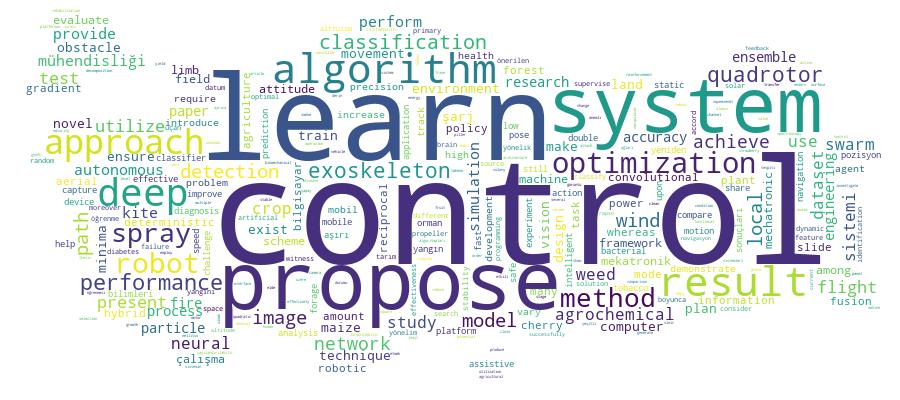
24 results
Scholarly Output Search Results
Now showing 1 - 10 of 24
Article Citation - WoS: 1Citation - Scopus: 3Investigation of Harmonic Losses To Reduce Rotor Copper Loss in Induction Motors for Traction Applications(Multidisciplinary Digital Publishing Institute (MDPI), 2025) Siddique, M.S.; Ertan, H.B.; Alam, M.S.; Khan, M.U.The focus of this paper is to seek means of increasing induction motor efficiency to a comparable level to a permanent magnet motor. Harmonic and high-frequency losses increase the rotor core and copper loss, often limiting IM efficiency. The research in this study focuses on reducing rotor core and copper losses for this purpose. An accurate finite element model of a prototype motor is developed. The accuracy of this model in predicting the performance and losses of the prototype motor is verified with experiments over a 32 Hz–125 Hz supply frequency range. The verified model of the motor is used to identify the causes of the rotor core and copper losses of the motor. It is found that the air gap flux density of the motor contains many harmonics, and the slot harmonics are dominant. The distribution of the core loss and the copper loss is investigated on the rotor side. It is discovered that up to 35% of the rotor copper losses and 90% rotor core losses occur in the regions up to 4 mm from the airgap where the harmonics penetrate. To reduce these losses, one solution is to reduce the magnitude of the air gap flux density harmonics. For this purpose, placing a sleeve to cover the slot openings is investigated. The FEA indicates that this measure reduces the harmonic magnitudes and reduces the core and bar losses. However, its effect on efficiency is observed to be limited. This is attributed to the penetration depth of flux density harmonics inside the rotor conductors. To remedy this problem, several FEA-based modifications to the rotor slot shape are investigated to place rotor bars deeper than the harmonic penetration. It is found that placing the bars further away from the rotor surface is very effective. Using a 1 mm sleeve across the stator’s open slots combined with a rotor tapered slot lip positions the bars slightly deeper than the major harmonic penetration depth, making it the optimal solution. This reduces the bar loss by 70% and increases the motor efficiency by 1%. Similar loss reduction is observed over the tested supply frequency range. © 2025 by the authors.Article Citation - WoS: 32Citation - Scopus: 39A Computationally Efficient Method for Hybrid Eeg-Fnirs Bci Based on the Pearson Correlation(Hindawi Ltd, 2020) Hasan, Mustafa A. H.; Khan, Muhammad U.; Mishra, DeeptiA hybrid brain computer interface (BCI) system considered here is a combination of electroencephalography (EEG) and functional near-infrared spectroscopy (fNIRS). EEG-fNIRS signals are simultaneously recorded to achieve high motor imagery task classification. This integration helps to achieve better system performance, but at the cost of an increase in system complexity and computational time. In hybrid BCI studies, channel selection is recognized as the key element that directly affects the system's performance. In this paper, we propose a novel channel selection approach using the Pearson product-moment correlation coefficient, where only highly correlated channels are selected from each hemisphere. Then, four different statistical features are extracted, and their different combinations are used for the classification through KNN and Tree classifiers. As far as we know, there is no report available that explored the Pearson product-moment correlation coefficient for hybrid EEG-fNIRS BCI channel selection. The results demonstrate that our hybrid system significantly reduces computational burden while achieving a classification accuracy with high reliability comparable to the existing literature.Article Citation - WoS: 21Citation - Scopus: 36Deep Learning-Based Computer-Aided Diagnosis (cad): Applications for Medical Image Datasets(Mdpi, 2022) Kadhim, Yezi Ali; Khan, Muhammad Umer; Mishra, AlokComputer-aided diagnosis (CAD) has proved to be an effective and accurate method for diagnostic prediction over the years. This article focuses on the development of an automated CAD system with the intent to perform diagnosis as accurately as possible. Deep learning methods have been able to produce impressive results on medical image datasets. This study employs deep learning methods in conjunction with meta-heuristic algorithms and supervised machine-learning algorithms to perform an accurate diagnosis. Pre-trained convolutional neural networks (CNNs) or auto-encoder are used for feature extraction, whereas feature selection is performed using an ant colony optimization (ACO) algorithm. Ant colony optimization helps to search for the best optimal features while reducing the amount of data. Lastly, diagnosis prediction (classification) is achieved using learnable classifiers. The novel framework for the extraction and selection of features is based on deep learning, auto-encoder, and ACO. The performance of the proposed approach is evaluated using two medical image datasets: chest X-ray (CXR) and magnetic resonance imaging (MRI) for the prediction of the existence of COVID-19 and brain tumors. Accuracy is used as the main measure to compare the performance of the proposed approach with existing state-of-the-art methods. The proposed system achieves an average accuracy of 99.61% and 99.18%, outperforming all other methods in diagnosing the presence of COVID-19 and brain tumors, respectively. Based on the achieved results, it can be claimed that physicians or radiologists can confidently utilize the proposed approach for diagnosing COVID-19 patients and patients with specific brain tumors.Conference Object Citation - Scopus: 4Convolution Neural Network (cnn) Based Automatic Sorting of Cherries(Institute of Electrical and Electronics Engineers Inc., 2021) Park,H.; Khan,M.U.Cherries are spring fruits enriched with nutrients, and are easily available in food markets around the world. Due to their excess demand, many enterprises solely focused on their processing. Cherries are especially susceptible to pathological-, physiological-diseases and structural degradation due to their soft outer skin. The post-harvest life of the fruit is limited by various characteristics. The agricultural industry has also been at the forefront to get benefits from the advanced machine learning tools. This study presents an image processing-based system for sorting cherries using the convolutional neural network (CNN). For this study, Prunus avium L cherries of export quality, available in Turkey, tagged as ‘0900 Ziraat’, are used. Surprisingly, there exists no dataset for these cherries; hence, we developed our dataset. Through the proposed approach based upon U-Net, the binary classification accuracy of 99% is achieved. Clear identification is demonstrated by the test results of varying mixture ratios of good and bad cherries. It can therefore be said that for cherry sorting and grading, U-Net can be applied as a reliable and promising machine learning tool. ©2021 IEEEMaster Thesis Derin Öğrenme ile Orman Yangını Tespiti(2024) Özel, Berk; Khan, Muhammad UmerFire detection systems are critical for safeguarding lives and minimizing property damage. One of the key areas where such systems are vital are forest fires. In recent years, there have been several record-breaking forest fires in terms of size, duration, and destruction. Traditional methods of fire detection, such as smoke or heat sensors, have their limitations, leading to the emergence of innovative approaches based on advanced technologies. This thesis examines the application of Batch-Instance Normalization combined with ResNet, a deep learning model for wildfire detection. The study compares the performance of Batch-Instance Normalization with other normalization approaches. In this study, a forest fire dataset is used which is taken from the Kaggle for training the model. The Dataset includes 4609 images, 2120 Fire and 2499 Non-Fire images. The ResNet model is tested with eight different optimizers and trained with the one that gives the best results. The experiments evaluate the impact of normalization techniques and optimizers on the accuracy of wildfire detection. The results show that Batch-Instance Normalization with single exponential smoothing significantly improves the accuracy of the model. It attains F1-score of 96.14%, accuracy of 96.56%, and precision of 99.49%. A minimum 1%, accuracy difference, %0.6 F1 score difference, %1.05 precision difference were obtained from other normalization methods. Combining the capabilities of deep learning with the innovative Batch-Instance Normalization has demonstrated a promising and effective solution for wildfire detection.Conference Object Citation - Scopus: 10Biomechanical Design and Control of Lower Limb Exoskeleton for Sit-To and Stand-To Movements(Institute of Electrical and Electronics Engineers Inc., 2018) Qureshi,M.H.; Masood,Z.; Rehman,L.; Owais,M.; Khan,M.U.In this paper, we present design and development phase of lower limb robotic exoskeleton that can assist paralyzed individuals. Motion of the human wearing exoskeleton is introduced by actuators. Both exoskeleton legs are attached to the supporting frame by passive universal joints. The exoskeleton provides 3 DOFs per limb of which two joints are active and one passive. The control actions i.e., sit-to-stand and stand-to-sit movements are triggered using Double Pole Double Throw (DPDT) toggle switch. The control scheme is implement using Switch control method and the feedback is provided by means of current measurement. This assistive device can be utilized for the disabled persons. The simulation results are provided that evaluates the performance of the control actions on exoskeleton. © 2018 IEEE.Conference Object Citation - Scopus: 9Attitude Control of Quad-Copter Using Deterministic Policy Gradient Algorithms (dpga)(Institute of Electrical and Electronics Engineers Inc., 2019) Ghouri,U.H.; Zafar,M.U.; Bari,S.; Khan,H.; Khan,M.U.In aerial robotics, intelligent control has been a buzz for the past few years. Extensive research efforts can be witnessed to produce control algorithms for stable flight operation of aerial robots using machine learning. Supervised learning has the tendency but training an agent using supervised learning can be a tedious task. Moreover, the data gathering could be expensive and always prone to inaccuracies due to parametric variations and system dynamics. An alternative approach is to ensure the stability of the aerial robots with the help of Deep Re-inforcement Learning (DRL). This paper deals with the intelligent control of quad-copter using deterministic policy gradient algorithms. In this research, state of the art Deep Deterministic Policy Gradient (DDPG) and Distributed Distributional Deep Deterministic Policy Gradient (D4PG) algorithms are employed for attitude control of quad-copter. An open source simulation environment GymFC is used for training of quad-copter. The results for comparative analysis of DDPG D4PG algorithms are also presented, highlighting the attitude control performance. © 2019 IEEE.Article Utilization of Robotics for Solar Panel Cleaning and Maintenance(2019) Park, Haon; Öztürk, Abdullah; Park, Hajun; Khan, Muhammed UmerIn this study, a portable and low-cost solar panel cleaning robot with a functioning to blowaway dust was designed and built to incur labor costs.The robot is service effective, environmentallyfriendly, energy independent, self-automated, long durable, and cost-effective. After cleaning operation,output voltage and current in solar panel increased by 8.02% and 18.78%, respectively. Moreover, theimage processing with the photos taken by a camera fixed on the robot made classification according tocolor changes in the solar panel. Therefore, it can be concluded that the automated and multifunctionalrobot may facilitate the solar panel surface cleaning and be an applicable maintenance method throughremote monitoring of the surface conditions.Article Citation - WoS: 25Citation - Scopus: 33Hybrid Eeg-Fnirs Bci Fusion Using Multi-Resolution Singular Value Decomposition (msvd)(Frontiers Media Sa, 2020) Khan, Muhammad Umer; Hasan, Mustafa A. H.Brain-computer interface (BCI) multi-modal fusion has the potential to generate multiple commands in a highly reliable manner by alleviating the drawbacks associated with single modality. In the present work, a hybrid EEG-fNIRS BCI system-achieved through a fusion of concurrently recorded electroencephalography (EEG) and functional near-infrared spectroscopy (fNIRS) signals-is used to overcome the limitations of uni-modality and to achieve higher tasks classification. Although the hybrid approach enhances the performance of the system, the improvements are still modest due to the lack of availability of computational approaches to fuse the two modalities. To overcome this, a novel approach is proposed using Multi-resolution singular value decomposition (MSVD) to achieve system- and feature-based fusion. The two approaches based up different features set are compared using the KNN and Tree classifiers. The results obtained through multiple datasets show that the proposed approach can effectively fuse both modalities with improvement in the classification accuracy.Article Citation - WoS: 26Citation - Scopus: 35Tobset: a New Tobacco Crop and Weeds Image Dataset and Its Utilization for Vision-Based Spraying by Agricultural Robots(Mdpi, 2022) Alam, Muhammad Shahab; Khan, Muhammad Umer; Alam, Mansoor; Tufail, Muhammad; Güneş, Ahmet; Khan, Muhammad Umer; Gunes, Ahmet; Salah, Bashir; Khan, Muhammad Tahir; Khan, Muhammad Umer; Güneş, Ahmet; Mechatronics Engineering; Department of Mechatronics Engineering; Mechatronics Engineering; Department of Mechatronics EngineeringSelective agrochemical spraying is a highly intricate task in precision agriculture. It requires spraying equipment to distinguish between crop (plants) and weeds and perform spray operations in real-time accordingly. The study presented in this paper entails the development of two convolutional neural networks (CNNs)-based vision frameworks, i.e., Faster R-CNN and YOLOv5, for the detection and classification of tobacco crops/weeds in real time. An essential requirement for CNN is to pre-train it well on a large dataset to distinguish crops from weeds, lately the same trained network can be utilized in real fields. We present an open access image dataset (TobSet) of tobacco plants and weeds acquired from local fields at different growth stages and varying lighting conditions. The TobSet comprises 7000 images of tobacco plants and 1000 images of weeds and bare soil, taken manually with digital cameras periodically over two months. Both vision frameworks are trained and then tested using this dataset. The Faster R-CNN-based vision framework manifested supremacy over the YOLOv5-based vision framework in terms of accuracy and robustness, whereas the YOLOv5-based vision framework demonstrated faster inference. Experimental evaluation of the system is performed in tobacco fields via a four-wheeled mobile robot sprayer controlled using a computer equipped with NVIDIA GTX 1650 GPU. The results demonstrate that Faster R-CNN and YOLOv5-based vision systems can analyze plants at 10 and 16 frames per second (fps) with a classification accuracy of 98% and 94%, respectively. Moreover, the precise smart application of pesticides with the proposed system offered a 52% reduction in pesticide usage by spotting the targets only, i.e., tobacco plants.

- «
- 1 (current)
- 2
- 3
- »