
Khan, Muhammad Umer
Loading...
Profile URL
Name Variants
Khan, Muhammad Umer
K.,Muhammad Umer
Muhammad Umer, Khan
Khan,Muhammad Umer
M.U.Khan
M., Khan
M.,Khan
Khan U.
Khan M.
Khan,M.U.
M. U. Khan
Umer Khan M.
K., Muhammad Umer
Muhammad Umer Khan
Khan, Umer
Khan, Muhammed Umer
Khan, M. U.
Khan, M.U
K.,Muhammad Umer
Muhammad Umer, Khan
Khan,Muhammad Umer
M.U.Khan
M., Khan
M.,Khan
Khan U.
Khan M.
Khan,M.U.
M. U. Khan
Umer Khan M.
K., Muhammad Umer
Muhammad Umer Khan
Khan, Umer
Khan, Muhammed Umer
Khan, M. U.
Khan, M.U
Job Title
Yardımcı Doçent
Email Address
umer.khan@atilim.edu.tr
Main Affiliation
Mechatronics Engineering
Status
Website
ORCID ID
Scopus Author ID
Turkish CoHE Profile ID
Google Scholar ID
WoS Researcher ID
Sustainable Development Goals
 1
1NO POVERTY
0
Research Products
 2
2ZERO HUNGER
4
Research Products
 3
3GOOD HEALTH AND WELL-BEING
1
Research Products
 4
4QUALITY EDUCATION
0
Research Products
 5
5GENDER EQUALITY
0
Research Products
 6
6CLEAN WATER AND SANITATION
0
Research Products
 7
7AFFORDABLE AND CLEAN ENERGY
4
Research Products
 8
8DECENT WORK AND ECONOMIC GROWTH
0
Research Products
 9
9INDUSTRY, INNOVATION AND INFRASTRUCTURE
1
Research Products
 10
10REDUCED INEQUALITIES
0
Research Products
 11
11SUSTAINABLE CITIES AND COMMUNITIES
0
Research Products
 12
12RESPONSIBLE CONSUMPTION AND PRODUCTION
0
Research Products
 13
13CLIMATE ACTION
0
Research Products
 14
14LIFE BELOW WATER
0
Research Products
 15
15LIFE ON LAND
0
Research Products
 16
16PEACE, JUSTICE AND STRONG INSTITUTIONS
0
Research Products
 17
17PARTNERSHIPS FOR THE GOALS
1
Research Products

Documents
38
Citations
641
h-index
13

Documents
30
Citations
476

Scholarly Output
38
Articles
15
Views / Downloads
185/1662
Supervised MSc Theses
11
Supervised PhD Theses
0
WoS Citation Count
253
Scopus Citation Count
374
Patents
0
Projects
0
WoS Citations per Publication
6.66
Scopus Citations per Publication
9.84
Open Access Source
10
Supervised Theses
11
| Journal | Count |
|---|---|
| Applied Sciences | 2 |
| 2018 14th IEEE/ASME International Conference on Mechatronic and Embedded Systems and Applications, MESA 2018 -- 14th IEEE/ASME International Conference on Mechatronic and Embedded Systems and Applications, MESA 2018 -- 2 July 2018 through 4 July 2018 -- Oulu -- 139111 | 2 |
| 2019 2nd International Conference on Communication, Computing and Digital Systems, C-CODE 2019 -- 2nd International Conference on Communication, Computing and Digital Systems, C-CODE 2019 -- 6 March 2019 through 7 March 2019 -- Islamabad -- 146997 | 1 |
| 2020 7th International Conference on Electrical and Electronics Engineering, ICEEE 2020 -- 7th International Conference on Electrical and Electronics Engineering, ICEEE 2020 -- 14 April 2020 through 16 April 2020 -- Antalya -- 160450 | 1 |
| 2021 IEEE International Conference on Robotics, Automation and Artificial Intelligence, RAAI 2021 -- 2021 IEEE International Conference on Robotics, Automation and Artificial Intelligence, RAAI 2021 -- 21 April 2021 through 23 April 2021 -- Virtual, Online -- 176794 | 1 |
Current Page: 1 / 5
Scopus Quartile Distribution
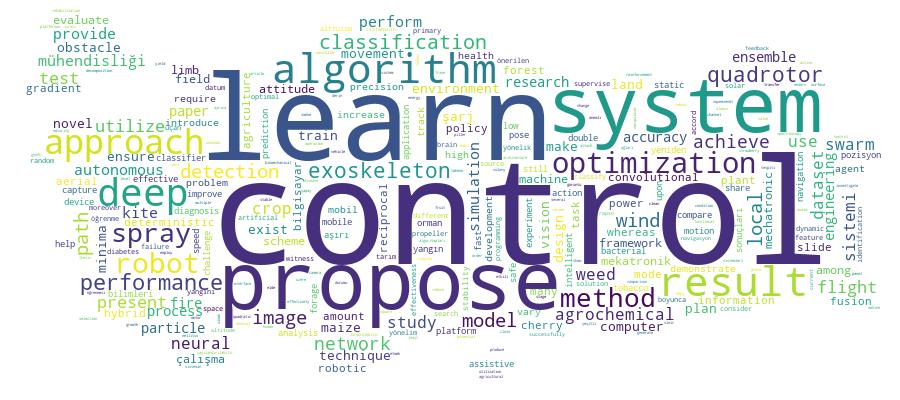
Competency Cloud
24 results
Scholarly Output Search Results
Now showing 1 - 10 of 24
Master Thesis Derin Öğrenme ile Orman Yangını Tespiti(2024) Özel, Berk; Khan, Muhammad UmerFire detection systems are critical for safeguarding lives and minimizing property damage. One of the key areas where such systems are vital are forest fires. In recent years, there have been several record-breaking forest fires in terms of size, duration, and destruction. Traditional methods of fire detection, such as smoke or heat sensors, have their limitations, leading to the emergence of innovative approaches based on advanced technologies. This thesis examines the application of Batch-Instance Normalization combined with ResNet, a deep learning model for wildfire detection. The study compares the performance of Batch-Instance Normalization with other normalization approaches. In this study, a forest fire dataset is used which is taken from the Kaggle for training the model. The Dataset includes 4609 images, 2120 Fire and 2499 Non-Fire images. The ResNet model is tested with eight different optimizers and trained with the one that gives the best results. The experiments evaluate the impact of normalization techniques and optimizers on the accuracy of wildfire detection. The results show that Batch-Instance Normalization with single exponential smoothing significantly improves the accuracy of the model. It attains F1-score of 96.14%, accuracy of 96.56%, and precision of 99.49%. A minimum 1%, accuracy difference, %0.6 F1 score difference, %1.05 precision difference were obtained from other normalization methods. Combining the capabilities of deep learning with the innovative Batch-Instance Normalization has demonstrated a promising and effective solution for wildfire detection.Article Citation - WoS: 5Citation - Scopus: 4Avoiding Contingent Incidents by Quadrotors Due To One or Two Propellers Failure(Public Library Science, 2023) Altinuc, Kemal Orcun; Khan, Muhammad Umer; Iqbal, JamshedWith the increasing impact of drones in our daily lives, safety issues have become a primary concern. In this study, a novel supervisor-based active fault-tolerant (FT) control system is presented for a rotary-wing quadrotor to maintain its pose in 3D space upon losing one or two propellers. Our approach allows the quadrotor to make controlled movements about a primary axis attached to the body-fixed frame. A multi-loop cascaded control architecture is designed to ensure robustness, stability, reference tracking, and safe landing. The altitude control is performed using a proportional-integral-derivative (PID) controller, whereas linear-quadratic-integral (LQI) and model-predictive-control (MPC) have been investigated for reduced attitude control and their performance is compared based on absolute and mean-squared error. The simulation results affirm that the quadrotor remains in a stable region, successfully performs the reference tracking, and ensures a safe landing while counteracting the effects of propeller(s) failures.Master Thesis Bilinmeyen Ortamlarda Robot Sürüleri için Algoritma Planlamada Etkin Bir Yol(2020) Abdı, Mohammed Isam Ismael; Khan, Muhammad UmerBirçok durumda birkaç mobil robot —bağımsız ajan— tek bir robot için gerçekleştirilmesi zor veya imkânsız hedefleri elde etmek amacıyla ekip halinde bir araya gelebilirler. Bu mobil robotlar belli bir görevi yerine getirmek için iş birliği yapabilirler, bu, sürünün büyüklüğüyle tam bir karşılıklı ilişki halindedir. Tek tek her robot sensörlerini kullanarak yerel ortamla karşılıklı olarak etkileşir. Sürü açısından birincil endişe başlangıçtan hedef yere kadar güvenli bir yolun tanımlanması ve izlenmesidir. Literatürde bu hedefin gerçekleştirilmesiyle ilgili Neural Network (Sinir Ağları), Genetic Algorithms (Genetik Algoritmalar), Bacterial Foraging Optimization (Bakteriyel Besin Arama Optimizasyonu), Ant Colony Optimization (Karınca Kolonisi Optimizasyonu), Artificial Potential Field (Yapay Potansiyel Alan), v.b. gibi pek çok algoritma mevcuttur. Bunlar arasında Bacterial Foraging Optimization (BFO) algoritması çalışma ortamında bilinen tüm engelleri göz önüne alarak güvenliği ve hedefin bulunmasını sağlamaktaki etkinliği nedeniyle pek çok bilimcinin dikkatini çekmektedir. Ayrıca, belirlenen yolu keşfeder ve doğru olarak izler. BFO kümeleşme prensiplerini ve doğadaki sosyal davranışlar analojisini kullanan, ilhamını biyolojiden alan doğrudan yaklaşımlı ama güçlü bir optimizasyon yöntemidir. BFO yassı bir yüzey haritası üzerinde engellerin varlığında başlangıçtan hedef noktaya kadar optimal yolu başarıyla araştırır. Ancak bu algoritma, konveks olmayan engellerin işe karışması durumunda yerel asgari şartlara sıkışmak gibi bir zayıflığa sahiptir. Sürünün robotlarından herhangi birinin sıkışıp kalması durumu görevinin tamamının başarısızlığı olarak görülmektedir. Bu araştırma BFO algoritmasının hem konveks olan hem de olmayan niteliklerdeki engellerden başarıyla kaçınılmasını sağlayan iyileştirilmiş bir versiyonunu önermektedir. Önerilen algoritma engele zıt yöndeki belli bir mesafeyi kapsayarak robotun yerel asgari değerlerden kurtulmasına yardım eder. Sert bir açıyla karşılaşıldığında algoritma güvenli bir yol oluşturmak için görsel engeller oluşturmaya başlar. Daha sonra bu bilgi diğer robotlara aktarılarak onların da yerel minimumlardan kaçınmaları sağlanır. Önerilen algoritmanın etkinliğinin test edilmesi için mevcut BFO algoritmasıyla bir karşılaştırma yapılmıştır. Her iki algoritmanın performansı bilinmeyen dinamik ve statik ortamlarda test edilmiştir. Sonuçlara göre, önerilen algoritmanın yerel minimumlardan başarıyla kurtulduğu ve BFO'nun sıkışıp kaldığı gözlenmiştir.Article Citation - WoS: 21Citation - Scopus: 36Deep Learning-Based Computer-Aided Diagnosis (cad): Applications for Medical Image Datasets(Mdpi, 2022) Kadhim, Yezi Ali; Khan, Muhammad Umer; Mishra, AlokComputer-aided diagnosis (CAD) has proved to be an effective and accurate method for diagnostic prediction over the years. This article focuses on the development of an automated CAD system with the intent to perform diagnosis as accurately as possible. Deep learning methods have been able to produce impressive results on medical image datasets. This study employs deep learning methods in conjunction with meta-heuristic algorithms and supervised machine-learning algorithms to perform an accurate diagnosis. Pre-trained convolutional neural networks (CNNs) or auto-encoder are used for feature extraction, whereas feature selection is performed using an ant colony optimization (ACO) algorithm. Ant colony optimization helps to search for the best optimal features while reducing the amount of data. Lastly, diagnosis prediction (classification) is achieved using learnable classifiers. The novel framework for the extraction and selection of features is based on deep learning, auto-encoder, and ACO. The performance of the proposed approach is evaluated using two medical image datasets: chest X-ray (CXR) and magnetic resonance imaging (MRI) for the prediction of the existence of COVID-19 and brain tumors. Accuracy is used as the main measure to compare the performance of the proposed approach with existing state-of-the-art methods. The proposed system achieves an average accuracy of 99.61% and 99.18%, outperforming all other methods in diagnosing the presence of COVID-19 and brain tumors, respectively. Based on the achieved results, it can be claimed that physicians or radiologists can confidently utilize the proposed approach for diagnosing COVID-19 patients and patients with specific brain tumors.Article Citation - WoS: 2Citation - Scopus: 1Autonomous Landing of a Quadrotor on a Moving Platform Using Motion Capture System(Springer, 2024) Qassab, Ayman; Khan, Muhammad Umer; Irfanoglu, BulentThis paper investigates the challenging problem of the autonomous landing of a quadrotor on a moving platform in a non-cooperative environment. The limited sensing ability of quadrotors often hampers their utilization for autonomous landing, especially in GPS-denied areas. The performance of motion capture systems (MCSs) in many application areas is the motivation to utilize them for the autonomous take-off and landing of the quadrotor in this research. An autonomous closed-loop vision-based navigation, tracking, and control system is proposed for quadrotors to perform landing based upon Model Predictive Control (MPC) by utilizing multi-objective functions. The entire process is posed as a constrained tracking problem to minimize energy consumption and ensure smooth maneuvers. The proposed approach is fully autonomous from take-off to landing; whereas, the movements of the landing platform are pre-defined but still unknown to the quadrotor. The landing performance of the quadrotor is tested and evaluated for three different movement patterns: static, square-shaped, and circular-shaped. Through experimental results, the pose error between the quadrotor and the platform is measured and found to be less than 30 cm. Introducing a holistic vision system for quadrotor navigation, tracking, and landing on stationary/moving platforms. Proposing an energy-efficient, smooth, and stable MPC controller validated by Lyapunov analysis. Validating the adept tracking and safe landings of the quadrotor on stationary/moving platforms through three diverse experiments.Master Thesis Derin öğrenme ile orman yangını tespiti(2024) Özel, Berk; Khan, Muhammad UmerYangın algılama sistemleri can güvenliği ve maddi hasarın en aza indirilmesi açısından kritik öneme sahiptir. Bu tür sistemlerin hayati önem taşıdığı alanlardan biri de orman yangınlarıdır. Son yıllarda büyüklük, süre ve tahribat açısından rekor sayıda orman yangını yaşandı. Duman veya ısı sensörleri gibi geleneksel yangın algılama yöntemlerinin sınırlamaları vardır ve bu da ileri teknolojilere dayalı yenilikçi yaklaşımların ortaya çıkmasına neden olur. Bu tez, orman yangını tespiti için bir derin öğrenme modeli olan ResNet ile birlikte Batch-Instance Normalizasyonunun uygulanmasını incelemektedir. Çalışma, Batch-Instance Normalizasyonunun performansını diğer normalleştirme yaklaşımlarıyla karşılaştırmaktadır. Bu çalışmada modelin eğitimi için orman yangını veri seti kullanılmıştır. Bu veri seti 4609 görsel içermektedir. Bu görseller 2120 Yangın, 2499 yangın içermeyen görselden oluşmaktadır. ResNet modeli sekiz farklı optimize edici ile test edilmiş ve en iyi sonuçları veren ile eğitilmiştir. Deneyler, normalizasyon tekniklerinin ve optimize edicilerin yangın tespitinin doğruluğu üzerindeki etkisini değerlendirmektedir. Sonuçlar, tek üstel düzeltmeyle Batch-Instance Normalizasyonunun modelin doğruluğunu önemli ölçüde artırdığını göstermektedir. Deneyde model, 96.14% F1 skoruna, 96.56% doğruluğa ve 99.49% kesinlik değerlerine ulaşmıştır. Diğer yaklaşımlardan minimum %1 doğruluk farkı, %0,6 F1 skor farkı, %1,05 kesinlik farkı elde edilmiştir. Derin öğrenmenin yeteneklerini Batch-Instance Normalizasyonunuyla birleştirmek, orman yangını tespiti için umut verici ve etkili bir çözüm ortaya koydu.Article Citation - WoS: 25Citation - Scopus: 33Hybrid Eeg-Fnirs Bci Fusion Using Multi-Resolution Singular Value Decomposition (msvd)(Frontiers Media Sa, 2020) Khan, Muhammad Umer; Hasan, Mustafa A. H.Brain-computer interface (BCI) multi-modal fusion has the potential to generate multiple commands in a highly reliable manner by alleviating the drawbacks associated with single modality. In the present work, a hybrid EEG-fNIRS BCI system-achieved through a fusion of concurrently recorded electroencephalography (EEG) and functional near-infrared spectroscopy (fNIRS) signals-is used to overcome the limitations of uni-modality and to achieve higher tasks classification. Although the hybrid approach enhances the performance of the system, the improvements are still modest due to the lack of availability of computational approaches to fuse the two modalities. To overcome this, a novel approach is proposed using Multi-resolution singular value decomposition (MSVD) to achieve system- and feature-based fusion. The two approaches based up different features set are compared using the KNN and Tree classifiers. The results obtained through multiple datasets show that the proposed approach can effectively fuse both modalities with improvement in the classification accuracy.Master Thesis Optı-track Kameraları Kullanarak Birden Fazla Temsilci için Yerelleştirme ve Yol Planlaması(2021) Al-qassab, Ayman; Khan, Muhammad Umer; Mohammadzadeh, Mohammad Hassan GolFiziksel bir mekandaki nesnelerin veya canlıların hareketlerinin dijital olarak algılanması ve kaydedilmesi işlemi, Opti-Track sistemi gibi hareket yakalama (MoCap) sistemi kullanılarak gerçekleştirilir. Bu çalışmada hareket yakalama sisteminin amacı, hem quadrotor hem de mobil platformun pozlarını sürekli olarak belirlemektir. Konum bilgisi navigasyon sistemi tarafından quadrotor'u hareketli mobil platforma yönlendirmek ve güvenli bir şekilde inmek için kullanılır. İstenen sonuçları iyi bir doğrulukla elde etmek için mobil platformu izlemek için bir Kalman filtresi kullanılır. Ayrıca, mobil platformun gelecekteki konumunu tahmin etmek için başka bir Kalman filtresi kullanılmıştır. Quadrotoru tahmin edilen konuma yönlendirmek için bir model öngörücü kontrolör (MPC) kullanılır. Model öngörücü kontrolü, quadrotor'un istenen yolu izlemesine yardımcı olur. Bu çalışma, hareketli bir mobil platformun gelecekteki konumunu tahmin etmek ve quadrotor'u mobil platforma yönlendirmek için hareket yakalama sisteminin bilgisini ve Kalman filtresini kullanan bir navigasyon sistemi önerdi. Navigasyon sistemi, quadrotor'un kalkışını, seyir yörüngesini ve mobil platforma inişini otonom olarak kontrol eder. Önerilen navigasyon sisteminin performansını ve güvenilirliğini doğrulamak için çeşitli deneyler yapılmıştır. Deneylerin sonuçları, önerilen navigasyon sisteminin istenen sonuçlara ulaşmada etkili olduğunu kanıtladığını göstermektedirArticle Citation - WoS: 26Citation - Scopus: 35Tobset: a New Tobacco Crop and Weeds Image Dataset and Its Utilization for Vision-Based Spraying by Agricultural Robots(Mdpi, 2022) Alam, Muhammad Shahab; Khan, Muhammad Umer; Alam, Mansoor; Tufail, Muhammad; Güneş, Ahmet; Khan, Muhammad Umer; Gunes, Ahmet; Salah, Bashir; Khan, Muhammad Tahir; Khan, Muhammad Umer; Güneş, Ahmet; Mechatronics Engineering; Department of Mechatronics Engineering; Mechatronics Engineering; Department of Mechatronics EngineeringSelective agrochemical spraying is a highly intricate task in precision agriculture. It requires spraying equipment to distinguish between crop (plants) and weeds and perform spray operations in real-time accordingly. The study presented in this paper entails the development of two convolutional neural networks (CNNs)-based vision frameworks, i.e., Faster R-CNN and YOLOv5, for the detection and classification of tobacco crops/weeds in real time. An essential requirement for CNN is to pre-train it well on a large dataset to distinguish crops from weeds, lately the same trained network can be utilized in real fields. We present an open access image dataset (TobSet) of tobacco plants and weeds acquired from local fields at different growth stages and varying lighting conditions. The TobSet comprises 7000 images of tobacco plants and 1000 images of weeds and bare soil, taken manually with digital cameras periodically over two months. Both vision frameworks are trained and then tested using this dataset. The Faster R-CNN-based vision framework manifested supremacy over the YOLOv5-based vision framework in terms of accuracy and robustness, whereas the YOLOv5-based vision framework demonstrated faster inference. Experimental evaluation of the system is performed in tobacco fields via a four-wheeled mobile robot sprayer controlled using a computer equipped with NVIDIA GTX 1650 GPU. The results demonstrate that Faster R-CNN and YOLOv5-based vision systems can analyze plants at 10 and 16 frames per second (fps) with a classification accuracy of 98% and 94%, respectively. Moreover, the precise smart application of pesticides with the proposed system offered a 52% reduction in pesticide usage by spotting the targets only, i.e., tobacco plants.Conference Object Citation - WoS: 3Biomechanical Design and Control of Lower Limb Exoskeleton for Sit-to-Stand and Stand-to-Sit Movements(Ieee, 2018) Qureshi, Muhammad Hamza; Masood, Zeeshan; Rehman, Linta; Owais, Muhammad; Khan, Muhammad UmerIn this paper, we present design and development phase of lower limb robotic exoskeleton that can assist paralyzed individuals. Motion of the human wearing exoskeleton is introduced by actuators. Both exoskeleton legs are attached to the supporting frame by passive universal joints. The exoskeleton provides 3 DOFs per limb of which two joints are active and one passive. The control actions i.e., sit-to-stand and stand-to-sit movements are triggered using Double Pole Double Throw (DPDT) toggle switch. The control scheme is implement using Switch control method and the feedback is provided by means of current measurement. This assistive device can be utilized for the disabled persons. The simulation results are provided that evaluates the performance of the control actions on exoskeleton.

- «
- 1 (current)
- 2
- 3
- »