
Karakaya, Kasım Murat
Loading...

Profile URL
Name Variants
Karakaya, Murat
Karakaya, Kasım Murat
K., Kasim Murat
K.,Kasım Murat
Karakaya,K.M.
Kasim Murat, Karakaya
K., Karakaya
K.,Kasim Murat
Karakaya, Kasim Murat
Kasım Murat, Karakaya
K.M.Karakaya
K.,Karakaya
Karakaya,M.
Karakaya,M.
Karakaya, Kasım Murat
K., Kasim Murat
K.,Kasım Murat
Karakaya,K.M.
Kasim Murat, Karakaya
K., Karakaya
K.,Kasim Murat
Karakaya, Kasim Murat
Kasım Murat, Karakaya
K.M.Karakaya
K.,Karakaya
Karakaya,M.
Karakaya,M.
Job Title
Profesör Doktor
Email Address
murat.karakaya@atilim.edu.tr
Main Affiliation
Computer Engineering
Status
Former Staff
Website
ORCID ID
Scopus Author ID
Turkish CoHE Profile ID
Google Scholar ID
WoS Researcher ID
Sustainable Development Goals
 1
1NO POVERTY
0
Research Products
 2
2ZERO HUNGER
0
Research Products
 3
3GOOD HEALTH AND WELL-BEING
1
Research Products
 4
4QUALITY EDUCATION
0
Research Products
 5
5GENDER EQUALITY
0
Research Products
 6
6CLEAN WATER AND SANITATION
0
Research Products
 7
7AFFORDABLE AND CLEAN ENERGY
1
Research Products
 8
8DECENT WORK AND ECONOMIC GROWTH
0
Research Products
 9
9INDUSTRY, INNOVATION AND INFRASTRUCTURE
0
Research Products
 10
10REDUCED INEQUALITIES
0
Research Products
 11
11SUSTAINABLE CITIES AND COMMUNITIES
4
Research Products
 12
12RESPONSIBLE CONSUMPTION AND PRODUCTION
0
Research Products
 13
13CLIMATE ACTION
0
Research Products
 14
14LIFE BELOW WATER
0
Research Products
 15
15LIFE ON LAND
0
Research Products
 16
16PEACE, JUSTICE AND STRONG INSTITUTIONS
0
Research Products
 17
17PARTNERSHIPS FOR THE GOALS
0
Research Products

This researcher does not have a Scopus ID.

This researcher does not have a WoS ID.

Scholarly Output
44
Articles
20
Views / Downloads
148/417
Supervised MSc Theses
4
Supervised PhD Theses
0
WoS Citation Count
138
Scopus Citation Count
200
Patents
0
Projects
0
WoS Citations per Publication
3.14
Scopus Citations per Publication
4.55
Open Access Source
4
Supervised Theses
4
| Journal | Count |
|---|---|
| UBMK 2018 - 3rd International Conference on Computer Science and Engineering -- 3rd International Conference on Computer Science and Engineering, UBMK 2018 -- 20 September 2018 through 23 September 2018 -- Sarajevo -- 143560 | 4 |
| 2017 IEEE 1st Ukraine Conference on Electrical and Computer Engineering, UKRCON 2017 - Proceedings -- 1st IEEE Ukraine Conference on Electrical and Computer Engineering, UKRCON 2017 -- 29 May 2017 through 2 June 2017 -- Kyiv -- 131763 | 2 |
| Proceedings - 6th International Conference on Computer Science and Engineering, UBMK 2021 -- 6th International Conference on Computer Science and Engineering, UBMK 2021 -- 15 September 2021 through 17 September 2021 -- Ankara -- 176826 | 2 |
| 3rd International Conference on Computer Science and Engineering (UBMK) -- SEP 20-23, 2018 -- Sarajevo, BOSNIA & HERCEG | 2 |
| 1st International Informatics and Software Engineering Conference: Innovative Technologies for Digital Transformation, IISEC 2019 - Proceedings -- 1st International Informatics and Software Engineering Conference, IISEC 2019 -- 6 November 2019 through 7 November 2019 -- Ankara -- 157111 | 2 |
Current Page: 1 / 5
Scopus Quartile Distribution
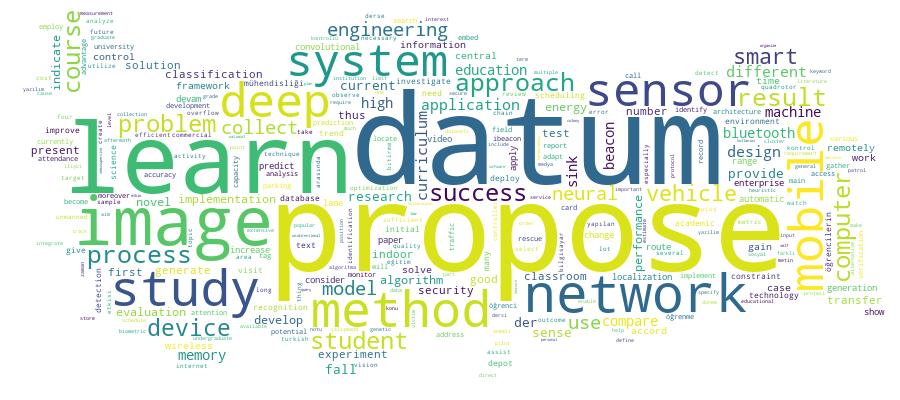
Competency Cloud
20 results
Scholarly Output Search Results
Now showing 1 - 10 of 20
Article Biometric Verification on E-Id Secure Access Devices: a Case Study on Turkish National E-Id Card Secure Access Device Specifications(International Journal of Information Security Science, 2017) Bostan, Atila; Şengül, Gökhan; Karakaya, MuratBiometric verification on e-ID cards requires clear procedures and standards be defined, especially when the access devices are anticipated to be produced commercial companies. Turkish national e-ID card project has reached the dissemination step. Now the commercial companies are expected to produce and market e-ID card access devices which will conduct secure electronic identity verification functions. However, published standards specifying e-ID card-access-device requirements are ambiguous on biometric verification procedures. In this study, we intended to attract scientific interest to the problems identified in the current design of biometric verification on Turkish national e-ID cards and proposed several verification alternatives which enables the production of e-ID card access devices in a commercial-competition environment.Article Citation - Scopus: 1Analyzing Students' Academic Success in Pre-requisite Course Chains: A Case Study in Turkey(Tempus Publications, 2018) Karakaya, Murat; Eryilmaz, Meltem; Ceyhan, Ulas; Computer EngineeringThere are several principles which have been accepted as approaches to successful curriculum development. In spite of the differences in the proposed sequencing of topics, all approaches basically depend on the pre-requisite chains to implement their educational approach in the curriculum development for specifying the order of the subjects. In this research, two prerequisite chains representing two different curriculum development approaches are taken into consideration in a case study. The first research question considered is whether academic success in a follow-up course is positively related to success attained in the pre-requisite course. The second one is whether or not the selected curriculum development approach for deciding the chains has a significant impact on the academic success relationships between a pre-requisite and its follow-up course. To answer these questions, course data of 441 undergraduate students who graduated from the Atilim University between Fall 2001 and Spring 2015 semesters were collected and analyzed. The results indicate that the succes levels gained in a pre-requisite and its follow-up course are corelated. Moreover, different cirriculum development methods can affect this corelation. Thus, cirriculum developers should consider appropriate approaches to improve student success for deciding chaining courses and their contents.Article Citation - WoS: 1Citation - Scopus: 1Msct: an Efficient Data Collection Heuristic for Wireless Sensor Networks With Limited Sensor Memory Capacity(Ksii-kor Soc internet information, 2015) Karakaya, MuratSensors used in Wireless Sensor Networks (WSN) have mostly limited capacity which affects the performance of their applications. One of the data-gathering methods is to use mobile sinks to visit these sensors so that they can save their limited battery energies from forwarding data packages to static sinks. The main disadvantage of employing mobile sinks is the delay of data collection due to relative low speed of mobile sinks. Since sensors have very limited memory capacities, whenever a mobile sink is too late to visit a sensor, that sensor's memory would be full, which is called a 'memory overflow', and thus, needs to be purged, which causes loss of collected data. In this work, a method is proposed to generate mobile sink tours, such that the number of overflows and the amount of lost data are minimized. Moreover, the proposed method does not need either the sensor locations or sensor memory status in advance. Hence, the overhead stemmed from the information exchange of these requirements are avoided. The proposed method is compared with a previously published heuristic. The simulation experiment results show the success of the proposed method over the rival heuristic with respect to the considered metrics under various parameters.Article Citation - WoS: 1Citation - Scopus: 2Ss-Mla: a Semisupervised Method for Multi-Label Annotation of Remotely Sensed Images(SPIE, 2021) Üstünkök,T.; Karakaya,M.Recent technological advancements in satellite imagery have increased the production of remotely sensed images. Therefore, developing efficient methods for annotating these images has gained popularity. Most of the current state-of-the-art methods are based on supervised machine learning techniques. We propose a method called semisupervised multi-label annotizer (SS-MLA) that adapts vector-quantized temporal associative memory to annotate remotely sensed images. One of the advantages of SS-MLA over the supervised methods is that it extracts features not only from the given sample but also from similar samples that are previously seen without using an explicit attention mechanism. Thus SS-MLA enhances the learning efficiency of the training process. We conduct extensive performance comparisons with five different methods in the literature over four datasets. The comparison results indicate the success of the proposed method over the existing ones: SS-MLA generates the best results in 7 out of 11 comparisons. © 2021 Society of Photo-Optical Instrumentation Engineers (SPIE).Article Yazılım Mühendisliği Eğitiminde Bitirme Projesi Dersinin Öğrenci Bakış Açısıyla Değerlendirilmesi(Ulusal Yazılım Mühendisliği Sempozyumu, 2013) Bostan, Atila; Karakaya, MuratYazılım mühendisliği eğitiminin ayrılmaz bir parçası olarak bitirme projesi dersi Türkiye’deki ilgili tüm programların müfredatlarında yer almaktadır. Lisans eğitim sürecinin son aşamasında çeşitli isimlerle yer alan ve öğrencilerin proje geliştirme süreçlerini grup içerisindeki çalışmalar ile tecrübe etmelerine olanak sağlayan bu ders, üniversiteler tarafından değişik şekillerde ele alın makta ve yönetilmektedir. Yazılım mühendisliği lisans eğitimindeki diğer derslerden gerek işleniş ve gerekse beklentiler açısından farklı olan bu dersin verilme sürecinde çeşitli sorunlarla ve güçlüklerle karşılaşılmaktadır. Bu çalışmada; yazılım mühendisliği programlarında verilen bitirme projesi dersinin öğrenci bakış açısından irdelenmesi için bu dersi alan öğrencilere anket yapılmış, öğrencilerin yaşdıkları zorluklar ile karşılaştıkları sorunlar belirlenmiş ve dersin öğrenciler açısından daha etkin ve faydalı olması için alınabilecek tedbirler öneriler olarak çalışmanın sonunda sunulmuşturArticle Citation - WoS: 3Citation - Scopus: 3Time-Sensitive Ant Colony Optimization To Schedule a Mobile Sink for Data Collection in Wireless Sensor Networks(Old City Publishing inc, 2015) Karakaya, Murat; Computer EngineeringIn Wireless Sensor Networks, sensor nodes are deployed to monitor and record the changes in their surroundings. The collected data in the sensor memories is transferred to a remote central via static or mobile sinks. Because sensors have scarce memory capacity various challenges occur in gathering the data from the environment and transferring them to the remote control. For instance, a sensor's memory might get completely full with the sensed data if the sensor can not transfer them on time. Then, a memory overflow happens which causes all the collected data to be erased to free the memory for future readings. Therefore, when a mobile sink (MS) is employed to collect data from the sensors, the MS has to visit each sensor before any memory overflow takes place. In this paper, we study the design of a mobile sink scheduling algorithm based on the Ant Colony Optimization (ACO) meta-heuristic to address this specific issue. The proposed scheduling algorithm, called Mobile Element Scheduling with Time Sensitive ACO (MES/TSACO), aims to prepare a schedule for a mobile sink to visit sensors such that the number of memory overflow incidents is reduced and the amount of collected data is increased. To test and compare the effectiveness of the MES/TSACO approach, the Minimum Weighted Sum First (MWSF) heuristic is implemented as an alternative solution. The results obtained from the extensive simulation tests show that the MES/TSACO generates schedules with considerably reduced number of overflow incidents and increased amount of collected data compared to the MWSF heuristic.Article Citation - WoS: 49Citation - Scopus: 69Deep Learning Based Fall Detection Using Smartwatches for Healthcare Applications(Elsevier Sci Ltd, 2022) Sengul, Gokhan; Karakaya, Murat; Misra, Sanjay; Abayomi-Alli, Olusola O.; Damasevicius, RobertasWe implement a smart watch-based system to predict fall detection. We differentiate fall detection from four common daily activities: sitting, squatting, running, and walking. Moreover, we separate falling into falling from a chair and falling from a standing position. We develop a mobile application that collects the acceleration and gyroscope sensor data and transfers them to the cloud. In the cloud, we implement a deep learning algorithm to classify the activity according to the given classes. To increase the number of data samples available for training, we use the Bica cubic Hermite interpolation, which allows us to improve the accuracy of the neural network. The 38 statistical data features were calculated using the rolling update approach and used as input to the classifier. For activity classification, we have adopted the bi-directional long short-term memory (BiLSTM) neural network. The results demonstrate that our system can detect falling with an accuracy of 99.59% (using leave-one-activityout cross-validation) and 97.35% (using leave-one-subject-out cross-validation) considering all activities. When considering only binary classification (falling vs. all other activities), perfect accuracy is achieved.Article Citation - WoS: 5Citation - Scopus: 7Deadline-Aware Energy-Efficient Query Scheduling in Wireless Sensor Networks With Mobile Sink(Hindawi Ltd, 2013) Karakaya, MuratMobile sinks are proposed to save sensor energy spent for multihop communication in transferring data to a base station (sink) in Wireless Sensor Networks. Due to relative low speed of mobile sinks, these approaches are mostly suitable for delay-tolerant applications. In this paper, we study the design of a query scheduling algorithmfor query-based data gathering applications using mobile sinks. However, these kinds of applications are sensitive to delays due to specified query deadlines. Thus, the proposed scheduling algorithm aims to minimize the number of missed deadlines while keeping the level of energy consumption at the minimum.Article Citation - WoS: 76Citation - Scopus: 91Efficient Route Planning for an Unmanned Air Vehicle Deployed on a Moving Carrier(Springer, 2016) Savuran, Halil; Karakaya, MuratVehicle routing problem (VRP) is a constrained extension of the well-known traveling salesman problem (TSP). Emerging from the current conceptual trends in operations field, a new constraint to be included to the existing VRP parameters is the depot mobility. A practical example of such a problem is planning a route for an Unmanned air vehicle (UAV) deployed on a mobile platform to visit fixed targets. Furthermore, the range constraint of the UAV becomes another constraint within this sample case as well. In this paper, we define new VRP variants by introducing depot mobility (Mobile Depot VRP: MoDVRP) and extending it with capacity constraint (Capacitated MoDVRP: C-MoDVRP). As a sample use case, we study route planning for a UAV deployed on a moving carrier. To deal with the C-MoDVRP, we propose a Genetic Algorithm that is adapted to satisfy the constraints of depot mobility and range, while maximizing the number of targets visited by the UAV. To examine the success of our approach, we compare the individual performances of our proposed genetic operators with conventional ones and the performance of our overall solution with the Nearest Neighbor and Hill Climbing heuristics, on some well-known TSP benchmark problems, and receive successful results.Article Determination and Identification of Dangerously Lane Changing Vehicles in Traffic by Image Processing Techniques(International Journal of Scientific Research in Information Systems and Engineering, 2017) Şengül, Gökhan; Karakaya, Murat; Bostan, AtilaDue to increase of vehicle usage all around the world, the importance of safety driving in traffic is increasing. All of the countries around the world are taking actions to increase the safety driving habitats and decrease the number of traffic accidents. One of the applied precautions is to put necessary automatic auditing mechanisms into service for controlling the drivers as they drive since reckless drivers may not obey many traffic rules. In this study, image and video processing based methods are applied to identify the dangerously lane changing vehicles/drivers in the traffic. The proposed method focuses on to detect three different violations in traffic: the vehicles frequently changing traffic lanes, the vehicles changing lanes when it is forbidden, and the vehicles overtaking the other vehicles using the right lanes instead of left one. The proposed method is based on the image and video processing techniques. It first detects the vehicles in video sequences, then tracks the vehicles in the following frames and determines the lane changes of the vehicles. In the vehicle detection phase an image subtraction method is used. In the vehicle tracking phase, Kalman filtering tracking algorithm is used. After determining the lane changes of the vehicles/drivers, a rule based decision system is used to find out the vehicles/drivers improperly changing lanes and those vehicles are marked on the video. The proposed method is tested on the videos captured from real traffic environments and promising results are obtained.
