
Şaşmazel, Hilal Türkoğlu
Loading...
Profile URL
Name Variants
S.,Hilal Turkoglu
Sasmazel, Hilal Tuerkoglu
Sasmazel, Hilal Turkoglu
H. T. Şaşmazel
Turkoglu Sasmazel H.
Sasmazel,H.T.
Şaşmazel,H.T.
Hilal Türkoğlu, Şaşmazel
H., Sasmazel
Şasmazel H.
S., Hilal Turkoglu
Ş.,Hilal Türkoğlu
Ş., Hilal Türkoğlu
Turkoğlu Şaşmazel H.
Hilal Turkoglu, Sasmazel
H.T.Sasmazel
H.T.Şaşmazel
Sasmazel H.
Sasmazel, H. T.
Türkoglu, H
Turkoglu, Hilal
Sasmazel, H. Turkoglu
Sasmazel, Hilal T.
H. T. Sasmazel
Şaşmazel, Hilal Türkoğlu
H.,Şaşmazel
Şaşmazel H.
Sasmazel, H. Tuerkodlu
Türkoǧlu Şaşmazel,H.
Şaşmazel, Hilal
Sasmazel, Hilal Tuerkoglu
Sasmazel, Hilal Turkoglu
H. T. Şaşmazel
Turkoglu Sasmazel H.
Sasmazel,H.T.
Şaşmazel,H.T.
Hilal Türkoğlu, Şaşmazel
H., Sasmazel
Şasmazel H.
S., Hilal Turkoglu
Ş.,Hilal Türkoğlu
Ş., Hilal Türkoğlu
Turkoğlu Şaşmazel H.
Hilal Turkoglu, Sasmazel
H.T.Sasmazel
H.T.Şaşmazel
Sasmazel H.
Sasmazel, H. T.
Türkoglu, H
Turkoglu, Hilal
Sasmazel, H. Turkoglu
Sasmazel, Hilal T.
H. T. Sasmazel
Şaşmazel, Hilal Türkoğlu
H.,Şaşmazel
Şaşmazel H.
Sasmazel, H. Tuerkodlu
Türkoǧlu Şaşmazel,H.
Şaşmazel, Hilal
Job Title
Profesor Doktor
Email Address
hilal.sasmazel@atilim.edu.tr
Main Affiliation
Metallurgical and Materials Engineering
Status
Website
ORCID ID
Scopus Author ID
Turkish CoHE Profile ID
Google Scholar ID
WoS Researcher ID
Sustainable Development Goals
14
LIFE BELOW WATER

1
Research Products
2
ZERO HUNGER

0
Research Products
11
SUSTAINABLE CITIES AND COMMUNITIES

0
Research Products
1
NO POVERTY

0
Research Products
12
RESPONSIBLE CONSUMPTION AND PRODUCTION

0
Research Products
7
AFFORDABLE AND CLEAN ENERGY

0
Research Products
5
GENDER EQUALITY

0
Research Products
3
GOOD HEALTH AND WELL-BEING

27
Research Products
9
INDUSTRY, INNOVATION AND INFRASTRUCTURE

0
Research Products
13
CLIMATE ACTION

0
Research Products
6
CLEAN WATER AND SANITATION

1
Research Products
10
REDUCED INEQUALITIES

0
Research Products
4
QUALITY EDUCATION

0
Research Products
15
LIFE ON LAND

0
Research Products
16
PEACE, JUSTICE AND STRONG INSTITUTIONS

0
Research Products
17
PARTNERSHIPS FOR THE GOALS

0
Research Products
8
DECENT WORK AND ECONOMIC GROWTH

0
Research Products

Documents
45
Citations
1387
h-index
20

Documents
50
Citations
1276

Scholarly Output
55
Articles
38
Views / Downloads
9/0
Supervised MSc Theses
10
Supervised PhD Theses
0
WoS Citation Count
968
Scopus Citation Count
1022
WoS h-index
18
Scopus h-index
18
Patents
0
Projects
0
WoS Citations per Publication
17.60
Scopus Citations per Publication
18.58
Open Access Source
11
Supervised Theses
10
Google Analytics Visitor Traffic
| Journal | Count |
|---|---|
| Journal of Nanoscience and Nanotechnology | 4 |
| Bio-Medical Materials and Engineering | 3 |
| International Journal of Biological Macromolecules | 2 |
| Molecules | 2 |
| Nanomaterials | 2 |
Current Page: 1 / 7
Scopus Quartile Distribution
Competency Cloud
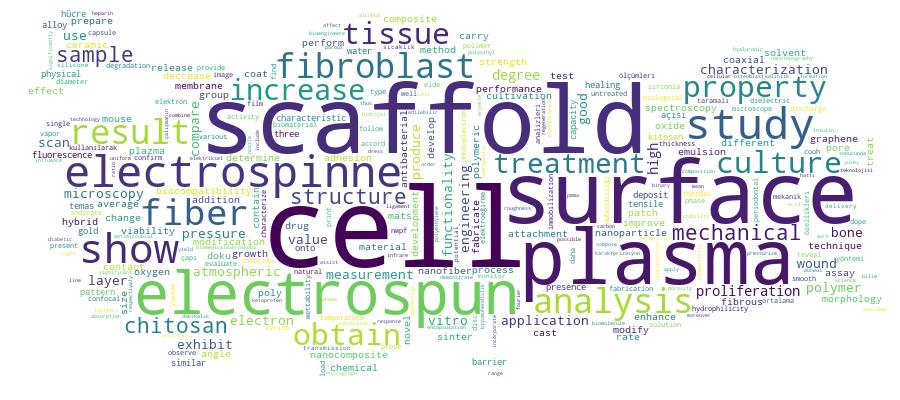
33 results
Scholarly Output Search Results
Now showing 1 - 10 of 33
Article Citation - WoS: 37Citation - Scopus: 45Study on the Cytocompatibility, Mechanical and Antimicrobial Properties of 3d Printed Composite Scaffolds Based on Pva/ Gold Nanoparticles (aunp)/ Ampicillin (amp) for Bone Tissue Engineering(Elsevier, 2021) Topsakal, Aysenur; Midha, Swati; Yuca, Esra; Tukay, Ari; Sasmazel, Hilal Turkoglu; Kalaskar, Deepak M.; Gunduz, OguzhanOver the years, gold nanoparticles (AuNP) have been widely used in several biomedical applications related to the diagnosis, drug delivery, bio-imaging, photo-thermal therapy and regenerative medicine, owing to their unique features such as surface plasmon resonance, fluorescence and easy surface functionality. Recent studies showed that gold nanoparticles display positive effect on osteogenic differentiation. In line with this effect, 3-Dimesional (3D) scaffolds that can be used in bone tissue were produced by exploiting the properties of gold nanoparticles that increase biocompatibility and support bone tissue development. In addition, ampicillin was added to the scaffolds containing gold nanoparticles as a model drug to improve its antimicrobial properties. The scaffolds were produced as composites of polyvinyl alcohol (PVA) main matrix as PVA, PVA/AuNP, PVA/Ampicillin (AMP) and PVA/AuNP/AMP. Scanning Electron Microscopy (SEM) Fourier Transform Infrared Spectroscopy (FTIR), tensile measurement tests, and in vitro applications of 3D scaffolds were performed. As depicted by SEM, scaffolds were produced at pore sizes appropriate for bone tissue regeneration. According to FTIR results, there was no modification observed in the AMP, PVA and gold nanoparticles due to mixing in the resultant scaffolds. In vitro results show that 3D printed composite scaffold based on PVA/AuNP/AMP are biocompatible, osteo-inductive and exhibit antimicrobial properties, compared to PVA scaffolds. This study has implications for addressing infections during orthopedic surgeries. The PVA-based gold nanoparticle 3D tissue scaffold study containing ampicillin covers a new study compared to other articles based on gold nanoparticles.Article Citation - WoS: 11Development of Antibacterial Composite Electrospun Chitosan-Coated Polypropylene Materials(Amer Scientific Publishers, 2018) Gozutok, Melike; Basar, Ahmet Ozan; Sasmazel, Hilal TurkogluIn this study, a natural antibacterial substance chitosan was coated with/without potassium sorbate (KS) (0.8% (w/w) of KS, 8% (w/v) chitosan) onto the polypropylene (PP) film by using electrospinning technique to obtain novel antibacterial composite materials for various applications such as wound dressing, tissue engineering, drug delivery and food packaging. Atmospheric pressure plasma surface treatment was applied onto polypropylene films in order to increase its wettability thus enhancing the adhesion capacity of the films and the optimum CA value was determined as 42.75 +/- 0.80 degrees. Scanning Electron Microscope (SEM) and X-ray Photoelectron Spectroscopy (XPS) analyses were realized to observe the morphological changes and chemical properties of the samples, respectively. Contact angle measurements, tensile testing, oxygen and water vapor transmission rate analyses were performed to obtain wettability values, mechanical properties and WVTRs, respectively. The WVTR was increased by plasma treatment and addition of KS (from 14.264 +/- 0.214% to 21.020 +/- 0.659%). The desired antibacterial performance of the samples was assessed with Staphylococcus aureus and Escherichia coli by inhibition ratio calculation and disc diffusion assay. The highest inhibition ratios were found as 64% for S. aureus and 92% for E. coli for plasma-treated CS-KS-PP films.Correction Influence of Water/O2 Plasma Treatment on Cellular Responses of Pcl and Pet Surfaces (vol 21, Pg 123, 2011)(Ios Press, 2011) Sasmazel, Hilal Turkoglu; Aday, Sezin; Manolache, Sorin; Gumusderelioglu, Menemse[No Abstract Available]Article Citation - WoS: 39Citation - Scopus: 44A Novel Treatment Strategy for Preterm Birth: Intra-Vaginal Progesterone-Loaded Fibrous Patches(Elsevier, 2020) Cam, Muhammet Emin; Hazar-Yavuz, Ayse Nur; Cesur, Sumeyye; Ozkan, Ozan; Alenezi, Hussain; Sasmazel, Hilal Turkoglu; Edirisinghe, MohanProgesterone-loaded poly(lactic) acid fibrous polymeric patches were produced using electrospinning and pressurized gyration for infra-vaginal application to prevent preterm birth. The patches were intravaginally inserted into rats in the final week of their pregnancy, equivalent to the third trimester of human pregnancy. Maintenance tocolysis with progesterone-loaded patches was elucidated by recording the contractile response of uterine smooth muscle to noradrenaline in pregnant rats. Both progesterone-loaded patches indicated similar results from release and thermal studies, however, patches obtained by electrospinning had smaller average diameters and more uniform dispersion compared to pressurized gyration. Patches obtained by pressurized gyration had better results in production yield and tensile strength than electrospinning; thereby pressurized gyration is better suited for scaled-up production. The patches did not affect cell attachment, viability, and proliferation on Vero cells negatively. Consequently, progesterone-loaded patches are a novel and successful treatment strategy for preventing preterm birth.Article Citation - WoS: 6Citation - Scopus: 6A Drug-Eluting Nanofibrous Hyaluronic Acid-Keratin Mat for Diabetic Wound Dressing(Springernature, 2022) Su, Sena; Bedir, Tuba; Kalkandelen, Cevriye; Sasmazel, Hilal Turkoglu; Basar, Ahmet Ozan; Chen, Jing; Gunduz, OguzhanDiabetes mellitus is a chronic metabolic disease associated with long-term multisystem complications, among which are non-healing diabetic foot ulcers (DFUs). Electrospinning is a sophisticated technique for the preparation of polymeric nanofibers impregnated with drugs for wound healing, burns, and diabetic ulcers. This study describes the fabrication and characterization of a novel drug-eluting dressing made of core-shell structured hyaluronic acid (HA)-keratin (KR)-polyethylene oxide (PEO) and polycaprolactone (PCL) nanofibers to treat diabetic wounds. The core-shell nanofibers produced by the emulsion electrospinning technique provide loading of metformin hydrochloride (MH), HA, and KR in the core of nanofibers, which in return improves the sustained long term release of the drug and prolongs the bioactivity. Morphological and chemical properties of the fibers were examined by SEM, FTIR, and XRD studies. It was observed that the fibers which contain HA and KR showed thin fiber structure, greater swelling capacity, fast degradation and increased cumulative drug release amount than neat emulsion fibers due to the hydrophilic nature of HA and KR. MH showed a sustained release from all fiber samples over 20 days and followed the first-order and Higuchi model kinetics and Fickian diffusion mechanism according to kinetic analysis results. In vitro cell culture studies showed that the developed mats exhibited enhanced biocompatibility performance with HA and KR incorporation. The results show that HA and KR-based emulsion electrospun fiber mats are potentially useful new nanofiber-based biomaterials in their use as drug carriers to treat diabetic wounds.Article Citation - Scopus: 1Surface Patterning of Poly(ε-Caprolactone) Scaffolds by Electrospinning for Monitoring Cell Biomass Behavior(Springer, 2022) Albayrak, Deniz; Sasmazel, Hilal TurkogluThe aim of this work was to produce three-dimensional fibrous surface patterns of poly(epsilon-caprolactone) (PCL), onto two-dimensional smooth solvent cast PCL surfaces with an electrospinning method by using a mask/stencil for monitoring cell biomass behavior. The characterizations of produced scaffolds were done by thickness measurements, scanning electron microscopy (SEM) analyses, contact angle (CA) measurements, Fourier-transform infrared spectroscopy (FTIR), and mechanical tests. According to SEM micrographs, all of the electrospun scaffold surfaces exhibited bead-free and uniform morphology while solvent cast surfaces were smooth and nonporous. CA measurements revealed that the solvent cast surfaces had moderate hydrophilicity (similar to 60 degrees) while electrospun regions had a more hydrophobic character (similar to 110 degrees for fully electrospun surfaces and similar to 85 degrees for electrospun patterns). Mechanical testing showed the produced scaffolds had a brittle character. Moreover, cell culture studies were performed with mouse fibroblast (L929) cells for 7 days period, and cell attachment assay, MTT assay, fluorescence, and SEM analyses were done. Cell culture studies indicated that the solvent cast and electrospun patterns have different characteristics for cell behavior. Thus, cell movement, attachment, and proliferation can be directed and monitored by obtaining different surface topographies in a single substrate surface. Based on the results of this study, it was found that patterns consisting of polymeric nanofiber structures can also be created directly by the electrospinning method.Article Citation - WoS: 45Citation - Scopus: 46Novel Hybrid Scaffolds for the Cultivation of Osteoblast Cells(Elsevier, 2011) Sasmazel, Hilal TurkogluIn this study, natural biodegradable polysaccharide, chitosan, and synthetic biodegradable polymer, poly(epsilon-caprolactone) (PCL) were used to prepare 3D, hybrid polymeric tissue scaffolds (PCL/chitosan blend and PCL/chitosan/PCL layer by layer scaffolds) by using the electrospinning technique. The hybrid scaffolds were developed through HA addition to accelerate osteoblast cell growth. Characteristic examinations of the scaffolds were performed by micrometer, SEM, contact angle measurement system, ATR-FTIR, tensile machine and swelling experiments. The thickness of all electrospun scaffolds was determined in the range of 0.010 +/- 0.001-0.012 +/- 0.002 mm. In order to optimize electrospinning processes, suitable bead-free and uniform scaffolds were selected by using SEM images. Blending of PCL with chitosan resulted in better hydrophilicity for the PCL/chitosan scaffolds. The characteristic peaks of PCL and chitosan in the blend and layer by layer nanofibers were observed. The PCL/chitosan/PCL layer by layer structure had higher elastic modulus and tensile strength values than both individual PCL and chitosan structures. The layer by layer scaffolds exhibited the PBS absorption values of 184.2; 197.2% which were higher than those of PCL scaffolds but lower than those of PCL/chitosan blend scaffolds. SaOs-2 osteosarcoma cell culture studies showed that the highest ALP activities belonged to novel PCL/chitosan/PCL layer by layer scaffolds meaning better cell differentiation on the surfaces. (C) 2011 Elsevier B.V. All rights reserved.Article Citation - WoS: 58Citation - Scopus: 77Electrospun Oxygen Scavenging Films of Poly(3-Hydroxybutyrate) Containing Palladium Nanoparticles for Active Packaging Applications(Mdpi, 2018) Cherpinski, Adriane; Gozutok, Melike; Sasmazel, Hilal Turkoglu; Torres-Giner, Sergio; Lagaron, Jose M.This paper reports on the development and characterization of oxygen scavenging films made of poly(3-hydroxybutyrate) (PHB) containing palladium nanoparticles (PdNPs) prepared by electrospinning followed by annealing treatment at 160 degrees C. The PdNPs were modified with the intention to optimize their dispersion and distribution in PHB by means of two different surfactants permitted for food contact applications, i.e., hexadecyltrimethylammonium bromide (CTAB) and tetraethyl orthosilicate (TEOS). Analysis of the morphology and characterization of the chemical, thermal, mechanical, and water and limonene vapor barrier properties and the oxygen scavenging capacity of the various PHB materials were carried out. From the results, it was seen that a better dispersion and distribution was obtained using CTAB as the dispersing aid. As a result, the PHB/PdNP nanocomposites containing CTAB provided also the best oxygen scavenging performance. These films offer a significant potential as new active coating or interlayer systems for application in the design of novel active food packaging structures.Article Citation - WoS: 18Citation - Scopus: 19Effects of Nozzle Type Atmospheric Dry Air Plasma on L929 Fibroblast Cells Hybrid Poly (ε-caprolactone)/Chitosan (ε-Caprolactone) Scaffolds Interactions(Soc Bioscience Bioengineering Japan, 2016) Ozkan, Ozan; Sasmazel, Hilal TurkogluIn the study presented here, in order to improve the surface functionality and topography of poly (epsilon-caprolactone) (PCL)/chitosan/PCL hybrid tissue scaffolds fabricated layer by layer with electrospinning technique, an atmospheric pressure nozzle type plasma surface modification was utilized. The optimization of the plasma process parameters was carried out by monitoring the changes in surface hydrophilicity by using contact angle measurements. SEM, AFM and XPS analyses were utilized to observe the changes in topographical and chemical properties of the modified surfaces. The results showed that applied plasma modification altered the nanotopography and the functionality of the surfaces of the scaffolds. The modification applied for 9 min from a distance of 17 cm was found to provide the possible contact angle value (75.163 +/- 0.083) closest to the target value which is the value of tissue culture polystyrene (TCPS) petri dishes (similar to 49.7 degrees), compared to the unmodified samples (84.46 +/- 3.86). In vitro cell culture was carried out by L929 mouse fibroblast cell line in order to examine the effects of plasma surface modification on cell material interactions. Standard MIT assay showed improved cell viability on/within modified scaffolds confirmed with the observations of the cell attachment and the morphology by means of SEM, fluorescence and confocal imaging. The experiments performed in the study proved the enhanced biocompatibility of the nozzle type dry air plasma modified scaffolds. (C) 2016, The Society for Biotechnology, Japan. All rights reserved.Article Citation - WoS: 7Citation - Scopus: 7Advanced 3d Printed Bone Scaffolds With Sodium Alginate/Tri-calcium Phosphate/Probiotic Bacterial Hydroxyapatite: Enhanced Mechanical and Biocompatible Properties for Bone Tissue Engineering(Elsevier Sci Ltd, 2024) Nouri, Sabereh; Emtiazi, Giti; Ulag, Songul; Gunduz, Oguzhan; Koyuncu, Ayse Ceren Calikoglu; Roghanian, Rasoul; Sasmazel, Hilal TurkogluIntroduction: The increasing prevalence of severe bone diseases, such as osteoporosis and critical bone defects, necessitates the development of more effective bone substitutes. This study addresses this need by investigating 3D-printed bone scaffolds composed of sodium alginate and tricalcium phosphate, enhanced with three distinct types of hydroxyapatite (HA): bovine-derived HA, commercially available HA, and HA enriched with probiotic bacteria. We aim to evaluate the performance of these scaffolds in terms of mechanical strength, biocompatibility, and their ability to support bone regeneration. Methods: The scaffolds were analyzed through various tests, including X-ray Diffraction (XRD), Fourier Transform Infrared Spectroscopy (FTIR), Differential Scanning Calorimetry (DSC) to characterization. Scanning Electron Microscopy (SEM) was used to examine pore structure, while swelling and degradation tests evaluated the scaffold's stability. Compression testing determined mechanical strength, and in vitro cell culture assays assessed cell proliferation, osteogenic differentiation, and biomineralization. Results: SEM results indicated that 3D scaffolds with probiotic bacterial HA had the desired 472 mu m pore size. These scaffolds demonstrated a strain of 29.26 % and a compressive strength of 10 MPa, meeting the mechanical standards of human trabecular bone. Cell culture studies revealed enhanced cell proliferation by 50 %, osteogenic differentiation with 15.3 U/mg ALP activity, and 1.22-fold biomineralization, suggesting they are highly biocompatible and promote bone growth. Conclusion: Probiotic bacterial HA scaffolds exhibit ideal properties and biocompatibility, enhancing bone regeneration and serving as an ideal alternative to chemical types.
