Yücesan, Ongun

Loading...
Profile Picture
Name Variants
Ongun Yücesan
Yucesan, Ongun
O., Yucesan
O., Yücesan
Y., Ongun
Yücesan,O.
O.,Yücesan
Yücesan, Ongun
Y.,Ongun
Ongun, Yücesan
Yucesan,O.
Yucesan,Ongun
Ongun, Yucesan
O.,Yucesan
Job Title
Doktor Öğretim Üyesi
Email Address
ongun.yucesan@atilim.edu.tr
Main Affiliation
Avionics
Status
Website
Scopus Author ID
Turkish CoHE Profile ID
Google Scholar ID
WoS Researcher ID

Sustainable Development Goals

NO POVERTY1
NO POVERTY
0
Research Products
ZERO HUNGER2
ZERO HUNGER
0
Research Products
GOOD HEALTH AND WELL-BEING3
GOOD HEALTH AND WELL-BEING
0
Research Products
QUALITY EDUCATION4
QUALITY EDUCATION
0
Research Products
GENDER EQUALITY5
GENDER EQUALITY
0
Research Products
CLEAN WATER AND SANITATION6
CLEAN WATER AND SANITATION
0
Research Products
AFFORDABLE AND CLEAN ENERGY7
AFFORDABLE AND CLEAN ENERGY
0
Research Products
DECENT WORK AND ECONOMIC GROWTH8
DECENT WORK AND ECONOMIC GROWTH
0
Research Products
INDUSTRY, INNOVATION AND INFRASTRUCTURE9
INDUSTRY, INNOVATION AND INFRASTRUCTURE
1
Research Products
REDUCED INEQUALITIES10
REDUCED INEQUALITIES
0
Research Products
SUSTAINABLE CITIES AND COMMUNITIES11
SUSTAINABLE CITIES AND COMMUNITIES
0
Research Products
RESPONSIBLE CONSUMPTION AND PRODUCTION12
RESPONSIBLE CONSUMPTION AND PRODUCTION
0
Research Products
CLIMATE ACTION13
CLIMATE ACTION
0
Research Products
LIFE BELOW WATER14
LIFE BELOW WATER
0
Research Products
LIFE ON LAND15
LIFE ON LAND
0
Research Products
PEACE, JUSTICE AND STRONG INSTITUTIONS16
PEACE, JUSTICE AND STRONG INSTITUTIONS
0
Research Products
PARTNERSHIPS FOR THE GOALS17
PARTNERSHIPS FOR THE GOALS
0
Research Products
This researcher does not have a Scopus ID.
This researcher does not have a WoS ID.
Scholarly Output

6

Articles

5

Views / Downloads

18/131

Supervised MSc Theses

0

Supervised PhD Theses

1

WoS Citation Count

0

Scopus Citation Count

0

Patents

0

Projects

0

WoS Citations per Publication

0.00

Scopus Citations per Publication

0.00

Open Access Source

4

Supervised Theses

1

JournalCount
İstatistikçiler Dergisi: İstatistik ve Aktüerya1
İstatistikçiler Dergisi: İstatistik ve  Aktüerya1
Journal of aviation (Online)1
Journal of Aviation (Online)1
Journal of Electronic Testing1
Current Page: 1 / 1

Scopus Quartile Distribution

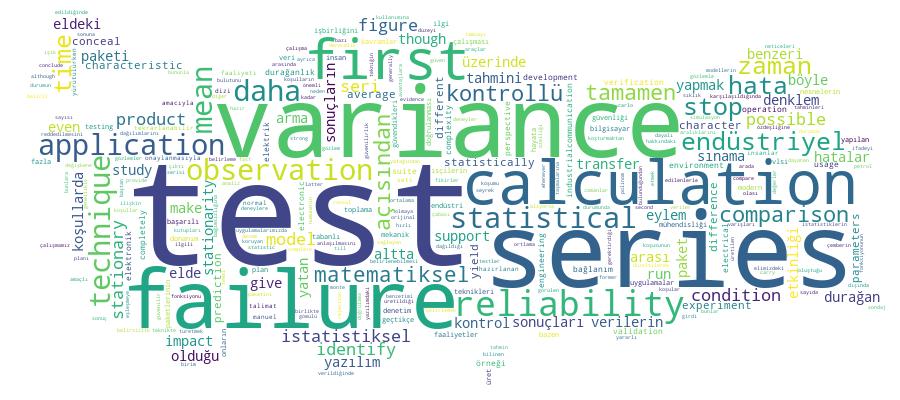
Competency Cloud

GCRIS Competency Cloud

Scholarly Output Search Results

Now showing 1 - 4 of 4
  • Article
    Time Complexity Comparison of Stopping at First Failure and Completely Running the Test
    (Springer, 2020) Yucesan, Ongun; Ozkil, Altan
    For a given test set, we compare two test application techniques, "stopping at first failure" and "complete run", respectively. The former stops the test whenever a failure is encountered. The latter however, carries on till the end. Our comparison concludes that although the first technique is generally faster, there is no strong evidence to support a complete rejection of the second technique for it provides statistics useful in test planning. Results support an interchangeable application of both techniques with more frequent use of stopping at first failure. Even though there are numerous studies to decide how to prioritize and select test cases (TC), or to examine dependencies of TCs and codes, the presented comparison of the two test application techniques for a given "test set" has the potential to reduce the total run time of the test.
  • Article
    Impact of Operations on a Series Per Reliability Perspective
    (2025) Yucesan, Ongun
    The Mean Time Between Failure (MTBF) figures are the average of test durations between failure observations formed into a series. They can be seen to suit classical statistical distributions. An equally possible condition is that they are not stationary as a contradiction to the previous statement. In such worse conditions accepting availability of a concealed statistical property, this paper tries to identify the impact of Bi-sample Differencing and Bi-sample mean manipulations. In other words, operating on reliability observations series to reveal concealed statistical knowledge. Experimentation based on observation over a stationary series as a controlled experiment. As an outcome of experiments, the differencing seems to be alleviating the trend and seasonality to a degree. The bi-sample averaging is observed to be hiding variant conditions.
  • Article
    Öz Bağlanım Denklem Tahmini ile Durağanlık Testi: Bir Endüstriyel İşletişim Örneği
    (2022) Yucesan, Ongun; Özkil, Altan
    AR ve ARMA tahminleri, eldeki bir seri için temel bir matematiksel ifadeyi belirlemek açısından iyi bilinen araçlar olmaya devam etmektedir. Matematiksel bir denklem elde edildiğinde, girdi ve çıktı arasında bir transfer fonksiyonu türetmek mümkündür. Bu transfer fonksiyonunun kutupları birim çemberin üzerinde veya dışında yer alıyorsa, üretilen seri durağan olmayacaktır. Önemli sayıda numunenin üretildiği böyle bir seri, bir simülasyon etkinliği için tamsayı taşmalarına neden olacaktır. Çalışma için, Hatalar Arası Ortlama Zaman (HAOZ) gözlem amaçlı doğrulama serisi, bir Endüstriyel Gömülü PC İletişimi Sınama yatağından alınmıştır. Bunlar zaman ve sıklık açısından AR ve ARMA tarafından tahmin edilenlerle karşılaştırılır. AR tahmini, durağan özelliği koruyan 57 derecelik bir polinom durumunda, orijinal gözlemle daha iyi bir eşleşmeye sahiptir.
  • Article
    On Stationarity of Variance Calculation Series
    (2023) Yucesan, Ongun
    While making reliability observations, more samples mean one can make a statistically representative prediction. It is possible to model the failure arrival characteristics statistically using this knowledge. As a natural product of many experiments, a mean and variance figure can be identified for modelling the different occurrences. Even though the different situations can be modelled with such parameters, it may not wholly outline the condition of the product being developed and under test. The variance calculation series derived from the original reliability observation series, which is normally used for simple variance calculation, can be an important consideration. This consideration is rarely encountered. With a mean and a variance figure, a statistical prediction can be made. However, with the very same parameters, another reliability characteristic possessing product or a subcomponent may exist. For this instance, identifying whether the variance calculation series has stationarity and incorporating it in calculations can yield a possible prediction of a more accurate statistical model. In this study, the variance calculation series is considered for their stationary character at hand and is shown to possess such character yielding further modelling possibilities and emphasizing the importance of this consideration.