
Ekin, Cansu Çiğdem
Loading...
Profile URL
Name Variants
Aydin, Cansu Cigdem
Cansu Cigdem, Ekin
E.,Cansu Çiğdem
Aydin C.
Ekin, Cansu Cigdem
Ekin, Cansu
Aydin, C. C.
E., Cansu Çiğdem
C. C. Ekin
E., Cansu Cigdem
C.C.Ekin
C.Ç.Ekin
C., Ekin
Ekin, Cansu Çiğdem
C. Ç. Ekin
E.,Cansu Cigdem
Ekin, Cansu C.
Ekin,C.C.
Cansu Çiğdem, Ekin
C.,Ekin
Ekin,C.Ç.
Ekin C.
Aydın, Cansu Ciğdem
Rouyendegh, Babak Daneshvar
Rouyendegh (B Erdebilli), Babak Daneshvar
Cansu Cigdem, Ekin
E.,Cansu Çiğdem
Aydin C.
Ekin, Cansu Cigdem
Ekin, Cansu
Aydin, C. C.
E., Cansu Çiğdem
C. C. Ekin
E., Cansu Cigdem
C.C.Ekin
C.Ç.Ekin
C., Ekin
Ekin, Cansu Çiğdem
C. Ç. Ekin
E.,Cansu Cigdem
Ekin, Cansu C.
Ekin,C.C.
Cansu Çiğdem, Ekin
C.,Ekin
Ekin,C.Ç.
Ekin C.
Aydın, Cansu Ciğdem
Rouyendegh, Babak Daneshvar
Rouyendegh (B Erdebilli), Babak Daneshvar
Job Title
Doçent Doktor
Email Address
cansu.aydin@atilim.edu.tr
Main Affiliation
Computer Engineering
Status
Website
ORCID ID
Scopus Author ID
Turkish CoHE Profile ID
Google Scholar ID
WoS Researcher ID
Sustainable Development Goals
 1
1NO POVERTY
1
Research Products
 2
2ZERO HUNGER
2
Research Products
 3
3GOOD HEALTH AND WELL-BEING
2
Research Products
 4
4QUALITY EDUCATION
8
Research Products
 5
5GENDER EQUALITY
0
Research Products
 6
6CLEAN WATER AND SANITATION
0
Research Products
 7
7AFFORDABLE AND CLEAN ENERGY
0
Research Products
 8
8DECENT WORK AND ECONOMIC GROWTH
0
Research Products
 9
9INDUSTRY, INNOVATION AND INFRASTRUCTURE
1
Research Products
 10
10REDUCED INEQUALITIES
0
Research Products
 11
11SUSTAINABLE CITIES AND COMMUNITIES
0
Research Products
 12
12RESPONSIBLE CONSUMPTION AND PRODUCTION
0
Research Products
 13
13CLIMATE ACTION
1
Research Products
 14
14LIFE BELOW WATER
1
Research Products
 15
15LIFE ON LAND
0
Research Products
 16
16PEACE, JUSTICE AND STRONG INSTITUTIONS
0
Research Products
 17
17PARTNERSHIPS FOR THE GOALS
0
Research Products

This researcher does not have a Scopus ID.

Documents
14
Citations
165

Scholarly Output
43
Articles
23
Views / Downloads
4/0
Supervised MSc Theses
5
Supervised PhD Theses
0
WoS Citation Count
563
Scopus Citation Count
646
Patents
0
Projects
0
WoS Citations per Publication
13.09
Scopus Citations per Publication
15.02
Open Access Source
8
Supervised Theses
5
| Journal | Count |
|---|---|
| Tehnicki Vjesnik | 4 |
| 3rd International Conference on Information Management and Evaluation (ICIME) -- APR 16-17, 2012 -- Atilim Univ, Performance Management & Applicat Res Ctr, Ankara, TURKEY | 3 |
| Journal of Applied Mathematics | 2 |
| Journal of Systems Architecture | 2 |
| UBMK 2018 - 3rd International Conference on Computer Science and Engineering -- 3rd International Conference on Computer Science and Engineering, UBMK 2018 -- 20 September 2018 through 23 September 2018 -- Sarajevo -- 143560 | 2 |
Current Page: 1 / 6
Scopus Quartile Distribution
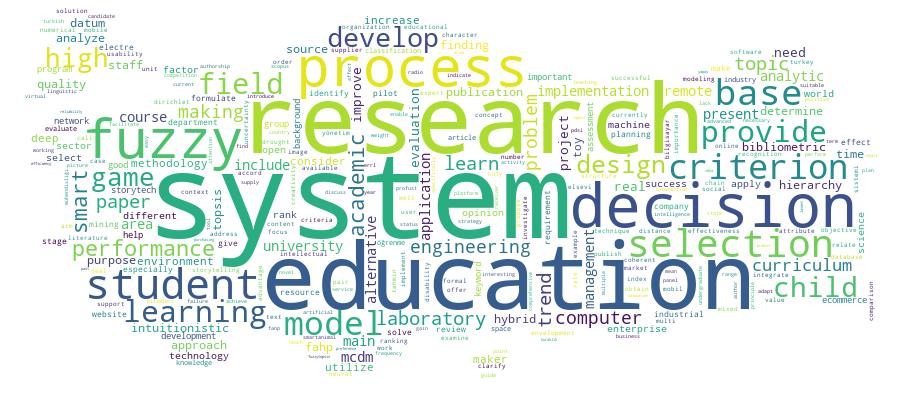
Competency Cloud
33 results
Scholarly Output Search Results
Now showing 1 - 10 of 33
Conference Object Citation - Scopus: 2An Undergraduate Curriculum for Deep Learning(Institute of Electrical and Electronics Engineers Inc., 2018) Tirkes,G.; Ekin,C.C.; Engul,G.; Bostan,A.; Karakaya,M.Deep Learning (DL) is an interesting and rapidly developing field of research which has been currently utilized as a part of industry and in many disciplines to address a wide range of problems, from image classification, computer vision, video games, bioinformatics, and handwriting recognition to machine translation. The starting point of this study is the recognition of a big gap between the sector need of specialists in DL technology and the lack of sufficient education provided by the universities. Higher education institutions are the best environment to provide this expertise to the students. However, currently most universities do not provide specifically designed DL courses to their students. Thus, the main objective of this study is to design a novel curriculum including two courses to facilitate teaching and learning of DL topic. The proposed curriculum will enable students to solve real-world problems by applying DL approaches and gain necessary background to adapt their knowledge to more advanced, industry-specific fields. © 2018 IEEE.Article Citation - WoS: 4Citation - Scopus: 14User Study of a New Smart Toy for Children's Storytelling(Routledge Journals, Taylor & Francis Ltd, 2014) Kara, Nuri; Aydin, Cansu Cigdem; Cagiltay, KursatThis article introduces StoryTech, a smart storytelling toy that offers children a mixed reality environment in which to tell imaginative stories. During usability testing, an empirical study was carried out with 90 child participants. The findings indicated that StoryTech creates a rich storytelling experience, especially for ages five and six.Conference Object Citation - Scopus: 2Mba Students' Preference On: Online, Formal and Hybrid Mba Programs(Elsevier Science Bv, 2011) Rouyendegh, Babak Daneshvar; Erkan, Turan ErmanIn recent years, there has been a rapid rise in student enrolments in both online and formal MBA programs. This study is based on the results of a case study in which over 30 students enrolled in a top-ranked online and formal MBA program. Thus, the Fuzzy Analytic Hierarchy Process (FAHP) has been used for choosing the program. Due to the inability of AHP to deal with the impression and subjectiveness in the pair-wise comparison process, the FAHP has been used. The result of the research is interesting since neither an online nor a formal education program is preferred; a hybrid one has been developed. (C) 2011 Published by Elsevier Ltd.Article Citation - WoS: 67Citation - Scopus: 91An Application of the Fuzzy Electre Method for Academic Staff Selection(Wiley, 2013) Rouyendegh, Babak Daneshvar; Erkan, Turan ErmanThere are various methods regarding staff selection in different fields. Thanks to the increasing improvements in the field of education, universities around the world tend to demand high -quality and professional academic staff. Staff selection is a multi-criteria decision-making processes, and of strategic importance for most universities. This study deals with actual application of academic of staff selection using the opinion of experts to be applied into a model of group decision - making called the Fuzzy ELECTRE (Elimination Et Choix Traduisant la REaite) method. There are ten qualitative criteria for selecting the best candidate amongst five prospective applications. (c) 2012 Wiley Periodicals, Inc.Article Citation - WoS: 29Citation - Scopus: 32Development of Decision Support Model for Selecting a Maintenance Plan Using a Fuzzy Mcdm Approach: a Theoretical Framework(Hindawi Ltd, 2018) Abdulgader, Fathia Sghayer; Eid, Rajeh; Rouyendegh (B Erdebilli), Babak Daneshvar; Rouyendegh , Babak DaneshvarIn complex decision making, using multicriteria decision-making (MCDM) methodologies is the most scientific way to ensure an informed and justified decision between several alternatives. MCDMs have been used in different ways and with several applications that proved their efficiency in achieving this goal. In this research, the advantages and disadvantages of the different MCDM methodologies are studied, along with the different techniques implemented to increase their accuracy and precision. The main aim of the study is to develop a hybrid MCDM process that combines the strengths of several MCDM methods and apply it to choose the best fit maintenance policy/strategy for industrial application. Moreover, fuzzy linguistic terms are utilized in all of the used MCDM techniques in order to eliminate the uncertainty and ambiguity of the results. Through an extensive literature review performed on studies that have used MCDM methods in a hybrid context and using fuzzy linguistic terms, a model is developed to use fuzzy DEMATEL-AHP-TOPSIS hybrid technique. The model with its application is the first of its kind, which combines the strengths of fuzzy DEMATEL in establishing interrelationships between several criteria, as well as performing a pairwise comparison between the criteria for prioritization using the fuzzy AHP method. Thereafter, the alternatives are compared using fuzzy TOPSIS method by establishing negative and positive solutions and calculating the relative closeness for each of the alternatives. Furthermore, six main criteria, twenty criteria, and five alternatives are selected from the literature for the model application.Conference Object Distance Laboratory Applications Errl(Ieee, 2008) Aydin, C. C.; Turkmen, G.; Ozyurt, E.; Aydin, E. U.; Cagiltay, N. E.; Ozbek, M. E.; Kara, A.In the last decade, the effect of internet usage in education is gradually increased. When we look from academic perspective, the new technologies provided alternatives for students learning. As distance education becomes important everyday, the indispensable elements of teaching and education, laboratories must be reachable via remote connection. Consequently, the education that is going to be given to the students will be more flexible with respect to place and time constraints and students can reach laboratory facilities at any time and anywhere not only in lectures and practical hours. In this study, European Remote Radio Laboratory (ERRL) which is a distance remote Radio Frequency (RF) laboratory designed for electrical-electronics students, is described generally. The software architecture, infrastructure and experiment that can be done with a remote connection have been described.Article Citation - WoS: 17Citation - Scopus: 22Seven Principles of Instructional Content Design for a Remote Laboratory: a Case Study on Errl(Ieee-inst Electrical Electronics Engineers inc, 2011) Cagiltay, Nergiz Ercil; Aydin, Elif; Aydin, Cansu Cigdem; Kara, Ali; Alexandru, MarianThis paper discusses the results of a study of the requirements for developing a remote radio frequency (RF) laboratory for electrical engineering students. It investigates students' preferred usage of the technical content of a state-of-the-art RF laboratory. The results of this study are compared to previous findings, which dealt with other user groups (technicians in technical colleges and engineers in the RF domain). Based on the results of these analyses, seven essential principles for designing and developing such a laboratory were identified. As a case study, these principles were then implemented into a remote laboratory system. In this paper, the implementation examples are also provided and discussed. The primary aim of this study is to guide remote laboratory platform developers toward the most effective instructional design. This study also determined, from the remote laboratory system case study, what the requirements are of such a laboratory from the students' perspective.Article Citation - WoS: 76Citation - Scopus: 73Measuring the Efficiency of Hospitals: a Fully-Ranking Dea-Fahp Approach(Springer, 2019) Rouyendegh, Babak Daneshvar; Oztekin, Asil; Ekong, Joseph; Dag, AliThe goal of this study is to present a DEA-based fuzzy multi-criteria decision making model for firms in the health care industry in order to enhance their business performance. The study demonstrates a real-life use of the proposed model, mainly designed for hospitals. Data envelopment analysis enhanced with fuzzy analytic hierarchy process are collectively utilized to quantify the data and structure the model in decision-making. The juxtaposition of the two methods is used to compile a ranked list of multiple proxies containing diverse input and output variables which occur in two stages. This hybrid model provides several benefits, one of which is the ability to make the most appropriate decision considering the value of the weights determined by the data from the hybrid model.Conference Object Citation - WoS: 6Curriculum Change Parameters Determined by Multi Criteria Decision Making (mcdm)(Elsevier Science Bv, 2014) Erkan, Turan Erman; Rouyendegh, Babak DaneshvarCurriculum, research, instruction, learning and assessment are the pulse of the university. The main purpose of this study is to fill a substantial knowledge gap regarding reaching a uniform group decision in Industrial engineering curriculum design and planning. A comprehensive quality based course criterion model extracted from existing literature and expert opinions was developed. Multi Criteria Decision Making (MCDA) was used to identify the relative importance of course criteria for the purpose of tailoring an optimal four Industrial engineering curriculum for Bachelor's Degree students in Turkey.. The hierarchical model and analysis utilized in the present study will be useful for resolving several important multi-criteria decision-making issues in planning and evaluating Industrial Engineering programs. (C) 2013 The Authors. Published by Elsevier Ltd. Selection and/or peer-review under responsibility of Academic World Education and Research Center.Article Citation - WoS: 4Citation - Scopus: 6On Profust Reliability of Coherent Systems: Signature-Based Expressions(Sage Publications Ltd, 2013) Eryilmaz, Serkan; Rouyendegh, Babak DaneshvarIn this article we study profust reliability of non-repairable coherent systems through the concept of system signature. We obtain explicit expressions for the profust reliability and mean time to fuzzy failure of coherent systems. We compute and present mean time to failure and mean time to fuzzy failure of all coherent systems with three and four components. Finally, we illustrate the results for a well known class of coherent systems called m-consecutive-k-out-of-n:F.
