
Kaftanoğlu, Bilgin
Loading...
Profile URL
Name Variants
Bilgin, Kaftanoğlu
Kaftanoglu, Bilgin
Bilgin Kaftanoğlu
K., Bilgin
Kaftanoğlu,B.
Kaftanoğlu, Bilgin
K.,Bilgin
B.,Kaftanoglu
KAFTANOGLU B.
Kaftanoğlu B.
B.,Kaftanoğlu
Kaftanoglu,B.
Bilgin, Kaftanoglu
Kaftanoglu B.
Kaftanoglu,Bilgin
B., Kaftanoğlu
B., Kaftanoglu
Kaftanoglu, B.
Kaftanoglu, Bilgin
Bilgin Kaftanoğlu
K., Bilgin
Kaftanoğlu,B.
Kaftanoğlu, Bilgin
K.,Bilgin
B.,Kaftanoglu
KAFTANOGLU B.
Kaftanoğlu B.
B.,Kaftanoğlu
Kaftanoglu,B.
Bilgin, Kaftanoglu
Kaftanoglu B.
Kaftanoglu,Bilgin
B., Kaftanoğlu
B., Kaftanoglu
Kaftanoglu, B.
Job Title
Profesör Doktor
Email Address
bilgin.kaftanoglu@atilim.edu.tr
Main Affiliation
Manufacturing Engineering
Status
Website
ORCID ID
Scopus Author ID
Turkish CoHE Profile ID
Google Scholar ID
WoS Researcher ID
Sustainable Development Goals
 1
1NO POVERTY
0
Research Products
 2
2ZERO HUNGER
0
Research Products
 3
3GOOD HEALTH AND WELL-BEING
1
Research Products
 4
4QUALITY EDUCATION
0
Research Products
 5
5GENDER EQUALITY
0
Research Products
 6
6CLEAN WATER AND SANITATION
0
Research Products
 7
7AFFORDABLE AND CLEAN ENERGY
3
Research Products
 8
8DECENT WORK AND ECONOMIC GROWTH
0
Research Products
 9
9INDUSTRY, INNOVATION AND INFRASTRUCTURE
6
Research Products
 10
10REDUCED INEQUALITIES
0
Research Products
 11
11SUSTAINABLE CITIES AND COMMUNITIES
1
Research Products
 12
12RESPONSIBLE CONSUMPTION AND PRODUCTION
1
Research Products
 13
13CLIMATE ACTION
1
Research Products
 14
14LIFE BELOW WATER
0
Research Products
 15
15LIFE ON LAND
0
Research Products
 16
16PEACE, JUSTICE AND STRONG INSTITUTIONS
0
Research Products
 17
17PARTNERSHIPS FOR THE GOALS
0
Research Products

Scopus data could not be loaded because of an error. Please refresh the page or try again later.

This researcher does not have a WoS ID.

Scholarly Output
55
Articles
29
Views / Downloads
121/174
Supervised MSc Theses
10
Supervised PhD Theses
5
WoS Citation Count
758
Scopus Citation Count
876
Patents
0
Projects
0
WoS Citations per Publication
13.78
Scopus Citations per Publication
15.93
Open Access Source
9
Supervised Theses
15
| Journal | Count |
|---|---|
| Makina Tasarım ve Imalat Dergisi | 3 |
| International Journal of Mechatronics and Manufacturing Systems | 3 |
| Applied Energy | 2 |
| International Journal of Refrigeration | 2 |
| The International Journal of Advanced Manufacturing Technology | 2 |
Current Page: 1 / 6
Scopus Quartile Distribution
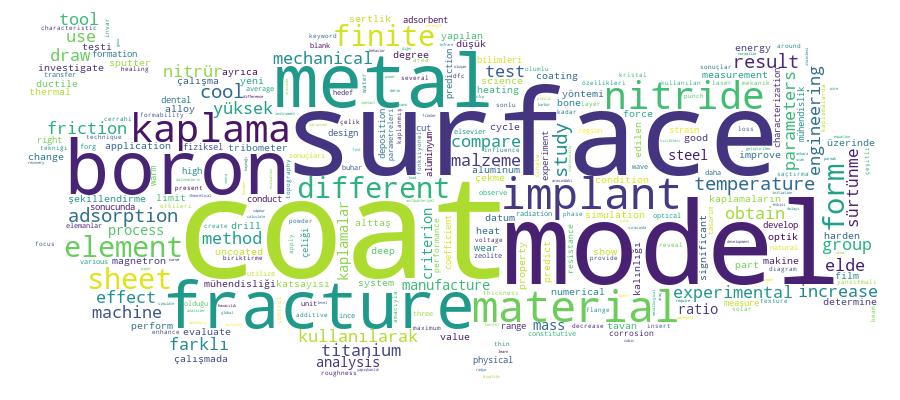
Competency Cloud
21 results
Scholarly Output Search Results
Now showing 1 - 10 of 21
Article Citation - WoS: 58Citation - Scopus: 66Experimental Investigation of a Natural Zeolite-Water Adsorption Cooling Unit(Elsevier Sci Ltd, 2011) Solmus, Ismail; Kaftanoglu, Bilgin; Yamali, Cemil; Baker, DerekIn this study, a thermally driven adsorption cooling unit using natural zeolite-water as the adsorbent-refrigerant pair has been built and its performance investigated experimentally at various evaporator temperatures. The primary components of the cooling unit are a shell and tube adsorbent bed, an evaporator, a condenser, heating and cooling baths, measurement instruments and supplementary system components. The adsorbent bed is considered to enhance the bed's heat and mass transfer characteristics; the bed consists of an inner vacuum tube filled with zeolite (zeolite tube) inserted into a larger tubular shell. Under the experimental conditions of 45 degrees C adsorption, 150 degrees C desorption, 30 degrees C condenser and 22.5 degrees C, 15 degrees C and 10 degrees C evaporator temperatures, the COP of the adsorption cooling unit is approximately 0.25 and the maximum average volumetric cooling power density (SCR,) and mass specific cooling power density per kg adsorbent (SCP) of the cooling unit are 5.2 kW/m(3) and 7 W/kg, respectively. (C) 2011 Elsevier Ltd. All rights reserved.Conference Object Antibacterial Activity of Cubic Boron Nitride (cbn) Coatings on Stainless Steel Grade 316 (316l)(Amer Chemical Soc, 2010) Uzunoglu, Emel; Sengonul, Merih; Derici, Kursat; Biriken, Derya; Kaftanoglu, Bilgin; Sengonul, Merih[No Abstract Available]Article Citation - WoS: 46Citation - Scopus: 50Investigations on Microstructural Changes in Machining of Inconel 100 Alloy Using Face Turning Experiments and 3d Finite Element Simulations(Pergamon-elsevier Science Ltd, 2016) Arisoy, Yigit M.; Guo, Changsheng; Kaftanoglu, Bilgin; Oezel, Tugrul; Ozel, Tugrul; Kaftanoʇlu, BilginNickel-base IN100 alloy is a choice of material for components requiring high strength at elevated temperatures. Machining processes applied to these components affect the microstructure, grain size, and microhardness of the finished surface. This research investigates the effects of tool micro-geometry, coating, and cutting speed on the microstructural changes during machining. 3D customized finite element simulations have been performed to predict the average grain size by implementing modified temperature dependent flow softening based material and Johnson-Mehl-Avrami-Kolmogorov crystallization models. Simulation predictions on the average grain sizes, phase fractions, and resultant microhardness are compared against experimental measurements revealing good agreements. (C) 2016 Elsevier Ltd. All rights reserved.Article Citation - WoS: 40Citation - Scopus: 50Focus Variation Measurement and Prediction of Surface Texture Parameters Using Machine Learning in Laser Powder Bed Fusion(Asme, 2020) Ozel, Tugrul; Altay, Ayca; Kaftanoglu, Bilgin; Leach, Richard; Senin, Nicola; Donmez, AlkanThe powder bed fusion-based additive manufacturing process uses a laser to melt and fuse powder metal material together and creates parts with intricate surface topography that are often influenced by laser path, layer-to-layer scanning strategies, and energy density. Surface topography investigations of as-built, nickel alloy (625) surfaces were performed by obtaining areal height maps using focus variation microscopy for samples produced at various energy density settings and two different scan strategies. Surface areal height maps and measured surface texture parameters revealed the highly irregular nature of surface topography created by laser powder bed fusion (LPBF). Effects of process parameters and energy density on the areal surface texture have been identified. Machine learning methods were applied to measured data to establish input and output relationships between process parameters and measured surface texture parameters with predictive capabilities. The advantages of utilizing such predictive models for process planning purposes are highlighted.Article Citation - WoS: 7Citation - Scopus: 13Experimental Investigation of Non-Isothermal Deep Drawing of Dp600 Steel(Springer London Ltd, 2018) Kayhan, Erdem; Kaftanoglu, BilginTo increase the limiting drawing ratio (LDR) in deep drawing, experiments are conducted on DP600, IF, and HSLA steels. The flange region of blank is heated up to temperatures in the warm range by inductance heating. During heating, the central portion of blank is cooled by water to prevent the reduction of the strength of the material in the central region. The temperature increase of flange region is observed by two infrared sensors focusing on two different points, one on the blank rim and the other near the die radius. An intensive cooling by cold water is applied to the bottom side of a blank during deep drawing. Increases up to 25.58% on LDR are obtained. There is no significant change in the microstructure of the material due to warm forming. Material characterization is obtained by a Gleeble 3800 thermo-mechanical testing machine for the temperature range 150-300 degrees C.Article Citation - WoS: 17Citation - Scopus: 20Prediction of forming limit curve at fracture for sheet metal using new ductile fracture criterion(Elsevier Science Bv, 2018) Dizaji, Shahram Abbasnejad; Darendeliler, Haluk; Kaftanoglu, BilginThe application of ductile fracture criteria (DFCs) in numerical analysis of sheet metal forming processes can lead to the accurate determination of the fracture initiation. In this study, a new uncoupled ductile fracture criterion (DFC) has been developed which considers the effects of material parameters on the forming limit curves (FLCs) and can be easily implemented in the finite element codes. Two different constitutive models have been employed with the new DFC in order to evaluate the results obtained for fracture prediction. Various experimental tests have been utilized to validate the new criterion and its results are also compared with other well-known uncoupled DFCs. It is observed that the new criterion predicts the ductile fracture for all aluminum, steel and stainless steel materials better than the former criteria.Article Citation - WoS: 5Measurement of Solar Radiation in Ankara, Turkey(Turkish Soc thermal Sciences Technology, 2013) Caglar, Ahmet; Yamali, Cemil; Baker, Derek K.; Kaftanoglu, BilginThe solar energy potential of Ankara, Turkey, (39.89 degrees N, 32.78 degrees E) has been investigated using the measurements of global and beam radiation over the period May 2008 to May 2009. Surface air temperature was also measured and variation in clearness index evaluated over this period. Global and beam radiations have been analyzed using hourly, daily and monthly averages obtained from 1-minute averages of recorded data. Results show that annual average daily global and beam radiations were 17.04 and 15.72 MJ/m(2)/day, respectively, for this period. The results are compared with the data available for several other cities in Turkey. The study shows that Ankara has a large solar potential. The consistency of these data with that from the State Meteorological Service (SMS) weather station in Ankara was analyzed. Significant differences between these 2 stations were found and are attributed to measurement error at the SMS station. New radiation-measurement stations should be established to create a better national radiation database for Turkey.Letter Theoretical Modelling of Magnetron Sputtering of Boron Nitride Coating(Springer Heidelberg, 2023) Rake, Nakka; Kaftanoglu, Bilgin; Hacaloglu, Tugce; Aydogan, AsudeThe fundamentals of the magnetron sputtering (MS) technique are simple. However, the complex interplay of various physical and chemical sub-processes lies in its simplicity. The direct simulation Monte Carlo (DSMC) method is used to model the MS of the Boron Nitride (BN) coating. The Lorentz force, which is created by an electric field, magnetic field and particle collision, is utilised to model the BN coating. Three distinct bias voltages are used to generate three different BN-coating models under the same conditions. The modelling of BN coatings reveals that the deposition rate decreases as the substrate voltage increases.Conference Object Citation - WoS: 7Citation - Scopus: 7Effect of Hardening Models on Different Ductile Fracture Criteria in Sheet Metal Forming(Springer France, 2016) Dizaji, Shahram Abbasnejad; Darendeliler, Haluk; Kaftanoglu, Bilgin; Abbasnejad Dizaji, ShahramPrediction of the fracture is one of the challenging issues which gains attention in sheet metal forming as numerical analyses are being extensively used to simulate the process. To have better results in predicting the sheet metal fracture, appropriate ductile fracture criterion (DFC), yield criterion and hardening rule should be chosen. In this study, the effects of different hardening models namely isotropic, kinematic and combined hardening rules on the various uncoupled ductile fracture criteria are investigated using experimental and numerical methods. Five different ductile fracture criteria are implemented to a finite element code by the user subroutines. The criterion constants of DFCs are obtained by the related experimental tests. The in-plane principle strains obtained by the finite element analyses for different DFCs are compared with the experimental results. Also, the experimental results are used to evaluate the principle strain values calculated by the finite element analysis for different combinations of DFCs and hardening rules. It is shown that some DFCs give better predictions if the appropriate hardening model is employed.Article Citation - WoS: 7Citation - Scopus: 9Histomorphometric and Biomechanical Evaluation of the Osseointegration Around Micro- and Nano-Level Boron-Nitride Coated Titanium Dental Implants(Elsevier, 2022) Ozmeric, Nurdan; Cakal, Gaye Ozgur; Gokmenoglu, Ceren; Ozmeric, Ahmet; Oduncuoglu, Bahar Fusun; Hacaloglu, Tugce; Kaftanoglu, BilginIntroduction: Titanium dental implants has been coated with different materials such as polymers and biomi-metic agents, bone morphogenetic protein, calcium phosphate to enhance surface properties of the titanium implants for osseointegration. The aim of this study was to evaluate the bone tissue healing around Boron Nitride-coated (BN-coated) titanium implants histomorphometrically and biomechanically and also observe the effect of different coating thicknesses on osseointegration. Materials and methods: BN was coated on dental titanium implants with two different coating thicknesses by using RF magnetron sputtering system. Totally fifty-four implants were inserted into the tibias' of 12 New Zealand rabbits bilaterally under general anesthesia. All animals were sacrificed after 4-weeks. Bone-implant contact (BIC) and new bone area/total area ratios (BATA) were calculated. Also, the removal torque (RT) test was performed. Results: The highest new bone area in the medullary cavity was around the nano-BN-coated surface with 15.70%. In micro-BN-coated surface and control group, this ratio was determined as 10.48% and 8.23%, respectively. The BIC ratios in upper-side of implants and cortical-associated BIC ratios in lower-side were found significantly higher in control and micro-BN-coated group than nano-BN-coated group (p > 0.05). Sim-ilar BIC values were observed between control and micro-BN-coated groups (p > 0.05). BATA values did not show statistically significant differences between all three groups (p > 0.05). The RT values measured in all groups were found comparable and no statistically significant differences were found (p > 0.05). Conclusion: No inflammatory reaction developed around any implant. Relatively more new bone formation around nano-BN-coated titanium implants indicates the promising osseoinductive effect of BN coating. BN-coated implants showed similar biomechanical and histomorphometrical outcomes to that of the conven-tional titanium implants through a 4-week evaluation period. (c) 2022 Elsevier Masson SAS. All rights reserved.

- «
- 1 (current)
- 2
- 3
- »