
Eseller, Kemal Efe
Loading...

Profile URL
Name Variants
Eseller, K. E.
K., Eseller
E.,Kemal Efe
Eseller, Kemal Efe
Eseller,K.E.
Kemal Efe, Eseller
K.E.Eseller
E., Kemal Efe
K.,Eseller
K., Eseller
E.,Kemal Efe
Eseller, Kemal Efe
Eseller,K.E.
Kemal Efe, Eseller
K.E.Eseller
E., Kemal Efe
K.,Eseller
Job Title
Profesör Doktor
Email Address
efe.eseller@atilim.edu.tr
Main Affiliation
Department of Electrical & Electronics Engineering
Status
Former Staff
Website
ORCID ID
Scopus Author ID
Turkish CoHE Profile ID
Google Scholar ID
WoS Researcher ID
Sustainable Development Goals
 1
1NO POVERTY
0
Research Products
 2
2ZERO HUNGER
0
Research Products
 3
3GOOD HEALTH AND WELL-BEING
0
Research Products
 4
4QUALITY EDUCATION
0
Research Products
 5
5GENDER EQUALITY
0
Research Products
 6
6CLEAN WATER AND SANITATION
0
Research Products
 7
7AFFORDABLE AND CLEAN ENERGY
2
Research Products
 8
8DECENT WORK AND ECONOMIC GROWTH
1
Research Products
 9
9INDUSTRY, INNOVATION AND INFRASTRUCTURE
2
Research Products
 10
10REDUCED INEQUALITIES
0
Research Products
 11
11SUSTAINABLE CITIES AND COMMUNITIES
1
Research Products
 12
12RESPONSIBLE CONSUMPTION AND PRODUCTION
1
Research Products
 13
13CLIMATE ACTION
1
Research Products
 14
14LIFE BELOW WATER
0
Research Products
 15
15LIFE ON LAND
0
Research Products
 16
16PEACE, JUSTICE AND STRONG INSTITUTIONS
0
Research Products
 17
17PARTNERSHIPS FOR THE GOALS
0
Research Products

This researcher does not have a Scopus ID.

This researcher does not have a WoS ID.

Scholarly Output
22
Articles
12
Views / Downloads
29/94
Supervised MSc Theses
5
Supervised PhD Theses
2
WoS Citation Count
363
Scopus Citation Count
449
Patents
0
Projects
0
WoS Citations per Publication
16.50
Scopus Citations per Publication
20.41
Open Access Source
5
Supervised Theses
7
| Journal | Count |
|---|---|
| Food Chemistry | 2 |
| Laser-Induced Breakdown Spectroscopy, Second Edition | 2 |
| Spectrochimica Acta Part B: Atomic Spectroscopy | 2 |
| Inventions | 1 |
| Biomedical Optics Express | 1 |
Current Page: 1 / 3
Scopus Quartile Distribution
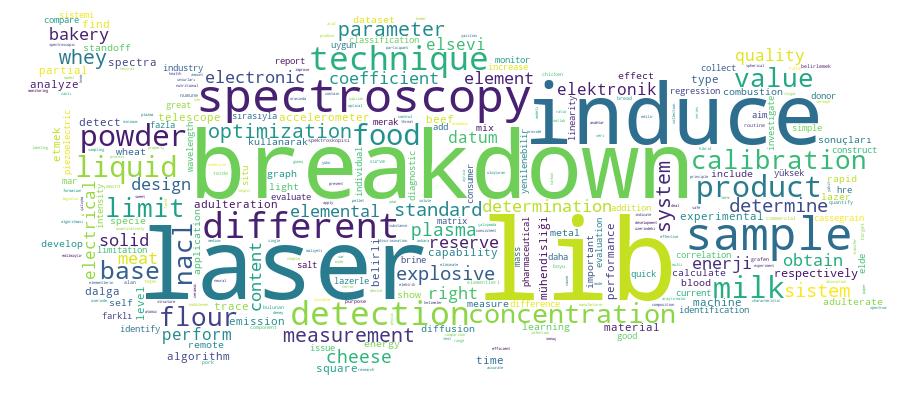
Competency Cloud
10 results
Scholarly Output Search Results
Now showing 1 - 10 of 10
Article Citation - WoS: 3Citation - Scopus: 3Classification of Different Recycled Rubber-Epoxy Composite Based on Their Hardness Using Laser-Induced Breakdown Spectroscopy (libs) With Comparison Machine Learning Algorithms(Mdpi, 2023) Yilmaz, Vadi Su; Yılmaz, Vadi Su; Eseller, Kemal Efe; Aslan, Ozgur; Aslan, Özgür; Bayraktar, Emin; Eseller, Kemal Efe; Yılmaz, Vadi Su; Aslan, Özgür; Eseller, Kemal Efe; Electrical-Electronics Engineering; Department of Electrical & Electronics Engineering; Mechanical Engineering; Electrical-Electronics Engineering; Mechanical Engineering; Department of Electrical & Electronics EngineeringThis paper aims toward the successful detection of harmful materials in a substance by integrating machine learning (ML) into laser-induced breakdown spectroscopy (LIBS). LIBS is used to distinguish five different synthetic polymers where eight different heavy material contents are also detected by LIBS. Each material intensity-wavelength graph is obtained and the dataset is constructed for classification by a machine learning (ML) algorithm. Seven popular machine learning algorithms are applied to the dataset which include eight different substances with their wavelength-intensity value. Machine learning algorithms are used to train the dataset, results are discussed and which classification algorithm is appropriate for this dataset is determined.Book Part Citation - Scopus: 3Combustion Applications of Laser-Induced Breakdown Spectroscopy(Elsevier, 2020) Yueh,F.Y.; Tripathi,M.M.; Singh,J.P.; Sezer,B.; Eseller,K.E.The laser-induced breakdown spectroscopy (LIBS) technique has the capability to perform multielemental, remote, online, in situ analysis with no/minimum sample preparations. LIBS has created a great deal of interest in combustion diagnostic research. In this chapter, LIBS capabilities in combustion diagnostics and monitoring engine and flame characteristics are investigated. © 2020 Elsevier B.V. All rights reserved.Master Thesis Data Analysis Software Development of Laser Induced Breakdown Spectroscopy (libs)(2021) Gundoz, Omer Abduljabbar Mohhammed Al; Eseller, Kemal EfeLaser induced breakdown spectroscopy is a useful growing technique. The research's on LIBS is gaining importance in instrumentation and data analysis fields because it has a large number of applications in different fields especially in industrial, scientific investigation, medical, and many other fields .this study views a theoretical base of the libs technique as well as the setup of libs including new set up which are the portable libs set up which are getting more attention in recent works due to the ease of use and accurate results. From the analytical point of view, LIBS is usually characterized by direct laser ablation. And also the competition is made through a database which is explaining the different elements due to different wavelength and their intensities, which will refer in the end to the elements that the sample consist of: The database being used is coming from the laboratory with multiple experiences. also, this work will focus on detecting specific elements which are FE,CU,ZN,AL and MG. Key Words: laser, ablation, plasma, spectrometer, fiber optics, q.switch , lensArticle Citation - WoS: 5Citation - Scopus: 6Blood Metal Analysis of Plasmas From Donors With and Without Sars-Cov Using Laser-Induced Breakdown Spectroscopy and Logistic Regression(Optica Publishing Group, 2024) Melikechi, Noureddine; Adler, Helmar G.; Safi, Ali; Landis, Joshua E.; Pourkamali-Anaraki, Farhad; Eseller, Kemal Efe; Xia, Weiming; Efe Eseller, KemalResearch on the correlation between metal levels in blood and Covid-19 infection has been conducted primarily by assessing how each individual blood metal is linked to different aspects of the disease using samples from donors with various levels of severity to Covid-19 infection. Using logistics regression on LIBS spectra of plasma samples collected pre- and postCovid-19 pandemic from donors known to have developed various levels of antibodies to the SARS-Cov-2 virus, we show that relying on the levels of Na, K, and Mg together is more efficient at differentiating the two types of plasma samples than any single blood alone.Doctoral Thesis Lıbs Kullanılarak Matlab Temelinde İnce Filmlere Ait Yapı Analizi(2021) Azouz, Omaro A.; Eseller, Kemal EfeBu tezde, farklı dalga boylarında foton (ışık) salan ve NIST verileri ile karşılaştırılan, her bir numunedeki elementleri ve konsantrasyonunu belirlemek için kullanılabilir olan, numunenin belirli bir alanına lazer atışını kullanan bir tür atomik emisyon tekniği olan Lazerle indüklenmiş plazma Spektroskopisi (LIBS) yöntemi ile çalıştık. Çalışmamızda Lorentzian uyumu kullanarak tepe ve alt noktaları belirlemek için bir MATLAB kodu geliştirdik. Böylece her tepe noktasının altındaki alan yüzdesini hesaplayabilir ve sonuçları diğer yöntemlerle Origin yazılımı ve Excel kullanarak karşılaştırabildik. Her bir atış için RSD, LOD ve SNR ve gürültü dalgalanmasını hesaplanmıştır. Numune CVD ile hazırlandı ve bu çalışmada LIBS Modelini ((LPS-1064-A 50mJ) kullandık; Başlangıç Dalgaboyu 186.263 nm, Bitiş Dalgaboyu: 888.604 nm, Geçit Gecikmesi: 0.350, Geçit Genişliği (ms): 1.050 dir. Belirli bir program kullanılarak yapılan hesaplama, her tepe noktasının altındaki Alan yüzdesine ilişkin özdeş sonuçları gösterdi ve her dalga boyunda birinci ve ikinci atışta anormal tepki olmasına rağmen, foton emisyon etkisi normal hale geldi. Numune üzerinde Sn, Mg, Fe, Al, Cu, S, Si, Zn elementleri analizleri yapıldı.Master Thesis Ankara'da Uzak Komünite için Sıfır Enerji Binalarında Bağımsız Mikrogrıd Hibrit Enerji Sisteminin Techno-ekonomik Optimizasyonu(2020) Hayalı, Othman Jasım Mohammed Al; Mehrtash, Mehdi; Eseller, Kemal EfeArtan elektrik enerji tüketimi, fosil yakıtların azalması, iletim hatlarının yüksek fiyatları ve çevre kirliliği sorunları ülkeleri yenilenebilir enerji kaynaklarından elektriğin üretildiği sıfır enerji binaları (ZEB) geliştirmeye itmektedir. Rüzgar ve güneş enerjileri ümit verici kaynaklardır. Ancak, bu kaynakların kesintili doğası sistem güvenilirliğini azaltır. Hibrid yenilenebilir enerji sistemi (HRES), bu soruna bir çözüm olarak kabul edilir. Bir HRES tasarlamak için yatırımcıların minimum yapılandırma maliyetini göz önünde bulundurmaları gerekir. Bu çalışmada, Ankara'da uzak bir bölgede 30 evin elektriklendirmek için fotovoltaik (PV) ve rüzgar türbini (WT) sistemlerinin kurulması simüle edilmiştir. Yükü en az maliyetle karşılayabilecek en uygun hibrit sistemi elde etmek için farklı senaryolar düşünülmüştür. Optimal konfigürasyon elde etmek için Çoklu Enerji Kaynakları için Hibrid Optimizasyon Modeli (HOMER) yazılımı ve Parçacık Sürüsü Optimizasyonu (PSO) algoritması uygulanmıştır. 107 kW PV, 3 × 10 kW WT, 10 kW dizel jeneratör (DG) ve 45 × 7.15 kWh pillerden oluşan HRES, elektrik yükü talebini karşılamak için en uygun seçim olarak seçilmiştir. Enerji maliyeti (COE) ve net yüzde maliyeti (NPC) sırasıyla 0.25 $/kWh ve 568431 $ olarak bulunmuştur. Duyarlılık analizinde sonuçları doğrulamak için PV ve WT sermaye maliyetlerinin, yakıt fiyatının ve pillerin türünün sistem performansı üzerindeki etkileri incelenmiştir. Sonuç olarak, yakıt fiyatını ikiye katlamak, COE ve NPC'yi sırasıyla 14% ve 13% oranında arttırdıgı gözlenmiştir. PV ve WT sermaye maliyetleri yarıya düştüğünde, COE ve NPC sırasıyla 20% ve 12% oranında azalmıştır. Belirli bir pil teknolojisinin kullanılmasının hem genel fiyatı hem de gaz emisyonlarını azalttığı görülmüştür. Anahtar Kelimeler: Off-grid ZEB, Yenilenebilir Enerji, PSO, HOMER, AnkaraArticle Citation - WoS: 6Citation - Scopus: 6Comparison of Different Calibration Techniques of Laser Induced Breakdown Spectroscopy in Bakery Products: on Nacl Measurement(Springer, 2021) Bilge, Gonca; Eseller, Kemal Efe; Berberoglu, Halil; Sezer, Banu; Tamer, Ugur; Boyaci, Ismail HakkiLaser induced breakdown spectroscopy (LIBS) is a rapid optical spectroscopy technique for elemental determination, which has been used for quantitative analysis in many fields. However, the calibration involving atomic emission intensity and sample concentration, is still a challenge due to physical-chemical matrix effect of samples and fluctuations of experimental parameters. To overcome these problems, various chemometric data analysis techniques have been combined with LIBS technique. In this study, LIBS was used to show its potential as a routine analysis for Na measurements in bakery products. A series of standard bread samples containing various concentrations of NaCl (0.025%-3.5%) was prepared to compare different calibration techniques. Standard calibration curve (SCC), artificial neural network (ANN) and partial least square (PLS) techniques were used as calibration strategies. Among them, PLS was found to be more efficient for predicting the Na concentrations in bakery products with an increase in coefficient of determination value from 0.961 to 0.999 for standard bread samples and from 0.788 to 0.943 for commercial products.Master Thesis El Tipi Lazer-oluşturmalı Plazma Spektroskopisi (lıbs) Aygıtı Geliştirilmesi(2021) Aktepe, Mustafa; Eseller, Kemal Efe; Berberoğlu, HalilBu tezde, makine öğrenmesi algoritmalarını kullanarak örnekleri birbirinden ayırt edebilen bir el tipi sistem geliştirdik. Bu tezin temel amacı, yüksek enerjili malzemeleri ayırt etmek için temel oluşturan bir sistem geliştirmektir. Bu sistem, C (248 nm, 1069 nm), O (777 nm, 926 nm), H (656 nm,486 nm), N (868nm, 1011 nm), San Bantları (300 nm – 650 nm) gibi element ve moleküllere sahip olan yüksek enerjili malzemeleri niteliksel ve niceliksel olarak analiz edebilir. Bu elementlerin ve moleküllerin dalga boyu bilgileri Ulusal Standartlar ve Teknoloji Enstitüsü (NIST) veri tabanından elde edilmiştir. Bu sistem, örnekleri analiz etmek ve belirlemek için makine öğrenme algoritması (Destek Vektör Makinesi/SVM) kullanır. El tipi bir sistem olarak geliştirilen bu sistem, sonuç olarak tüm kontrol, iletişim ve kullanıcı ara yüzü (UI) mekanizmaları için gömülü platformda geliştirilmiştir. Bu amaçla ST Microelectronics tarafından geliştirilen ve STM32F746ZGT6 modeli olan ARM (ARM Cortex M7) tabanlı mikro denetleyici birimi (MCU) kullanıyoruz.Article Citation - Scopus: 1Performance Evaluation of Self-Mixing Interferometer With the Ceramic Type Piezoelectric Accelerometers(de Gruyter Poland Sp Z O O, 2022) Berberoglu, Halil; Tiken, Mehmet; Eseller, Kemal Efe; Orhan, Elif; Candan, CanIn this article, reconstructed displacement from the self-mixing signal is compared with the displacement obtained by the ceramic shear mode design piezoelectric accelerometer. Piezoelectric accelerometers are widely accepted due to the low output noise and wide frequency range, but nevertheless it is not contact-free. Self-mixing interferometric signals due to the vibrating target on which an accelerometer is attached are acquired by an external silicon type photodetector. The laser light hits directly the accelerometer as a target which is driven by the sum of two different sinusoidal frequencies of 150 and 300 Hz with different voltage levels.Book Part Citation - Scopus: 4Food Science Application(Elsevier, 2020) Eseller,K.E.; Boyaci,I.H.; Sezer,B.; Bilge,G.; Berberoglu,H.One of the main issues in the food industry is to determine quality and authenticity, and to detect adulteration, which causes a great deal of concern among consumers and risk in brand reputation for manufacturers. Food quality control is a wide playing field that includes different participants such as consumers, manufacturers, legislative bodies, researchers, etc. with an individual perspective for each participant, including economic and environmental contexts. But the ultimate goal is to produce safe and healthy food products. The preferential choice of food items depends on individuals’ lifestyles, diets, health, religious beliefs, current trends, etc. This brings about the issues of accurate labeling, fair trade, and consumer's health. The analysis of food and capabilities and limitations of laser-induced breakdown spectroscopy (LIBS) on foods have been reported. This chapter provides an overview of applications on food quality and the monitoring of several foods, sampling techniques, and limitations of LIBS. © 2020 Elsevier B.V. All rights reserved.
