
Qasrawı, Atef Fayez Hasan
Loading...

Profile URL
Name Variants
Qasrawi, Atef Fayez
Atef Fayez Hasan, Qasrawı
Qasrawı,A.F.H.
Qasrawi,A.F.H.
Q., Atef Fayez Hasan
Q.,Atef Fayez Hasan
Atef Fayez Hasan, Qasrawi
Qasrawi, Atef Fayez Hasan
A.F.H.Qasrawı
A.F.H.Qasrawi
A., Qasrawi
A.,Qasrawı
Qasrawı, Atef Fayez Hasan
Qasrawi, A. F.
Qasrawi,A.F.
Qasrawi, AF
Qasrawi, Atef F.
Qasrawi, Atef A.
Qasrawi, Atef Fayez
Qasrawi, Atef F.
Qasrawi, Atef A.
Qasrawi, Atef
Atef Fayez Hasan, Qasrawı
Qasrawı,A.F.H.
Qasrawi,A.F.H.
Q., Atef Fayez Hasan
Q.,Atef Fayez Hasan
Atef Fayez Hasan, Qasrawi
Qasrawi, Atef Fayez Hasan
A.F.H.Qasrawı
A.F.H.Qasrawi
A., Qasrawi
A.,Qasrawı
Qasrawı, Atef Fayez Hasan
Qasrawi, A. F.
Qasrawi,A.F.
Qasrawi, AF
Qasrawi, Atef F.
Qasrawi, Atef A.
Qasrawi, Atef Fayez
Qasrawi, Atef F.
Qasrawi, Atef A.
Qasrawi, Atef
Job Title
Doçent Doktor
Email Address
atef.qasrawi@atilim.edu.tr
Main Affiliation
Department of Electrical & Electronics Engineering
Status
Former Staff
Website
ORCID ID
Scopus Author ID
Turkish CoHE Profile ID
Google Scholar ID
WoS Researcher ID
Sustainable Development Goals
2
ZERO HUNGER

0
Research Products
11
SUSTAINABLE CITIES AND COMMUNITIES

0
Research Products
14
LIFE BELOW WATER

0
Research Products
6
CLEAN WATER AND SANITATION

0
Research Products
1
NO POVERTY

0
Research Products
5
GENDER EQUALITY

0
Research Products
9
INDUSTRY, INNOVATION AND INFRASTRUCTURE

0
Research Products
16
PEACE, JUSTICE AND STRONG INSTITUTIONS

1
Research Products
17
PARTNERSHIPS FOR THE GOALS

0
Research Products
15
LIFE ON LAND

0
Research Products
10
REDUCED INEQUALITIES

0
Research Products
7
AFFORDABLE AND CLEAN ENERGY

17
Research Products
8
DECENT WORK AND ECONOMIC GROWTH

0
Research Products
4
QUALITY EDUCATION

0
Research Products
12
RESPONSIBLE CONSUMPTION AND PRODUCTION

0
Research Products
3
GOOD HEALTH AND WELL-BEING

0
Research Products
13
CLIMATE ACTION

0
Research Products

This researcher does not have a Scopus ID.

This researcher does not have a WoS ID.

Scholarly Output
222
Articles
218
Views / Downloads
639/0
Supervised MSc Theses
0
Supervised PhD Theses
0
WoS Citation Count
1887
Scopus Citation Count
1907
WoS h-index
21
Scopus h-index
21
Patents
0
Projects
0
WoS Citations per Publication
8.50
Scopus Citations per Publication
8.59
Open Access Source
17
Supervised Theses
0
Google Analytics Visitor Traffic
| Journal | Count |
|---|---|
| Journal of Electronic Materials | 15 |
| Crystal Research and Technology | 13 |
| physica status solidi (a) | 12 |
| Journal of Alloys and Compounds | 11 |
| Materials Science in Semiconductor Processing | 11 |
Current Page: 1 / 11
Scopus Quartile Distribution
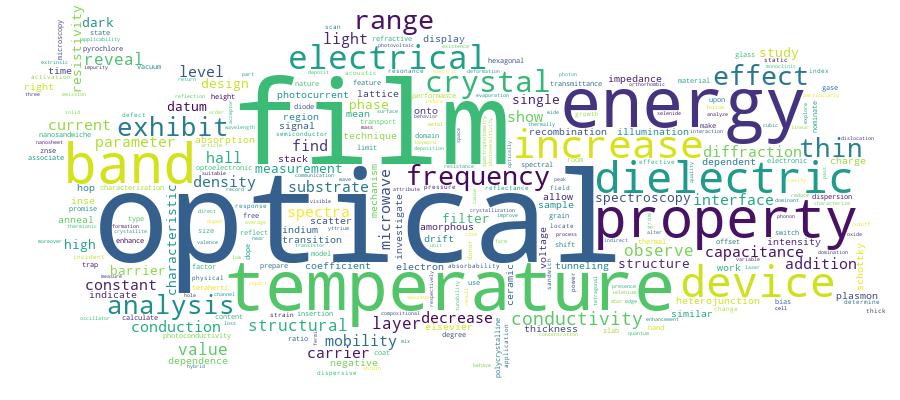
Competency Cloud
15 results
Scholarly Output Search Results
Now showing 1 - 10 of 15
Article Citation - WoS: 6Citation - Scopus: 6Dielectric Dispersion at the Mn/Znpc Interfaces(Wiley-v C H verlag Gmbh, 2020) Qasrawi, Atef F.; Zyoud, Hadeel M.Herein, the effects of manganese transparent (150 nm) substrates on the structural, nonlinear optical, and dielectric properties of zinc phthalocyanine are explored. ZnPc thin films are observed to exhibit deformed crystal structure associated with remarkable enhancement in the light absorbability by 21 times at 2.62 eV and by 173 times in the near-infrared (NIR) region of light upon replacement of glass by transparent Mn substrates. The Mn layer also causes a redshift in the energy bandgap, allows generation of free carrier absorption process and increases the dielectric constant by more than 169% in the NIR region. The interaction between the manganese substrates with the organic ZnPc thin layers decreases the free holes density, widens the plasmon frequency range, and improves the drift mobility of holes. The nonlinear dielectric response with the highly improved light absorbability in the NIR range of light nominates the Mn/ZnPc thin films for optoelectronic applications.Article Citation - WoS: 9Citation - Scopus: 9Energy Band Diagram and Current Transport Mechanism in P-mgo/N-ga4<(Ieee-inst Electrical Electronics Engineers inc, 2015) Qasrawi, Atef F.; Gasanly, N. M.A p-n heterojunction made of MgO and Ga4Se3S single crystal has been successfully produced. The current-voltage curve analysis has shown that the current conduction mechanism is mostly governed by the Richardson-Schottky mechanism. The width of the effective interface region of the p-n junction was found to be 3.72x10(-5)cm. The work function and the electron affinity of the Ga4Se3S crystals were also determined as 4.32 and 3.96 eV, respectively. On the other hand, the capacitance-voltage curve analysis, which was carried out in the power range that extends from Bluetooth to WLAN power outputs, reflected a built-in voltage of 0.48 eV and density of noncompensated carriers of 8.2 x 10(16)cm(-3). The device is observed to exhibit a wide range of negative resistance associated with the tunneling of charged particles at reverse biasing down to similar to 1.28 V. At that voltage, when exposed to a He-Ne laser beam of similar to 3 mW, the device reflected a responsivity of similar to 80. The charge storability increased and the I-V characteristics are significantly shifted. These properties are promising because it indicates the applicability of these tunneling devices in optoelectronics.Article Citation - WoS: 7Citation - Scopus: 7Enhancements of Light Absorbability, Optical Conductivity, and Terahertz Cutoff Frequency in Stacked Layers of Selenium Via Ag Nanoslabs Sandwiching(Wiley-v C H verlag Gmbh, 2019) Qasrawi, Atef F.; Abu Al Rob, Osama H.Herein, the effects of insertion of Ag layer of thickness of 100 nm between two stacked layers of selenium are investigated by means of X-ray diffraction, scanning electron microscopy, and optical spectrophotometry techniques. While the structural analysis shows the amorphous nature of growth of the stacked layers of Se, the morphology analysis shows the formation of nanorods and nanowires that exhibit lengths and diameters in the ranges of 1.5-2.5 mu m and 36-146 nm, respectively. The optical spectroscopy analysis shows that the presence of Ag between stacked layers of selenium enhances the light absorbability, increases the optical conductivity, and widens the range of the terahertz cutoff frequency. In addition, Ag layers increase the drift mobility from 15.07 to 35.64 cm(2) Vs(-1) and extend the plasmon frequency domain of stacked layers of selenium from 0.45-5.60 to 0.62-5.90 GHz. The calculated optical conductivity parameters and the spectral analysis of the terahertz cutoff frequency that vary in the range of 0.35-13.20 THz indicate the applicability of the Ag sandwiched selenium stacked layers as terahertz cavities suitable for visible-light communications as band-pass filters.Article Citation - WoS: 3Citation - Scopus: 3Analysis of the Junction Properties of C/Gase0.5< Back-To Schottky-Type Photodetectors(Ieee-inst Electrical Electronics Engineers inc, 2015) Khanfar, Hazem K.; Qasrawi, Atef F.; Gasanly, Nizami M.In this paper, a C/GaSe0.5S0.5/C metal-semiconductor-metal photodetector is suggested and described. The device is explored by means of current-voltage and capacitance-voltage (C-V) characteristics under different photoexcitation intensities. It was observed that the design of the back-to-back Schottky device has reduced the dark current of the normal Ag/GaSe0.5S0.5/C Schottky diode by 13 times and increased the photosensitivity from 3.8 to similar to 2.1x10(3). The device exhibited a barrier height of 0.842 eV in the dark. The barrier height is reduced via photoexcitation. In addition, the C/GaSe0.5S0.5/C device exhibited an ON/OFF switching property from low injection OFF to high injection ON at specific biasing voltages. This voltage decreased with the increasing illumination intensity. On the other hand, the C-V characteristics of the device, which was recorded for an ac input signal with 100 MHz at different levels of photoexcitation shifted up when the intensity of light was increased. When the same measurement was repeated at signal frequency of 1.6 GHz, the C-V characteristics reflected a different level of capacitance response. These features of C/GaSe0.5S0.5/C photodetectors nominate the device to be used as multipurpose optical switches being suitable to store different levels of electromagnetic energy at microwave frequencies.Article Citation - WoS: 1Citation - Scopus: 1Tungsten Doped Bi1.5zn0.92< Ceramics Designed as Radio/Microwave Band Pass/Reject Filters(Wiley, 2021) Qasrawi, Atef F.; Abdalghafour, Mays A.; Mergen, A.Herein, radiowave/microwave bandpass/reject filters are fabricated from the tungsten doped Bi1.5Zn0.92Nb1.5-6x/5WxO6.92 (W-BZN) pyrochlore ceramics. The W-BZN band filters are prepared by the solid state reaction technique and subjected to X-ray diffraction (XRD) and impedance spectroscopy analyses. It was shown that the W-BZN filters can display negative capacitance effects accompanied with resonance-antiresonance oscillations. The calculations of the reflection coefficient parameter (S-11), the return loss (L-r) and the voltage standing wave ratios (VSWR) in the frequency domain of 0.01 to 1.80 GHz, has shown that the W-BZN device can perform as microwave cavities at two notch frequency values of 0.44 and 1.53 GHz. W-BZN devices can also be nominated as noise reducers and radiowave/microwave signal receivers suitable for telecommunication technology.Article Citation - WoS: 11Citation - Scopus: 11Band Offsets, Optical Conduction, and Microwave Band Filtering Characteristics of Γ-in2se3< Heterojunctions(Wiley-v C H verlag Gmbh, 2020) Qasrawi, Atef F.; Kmail, Reham R.Herein, the design and experimental characterization of gamma-In2Se3/CuO interfaces are considered. Thin films of gamma-In(2)Se(3)are coated with thin layers of CuO at room temperature. The heterojunction device is structurally, morphologically, and optically characterized. It is observed that the coating of CuO onto gamma-In(2)Se(3)engenders the formation of CuSe(2)at the ultrathin interface. The gamma-In2Se3/CuO heterojunctions exhibit maximum possible conduction and valence band offsets of values 0.47 and 0.96 eV, respectively. The dielectric spectra display two dielectric resonance peaks at 2.96 and 1.78 eV. In addition, analyses of the optical conductivity spectra reveal accurate drift mobility and plasmon frequency values of 31.31 cm(2) Vs(-1)and 1.5 GHz, respectively. The ability of the device to control the signal propagation at gigahertz level is experimentally tested by the impedance spectroscopy technique which proved the ability of the device to behave as bandpass filters of notch frequency of 1.49 GHz. The gamma-In2Se3/CuO heterojunction devices are also observed to display terahertz cutoff frequency values of approximate to 24 THz in the infrared (IR) range of incident photon energy and approximate to 193 THz in the ultraviolet light range. The nonlinear optical performance of the device nominates it for use as terahertz/gigahertz band filters.Article Citation - WoS: 11Citation - Scopus: 11Design and Applications of Al/Inse Hybrid Device(Ieee-inst Electrical Electronics Engineers inc, 2015) Qasrawi, Atef F.; Khanfar, Hazem K.In this paper, a hybrid device made of Ag/BN Schottky barrier and anisotype InSe/BN heterojunction is designed and characterized. The design of the energy band diagram of the device revealed a valance band splitting at the InSe/BN interface and a barrier height at the Ag/BN junction of 3.04 and 6.49 eV, respectively. These parameters which were designed to force current conduction by tunneling were experimentally confirmed by the dark I-V characteristics which revealed an electric field assisted tunneling process. The hybrid device exhibited high/low current switching property at Vs = 2.60 V when forward biased. When the device was exposed to 850-nm lasers light, Vs regularly increased with increasing light power indicating the applicability of these devices as IR photodetectors. In addition, when it was used as capacitor and depleted with signal of frequency of 0.1 GHz and varying amplitude it showed good energy storing property with a quality factor of similar to 200. On the other hand, when the hybrid device was used as microwave resonator it behaves like bandstop filter that blocks signals of various notch frequencies in the range of 1.58-2.30 GHz. The features of the device are promising as they indicate the applicability of the Al/InSe/BN/Ag in communication technology.Article Citation - WoS: 8Citation - Scopus: 10Thickness Effects on the Dielectric Dispersion and Optical Conductivity Parameters of Cuo Thin Films(Wiley, 2020) Qasrawi, Atef F.; Qasrawı, Atef Fayez Hasan; Hamamdah, Alaa A.; Qasrawı, Atef Fayez Hasan; Department of Electrical & Electronics Engineering; Department of Electrical & Electronics EngineeringIn this article, the effect of film thickness on the structural, optical, dielectric, and optical conductivity parameters of CuO thin films are reported. CuO thin films which are prepared by the physical vapor deposition technique under vacuum pressure of 10(-5) mbar with various thicknesses in the range of 50 to 1000 nm are observed to exhibit amorphous nature of growth. The values of the energy bands gaps, the spectral response of the dielectric constant and of the optical conductivity parameters are highly sensitive to the film thickness. Particularly, while the 50 nm thick CuO films exhibits quantum confinement which forces the material to have wide band gap (2.70 eV), the thicker films display an energy band gap in the infrared range of spectrum. It was also observed that the thicker the films, the more pronounced the nonlinear dielectric response. In addition, analysis of the optical conductivity parameters using Drude-Lorentz approach for optical conduction has shown that the 50 nm thick films can display drift mobility value of 4.65 cm(2)/Vs accompanied with plasmon frequency of 1.20 GHz and free carrier density of 7.5x10(17) cm(3). The Drude-Lorentz analysis has also shown that the free carrier density and the plasmon frequency of CuO decreases with increasing film thickness. This decrement is accompanied with enhancement in the drift mobility values which reaches 12.56 cm(2)/V s as the film thickness exceeds 250 nm. Such features of the thin layer of CuO make them suitable for the production of nano/microthin film transistors.Article Citation - WoS: 1Citation - Scopus: 1Pseudodielectric Dispersion in As2se3< Thin Films(Wiley-v C H verlag Gmbh, 2020) Kayed, Tarek S.; Kayed, Tarek Said; Qasrawi, Atef F.; Qasrawı, Atef Fayez Hasan; Kayed, Tarek Said; Qasrawı, Atef Fayez Hasan; Department of Electrical & Electronics Engineering; Department of Electrical & Electronics EngineeringHerein, X-ray diffraction, energy dispersive X-ray spectroscopy, and spectral ellipsometry techniques are used to investigate the structural, pseudo-optical, and pseudodielectric properties of arsenic selenide thin films. The stoichiometric films which are prepared by the thermal evaporation technique are found to prefer the amorphous nature of growth. While the pseudoabsorption coefficient spectra display strong absorption bands at 1.84, 1.81, 1.41, and 1.13 eV, the preferred pseudo-optical transitions happen within a direct forbidden energy bandgap of 1.80 eV. In addition, the real part of the pseudodielectric spectra displays three strong resonance peaks at critical energy values of 2.33, 1.90, and 1.29 eV. Modeling of the imaginary part of the pseudodielectric constant spectra in accordance with the Drude-Lorentz approach results in the existence of six linear oscillators. The response of arsenic selenide to elliptically polarized light signals shows that the films exhibit drift mobility, free electron concentration, and plasmon frequency values in the ranges of 0.21-43.96 cm(2) V(-1)s(-1), 1.90-58.0 x 10(19) cm(-3), and 5.8-32.0 GHz, respectively. The optical conductivity parameters for As2Se3 film nominate it as a promising candidate for the fabrication of tunneling diodes suitable for microwaves filtering up to 32.0 GHz and as thin-film transistors.Article Citation - WoS: 10Citation - Scopus: 14Impedance Spectroscopic Analysis of the Inse/Znse Interface(Ieee-inst Electrical Electronics Engineers inc, 2017) Al Garni, Sabah E.; Qasrawi, Atef F.In this paper, n-InSe/p-ZnSe/n-InSe (npn) thin-film transistors (TFTs) are deposited onto cubic (111)-oriented Ag, Au, and Al thin-film substrates. The properties of the structures are explored by means of X-ray diffraction and impedance spectroscopy in the frequency range of 10-1800 MHz. Although the Ag, Au, and Al substrates are observed to be well aligned with the cubic ZnSe, the electrical properties of these TFT for the np (InSe/ZnSe) and npn interfaces are different. Namely, while the capacitance of the TFT deposited onto the Ag substrate exhibited positive values, the capacitance of the TFT deposited onto Au and Al films is negative in the range of 10-1100 and 800-1800 MHz, respectively. In addition, even though the impedance of the Ag/np/Ag and Ag/npn/Ag heterojunction monotonically decreasedwith the increasing frequency, the impedance of Au/np/Au and Au/npn/Au interfaces exhibited resonance peaks at 1211 and 1148 MHz, respectively. When the wave trap features are read from reflection spectra, it is observed that the Ag/npn/Ag and the Al/np/Ag exhibit lowpass filter properties and the Au/npn/Au behaves as a bandstop filter at a notch frequency of 1176 MHz. These properties nominate the npn transistors for use as microwave traps and as high-speed CMOS amplifiers.
