
Qasrawı, Atef Fayez Hasan
Loading...

Profile URL
Name Variants
Qasrawi, Atef Fayez
Atef Fayez Hasan, Qasrawı
Qasrawı,A.F.H.
Qasrawi,A.F.H.
Q., Atef Fayez Hasan
Q.,Atef Fayez Hasan
Atef Fayez Hasan, Qasrawi
Qasrawi, Atef Fayez Hasan
A.F.H.Qasrawı
A.F.H.Qasrawi
A., Qasrawi
A.,Qasrawı
Qasrawı, Atef Fayez Hasan
Qasrawi, A. F.
Qasrawi,A.F.
Qasrawi, AF
Qasrawi, Atef F.
Qasrawi, Atef A.
Qasrawi, Atef Fayez
Qasrawi, Atef F.
Qasrawi, Atef A.
Qasrawi, Atef
Atef Fayez Hasan, Qasrawı
Qasrawı,A.F.H.
Qasrawi,A.F.H.
Q., Atef Fayez Hasan
Q.,Atef Fayez Hasan
Atef Fayez Hasan, Qasrawi
Qasrawi, Atef Fayez Hasan
A.F.H.Qasrawı
A.F.H.Qasrawi
A., Qasrawi
A.,Qasrawı
Qasrawı, Atef Fayez Hasan
Qasrawi, A. F.
Qasrawi,A.F.
Qasrawi, AF
Qasrawi, Atef F.
Qasrawi, Atef A.
Qasrawi, Atef Fayez
Qasrawi, Atef F.
Qasrawi, Atef A.
Qasrawi, Atef
Job Title
Doçent Doktor
Email Address
atef.qasrawi@atilim.edu.tr
Main Affiliation
Department of Electrical & Electronics Engineering
Status
Former Staff
Website
ORCID ID
Scopus Author ID
Turkish CoHE Profile ID
Google Scholar ID
WoS Researcher ID
Sustainable Development Goals
 1
1NO POVERTY
0
Research Products
 2
2ZERO HUNGER
0
Research Products
 3
3GOOD HEALTH AND WELL-BEING
0
Research Products
 4
4QUALITY EDUCATION
0
Research Products
 5
5GENDER EQUALITY
0
Research Products
 6
6CLEAN WATER AND SANITATION
0
Research Products
 7
7AFFORDABLE AND CLEAN ENERGY
17
Research Products
 8
8DECENT WORK AND ECONOMIC GROWTH
0
Research Products
 9
9INDUSTRY, INNOVATION AND INFRASTRUCTURE
0
Research Products
 10
10REDUCED INEQUALITIES
0
Research Products
 11
11SUSTAINABLE CITIES AND COMMUNITIES
0
Research Products
 12
12RESPONSIBLE CONSUMPTION AND PRODUCTION
0
Research Products
 13
13CLIMATE ACTION
0
Research Products
 14
14LIFE BELOW WATER
0
Research Products
 15
15LIFE ON LAND
0
Research Products
 16
16PEACE, JUSTICE AND STRONG INSTITUTIONS
1
Research Products
 17
17PARTNERSHIPS FOR THE GOALS
0
Research Products

This researcher does not have a Scopus ID.

This researcher does not have a WoS ID.

Scholarly Output
226
Articles
222
Views / Downloads
677/0
Supervised MSc Theses
0
Supervised PhD Theses
0
WoS Citation Count
1894
Scopus Citation Count
1915
Patents
0
Projects
0
WoS Citations per Publication
8.38
Scopus Citations per Publication
8.47
Open Access Source
17
Supervised Theses
0
| Journal | Count |
|---|---|
| Crystal Research and Technology | 16 |
| Journal of Electronic Materials | 15 |
| physica status solidi (a) | 12 |
| Materials Science in Semiconductor Processing | 11 |
| Journal of Alloys and Compounds | 11 |
Current Page: 1 / 11
Scopus Quartile Distribution
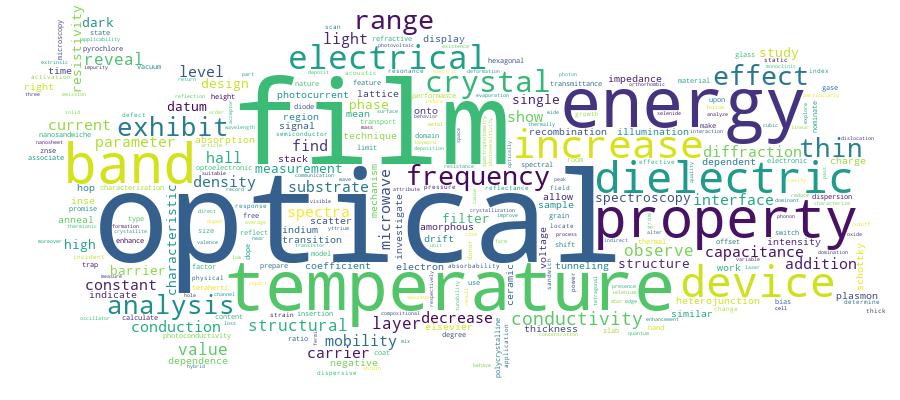
Competency Cloud
15 results
Scholarly Output Search Results
Now showing 1 - 10 of 15
Article Citation - WoS: 5Citation - Scopus: 5Acoustic Phonons Scattering Mobility and Carrier Effective Mass in In6s7< Crystals(Elsevier Science Sa, 2006) Qasrawi, A. F.; Gasanly, N. M.Systematic dark electrical resistivity and Hall coefficient measurements have been carried out in the temperature range of 170-320 K on n-type In6S7 crystals. The analysis of the electrical resistivity and carrier concentration reveals the intrinsic type of conduction with an average energy band gap of similar to 0.75 eV The carrier effective masses of the conduction and valence bands were calculated from the intrinsic temperature-dependent carrier concentration data and were found to be 0.565m(0) and 2.020m(0), respectively. The temperature-dependent Hall mobility was observed to follow the mu alpha T-3/2 law and was analyzed assuming the domination of acoustic phonons scattering. The acoustic phonons scattering mobility was calculated from the crystal's structural data with no assumptions. The experimental Hall mobility data of In6S7 crystals coincides with the theoretical acoustic phonons scattering mobility data with acoustic deformation potential of 6.4 eV. (c) 2006 Elsevier B.V. All rights reserved.Article Citation - WoS: 7Citation - Scopus: 7Structural and Dielectric Properties of Ba1-x< Solid Solutions(Wiley-v C H verlag Gmbh, 2021) Qasrawi, A. F.; Sahin, Ethem Ilhan; Abed, Tamara Y.; Emek, MehribanHerein, lanthanum doping effects on the structural, dielectric, and electrical properties of Ba1-xLax(Zn1/3Nb2/3)O-3 (BZN) solid solutions are focused upon. The La contents which are varied in the range of 0.02-0.20 exhibit a solubility limit of x = 0.02. Although minor phases of Ba5Nb4O15 and Ba3LaNb3O12 appear for samples doped with La contents of x = 0.05 and x = 0.10, they play no remarkable role for the enhanced structural and dielectric properties of BZN. The La doping content of x = 0.02 succeeds in increasing the crystallite size by 51.16% and lowering the microstrain by 34.18% and defect concentration by 63.10%. La-doped BZN ceramics display higher values of relative density and electrical conductivity. The analyses of the dielectric spectra as a function of temperature display dielectric relaxation behavior above 120 degrees C. In the temperature range of 20-120 degrees C, La doping changes the temperature coefficient of dielectric constants from +30 ppm degrees C-1 in pure samples to -341 ppm degrees C-1 in samples doped with La contents of x = 0.10. The enhancements in structural parameters, density values, and dielectric responses that are achieved via La doping make BZN ceramics more suitable for electronic device fabrication.Article Citation - WoS: 7Citation - Scopus: 7Photoconductivity Kinetics in Agin5s8< Thin Films(Elsevier Science Sa, 2010) Qasrawi, A. F.; Kayed, T. S.; Ercan, Ismail; Ercan, SmailThe temperature (T) and illumination intensity (F) effects on the photoconductivity of as grown and heat-treated AgIn5S8 thin films has been investigated. At fixed illumination intensity, in the temperature region of 40-300K, the photocurrent (I-ph) of the films was observed to decrease with decreasing temperature. The I-ph of the as grown sample behaved abnormally in the temperature region of 170-180K. At fixed temperature and variable illumination intensity, the photocurrent of the as grown sample exhibited linear, sublinear and supralinear recombination mechanisms at 300 K and in the regions of 160-260K and 25-130 K. respectively. This behavior is attributed to the exchange of role between the linear recombination at the surface near room temperature and trapping centers in the film which become dominant as temperature decreases. Annealing the sample at 350 K for 1 h improved the characteristic curves of I-ph. The abnormality disappeared and the I-ph - T dependence is systematic. The data analysis of which revealed two recombination centers located at 66 and 16 meV. In addition, the sublinear recombination mechanism disappeared and the heat-treated films exhibited supralinear recombination in most of the studied temperature range. (C) 2010 Elsevier B.V. All rights reserved.Article Citation - WoS: 5Citation - Scopus: 4Thickness and Annealing Effects on the Structural and Optical Conductivity Parameters of Zinc Phthalocyanine Thin Films(inst Materials Physics, 2020) Alharbi, S. R.; Qasrawi, A. F.; Khusayfan, N. M.; Department of Electrical & Electronics EngineeringIn this work, the effects of the thin film thicknesses on the structural, optical absorption, energy band gap, dielectric spectra and optical conductivity parameters of the Zinc phthalocyanine thin films are considered. Thin films of ZnPc of thicknesses of 50-600 nm which are coated onto glass substrates are observed to exhibit amorphous nature of growth. The polycrystalline monoclinic ZnPc phase of the films is obtained via annealing the films at 200 degrees C in a vacuum atmosphere. Increasing the ZnPc films thickness shrunk the energy band gap in the B- and Q- bands and decreased both of the optical conductivities and free holes density in the Q-band. The increase in the film thickness is also observed to decrease the plasmon frequency and the drift mobility of holes in the films. The highest dielectric constant is obtained for films of thicknesses of 100 nm. The annealing process enhanced the optical absorption, redshifts the energy band gap value and the critical energy of the absolute maxima of dielectric constant. In addition, while the heat treatment enhanced both of the scattering times at femtosecond level and the drift mobility, it reduced the free holes density, and the plasmon frequency.Article Citation - WoS: 4Citation - Scopus: 4Optical Dynamics at the Au/Znpc Interfaces(Univ Fed Sao Carlos, dept Engenharia Materials, 2020) Qasrawi, A. F.; Zyoud, Hadeel M.In this work, the optical dynamics and the structural properties of the zinc phthalocyanine which are coated onto 150 nm thick Au substrates are studied by the X-ray diffraction and optical spectrophotometry techniques. The Au/ZnPc interfaces appears to be strongly affected by the large lattice mismatches at the interface. It is observed that the coating ZnPc onto Au substrates increases the light absorbability by 4.7 and 128.2 times in the visible and infrared regions of light, respectively. Au substrates activated the free carrier absorption mechanism in the ZnPc thin films in the infrared range of light. In addition, the transparent Au substrates forced narrowing the energy band gap in both of the Q and B bands. It also increased the dielectric constant value by similar to 3.5 times in the IR range. The enhancements in the optical properties of ZnPc that resulted from the thin Au substrates make the ZnPc more suitable for optoelectronic, nonlinear optical applications and for electromagnetic energy storage in the infrared range of light.Article Citation - WoS: 3Citation - Scopus: 3Ytterbium Induced Structural Phase Transitions and Their Effects on the Optical and Electrical Properties of Znpc Thin Films(Springer, 2020) Qasrawi, A. F.; Zyoud, Hadeel M.In this work, the effects of ytterbium substrates of thicknesses of 150 (Yb-150) and 1000 nm (Yb-1000) on the structural, optical and electrical properties of zinc phthalocyanine (ZnPc) are investigated. While the Yb-150/ZnPc exhibited strained monoclinic structure, the Yb-1000/ZnPc thin films are observed to exhibit phase transitions from monoclinic to triclinic structure. Analysis which targeted observatories of the effects of the Yb-150 substrate on the optical properties indicated that the transparent Yb-150 substrate enhanced the light absorbability by more than 11 times at 1.27 eV. On the other hand, the impedance spectroscopy measurements on the nontransparent Yb-1000/ZnPc/Ag sandwiched structures have shown that these devices could exhibit negative capacitance (NC) effect in the frequency domain of 0.244-1.800 GHz. The NC effect is associated with resonance-anti-resonance response at 0.235 and 0.244 GHz, respectively. The structural, optical and electrical properties of the Yb/ZnPc interfaces indicate its applicability as optoelectronic and/or radio/microwave components.Article Citation - Scopus: 1Structural and Electrical Performance of Moo3 Films Designed as Microwave Resonators(inst Materials Physics, 2020) Al Garni, S. E.; Qasrawi, A. F.; Alharbi, S. R.; Department of Electrical & Electronics EngineeringIn this work, the effect of the insertion of lithium slabs of thicknesses of 50 nm between stacked layers of MoO3 is considered. Stacked layers of MoO3 comprising lithium slabs are prepared by the thermal evaporation technique onto Au substrates under vacuum pressure of 10(-5) mbar. The effects of Li slabs are explored by the X-ray diffraction, scanning electron microscopy, current-voltage characteristics and impedance spectroscopy techniques in the frequency domain of 0.01-1.80 GHz. While the presence of Li slabs did not alter the amorphous nature of structure, it forced the growth of rod-like grains of diameters of 100-160 nm and lengths of 1.5 mu m. Electrically, the presence of Li in the samples enhanced the rectifying properties of the devices and force reverse to forward current ratios larger than 60 times. Li slabs also controlled the negative capacitance effect and resonance -antiresonance regions in the Au/MoO3/MoO3/C stacked layers. While the Au/MoO3/MoO3/C devices displayed high conductance and low impedance values in the studied frequency domain, the Au/MoO3/Li/MOO3/C devices exhibited low conductance and high impedance mode in the frequency domain of 0.01-0.59 GHz. It is also found that the presence of Li slabs improved the performance of the devices through driving it to exhibit lower reflection coefficient and high return loss values near 0.80 GHz. The features of the devices nominate them for use as RF-Microwave traps or resonators.Article Citation - WoS: 10Citation - Scopus: 10Fabrication and Characterization of Yb/Moo3< Devices(Elsevier Science Bv, 2019) Al Garni, S. E.; Qasrawi, A. F.In this study we have explored some of the properties of Yb/MoO3/(C, Yb) thin films as a multifunctional optoelectronic device. While the MoO3 films which are deposited onto glass substrate are found to be of amorphous nature, the Yb metal induced the growth of orthorhombic phase of MoO3. The films are high transparent and exhibit energy band gap value of 3.0 eV which make it sensitive to light signals in the near ultraviolet range of light. In addition, the frequency dependent capacitance-voltage characteristics of Yb/MoO3/(C,Yb) structure display pronounced accumulation, depletion and inversion regions that nominate it for use as tunable metal-oxide-semiconductor MOS device. The physical parameters including the built in voltage, barrier height, flat band and threshold voltages of the MOS capacitors are also determined. Furthermore, the current-voltage characteristics displayed high rectification ratio that could reach 1.26 x 10(4) at biasing voltage of 0.5 V nominating the Yb/MoO3/C device for use as electronic switches. On the other hand, the impedance spectroscopy analysis in the frequency domain of 0.01-1.80 GHz, have shown that the Yb/MoO3/Yb structures are more appropriate for microwave applications than Yb/MoO3/C device. The microwave cutoff frequency for the Yb sandwiched MoO3 exceeds 140 GHz. The return loss for the Yb/MoO3/Yb reaches 26 dB at 1.8 GHz. These values are attractive as they suit microwave low/high pass band fillers.Article Citation - WoS: 4Citation - Scopus: 4Crystal Data and Indirect Optical Transitions in Tl2ingase4< Crystals(Pergamon-elsevier Science Ltd, 2008) Qasrawi, A. F.; Gasanly, N. M.The room temperature crystal data and the optical properties of the Bridgman method grown Tl2InGaSe4 crystals are reported and discussed. The X-ray diffraction technique has revealed that Tl2InGaSe4 is a single phase crystal of monoclinic structure. The unit cell lattice parameters, which were recalculated from the X-ray data, are found to be a = 0.77244 nm, b = 0.64945 nm, c = 0.92205 nm and beta = 95.03 degrees. The temperature dependence of the optical band gap of Tl2InGaSe4 single crystal in the temperature region of 290-500 K has also been investigated. The absorption coefficient was calculated from the transmittance and reflectance data in the incident photon energy range of 1.60-2.10 eV. The absorption edge is observed to shift toward lower energy values as temperature increases. The fundamental absorption edge corresponds to indirect allowed transition energy gap of 1.86 eV that exhibited a temperature coefficient gamma = -3.53 x 10(-4) eV/K. (C) 2007 Elsevier Ltd. All rights reserved.Article Citation - WoS: 8Citation - Scopus: 8Effect of Lithium Nanosandwiching on the Structural, Optical and Dielectric Performance of Moo3(Elsevier, 2019) Al Garni, S. E.; Qasrawi, A. F.In this article, we discuss the effects of lithium nanosheets on the structural, optical, dielectric and optical conductivity parameters of the MoO3 films. The nanosandwiching of Li layers between two layers of MoO3 of thicknesses larger than 20 nm induced the crystallization process of the amorphous MoO3. Namely, MoO3 thin films that are nanosandwiched with Li sheets of thicknesses larger than 50 nm, exhibit structural phase transitions from hexagonal to monoclinic and reveals larger crystallite sizes. The possible formation of Li2O at the MoO3/Li/MoO3 interfaces is simulated and discussed. Optically, the Li nanosandwiching is observed to enhance the light absorbability by 11.0 times at 2.0 eV and successfully engineered the energy bands gap in the range of 3.05-0.45 eV. It also enhances the dielectric performance. In addition, relatively thick layers of lithium (200 nm) succeeds in converting the conductivity type from n-to p-type. The modeling of the dielectric spectra in accordance with the Drude- Lorentz approach have shown that the presence of Li in the structure of MoO(3 )significantly increases the drift mobility values of electrons from 5.86 to 11.40 cm(2)/V. The plasmon frequency range for this system varies in the frequency domain of 0.32-5.94 GHz. The features of MoO3/Li/MoO3 interfaces make them attractive for thin film transistor technology as optical receivers being promising for use in optical communications.
