Mertol, Halit Cenan

Loading...
Profile Picture
Name Variants
Mertol, Halit Cenan
Halit Cenan Mertol
M., Halit Cenan
H. C. Mertol
H.,Mertol
M.,Halit Cenan
H., Mertol
Mertol,H.C.
Mertol,Halit Cenan
H.C.Mertol
Mertol H.
Halit Cenan, Mertol
Cenan Mertol H.
Mertol, Halit
Job Title
Doktor Öğretim Üyesi
Email Address
cenan.mertol@atilim.edu.tr
Main Affiliation
Civil Engineering
Status
Scopus Author ID
Turkish CoHE Profile ID
Google Scholar ID
WoS Researcher ID

Sustainable Development Goals

9

INDUSTRY, INNOVATION AND INFRASTRUCTURE
INDUSTRY, INNOVATION AND INFRASTRUCTURE Logo

0

Research Products

5

GENDER EQUALITY
GENDER EQUALITY Logo

0

Research Products

2

ZERO HUNGER
ZERO HUNGER Logo

0

Research Products

4

QUALITY EDUCATION
QUALITY EDUCATION Logo

1

Research Products

11

SUSTAINABLE CITIES AND COMMUNITIES
SUSTAINABLE CITIES AND COMMUNITIES Logo

12

Research Products

17

PARTNERSHIPS FOR THE GOALS
PARTNERSHIPS FOR THE GOALS Logo

0

Research Products

16

PEACE, JUSTICE AND STRONG INSTITUTIONS
PEACE, JUSTICE AND STRONG INSTITUTIONS Logo

0

Research Products

3

GOOD HEALTH AND WELL-BEING
GOOD HEALTH AND WELL-BEING Logo

0

Research Products

12

RESPONSIBLE CONSUMPTION AND PRODUCTION
RESPONSIBLE CONSUMPTION AND PRODUCTION Logo

1

Research Products

15

LIFE ON LAND
LIFE ON LAND Logo

0

Research Products

8

DECENT WORK AND ECONOMIC GROWTH
DECENT WORK AND ECONOMIC GROWTH Logo

1

Research Products

14

LIFE BELOW WATER
LIFE BELOW WATER Logo

0

Research Products

10

REDUCED INEQUALITIES
REDUCED INEQUALITIES Logo

0

Research Products

7

AFFORDABLE AND CLEAN ENERGY
AFFORDABLE AND CLEAN ENERGY Logo

0

Research Products

1

NO POVERTY
NO POVERTY Logo

0

Research Products

6

CLEAN WATER AND SANITATION
CLEAN WATER AND SANITATION Logo

0

Research Products

13

CLIMATE ACTION
CLIMATE ACTION Logo

0

Research Products
Documents

18

Citations

365

h-index

10

Documents

14

Citations

310

Scholarly Output

34

Articles

18

Views / Downloads

37/0

Supervised MSc Theses

14

Supervised PhD Theses

1

WoS Citation Count

272

Scopus Citation Count

306

WoS h-index

7

Scopus h-index

8

Patents

0

Projects

1

WoS Citations per Publication

8.00

Scopus Citations per Publication

9.00

Open Access Source

8

Supervised Theses

15

Google Analytics Visitor Traffic

JournalCount
PCI Journal2
Buildings2
Journal of the Croatian Association of Civil Engineers2
Journal of Performance of Constructed Facilities2
Journal of Reinforced Plastics and Composites1
Current Page: 1 / 3

Scopus Quartile Distribution

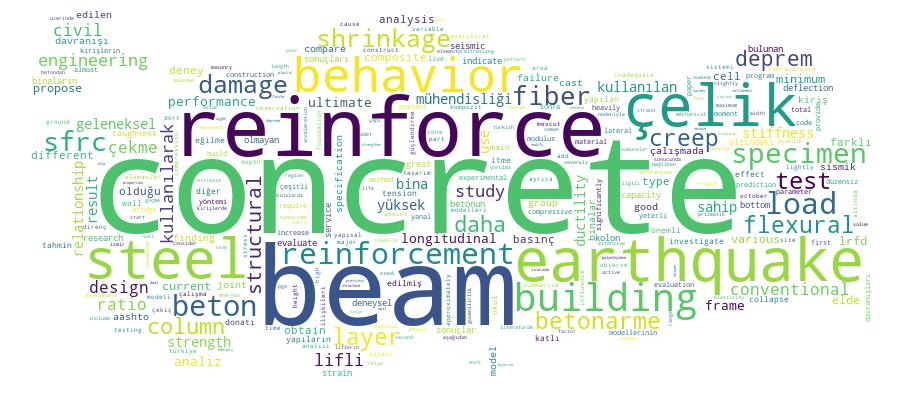
Competency Cloud

GCRIS Competency Cloud

Scholarly Output Search Results

Now showing 1 - 3 of 3
  • Article
    Citation - Scopus: 19
    Creep and shrinkage behavior of high-strength concrete and minimum reinforcement ratio for bridge columns
    (Precast/Prestressed Concrete Institute, 2010) Mertol,H.C.; Rizkalla,S.; Zia,P.; Mirmiran,A.
    This paper summarizes the findings of an extensive research program that examined the shrinkage and creep behavior of high-strength concrete (HSC) up to a strength of 18 ksi (124 MPa). Creep and shrinkage strains of 60 specimens were monitored for up to two years. The variables considered in this investigation were the concrete compressive strength, specimen size, curing type, age of concrete at loading, and loading stress level. Research findings indicate that the current American Association of State Highway and Transportation Officials' AASHTO LRFD Bridge Design Specifications could be used to estimate the creep coefficient and shrinkage strain of HSC up to 15 ksi (103 MPa). However, the current AASHTO LRFD specifications do not provide appropriate predictions for concrete compressive strength greater than 15 ksi (103 MPa). A revised time-development correction factor is proposed to obtain better predictions for HSC up to 18 ksi (124 MPa). For HSC compression members, the current AASHTO LRFD specifications require an excessive amount of minimum longitudinal reinforcement to account for the long-term effects due to shrinkage and creep. Based on an analysis, a new relationship is proposed for the required minimum reinforcement ratio.
  • Article
    Creep and Shrinkage Behavior of High-Strength Concrete and Minimum Reinforcement Ratio for Bridge Columns
    (Precast/Prestressed Concrete Institute, 2010) Mertol,H.C.; Rizkalla,S.; Zia,P.; Mirmiran,A.
    This paper summarizes the findings of an extensive research program that examined the shrinkage and creep behavior of high-strength concrete (HSC) up to a strength of 18 ksi (124 MPa). Creep and shrinkage strains of 60 specimens were monitored for up to two years. The variables considered in this investigation were the concrete compressive strength, specimen size, curing type, age of concrete at loading, and loading stress level. Research findings indicate that the current American Association of State Highway and Transportation Officials' AASHTO LRFD Bridge Design Specifications could be used to estimate the creep coefficient and shrinkage strain of HSC up to 15 ksi (103 MPa). However, the current AASHTO LRFD specifications do not provide appropriate predictions for concrete compressive strength greater than 15 ksi (103 MPa). A revised time-development correction factor is proposed to obtain better predictions for HSC up to 18 ksi (124 MPa). For HSC compression members, the current AASHTO LRFD specifications require an excessive amount of minimum longitudinal reinforcement to account for the long-term effects due to shrinkage and creep. Based on an analysis, a new relationship is proposed for the required minimum reinforcement ratio.
  • Article
    Citation - WoS: 18
    Creep and Shrinkage Behavior of High-Strength Concrete and Minimum Reinforcement Ratio for Bridge Columns
    (Precast/prestressed Concrete inst, 2010) Mertol, Halit Cenan; Rizkalla, Sami; Zia, Paul; Mirmiran, Amir
    This paper summarizes the findings of an extensive research program that examined the shrinkage and creep behavior of high-strength concrete (HSC) up to a strength of 18 ksi (124 MPa). Creep and shrinkage strains of 60 specimens were monitored for up to two years. The variables considered in this investigation were the concrete compressive strength, specimen size, curing type, age of concrete at loading, and loading stress level. Research findings indicate that the current American Association of State Highway and Transportation Officials' AASHTO LRFD Bridge Design Specifications could be used to estimate the creep coefficient and shrinkage strain of HSC up to 15 ksi (103 MPa). However, the current AASHTO LRFD specifications do not provide appropriate predictions for concrete compressive strength greater than 15 ksi (103 MPa). A revised time-development correction factor is proposed to obtain better predictions for HSC up to 18 ksi (124 MPa). For HSC compression members, the current AASHTO LRFD specifications require an excessive amount of minimum longitudinal reinforcement to account for the long-term effects due to shrinkage and creep. Based on an analysis, a new relationship is proposed for the required minimum reinforcement ratio.