
Cihaner, Atilla
Loading...
Profile URL
Name Variants
C.,Atilla
A., Cihaner
C., Atilla
Cihaner A.
A.,Cihaner
Cihaner, Atilla
Cihaner,A.
Atilla Cihaner
Atilla, Cihaner
Cihaner,Atilla
Cihaner, A.
Cihaner, A
A., Cihaner
C., Atilla
Cihaner A.
A.,Cihaner
Cihaner, Atilla
Cihaner,A.
Atilla Cihaner
Atilla, Cihaner
Cihaner,Atilla
Cihaner, A.
Cihaner, A
Job Title
Profesör Doktor
Email Address
atilla.cihaner@atilim.edu.tr
Main Affiliation
Chemical Engineering
Status
Website
ORCID ID
Scopus Author ID
Turkish CoHE Profile ID
Google Scholar ID
WoS Researcher ID
Sustainable Development Goals
 1
1NO POVERTY
0
Research Products
 2
2ZERO HUNGER
0
Research Products
 3
3GOOD HEALTH AND WELL-BEING
1
Research Products
 4
4QUALITY EDUCATION
0
Research Products
 5
5GENDER EQUALITY
0
Research Products
 6
6CLEAN WATER AND SANITATION
1
Research Products
 7
7AFFORDABLE AND CLEAN ENERGY
3
Research Products
 8
8DECENT WORK AND ECONOMIC GROWTH
0
Research Products
 9
9INDUSTRY, INNOVATION AND INFRASTRUCTURE
0
Research Products
 10
10REDUCED INEQUALITIES
0
Research Products
 11
11SUSTAINABLE CITIES AND COMMUNITIES
0
Research Products
 12
12RESPONSIBLE CONSUMPTION AND PRODUCTION
0
Research Products
 13
13CLIMATE ACTION
0
Research Products
 14
14LIFE BELOW WATER
0
Research Products
 15
15LIFE ON LAND
0
Research Products
 16
16PEACE, JUSTICE AND STRONG INSTITUTIONS
0
Research Products
 17
17PARTNERSHIPS FOR THE GOALS
0
Research Products

Documents
101
Citations
2366
h-index
28

Documents
103
Citations
2258

Scholarly Output
121
Articles
108
Views / Downloads
558/1849
Supervised MSc Theses
12
Supervised PhD Theses
0
WoS Citation Count
2257
Scopus Citation Count
2347
Patents
0
Projects
13
WoS Citations per Publication
18.65
Scopus Citations per Publication
19.40
Open Access Source
6
Supervised Theses
12
| Journal | Count |
|---|---|
| Electrochimica Acta | 15 |
| Journal of Electroanalytical Chemistry | 13 |
| Turkish Journal of Chemistry | 6 |
| Dyes and Pigments | 6 |
| Organic Electronics | 6 |
Current Page: 1 / 8
Scopus Quartile Distribution
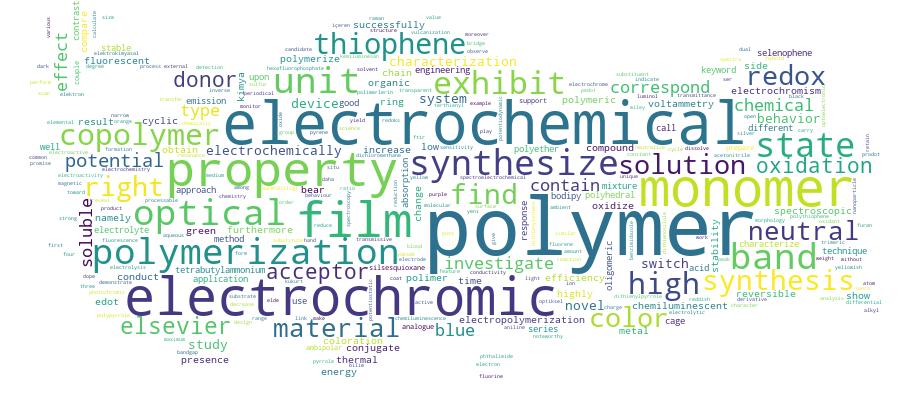
Competency Cloud
15 results
Scholarly Output Search Results
Now showing 1 - 10 of 15
Article Citation - WoS: 5Citation - Scopus: 5Electrochemical Polymerization of Para-Substituted Haloanilines(Taylor & Francis inc, 2006) Cihaner, A; Önal, AMPolyhaloanilines: poly(4-fluoroaniline) (P4FAN), poly(4-chloroaniline) (P4CAN), and poly(4-bromoaniline) (P4BAN), are synthesized from para-substituted haloaniline monomers; 4-fluoroaniline (4FAN), 4-chloroaniline (4CAN), and 4-bromoaniline (4BAN), respectively, via constant potential electrolysis (CPE) in acetonitrile-water mixture (1:1 v/v) with NaClO4 as supporting electrolyte. Prior to CPE, electrochemical behavior of the monomers were investigated in organic medium utilizing cyclic voltammetry (CV). The course of CPE was monitored using in-situ UV-VIS spectroscopic technique. Characterization of polymer products have been carried out using FT-IR and NMR spectroscopic techniques and thermal behaviors were studied using differential scanning calorimeter (DSC). Polyhaloanilines synthesized by electrochemical oxidation were doped using iodine and the change in the paramagnetic behavior was monitored by ESR, UV-VIS, and FT-IR.Article Citation - WoS: 7Citation - Scopus: 9Electrochemical Copolymerization of 2-Substituted Thiophene Derivative Linked by Polyether Bridge With Thiophene(Elsevier Science Sa, 2005) Cihaner, A; Önal, AMNew conducting copolymers have been synthesized via electrochemical oxidation of thiophene (Th) in the presence of monomer bis(2-thienyl)ethyl (1). Cyclic voltammetry (CV) studies showed that the presence of monomer I in the electrolytic solution greatly changes the CV behaviour of the formation of the polythiophene films. It is found that the increasing ratio of I was found to decrease electroactivity of copoly(I-Th). Electrochemical synthesis of copolymer films was achieved via constant potential electrolysis (CPE) in an electrolytic solution containing 0.1 M tetrabutylammonium hexafluorophosphate (TBAPF(6)) dissolved in CH3CN. Spectroelectrochemical (SPEL) properties of the films were investigated using UV-vis spectroscopic technique. (C) 2005 Elsevier B.V. All rights reserved.Article Citation - WoS: 5Citation - Scopus: 5Electrochemical Polymerization of 4-Allylanisole(Pergamon-elsevier Science Ltd, 2001) Cihaner, A; Testereci, HN; Önal, AMElectrochemical polymerization of 3-allylanisole (4AA). via constant potential electrolysis, has been investigated in acetonitrile using two different supporting electrolytes. Redox behavior of the monomer was also studied in the same solvent-electrolyte couples at room temperature. Electrochemical polymerization of the monomer yielded insoluble polymer films on the electrode surface, which bears a very low conductivity, together with the low molecular weight polymers in the bulk of the solution. The decrease in the monomer concentration, during the electrochemical polymerization. was monitored by taking the cyclic voltammogram of the electrolysis solution. The effect of temperature on the rate of electrochemical polymerization was: also studied. The polymers were characterized by taking the H-1-NMR and FTIR spectra. Molecular weight of the soluble polymer was determined by vapor pressure osmometry. Thermal analysis of the polymer film and soluble polymer were done by DSC. (C) 2001 Elsevier Science Ltd. All rights reserved.Article Citation - WoS: 6Citation - Scopus: 5Synthesis of a regular polymer containing pseudo-polyether cages(Elsevier Science Sa, 2005) Cihaner, A; Önal, AMA new compound consisting of 2-thienyl units linked by polyether bridge has been synthesized and its electrochemical polymerization was performed via constant potential electrolysis (CPE) in an electrolytic solution containing 0.1 M tetrabutylammonium hexafluorophosphate (TBAPF(6)) dissolved in CH3CN. Chemical polymerization was carried out using FeCl3 as oxidizing agent. It is found that both methods gave the same polymer product without any cleavage of the polyether bridge between thiophene (Th) rings. Although as synthesized polymers exhibited no conductivity, they gain conductivity via chemical doping using 12 vapor exposure. The polymers were characterized using FTIR spectroscopic technique and 12 doping was monitored using in-situ electron spin resonance (ESR) spectroscopy. Thermal behavior of electrochemically prepared polymer was investigated using differential scanning calorimetry, DSC and thermogravimetric analysis, TGA. (c) 2005 Elsevier B.V. All rights reserved.Article Citation - WoS: 1Citation - Scopus: 1Spectroelectrochemical Investigation of the Anodic Oxidation of Dibenzo-18(Elsevier Science Sa, 2004) Cihaner, A; Önal, AMPoly(dibenzo-18-crown-6) (poly-DB18C6) was synthesized by electrochemical oxidation of dibenzo-18-crown-6 (DB18C6) using a mixture of acetonitrile and dichloromethane as the solvent and tetrabutylammonium tetrafluoroborate (TBABF(4)) or tetrabutylammonium hexafluorophosphate (TBAPF(6)) as supporting electrolyte. The anodic polymerization of DB18C6 was investigated using in situ ESR and in situ UV-Vis spectroscopic techniques. Spectroelectrochemical (SPEL), properties and thermal analysis of the resulting polymers have been investigated using UV-Vis spectroscopy, differential scanning calorimetry (DSC) and thermogravimetric analysis (TGA). (C) 2004 Elsevier B.V. All rights reserved.Article Citation - WoS: 6Citation - Scopus: 6Anodic Oxidation of N-Substituted Dipyrrolyl Linked by Polyether Bridge(Taylor & Francis inc, 2006) Cihaner, AtillaElectroactive polymer containing polyether pseudo-cages has been synthesized by anodic oxidation of 1,11-bis(1,1-pyrrole)-3,6,9-trioxaundecane (I) using acetonitrile (ACN) as solvent and tetrabutylammonium perchlorate (TBAClO 4 ) as supporting electrolyte. Electrochemical behavior of monomer I and its polymer, poly-I , were studied using cyclic voltammetry (CV) and UV-VIS spectroscopic techniques. Also, a doping/dedoping study was carried out using electron spin resonance (ESR) and UV-VIS spectroscopic techniques. Thermal behavior of the product was studied using differential scanning calorimetry (DSC) and thermal gravimetric analysis (TGA).Article Citation - WoS: 24Citation - Scopus: 25A Novel Conducting Polymer Based on Terthienyl System Bearing Strong Electron-Withdrawing Substituents and Its Electrochromic Device Application(Elsevier Science Sa, 2008) Asil, Demet; Cihaner, Atilla; Algi, Fatih; Onal, Ahmet M.A novel conducting polymer bearing strong electron-withdrawing substituents (EWS) directly attached to the 3,4-positions of the thiophene ring was synthesized by electrochemical polymerization of diethyl 2,5-di(thiophen-2-yl)thiophene-3,4-dicarboxylate (SSS-Diester). The polymer (PSSS-Diester) was characterized by cyclic voltammetry, FT-IR and UV-vis spectroscopy. The polymer has a reversible redox process and demonstrates a stable electrochromic behavior: reddish orange in the neutral state, brown in the intermediate state and green in the oxidized state. Optical density and response time of the dual-type electrochromic device based on PSSS-Diester were found to be 0.23 and 0.6 s at 623 nm, respectively. It is also noteworthy that the device shows good environmental and redox stability (i.e. 94% of the optical activity of the device retained after 500th switch). (c) 2008 Elsevier B.V. All rights reserved.Article Citation - WoS: 65Citation - Scopus: 67An Electrochromic and Fluorescent Polymer Based on 1-(1(Elsevier Science Sa, 2008) Cihaner, Atilla; Algi, FatihA novel polymer was synthesized by electrochemical polymerization of 1-(1-naphthyl)-2,5-di-2-thienyl-1H-pyrrole (SNS-1-NAPH). The corresponding polymer (PSNS-1-NAPH) was characterized by cyclic voltammetry, FT-IR and UV-vis spectroscopy. The polymer has a very well-defined and reversible redox process in both organic and aqueous solutions. Furthermore, it shows stable electrochromic behavior; yellow in the neutral state, green in the intermediate state and violet in the oxidized state. PSNS-1-NAPH is soluble in common solvents. Although SNS-1-NAPH is almost nonfluorescent, its polymer is a yellow and/or green light emitter. (c) 2007 Elsevier B.V. All rights reserved.Article Citation - WoS: 1Citation - Scopus: 1Electrochemical Polymerization and Characterization of Polyether-Substituted Aniline Derivatives(Wiley, 2007) Tirkes, Seha; Cihaner, Atilla; Oenal, Ahmet M.; Önal, Ahmet M.New compounds consisting of aniline units linked by polyether bridges have been synthesized and their electrochemical polymerization was performed via constant potential electrolysis and cyclic voltammetry in an aqueous solution containing 3.0 moI L-1 H2SO4. Chemical polymerization was carried out using (NH4)(2)S2O8 as oxidizing agent. It was found that both methods gave the same polymer product without any cleavage of the polyether bridge between aniline rings. The polymers were characterized using the Fourier transform infrared spectroscopic technique and the thermal behavior of electrochemically prepared polymers was investigated using thermogravimetric analysis. Spectroelectrochemical properties of the films were investigated using the in situ UV-visible spectroscopic technique. (c) 2007 Society of Chemical Industry.Article Citation - WoS: 6Citation - Scopus: 6Synthesis and Polymerization of 2-And 3-Substituted Thiophene Derivatives Linked by Polyether Bridges(Elsevier Science Sa, 2004) Tirkes, S; Cihaner, A; Önal, AMNew compounds consisting of 2- and 3-thienyl units linked by polyether bridges have been synthesized and their electrochemical polymerization was performed via constant potential electrolysis (CPE) in an electrolytic solution containing 0.1 M tetrabutylammonium hexafluorophosphate (TBAPF(6)) dissolved in CH3CN. 2-Thienyl monomers (I and II), but not 3-thienyl monomers (III and IV), were also polymerized via chemical oxidation, which yielded broken pi-conjugated polymer products. The polymers were characterized using H-1 NMR and FT-IR spectroscopic techniques. It was found that both chemical and electrochemical oxidation of 2-thienyl monomers gave mainly poly(2,2'-bithiophenemethylene) due to elimination of polyether chains during the polymerization reaction. On the other hand, electrochemical oxidation of 3-thienyl monomers resulted in corresponding polymers without any cleavage of polyether bridges. Spectroelectrochemical (SPEL) properties of the products were investigated using UV-Vis spectroscopic techniques. (C) 2004 Elsevier B.V. All rights reserved.
