
Cihaner, Atilla
Loading...
Profile URL
Name Variants
C.,Atilla
A., Cihaner
C., Atilla
Cihaner A.
A.,Cihaner
Cihaner, Atilla
Cihaner,A.
Atilla Cihaner
Atilla, Cihaner
Cihaner,Atilla
Cihaner, A.
Cihaner, A
A., Cihaner
C., Atilla
Cihaner A.
A.,Cihaner
Cihaner, Atilla
Cihaner,A.
Atilla Cihaner
Atilla, Cihaner
Cihaner,Atilla
Cihaner, A.
Cihaner, A
Job Title
Profesör Doktor
Email Address
atilla.cihaner@atilim.edu.tr
Main Affiliation
Chemical Engineering
Status
Website
ORCID ID
Scopus Author ID
Turkish CoHE Profile ID
Google Scholar ID
WoS Researcher ID
Sustainable Development Goals
5
GENDER EQUALITY

0
Research Products
14
LIFE BELOW WATER

0
Research Products
10
REDUCED INEQUALITIES

0
Research Products
3
GOOD HEALTH AND WELL-BEING

1
Research Products
2
ZERO HUNGER

0
Research Products
9
INDUSTRY, INNOVATION AND INFRASTRUCTURE

0
Research Products
16
PEACE, JUSTICE AND STRONG INSTITUTIONS

0
Research Products
11
SUSTAINABLE CITIES AND COMMUNITIES

0
Research Products
8
DECENT WORK AND ECONOMIC GROWTH

0
Research Products
13
CLIMATE ACTION

0
Research Products
4
QUALITY EDUCATION

0
Research Products
6
CLEAN WATER AND SANITATION

1
Research Products
1
NO POVERTY

0
Research Products
15
LIFE ON LAND

0
Research Products
17
PARTNERSHIPS FOR THE GOALS

0
Research Products
7
AFFORDABLE AND CLEAN ENERGY

3
Research Products
12
RESPONSIBLE CONSUMPTION AND PRODUCTION

0
Research Products

Documents
101
Citations
2366
h-index
28

Documents
103
Citations
2258

Scholarly Output
121
Articles
108
Views / Downloads
61/0
Supervised MSc Theses
12
Supervised PhD Theses
0
WoS Citation Count
2257
Scopus Citation Count
2347
WoS h-index
27
Scopus h-index
28
Patents
0
Projects
13
WoS Citations per Publication
18.65
Scopus Citations per Publication
19.40
Open Access Source
6
Supervised Theses
12
Google Analytics Visitor Traffic
| Journal | Count |
|---|---|
| Electrochimica Acta | 15 |
| Journal of Electroanalytical Chemistry | 13 |
| Turkish Journal of Chemistry | 6 |
| Dyes and Pigments | 6 |
| Organic Electronics | 6 |
Current Page: 1 / 8
Scopus Quartile Distribution
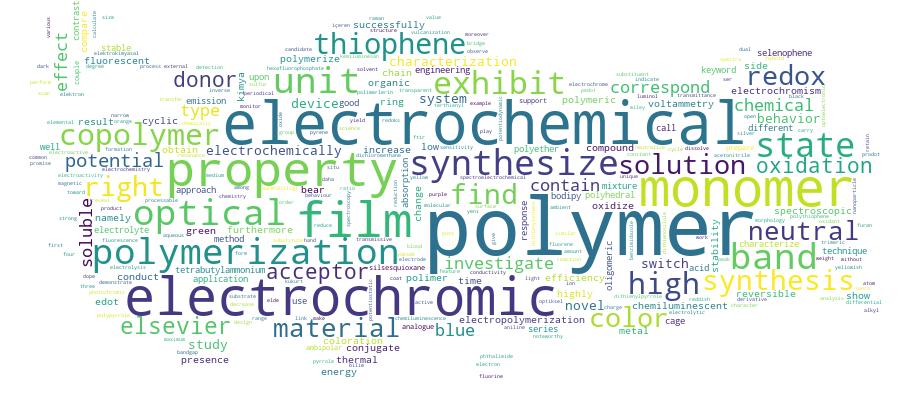
Competency Cloud
121 results
Scholarly Output Search Results
Now showing 1 - 10 of 121
Article Citation - WoS: 44Citation - Scopus: 45A Novel Electrochromic and Fluorescent Polythienylpyrrole Bearing 1,1′-Bipyrrole(Pergamon-elsevier Science Ltd, 2009) Cihaner, Atilla; Mert, Olcay; Demir, Ayhan S.A novel conducting polymer was successfully synthesized via electropolymerization of 1-(1H-pyrrol-1-yl)-2,5-di(thiophen-2-yl)-1H-pyrrole. The electrochemical and electro-optical properties of the corresponding polymer, which was the first example of polymer containing 1,1'-bipyrrole units, were elaborated using electroanalytical and spectroscopic techniques. Cyclic voltammograms and electro-optical studies showed that the polymer has a stable and well-defined reversible redox process as well as electrochromic behavior. The processable polymer film also possessed a yellowish orange light emitter property. (C) 2008 Elsevier Ltd. All rights reserved.Article Citation - WoS: 94Citation - Scopus: 95A New Conducting Polymer Bearing 4,4-difluoro-4-bora-3a,4a-diaza-s-indacene (bodipy) Subunit: Synthesis and Characterization(Pergamon-elsevier Science Ltd, 2008) Cihaner, Atilla; Algi, FatihA new monomer system based on thiophene, pyrrole and 4,4-difluoro-4-bora-3a,4a-diaza-s-indacene dye (SNS-BODIPY) was synthesized and its corresponding polymer (PSNS-BODIPY) was obtained via repetitive cycling or constant potential electrolysis in 0.1 M tetrabutylammonium hexafluorophosphate dissolved in dichloromethane. The PSNS-BODIPY film has very stable and well-defined reversible redox couples during p-doping process. Multi-electrochromic polymer film has a band gap of 2.9 eV with two absorption bands in its neutral state at 351 and 525 nm, attributed to the polymer backbone and BODIPY subunits, respectively. The percentage transmittance changes between both states (neutral and oxidized) were found as 12.1% for 351 nm and 17.7% for 525 nm in the visible region as well as 46.2% for 1050 nm in the near-infrared region. Beyond the robustness, the PSNS-BODIPY film has high redox stability (retaining 53.3% of its electroactivity at 351 nm after 2000 switching) with a low response time of 1.0 s. (C) 2008 Elsevier Ltd. All rights reserved.Master Thesis Kemilüminesans Bileşiklerin Sentezi ve Metal İyonu Tanıma ve Kan Tespitinde Kullanımları(2021) Balcı, Burcu; Cihaner, AtillaLüminesan bileşikler, geniş uygulama alanları sebebiyle son zamanlarda büyük önem kazanmıştır. Ayrıca, kemilüminesan bileşikler, yüksek lüminesans hassasiyetlerinden dolayı analitik kimyada birçok çalışmada kullanılmıştır. Bu tezde elektron verici-alıcı-verici yaklaşımı ile, isimleri 5,8-di(furan-2-il)-2,3-dihidroftalazin-1,4-dion (F2B-Lum), 5,8-di(selenofen-2-il)-2,3- dihidroftalazin-1,4-dion (S2B-Lum) ve 5,7-di(selenofen-2-il)-2,3-dihidrotiyeno[3,4-d] piridazin-1,4-dion (S2T-Lum) olan, yeni bir kemilüminesan bileşik serisi sentezlenmiştir. Yapıları NMR, FTIR ve HRMS teknikleri kullanılarak doğrulanmıştır. Daha sonra, alkali çözeltide (0,1 M NaOH(sulu)) bileşiklerin hidrojen peroksit ile farklı metal iyonları, hemin ve kan örnekleri varlığında kemilüminesans tepkimeleri araştırılmış ve sonuçlar luminol ile karşılaştırılmıştır. Beklendiği gibi, bileşiklerin bakır(II), demir(III) iyonlarına ve kana duyarlı olduğu gözlenmiştir. Yeni luminol türevleri olarak ilgili bileşiklerin, adli bilimde kan bulgularının tespiti için potansiyel adaylar olduğu sonucuna kolaylıkla varılabilir. Ek olarak, bileşiklerin bakır(II) iyonuna duyarlılığı, onları analitik uygulamalarda bakır iyonu tanıma için kullanılabilir hale getirmiştir. Ayrıca, bileşiklerin redoks davranışlarını araştırmak için döngülü voltametri tekniği kullanılmış ve tersinmez yükseltgenme sinyalleri göstermişlerdir. Ayrıca bu bileşikler kullanılarak -1.05 V'luk bir dış potansiyel uygulanarak kare dalga potansiyel yöntemi ile reaktif oksijen türleri tespit edilebilmektedir.Son olarak bileşiklerden S2T-Lum elektrokimyasal olarak başarılı bir şekilde polimerleştirilmiştir. İlgili polimer PS2T-Lum, elektroaktif olduğu ve polimerik yapısında kemilüminesan aktif uzantılar taşıdığı için luminol tipi polimerlerin değerli bir üyesi olabilir.Article Catalyst-Free Synthesis of Thiourea-Linked Dumbbell-Shaped POSS for Ultrasensitive Determination of Prilocaine in Human Blood With Computational Insights(Elsevier, 2026) Bilge, Selva; Bayraktar, Ece Nur; Erkmen, Cem; Balci, Burcu; Abofoul, Anas; Ozkut, Merve Icli; Cihaner, AtillaAlthough various electrochemical sensors have been reported for the determination of local anesthetic drugs, most existing platforms suffer from limited sensitivity, insufficient surface stability, or inadequate electron-transfer efficiency, particularly when applied to complex biological matrices. Moreover, the potential of hybrid polyhedral oligomeric silsesquioxane (POSS)-based nanostructures combined with metal oxide nano-particles for improving electroanalytical performance has not yet been thoroughly explored. In this study, a high-sensitivity electrochemical nanosensor was developed for the determination of prilocaine (PC), an amide-type local anesthetic, using a glassy carbon (GC) electrode modified with POSS-titanium dioxide (TiO2) nano-particles (Nps). The combination of modifications provided a unique electrode surface by combining the high stability of POSS with the strong adsorption properties of TiO2 Nps, thereby increasing both surface loading and adsorption capacity. To elucidate the structure of the modification combination, 1H and 13C nuclear magnetic resonance (NMR) and Fourier transform infrared (FTIR) spectroscopic techniques, as well as Brunauer-Emmett-Teller (BET), X-Ray diffraction (XRD), Electrochemical impedance spectroscopy (EIS), and high-resolution transmission electron microscopy (HRTEM) analysis techniques were used, respectively. The analytical performance of the developed nanosensor was systematically optimized using differential pulse voltammetry (DPV), adsorptive stripping differential pulse voltammetry (AdSDPV), square wave voltammetry (SWV), and adsorptive stripping square wave voltammetry (AdSSWV) techniques. As a result of the optimization studies, the lowest limit of detection (LOD) was 3.66 x 10⁻⁸ M with the AdSSWV technique. DFT results corroborated the mechanism, indicating ring-centered electron donation (HOMO) and adsorption-favored N/O regions (MEP). Low LOD values were also recorded with other techniques, demonstrating the method's high sensitivity in analyte detection. In real sample analysis tests, PC recovery value in human blood samples was determined to be 98.69% using the AdSDPV technique. Despite the matrix effect, the nanosensor demonstrated high accuracy and reproducibility. The results indicate that the developed POSS-TiO2 Nps modified GC electrode sensor offers a high-performance, reliable, and good electrochemical detection platform suitable for use in biological and clinical applications.Article Citation - WoS: 11Citation - Scopus: 12Ag Nanostructures on a Poly(3,4-Ethylenedioxythiophene) Film Prepared With Electrochemical Route: a Controllable Roughened Sers Substrate With High Repeatability and Stability(Pergamon-elsevier Science Ltd, 2012) Dogan, Uzeyir; Kaya, Murat; Cihaner, Atilla; Volkan, MurvetA simple, reliable and reproducible one-step electrochemical method for the preparation of surface-enhanced Raman-active polymer-mediated silver nanoparticles (Ag NPs) on planar indium tin oxide (ITO) coated glass substrates was reported. Poly(3,4-ethylenedioxythiophene) (PEDOT) film was used as a support material for dispersing nanostructured silver nanostructures on the surface homogeneously, since 3,4-ethylenedioxythiophene (EDOT) monomer polymerizes regioregularly. The optical properties and morphologies of the silver substrates have been investigated by ultraviolet-visible (UV-vis) spectroscopy and field emission scanning electron microscopy (FE-SEM). The UV-vis and FE-SEM results revealed that the Ag nanostructures separately appeared on the PEDOT coated ITO after reduction. The effect of the thickness of PEDOT polymer film, reduction potential of silver, the concentration of silver ion solution and the amount of silver particle on the polymer film on the SERS response were studied as well as repeatability and temporal stability of prepared substrates. Brilliant cresyl blue (BCB) has been used as Raman probes to evaluate the properties of the new SERS substrates. Signals collected over multiple spots within the same substrate resulted in a relative standard deviation (RSD) of 9.34%, while an RSD of 11.05% was measured in signals collected from different substrates. The SERS-active substrates were robust and stable which lost only 5.71% of initial intensity after 1 month. (C) 2012 Elsevier Ltd. All rights reserved.Article Citation - WoS: 7Citation - Scopus: 9Pyrrole Coupling Chemistry: Investigation of Electroanalytic, Spectroscopic and Thermal Properties of N-Substituted Poly(bis-Pyrrole) Films(Royal Soc Chemistry, 2013) Mert, Olcay; Demir, Ayhan S.; Cihaner, AtillaAn etheric member of N-linked polybispyrroles (PolybisPy) based on 1-(3-(2-(2-(3-(1H-pyrrol-1-yl)propoxy)ethoxy)ethoxy)propyl)-1H-pyrrole (1) was electrochemically synthesized for the versatile investigation of its exciting electrochromic and ion receptor properties. It has been fully characterized by electroanalytic, spectroscopic, thermal, and four-probe techniques. It was thereby found that P1 shows strong stability, and a reversible redox process as well as a good electrochromic material property; transparent yellow in the neutral state, light pink in the intermediate state, and blue in the oxidized state. Also, the corresponding polymer (P1) exhibited a selective voltammetric response towards Na+ among the alkali series in an organic medium. Moreover, P1 film was employed for the detection of Ag+ ions in the solution with cyclic voltammetry without precipitants or complexing ligands, and SEM images confirmed the deposition of metallic silver on the film surface. These prominent features also make P1 a good candidate for many practical uses, such as the recovery of metals and ion sensors.Master Thesis Kan İzlerinin Tespiti: Luminol-türü Bir Bileşik Sentezi ve Karakterizasyonu(2021) Kesimal, Büşra; Cihaner, AtillaLuminol başta adli-tıp olmak üzere analitik ölçümler dâhil birçok alanda kullanılan bir bileşiktir. Luminolün birçok alanda kullanılması ve bazı dezavantajlara sahip olması nedeniyle yeni luminol-tipi bileşiklerin sentezlenmesi büyük önem kazanmıştır. Bu tezde piridazin halkası içeren trimerik kemilüminesans 5,8-di(tiyofen-2-il)-2,3-dihidroftalazin-1,4-dion (T2B-Lum) bileşiği üzerinde çalışılmıştır. Sentez ve karakterizasyondan sonra, bileşiğin kemilüminesans tepkimeleri bazik ortamda (0,1 M sodium hidroksit çözeltisinde) farklı yükseltgenler (hidrojen peroksit, potasyum permanganat, potasyum dikromat) ile incelenmiştir. Sonrasında, T2B-Lum'un optiksel özelliği ve hidrojen peroksit ile beraber alkali ortamda farklı metal iyonlarının varlığında kemilüminesans tepkimesi çalışılmıştır. T2B-Lum'un diklorometan içerisinde 262 ve 330 nm'de iki soğurma bandı olup uyarıldığında 495 nm'de yeşil ışık yayar. Luminolün kuantum verimi %100 olarak alındığında diklorometan içerisinde T2B-Lum'un kuantum verimi %15,11 olarak hesaplanmıştır. Diğer bir taraftan, bazı metal katyonlarının, özellikle bakır(II) iyonlarının, kemilüminesans tepkimeyi katalizlediği gözlenmiştir. Ayrıca kemilüminesans ışımanın demir(III) iyonu ile katalizlendiği gözlenmiştir. Bu gözlemden sonra alkali çözeltide T2B-Lum'un hidrojen peroksit ile kemilüminesans davranımları katalizör olarak kullanılan hemin ve kan örneklerinin varlığında çalışılmıştır çünkü bu örnekler demir iyonları içermektedir. Son olarak T2B-Lum'un iyon tanıma özelliği incelenmiştir. Diğer metal katyonları (gümüş(I), kadmiyum(II), kobalt(II), demir(III), lityum(I), magnezyum(II), manganez(II), nikel(II), çinko(II)) dışında, T2B-Lum'un 2.2×10⁻³ M'lık bir saptama sınır değeriyle bakır iyonuna duyarlı olduğu gözlenmiştir.Article Citation - WoS: 10Citation - Scopus: 10Electroinitiated Polymerization of 2-Allylphenol(Springer-verlag, 2000) Cihaner, A; Önal, AMRedox behaviour of 2-allylphenol (2APhOH) was studied by using cyclic voltammetry (CV) and electroinitiated polymerization was conducted at the measured peak potentials. Constant potential electrolysis (CPE) of the monomer was carried out in acetonitrile-sodium perchlorate, solvent-electrolyte couple, at room temperature. Polymerization of the monomer yielded insoluble polymer films on the surface of the electrode together with the low molecular weight polymers in the bulk of the solution. The structural analysis of the polymers were carried by H-1-NMR and FTIR spectroscopy. Molecular weight of the soluble polymer was determined by GPC. Thermal properties of the polymer film and soluble polymer were studied by DSC. The course of electroinitiated polymerization was monitored by in-situ UV-VIS spectroscopy.Article Citation - WoS: 2Citation - Scopus: 3Impedance Spectroscopy of N-Substituted Oligo-Oxyethylene Polypyrrole Films(John Wiley & Sons inc, 2008) Cihaner, Atilla; Onal, Ahmet M.The electrochemical properties of neutral (dedoped) and oxidized (doped) poly(1,11-bis(1,1-pyrrole)-3,6,9-trioxaundecane) (poly-I) film electrodes were investigated using cyclic voltammetry and electrochemical impedance spectroscopy (EIS) techniques. Poly-I was deposited on glassy carbon electrode (GCE) from acetonitrile solution containing 5.0 x 10(-3) M 1,11-bis(1,1-pyrrole)-3,6,9-trioxaundecane (I) and 0.1 M LiClO4 supporting electrolyte. Doped poly-I exhibits a single semicircle in its complex-capacitance plots, indicating a single dominant ion transport process, together with high capacitance values. These features make this polymer film a candidate for an energy storage material. Also, poly-I can be a candidate as a sensory material for the detection of Ag+ based on impedance parameters. (C) 2008 Wiley Periodicals, Inc.Article Citation - WoS: 1Citation - Scopus: 1Synthesis and Characterization of New Dithienosilole Based Copolymers(Electrochemical Soc inc, 2016) Karabay, Lutfiye Canan; Al-Jumaili, Mohammed; Cihaner, Atilla2-Ethylhexyl substituted dithienosilole based soluble polymers including thiophene (1) and bithiophene (2) units were synthesized via Stille coupling reaction. The presence of 2-ethylhexyl substituents on the silole ring gave solubility property to the polymers in common solvents. According to gel permeation chromatography measurements, the weight average molecular weights of the polymers 1 and 2 were found to be as 70,977 with a polydispersity index of 2.30 and 110,439 with a PDI of 1.42, respectively. Fluorescent polymers in toluene solution have maximum emisssion bands at 634 nm for the polymer 1 and 613 nm for the polymer 2. Chemical and electrochemical doping of the polymers in the solution and in the film forms were monitored by using ultraviolet-visible spectroscopic technique. The polymers exhibited chromic (chemochromic and electrochromic) properties. While the colors of the neutral polymer films are purple for the polymer 1 and reddish brown for the polymer 2, both polymers are transparent sky blue at their oxidized states. The bandgaps of polymers in film forms were calculated as 1.81 eV for the polymer 1 and 1.92 eV for the polymer 2. Also, electrochromic device applications of the polymers were done. Electrochemical and optical behaviors of the polymers demonstrated that they can be good candidates for optoelectronic applications. (C) 2016 The Electrochemical Society. All rights reserved.
