Cihaner, Atilla

Loading...
Profile Picture
Name Variants
C.,Atilla
A., Cihaner
C., Atilla
Cihaner A.
A.,Cihaner
Cihaner, Atilla
Cihaner,A.
Atilla Cihaner
Atilla, Cihaner
Cihaner,Atilla
Cihaner, A.
Cihaner, A
Job Title
Profesör Doktor
Email Address
atilla.cihaner@atilim.edu.tr
Main Affiliation
Chemical Engineering
Status
Website
Scopus Author ID
Turkish CoHE Profile ID
Google Scholar ID
WoS Researcher ID

Sustainable Development Goals

2

ZERO HUNGER
ZERO HUNGER Logo

0

Research Products

11

SUSTAINABLE CITIES AND COMMUNITIES
SUSTAINABLE CITIES AND COMMUNITIES Logo

0

Research Products

14

LIFE BELOW WATER
LIFE BELOW WATER Logo

0

Research Products

6

CLEAN WATER AND SANITATION
CLEAN WATER AND SANITATION Logo

1

Research Products

1

NO POVERTY
NO POVERTY Logo

0

Research Products

5

GENDER EQUALITY
GENDER EQUALITY Logo

0

Research Products

9

INDUSTRY, INNOVATION AND INFRASTRUCTURE
INDUSTRY, INNOVATION AND INFRASTRUCTURE Logo

0

Research Products

16

PEACE, JUSTICE AND STRONG INSTITUTIONS
PEACE, JUSTICE AND STRONG INSTITUTIONS Logo

0

Research Products

17

PARTNERSHIPS FOR THE GOALS
PARTNERSHIPS FOR THE GOALS Logo

0

Research Products

15

LIFE ON LAND
LIFE ON LAND Logo

0

Research Products

10

REDUCED INEQUALITIES
REDUCED INEQUALITIES Logo

0

Research Products

7

AFFORDABLE AND CLEAN ENERGY
AFFORDABLE AND CLEAN ENERGY Logo

3

Research Products

8

DECENT WORK AND ECONOMIC GROWTH
DECENT WORK AND ECONOMIC GROWTH Logo

0

Research Products

4

QUALITY EDUCATION
QUALITY EDUCATION Logo

0

Research Products

12

RESPONSIBLE CONSUMPTION AND PRODUCTION
RESPONSIBLE CONSUMPTION AND PRODUCTION Logo

0

Research Products

3

GOOD HEALTH AND WELL-BEING
GOOD HEALTH AND WELL-BEING Logo

1

Research Products

13

CLIMATE ACTION
CLIMATE ACTION Logo

0

Research Products
Documents

101

Citations

2363

h-index

28

Documents

103

Citations

2256

Scholarly Output

121

Articles

108

Views / Downloads

531/1823

Supervised MSc Theses

12

Supervised PhD Theses

0

WoS Citation Count

2256

Scopus Citation Count

2342

WoS h-index

27

Scopus h-index

28

Patents

0

Projects

13

WoS Citations per Publication

18.64

Scopus Citations per Publication

19.36

Open Access Source

6

Supervised Theses

12

Google Analytics Visitor Traffic

JournalCount
Electrochimica Acta15
Journal of Electroanalytical Chemistry13
Turkish Journal of Chemistry6
Dyes and Pigments6
Organic Electronics6
Current Page: 1 / 8

Scopus Quartile Distribution

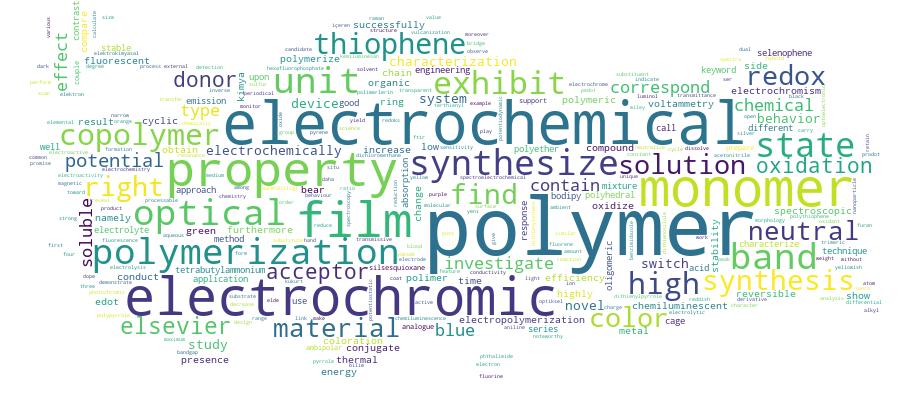
Competency Cloud

GCRIS Competency Cloud

Scholarly Output Search Results

Now showing 1 - 10 of 11
  • Article
    Citation - WoS: 5
    Citation - Scopus: 5
    Electrochemical Polymerization of Para-Substituted Haloanilines
    (Taylor & Francis inc, 2006) Cihaner, A; Önal, AM
    Polyhaloanilines: poly(4-fluoroaniline) (P4FAN), poly(4-chloroaniline) (P4CAN), and poly(4-bromoaniline) (P4BAN), are synthesized from para-substituted haloaniline monomers; 4-fluoroaniline (4FAN), 4-chloroaniline (4CAN), and 4-bromoaniline (4BAN), respectively, via constant potential electrolysis (CPE) in acetonitrile-water mixture (1:1 v/v) with NaClO4 as supporting electrolyte. Prior to CPE, electrochemical behavior of the monomers were investigated in organic medium utilizing cyclic voltammetry (CV). The course of CPE was monitored using in-situ UV-VIS spectroscopic technique. Characterization of polymer products have been carried out using FT-IR and NMR spectroscopic techniques and thermal behaviors were studied using differential scanning calorimeter (DSC). Polyhaloanilines synthesized by electrochemical oxidation were doped using iodine and the change in the paramagnetic behavior was monitored by ESR, UV-VIS, and FT-IR.
  • Article
    Citation - WoS: 7
    Citation - Scopus: 9
    Electrochemical Copolymerization of 2-Substituted Thiophene Derivative Linked by Polyether Bridge With Thiophene
    (Elsevier Science Sa, 2005) Cihaner, A; Önal, AM
    New conducting copolymers have been synthesized via electrochemical oxidation of thiophene (Th) in the presence of monomer bis(2-thienyl)ethyl (1). Cyclic voltammetry (CV) studies showed that the presence of monomer I in the electrolytic solution greatly changes the CV behaviour of the formation of the polythiophene films. It is found that the increasing ratio of I was found to decrease electroactivity of copoly(I-Th). Electrochemical synthesis of copolymer films was achieved via constant potential electrolysis (CPE) in an electrolytic solution containing 0.1 M tetrabutylammonium hexafluorophosphate (TBAPF(6)) dissolved in CH3CN. Spectroelectrochemical (SPEL) properties of the films were investigated using UV-vis spectroscopic technique. (C) 2005 Elsevier B.V. All rights reserved.
  • Article
    Citation - WoS: 20
    Citation - Scopus: 21
    Electrochemical Behaviour and Electrochemical Polymerization of Fluoro-Substituted Anilines
    (Wiley, 2002) Cihaner, A; Önal, AM
    The electrochemical behaviour of three fluoro-substituted aniline monomers, 2-fluoroaniline (2FAN), 3-fluoroaniline (3FAN) and 4-fluoroaniline (4FAN), was investigated in aqueous acidic and organic media by means of cyclic voltammetry (CV) studies. Constant potential electrolysis (CPE) of the monomers in acetonitrile-water mixture (1: 1 by volume) using NaClO4 as supporting electrolyte yielded soluble polymers. The mechanism of electrochemical polymerization was investigated using in situ electron spin resonance (ESR) and in situ UV-VIS spectroscopic techniques for one of the monomers (4FAN). Both CV and in situ LTV-VIS measurements indicated that the polymers obtained are in the emeraldine base form. In situ ESR studies indicated that electrochemical polymerization involves a radical-cation as an intermediate. Characterization of polymer products have been carried out using FTIR and NMR spectroscopic techniques, and thermal behaviour was studied using differential scanning calorimetry (DSC). It was found that conductivity can be imparted to assynthesized polyfluoroanilines via iodine doping. (C) 2002 Society of Chemical Industry.
  • Article
    Citation - WoS: 10
    Citation - Scopus: 10
    Electroinitiated Polymerization of 2-Allylphenol
    (Springer-verlag, 2000) Cihaner, A; Önal, AM
    Redox behaviour of 2-allylphenol (2APhOH) was studied by using cyclic voltammetry (CV) and electroinitiated polymerization was conducted at the measured peak potentials. Constant potential electrolysis (CPE) of the monomer was carried out in acetonitrile-sodium perchlorate, solvent-electrolyte couple, at room temperature. Polymerization of the monomer yielded insoluble polymer films on the surface of the electrode together with the low molecular weight polymers in the bulk of the solution. The structural analysis of the polymers were carried by H-1-NMR and FTIR spectroscopy. Molecular weight of the soluble polymer was determined by GPC. Thermal properties of the polymer film and soluble polymer were studied by DSC. The course of electroinitiated polymerization was monitored by in-situ UV-VIS spectroscopy.
  • Article
    Citation - WoS: 6
    Citation - Scopus: 5
    Synthesis of a regular polymer containing pseudo-polyether cages
    (Elsevier Science Sa, 2005) Cihaner, A; Önal, AM
    A new compound consisting of 2-thienyl units linked by polyether bridge has been synthesized and its electrochemical polymerization was performed via constant potential electrolysis (CPE) in an electrolytic solution containing 0.1 M tetrabutylammonium hexafluorophosphate (TBAPF(6)) dissolved in CH3CN. Chemical polymerization was carried out using FeCl3 as oxidizing agent. It is found that both methods gave the same polymer product without any cleavage of the polyether bridge between thiophene (Th) rings. Although as synthesized polymers exhibited no conductivity, they gain conductivity via chemical doping using 12 vapor exposure. The polymers were characterized using FTIR spectroscopic technique and 12 doping was monitored using in-situ electron spin resonance (ESR) spectroscopy. Thermal behavior of electrochemically prepared polymer was investigated using differential scanning calorimetry, DSC and thermogravimetric analysis, TGA. (c) 2005 Elsevier B.V. All rights reserved.
  • Article
    Citation - WoS: 5
    Citation - Scopus: 5
    Electrochemical Polymerization of 4-Allylanisole
    (Pergamon-elsevier Science Ltd, 2001) Cihaner, A; Testereci, HN; Önal, AM
    Electrochemical polymerization of 3-allylanisole (4AA). via constant potential electrolysis, has been investigated in acetonitrile using two different supporting electrolytes. Redox behavior of the monomer was also studied in the same solvent-electrolyte couples at room temperature. Electrochemical polymerization of the monomer yielded insoluble polymer films on the electrode surface, which bears a very low conductivity, together with the low molecular weight polymers in the bulk of the solution. The decrease in the monomer concentration, during the electrochemical polymerization. was monitored by taking the cyclic voltammogram of the electrolysis solution. The effect of temperature on the rate of electrochemical polymerization was: also studied. The polymers were characterized by taking the H-1-NMR and FTIR spectra. Molecular weight of the soluble polymer was determined by vapor pressure osmometry. Thermal analysis of the polymer film and soluble polymer were done by DSC. (C) 2001 Elsevier Science Ltd. All rights reserved.
  • Article
    Citation - WoS: 1
    Citation - Scopus: 1
    Spectroelectrochemical Investigation of the Anodic Oxidation of Dibenzo-18
    (Elsevier Science Sa, 2004) Cihaner, A; Önal, AM
    Poly(dibenzo-18-crown-6) (poly-DB18C6) was synthesized by electrochemical oxidation of dibenzo-18-crown-6 (DB18C6) using a mixture of acetonitrile and dichloromethane as the solvent and tetrabutylammonium tetrafluoroborate (TBABF(4)) or tetrabutylammonium hexafluorophosphate (TBAPF(6)) as supporting electrolyte. The anodic polymerization of DB18C6 was investigated using in situ ESR and in situ UV-Vis spectroscopic techniques. Spectroelectrochemical (SPEL), properties and thermal analysis of the resulting polymers have been investigated using UV-Vis spectroscopy, differential scanning calorimetry (DSC) and thermogravimetric analysis (TGA). (C) 2004 Elsevier B.V. All rights reserved.
  • Article
    Citation - WoS: 6
    Citation - Scopus: 6
    Synthesis and Polymerization of 2-And 3-Substituted Thiophene Derivatives Linked by Polyether Bridges
    (Elsevier Science Sa, 2004) Tirkes, S; Cihaner, A; Önal, AM
    New compounds consisting of 2- and 3-thienyl units linked by polyether bridges have been synthesized and their electrochemical polymerization was performed via constant potential electrolysis (CPE) in an electrolytic solution containing 0.1 M tetrabutylammonium hexafluorophosphate (TBAPF(6)) dissolved in CH3CN. 2-Thienyl monomers (I and II), but not 3-thienyl monomers (III and IV), were also polymerized via chemical oxidation, which yielded broken pi-conjugated polymer products. The polymers were characterized using H-1 NMR and FT-IR spectroscopic techniques. It was found that both chemical and electrochemical oxidation of 2-thienyl monomers gave mainly poly(2,2'-bithiophenemethylene) due to elimination of polyether chains during the polymerization reaction. On the other hand, electrochemical oxidation of 3-thienyl monomers resulted in corresponding polymers without any cleavage of polyether bridges. Spectroelectrochemical (SPEL) properties of the products were investigated using UV-Vis spectroscopic techniques. (C) 2004 Elsevier B.V. All rights reserved.
  • Article
    Citation - WoS: 28
    Citation - Scopus: 31
    Electrochemical Polymerization of 9-Fluorenone
    (Elsevier Science Sa, 2004) Cihaner, A; Tirkes, S; Önal, AM
    Electrochemical polymerization of 9-fluorenone, FO, was studied in CH2Cl2 solution with tetrabutylammonium tetrafluoroborate, TBABF(4), as the electrolyte, via constant potential electrolysis, CPE. Prior to CPE, the redox behavior of FO was investigated in the same solvent/electrolytic medium using cyclic voltammetry, CV. CPE of FO yielded an insoluble polymer deposit on the electrode surface. The product was characterized by FTIR spectroscopy techniques. The redox and spectroelectrochernical, SPEL, behavior of the polymer were studied by CV and in situ UV-Vis spectrophotometric techniques at various potentials, respectively. The conductivity was measured using a two-probe technique and the paramagnetic behavior of the polymer was monitored using in situ ESR spectroscopy. (C) 2004 Elsevier B.V. All rights reserved.
  • Article
    Citation - WoS: 4
    Citation - Scopus: 4
    Electrical, Optical and Photoconductive Properties of Poly(dibenzo-18
    (Wiley-v C H verlag Gmbh, 2004) Qasrawi, AF; Cihaner, A; Önal, AM
    To investigate the energy levels, absorption bands, band gap, dominant transport mechanisms, recombination mechanisms and the free carrier life time behavior of poly-dibenzo-18-crown-6, poly-DB18C6, films, the dark electrical conductivity in the temperature range of 200-550 K, the absorbance and photocurrent spectra, the photocurrent -illumination intensity and time dependence at 300 K were studied. The dark electrical conductivity measurements revealed the existence of three energy levels located at 0.93, 0.32 and 0.76 eV below the tails of the conduction band. The main transport mechanism in the dark was found to be due to the thermal excitation of charge carriers and the variable range hopping above and below 260 K, respectively. The photocurrent and absorbance spectra reflect a band gap of 3.9 eV. The photocurrent -illumination intensity dependence reflects the sublinear, linear and supralinear characters indicating the decrease, remaining constant and increase in the free electron life time that in turn show the bimolecular, strong and very strong recombination characters at the surface under the application of low, moderate and high illumination intensity, respectively. A response time of 25.6 s was calculated from the decay Of I-ph-time dependence. (C) 2004 WILEY-VCH Verlag GmbH & Co. KGaA, Weinheim.