
Mıshra, Alok
Loading...
Profile URL
Name Variants
Mishra, A.
Mishra, A
Mishra A.
Alok, Mishra
Mıshra, Alok
A., Mishra
Alok M.
M., Alok
M.,Alok
Mishra, Alok
Mishra,A.
A.,Mıshra
A.,Mishra
Alok, Mıshra
A., Mıshra
Mıshra,A.
Mishra, A
Mishra A.
Alok, Mishra
Mıshra, Alok
A., Mishra
Alok M.
M., Alok
M.,Alok
Mishra, Alok
Mishra,A.
A.,Mıshra
A.,Mishra
Alok, Mıshra
A., Mıshra
Mıshra,A.
Job Title
Profesor Doktor
Email Address
alok.mishra@atilim.edu.tr
Main Affiliation
Software Engineering
Status
Website
ORCID ID
Scopus Author ID
Turkish CoHE Profile ID
Google Scholar ID
WoS Researcher ID
Sustainable Development Goals
 1
1NO POVERTY
0
Research Products
 2
2ZERO HUNGER
1
Research Products
 3
3GOOD HEALTH AND WELL-BEING
9
Research Products
 4
4QUALITY EDUCATION
6
Research Products
 5
5GENDER EQUALITY
1
Research Products
 6
6CLEAN WATER AND SANITATION
1
Research Products
 7
7AFFORDABLE AND CLEAN ENERGY
0
Research Products
 8
8DECENT WORK AND ECONOMIC GROWTH
0
Research Products
 9
9INDUSTRY, INNOVATION AND INFRASTRUCTURE
8
Research Products
 10
10REDUCED INEQUALITIES
0
Research Products
 11
11SUSTAINABLE CITIES AND COMMUNITIES
4
Research Products
 12
12RESPONSIBLE CONSUMPTION AND PRODUCTION
4
Research Products
 13
13CLIMATE ACTION
4
Research Products
 14
14LIFE BELOW WATER
4
Research Products
 15
15LIFE ON LAND
0
Research Products
 16
16PEACE, JUSTICE AND STRONG INSTITUTIONS
10
Research Products
 17
17PARTNERSHIPS FOR THE GOALS
2
Research Products

This researcher does not have a Scopus ID.

Documents
165
Citations
2516

Scholarly Output
197
Articles
103
Views / Downloads
696/2397
Supervised MSc Theses
13
Supervised PhD Theses
8
WoS Citation Count
2022
Scopus Citation Count
3009
Patents
0
Projects
0
WoS Citations per Publication
10.26
Scopus Citations per Publication
15.27
Open Access Source
42
Supervised Theses
21
| Journal | Count |
|---|---|
| Sensors | 7 |
| TEM Journal | 7 |
| Computers in Human Behavior | 4 |
| Applied Sciences | 4 |
| Electronics Information and Planning | 4 |
Current Page: 1 / 22
Scopus Quartile Distribution
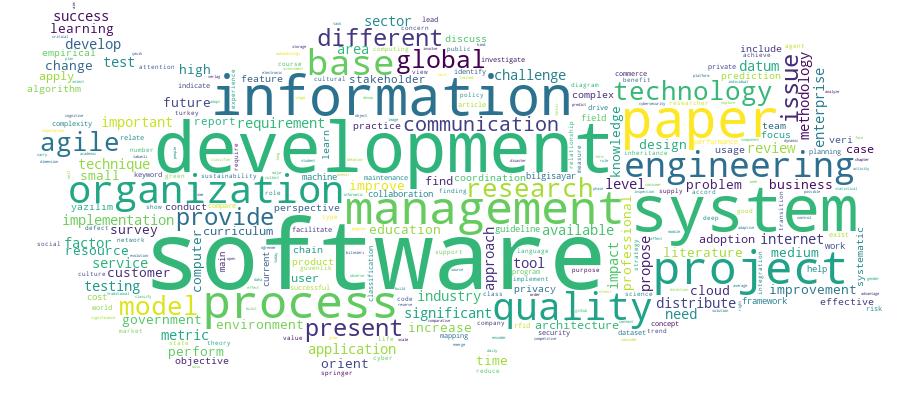
Competency Cloud
46 results
Scholarly Output Search Results
Now showing 1 - 10 of 46
Article Citation - WoS: 22Citation - Scopus: 32Organizational Issues in Embracing Agile Methods: an Empirical Assessment(Springer india, 2021) Mishra, Alok; Abdalhamid, Samia; Mishra, Deepti; Ostrovska, SofiyaThis study provides empirical evidence to the body of knowledge in Agile methods adoption in small, medium and large organizations in international context. This research explores the factors involved in the adoption of Agile methods in software development organizations. A survey was conducted among Agile professionals to gather survey data from 52 software organizations in seven countries across the world. Statistical techniques are applied towards empirical assessment. Organizational culture, team structure and management support are found to be crucial success factors whereas lack of management support, a large organization size and traditional organizational culture are found to be detrimental for the adoption of Agile approach in an organization. The selection of an appropriate Agile method depends on the project size and, for each size, there are specific methods preferred by different enterprises. Providing better control over the work is viewed as the primary advantage of the Agile methods within large and small organizations, while for the medium-size organizations, the priority is switched to coping with changing user requirements. Majority of the respondents did not consider embracing agile methods as a reason for project failure which indicates that Agile methods are, indeed, beneficial.Article Citation - WoS: 36Citation - Scopus: 66Cybersecurity Enterprises Policies: a Comparative Study(Mdpi, 2022) Mishra, Alok; Alzoubi, Yehia Ibrahim; Gill, Asif Qumer; Anwar, Memoona JaveriaCybersecurity is a critical issue that must be prioritized not just by enterprises of all kinds, but also by national security. To safeguard an organization's cyberenvironments, information, and communication technologies, many enterprises are investing substantially in cybersecurity these days. One part of the cyberdefense mechanism is building an enterprises' security policies library, for consistent implementation of security controls. Significant and common cybersecurity policies of various enterprises are compared and explored in this study to provide robust and comprehensive cybersecurity knowledge that can be used in various enterprises. Several significant common security policies were identified and discussed in this comprehensive study. This study identified 10 common cybersecurity policy aspects in five enterprises: healthcare, finance, education, aviation, and e-commerce. We aimed to build a strong infrastructure in each business, and investigate the security laws and policies that apply to all businesses in each sector. Furthermore, the findings of this study reveal that the importance of cybersecurity requirements differ across multiple organizations. The choice and applicability of cybersecurity policies are determined by the type of information under control and the security requirements of organizations in relation to these policies.Article Citation - WoS: 21Citation - Scopus: 36Deep Learning-Based Computer-Aided Diagnosis (cad): Applications for Medical Image Datasets(Mdpi, 2022) Kadhim, Yezi Ali; Khan, Muhammad Umer; Mishra, AlokComputer-aided diagnosis (CAD) has proved to be an effective and accurate method for diagnostic prediction over the years. This article focuses on the development of an automated CAD system with the intent to perform diagnosis as accurately as possible. Deep learning methods have been able to produce impressive results on medical image datasets. This study employs deep learning methods in conjunction with meta-heuristic algorithms and supervised machine-learning algorithms to perform an accurate diagnosis. Pre-trained convolutional neural networks (CNNs) or auto-encoder are used for feature extraction, whereas feature selection is performed using an ant colony optimization (ACO) algorithm. Ant colony optimization helps to search for the best optimal features while reducing the amount of data. Lastly, diagnosis prediction (classification) is achieved using learnable classifiers. The novel framework for the extraction and selection of features is based on deep learning, auto-encoder, and ACO. The performance of the proposed approach is evaluated using two medical image datasets: chest X-ray (CXR) and magnetic resonance imaging (MRI) for the prediction of the existence of COVID-19 and brain tumors. Accuracy is used as the main measure to compare the performance of the proposed approach with existing state-of-the-art methods. The proposed system achieves an average accuracy of 99.61% and 99.18%, outperforming all other methods in diagnosing the presence of COVID-19 and brain tumors, respectively. Based on the achieved results, it can be claimed that physicians or radiologists can confidently utilize the proposed approach for diagnosing COVID-19 patients and patients with specific brain tumors.Article Citation - WoS: 11Citation - Scopus: 13Challenges in Agile Software Maintenance for Local and Global Development: an Empirical Assessment(Mdpi, 2023) Almashhadani, Mohammed; Mishra, Alok; Yazici, Ali; Younas, MuhammadAgile methods have gained wide popularity recently due to their characteristics in software development. Despite the success of agile methods in the software maintenance process, several challenges have been reported. In this study, we investigate the challenges that measure the impact of agile methods in software maintenance in terms of quality factors. A survey was conducted to collect data from agile practitioners to establish their opinions about existing challenges. As a result of the statistical analysis of the data from the survey, it has been observed that there are moderately effective challenges in manageability, scalability, communication, collaboration, and transparency. Further research is required to validate software maintenance challenges in agile methods.Article Citation - WoS: 14Citation - Scopus: 25Automatic Classification of UML Class Diagrams Using Deep Learning Technique: Convolutional Neural Network(Mdpi, 2021) Gosala, Bethany; Chowdhuri, Sripriya Roy; Singh, Jyoti; Gupta, Manjari; Mishra, AlokUnified Modeling Language (UML) includes various types of diagrams that help to study, analyze, document, design, or develop any software efficiently. Therefore, UML diagrams are of great advantage for researchers, software developers, and academicians. Class diagrams are the most widely used UML diagrams for this purpose. Despite its recognition as a standard modeling language for Object-Oriented software, it is difficult to learn. Although there exist repositories that aids the users with the collection of UML diagrams, there is still much more to explore and develop in this domain. The objective of our research was to develop a tool that can automatically classify the images as UML class diagrams and non-UML class diagrams. Earlier research used Machine Learning techniques for classifying class diagrams. Thus, they are required to identify image features and investigate the impact of these features on the UML class diagrams classification problem. We developed a new approach for automatically classifying class diagrams using the approach of Convolutional Neural Network under the domain of Deep Learning. We have applied the code on Convolutional Neural Networks with and without the Regularization technique. Our tool receives JPEG/PNG/GIF/TIFF images as input and predicts whether it is a UML class diagram image or not. There is no need to tag images of class diagrams as UML class diagrams in our dataset.Article Citation - WoS: 11Citation - Scopus: 15Stress Detection Using Experience Sampling: a Systematic Mapping Study(Mdpi, 2022) Dogan, Gulin; Akbulut, Fatma Patlar; Catal, Cagatay; Mishra, AlokStress has been designated the "Health Epidemic of the 21st Century" by the World Health Organization and negatively affects the quality of individuals' lives by detracting most body systems. In today's world, different methods are used to track and measure various types of stress. Among these techniques, experience sampling is a unique method for studying everyday stress, which can affect employees' performance and even their health by threatening them emotionally and physically. The main advantage of experience sampling is that evaluating instantaneous experiences causes less memory bias than traditional retroactive measures. Further, it allows the exploration of temporal relationships in subjective experiences. The objective of this paper is to structure, analyze, and characterize the state of the art of available literature in the field of surveillance of work stress via the experience sampling method. We used the formal research methodology of systematic mapping to conduct a breadth-first review. We found 358 papers between 2010 and 2021 that are classified with respect to focus, research type, and contribution type. The resulting research landscape summarizes the opportunities and challenges of utilizing the experience sampling method on stress detection for practitioners and academics.Article Citation - WoS: 8Citation - Scopus: 12Srcmimm: the Software Requirements Change Management and Implementation Maturity Model in the Domain of Global Software Development Industry(Springer, 2023) Akbar, Muhammad Azeem; Khan, Arif Ali; Mahmood, Sajjad; Mishra, AlokThe software industry has widely adopted global software development (GSD) to gain economic benefits. Organizations that engage in GSD face various challenges, the majority being associated with requirements change management (RCM). The key motive of this study is to develop a requirement change management and implementation maturity model (SRCMIMM) for the GSD industry that could help the practitioners to assess and manage their RCM activities. A systematic literature review and questionnaire survey approach are used to identify and validate the critical success factors (CSFs), critical challenges (CCHs), and the related best practices of the RCM process. The investigated CSFs and CCHs are classified into five maturity levels based on the concepts of the existing maturity models in other domains, practitioners' feedback, and academic research. Every maturity level comprises different CSFs and CCHs that can help assess and manage a firm's RCM capability. To evaluate the effectiveness of the proposed model, four case studies are conducted in different GSD firms. The SRCMIMM has been developed to assist GSD organizations in improving their RCM process in efficiency and effectiveness.Article Citation - WoS: 11Citation - Scopus: 14Sustainability Inclusion in Informatics Curriculum Development(Mdpi, 2020) Mishra, Deepti; Mishra, Alok(1) Background: Presently, sustainability is a crucial issue for human beings due to many disasters owing to climate change. Information Technology (IT) is now part of everyday life in society due to the proliferation of gadgets such as mobile phones, apps, computers, information systems, web-based systems, etc. (2) Methods: The analysis is based on recent ACM/IEEE curriculum guidelines for IT, a rigorous literature review as well as various viewpoints and their relevance for sustainability-oriented curriculum development; it also includes an assessment of key competencies in sustainability for proposed units in the IT curriculum. (3) Results: Sustainability is a critical subject for prospective IT professionals. Therefore, it is imperative to motivate and raise awareness among students and the faculty community regarding sustainability through its inclusion in the Informatics curriculum. This paper focuses on how sustainability can be included in various courses of the Informatics curriculum. It also considers recent ACM/IEEE curriculum guidelines for IT professionals, which assert that IT students should explore IT strategies required for developing a culture of green and sustainable IT. (4) Conclusions: This paper provides guidelines for IT curriculum development by incorporating sustainable elements in courses, so that future IT professionals can learn and practice sustainability in order to develop a sustainable society.Article Citation - WoS: 19Citation - Scopus: 24A Novel Hybrid Machine Learning Based System To Classify Shoulder Implant Manufacturers(Mdpi, 2022) Sivari, Esra; Guzel, Mehmet Serdar; Bostanci, Erkan; Mishra, AlokIt is necessary to know the manufacturer and model of a previously implanted shoulder prosthesis before performing Total Shoulder Arthroplasty operations, which may need to be performed repeatedly in accordance with the need for repair or replacement. In cases where the patient's previous records cannot be found, where the records are not clear, or the surgery was conducted abroad, the specialist should identify the implant manufacturer and model during preoperative X-ray controls. In this study, an auxiliary expert system is proposed for classifying manufacturers of shoulder implants on the basis of X-ray images that is automated, objective, and based on hybrid machine learning models. In the proposed system, ten different hybrid models consisting of a combination of deep learning and machine learning algorithms were created and statistically tested. According to the experimental results, an accuracy of 95.07% was achieved using the DenseNet201 + Logistic Regression model, one of the proposed hybrid machine learning models (p < 0.05). The proposed hybrid machine learning algorithms achieve the goal of low cost and high performance compared to other studies in the literature. The results lead the authors to believe that the proposed system could be used in hospitals as an automatic and objective system for assisting orthopedists in the rapid and effective determination of shoulder implant types before performing revision surgery.Book Part Citation - Scopus: 2Novel Covid-19 Recognition Framework Based on Conic Functions Classifier(Springer Science and Business Media Deutschland GmbH, 2022) Karim,A.M.; Mishra,A.The new coronavirus has been declared as a global emergency. The first case was officially declared in Wuhan, China, during the end of 2019. Since then, the virus has spread to nearly every continent, and case numbers continue to rise. The scientists and engineers immediately responded to the virus and presented techniques, devices and treatment approaches to fight back and eliminate the virus. Machine learning is a popular scientific tool and is applied to several medical image recognition problems, involving tumour recognition, cancer detection, organ transplantation and COVID-19 diagnosis. It is proved that machine learning presents robust, fast and accurate results in various medical image recognition problems. Generally, machine learning-based frameworks consist of two stages: feature extraction and classification. In the feature extraction, overwhelmingly unsupervised learning techniques are applied to reduce the input data’s size. This step extracts appropriate features by reducing the computational time and increasing the performance of the classifiers. A classifier is the second step that aims to categorise the input. Within the proposed step, the unsupervised part relies on the feature extraction by using local binary patterns (LBP), followed by feature selection relying on factor analysis technique. The LBP is a kind of visual descriptor, mainly applied for image recognition problem. The aim of using LBP is to analyse the input COVID-19 image and extract salient features. Furthermore, factor analysis is a statistical technique applied to define variability among observed variables in less unnoticed variables named factors. The factor analysis applied to the LBP wavelet aims to select sensitive features from input data (LBP output) and reduce the size input. In the last stage, conic functions classifier is applied to classify two sets of data, categorising the extracted features by using LBP and factor analysis as positive or negative COVID-19 cases. The proposed solution aims to diagnose COVID-19 by using LBP and factor analysis, based on conic functions classifier. The conic functions classifier presents remarkable results compared with these popular classifiers and state-of-the-art studies presented in the literature. © 2022, Springer Nature Switzerland AG.
