Mıshra, Alok

Loading...
Profile Picture
Name Variants
Mishra, A.
Mishra, A
Mishra A.
Alok, Mishra
Mıshra, Alok
A., Mishra
Alok M.
M., Alok
M.,Alok
Mishra, Alok
Mishra,A.
A.,Mıshra
A.,Mishra
Alok, Mıshra
A., Mıshra
Mıshra,A.
Job Title
Profesor Doktor
Email Address
alok.mishra@atilim.edu.tr
Main Affiliation
Software Engineering
Status
Website
Scopus Author ID
Turkish CoHE Profile ID
Google Scholar ID
WoS Researcher ID

Sustainable Development Goals

NO POVERTY1
NO POVERTY
0
Research Products
ZERO HUNGER2
ZERO HUNGER
1
Research Products
GOOD HEALTH AND WELL-BEING3
GOOD HEALTH AND WELL-BEING
9
Research Products
QUALITY EDUCATION4
QUALITY EDUCATION
6
Research Products
GENDER EQUALITY5
GENDER EQUALITY
1
Research Products
CLEAN WATER AND SANITATION6
CLEAN WATER AND SANITATION
1
Research Products
AFFORDABLE AND CLEAN ENERGY7
AFFORDABLE AND CLEAN ENERGY
0
Research Products
DECENT WORK AND ECONOMIC GROWTH8
DECENT WORK AND ECONOMIC GROWTH
0
Research Products
INDUSTRY, INNOVATION AND INFRASTRUCTURE9
INDUSTRY, INNOVATION AND INFRASTRUCTURE
8
Research Products
REDUCED INEQUALITIES10
REDUCED INEQUALITIES
0
Research Products
SUSTAINABLE CITIES AND COMMUNITIES11
SUSTAINABLE CITIES AND COMMUNITIES
4
Research Products
RESPONSIBLE CONSUMPTION AND PRODUCTION12
RESPONSIBLE CONSUMPTION AND PRODUCTION
4
Research Products
CLIMATE ACTION13
CLIMATE ACTION
4
Research Products
LIFE BELOW WATER14
LIFE BELOW WATER
4
Research Products
LIFE ON LAND15
LIFE ON LAND
0
Research Products
PEACE, JUSTICE AND STRONG INSTITUTIONS16
PEACE, JUSTICE AND STRONG INSTITUTIONS
10
Research Products
PARTNERSHIPS FOR THE GOALS17
PARTNERSHIPS FOR THE GOALS
2
Research Products
This researcher does not have a Scopus ID.
Documents

170

Citations

2555

Scholarly Output

197

Articles

103

Views / Downloads

161/259

Supervised MSc Theses

13

Supervised PhD Theses

8

WoS Citation Count

2079

Scopus Citation Count

3045

Patents

0

Projects

0

WoS Citations per Publication

10.55

Scopus Citations per Publication

15.46

Open Access Source

42

Supervised Theses

21

JournalCount
Sensors7
TEM Journal7
Computers in Human Behavior4
Applied Sciences4
Electronics Information and Planning4
Current Page: 1 / 22

Scopus Quartile Distribution

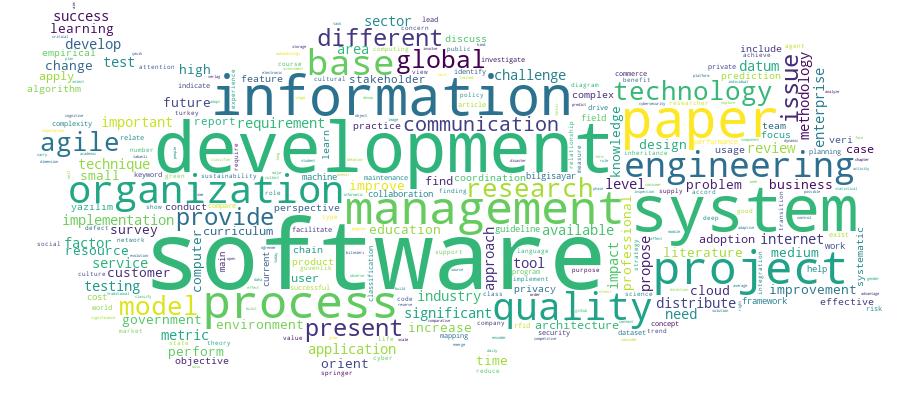
Competency Cloud

GCRIS Competency Cloud

Scholarly Output Search Results

Now showing 1 - 2 of 2
  • Article
    Citation - WoS: 6
    Deep Learning-Based Defect Prediction for Mobile Applications
    (Mdpi, 2022) Jorayeva, Manzura; Akbulut, Akhan; Catal, Cagatay; Mishra, Alok
    Smartphones have enabled the widespread use of mobile applications. However, there are unrecognized defects of mobile applications that can affect businesses due to a negative user experience. To avoid this, the defects of applications should be detected and removed before release. This study aims to develop a defect prediction model for mobile applications. We performed cross-project and within-project experiments and also used deep learning algorithms, such as convolutional neural networks (CNN) and long short term memory (LSTM) to develop a defect prediction model for Android-based applications. Based on our within-project experimental results, the CNN-based model provides the best performance for mobile application defect prediction with a 0.933 average area under ROC curve (AUC) value. For cross-project mobile application defect prediction, there is still room for improvement when deep learning algorithms are preferred.
  • Article
    Citation - WoS: 13
    Citation - Scopus: 15
    Techniques for Calculating Software Product Metrics Threshold Values: a Systematic Mapping Study
    (Mdpi, 2021) Mishra, Alok; Shatnawi, Raed; Catal, Cagatay; Akbulut, Akhan
    Several aspects of software product quality can be assessed and measured using product metrics. Without software metric threshold values, it is difficult to evaluate different aspects of quality. To this end, the interest in research studies that focus on identifying and deriving threshold values is growing, given the advantage of applying software metric threshold values to evaluate various software projects during their software development life cycle phases. The aim of this paper is to systematically investigate research on software metric threshold calculation techniques. In this study, electronic databases were systematically searched for relevant papers; 45 publications were selected based on inclusion/exclusion criteria, and research questions were answered. The results demonstrate the following important characteristics of studies: (a) both empirical and theoretical studies were conducted, a majority of which depends on empirical analysis; (b) the majority of papers apply statistical techniques to derive object-oriented metrics threshold values; (c) Chidamber and Kemerer (CK) metrics were studied in most of the papers, and are widely used to assess the quality of software systems; and (d) there is a considerable number of studies that have not validated metric threshold values in terms of quality attributes. From both the academic and practitioner points of view, the results of this review present a catalog and body of knowledge on metric threshold calculation techniques. The results set new research directions, such as conducting mixed studies on statistical and quality-related studies, studying an extensive number of metrics and studying interactions among metrics, studying more quality attributes, and considering multivariate threshold derivation.