
Saygılı, Dilek Demirtepe
Loading...
Profile URL
Name Variants
Dilek Demirtepe, Saygili
Saygili,D.D.
D. D. Saygılı
D., Saygili
D. D. Saygili
S.,Dilek Demirtepe
D.D.Saygili
D.,Saygili
Saygılı,D.D.
Saygılı, Dilek Demirtepe
D.D.Saygılı
Dilek Demirtepe, Saygılı
S., Dilek Demirtepe
D.,Saygılı
Saygili, Dilek Demirtepe
Demirtepe-Saygili, Dilek
Demirtepe Saygılı, Dilek
Saygili,D.D.
D. D. Saygılı
D., Saygili
D. D. Saygili
S.,Dilek Demirtepe
D.D.Saygili
D.,Saygili
Saygılı,D.D.
Saygılı, Dilek Demirtepe
D.D.Saygılı
Dilek Demirtepe, Saygılı
S., Dilek Demirtepe
D.,Saygılı
Saygili, Dilek Demirtepe
Demirtepe-Saygili, Dilek
Demirtepe Saygılı, Dilek
Job Title
Doçent Doktor
Email Address
dilek.saygili@atilim.edu.tr
Main Affiliation
Department of Psychology
Status
Website
ORCID ID
Scopus Author ID
Turkish CoHE Profile ID
Google Scholar ID
WoS Researcher ID
Sustainable Development Goals
5
GENDER EQUALITY

0
Research Products
14
LIFE BELOW WATER

0
Research Products
10
REDUCED INEQUALITIES

0
Research Products
3
GOOD HEALTH AND WELL-BEING

2
Research Products
2
ZERO HUNGER

0
Research Products
9
INDUSTRY, INNOVATION AND INFRASTRUCTURE

0
Research Products
16
PEACE, JUSTICE AND STRONG INSTITUTIONS

0
Research Products
11
SUSTAINABLE CITIES AND COMMUNITIES

0
Research Products
8
DECENT WORK AND ECONOMIC GROWTH

0
Research Products
13
CLIMATE ACTION

0
Research Products
4
QUALITY EDUCATION

1
Research Products
6
CLEAN WATER AND SANITATION

0
Research Products
1
NO POVERTY

0
Research Products
15
LIFE ON LAND

0
Research Products
17
PARTNERSHIPS FOR THE GOALS

0
Research Products
7
AFFORDABLE AND CLEAN ENERGY

0
Research Products
12
RESPONSIBLE CONSUMPTION AND PRODUCTION

0
Research Products

Documents
9
Citations
149
h-index
7

Documents
0
Citations
0

Scholarly Output
13
Articles
12
Views / Downloads
11/0
Supervised MSc Theses
0
Supervised PhD Theses
0
WoS Citation Count
67
Scopus Citation Count
83
WoS h-index
5
Scopus h-index
5
Patents
0
Projects
0
WoS Citations per Publication
5.15
Scopus Citations per Publication
6.38
Open Access Source
6
Supervised Theses
0
Google Analytics Visitor Traffic
| Journal | Count |
|---|---|
| AYNA Klinik Psikoloji Dergisi | 2 |
| Current Psychology | 2 |
| Dil ve Tarih-Coğrafya Fakültesi Dergisi | 1 |
| Journal of Health Psychology | 1 |
| Nesne Dergisi | 1 |
Current Page: 1 / 2
Scopus Quartile Distribution
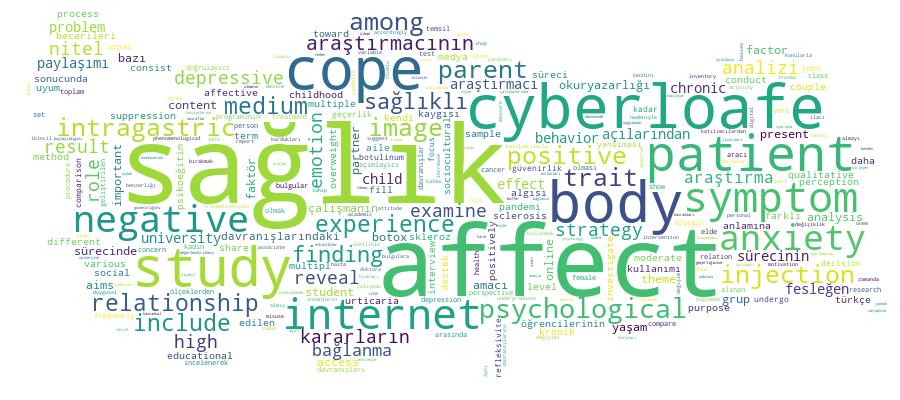
Competency Cloud
9 results
Scholarly Output Search Results
Now showing 1 - 9 of 9
Book Part Citation - Scopus: 4Stress, Coping, and Social Media Use(IGI Global, 2022) Demirtepe-Saygılı, D.Social media has become a part of people’s lives and many psychological processes are suggested to be related with social media use. This chapter examines social media use from a stress and coping perspective. Social media can be a stressor for users with the content of posts they see, with a fear of negative evaluation, as an unhealthy attachment to social media accounts, and as a result of cyberbullying. Social media use can also be a problem-focused coping as a source of information, an emotion-focused coping as a distraction, and a source of social support. Lastly, it can be a predictor or a part of well-being as well as a moderator or mediator between coping and well-being. After elaborating on social media use as a part of the coping process, implications for research and practice are discussed. The key points from a coping viewpoint are specified for users, parents, teachers, and professionals. While problematic use of social media can be part of dysfunctional coping and a worse well-being, healthy use can help individuals deal with stresses and lead to a better well-being. © 2022 by IGI Global. All rights reserved.Article Citation - WoS: 1Covıd-19 Pandemi Döneminde Üniversite Öğrencilerinin Medya Kullanımı, Sağlık Okuryazarlığı, Sağlık Kaygısı ve Sağlık Davranışları(Marmara Univ, Fac Communication, 2021) Eşiyok, Elif; Saygılı, Dilek Demirtepe; Eşiyok, Elif; Turancı, Eda; Eşiyok, ElifPandemi süreci insanların yaşam tarzlarını ve sağlık davranışlarını etkilerken aynı zamanda medya kullanımlarını da etkilemiştir. Bu çalışmanın amacı, COVID-19 salgını sırasında üniversite öğrencilerinin sağlık davranışlarındaki değişimi incelemektir. Sağlık davranışındaki değişiklik, beslenme ve egzersiz alışkanlıklarındaki değişiklikler anlamına gelmektedir. Bu çalışmada medya kullanımı, sağlık okuryazarlığı ve sağlık algısı, sağlık davranışlarındaki değişimin belirleyicileri olarak; sağlık kaygısı ve sağlıklı yaşam becerileri ise aracı değişken olarak ele alınmıştır. Pandeminin ikinci ayında Ankara ilindeki üniversitelerde öğrenim gören 392 üniversite öğrencisine anket uygulanmıştır. Bulgulara göre olumlu sağlık algısı, sağlık okuryazarlığı düzeyi, sağlık kaygısı düzeyi ve sağlıklı yaşam becerileri arttıkça sağlık davranışlarındaki değişim de artmaktadır. Yol analizi bulgularına göre daha olumlu sağlık algısı ve yüksek sağlık okuryazarlığı düzeyi, sağlıklı yaşam becerileri aracılığı ile sağlık davranışlarında daha yüksek düzeyde değişiklik sağlamaktadır. Ayrıca, Twitter kullanımı pandemi sürecinde sağlık kaygısını arttırarak, sağlık davranışlarındaki değişimi arttırmıştır. Bulgular, üniversite öğrencilerinin COVID-19’dan korunmak için sağlık davranışlarını değiştirme motivasyonlarının daha iyi anlaşılmasına yardımcı olmuştur.Article Kararların Paylaşımı Ölçeği’nin Türkçe Uyarlama, Geçerlik ve Güvenirlik Çalışması(2020) Saygılı, Dilek Demirtepe; Aytaç, BernaAile içi kararların eşler arasında nasıl paylaşıldığını ölçmeyi amaçlayan Kararların Paylaşımı Ölçeği aile çalışmalarında tercih edilen ölçeklerden biridir. Bu çalışmanın amacı Kararların Paylaşımı Ölçeği’nin kadın örnekleminde Türkçe uyarlamasını yapmak, geçerliğinive güvenirliğini incelemektir. Bu amaçla 219 kadın katılımcıya uygulanan ölçeklerden elde edilen veri, açımlayıcı ve doğrulayıcı faktör analizi ile incelenmiştir. Açımlayıcı faktör analizi sonucunda ortaya çıkan üç faktör toplam varyansın % 44.27’sini açıklamış ve masraflar, sosyal etkinlikler ve davranışlar olmak üzere ailede karar alınan üç alanı temsil etmiştir. Doğrulayıcı faktör analizi ile uyum indeksleri incelenerek [χ2(30) = 70.80, p= .000, χ2/sd = 2.36, CFI= .90, GFI = .93, RMSEA = .09] oluşanyapı desteklenmiştir. Ölçeğin kavramsal olarak ilişkili ve bağımsız olması beklenen kavramları ölçen araçlar ile ilişkileri incelenerek birleşen ve ayırt edici geçerlik açılarından değerlendirmeler yapılmıştır. Ölçeğin güvenirliği, iç tutarlılık katsayısı(Cronbach Alfa .83), bileşik güvenirlik (.76) ve test tekrar test güvenirlikleri (r = .82, p < .001) açılarından değerlendirilmiştir. Bulgular, Kararların Paylaşımı Ölçeği’nin Türkçe formunun geçerli ve güvenilir bir ölçüm aracı olarak aile çalışmalarındakullanılabileceğini göstermiştir.Article Citation - WoS: 30Citation - Scopus: 35Cyberloafing Behaviors Among University Students: Their Relationships With Positive and Negative Affect(Springer, 2023) Metin-Orta, Irem; Demirtepe-Saygili, DilekWith the technological advances, the use of digital devices, such as laptops, tablets, or smartphones in the educational setting has become prevalent among young people. Accordingly, there has been an increased concern among scholars on students' in-class Internet use for personal purposes; namely, 'cyberloafing'. Considerable research has demonstrated the adverse effects of in-class Internet use on students' learning environment and academic performance. The present study particularly investigates the relationship between cyberloafing behaviors and positive and negative affect among university students. It examines five different online activities including sharing, shopping, real-time updating, accessing online content, and gaming/gambling separately to gain greater insight into students' cyberloafing behaviors. The sample consisted of 267 undergraduate students who filled out questionnaires measuring cyberloafing behaviors, positive and negative affect, and demographical information including the use of the Internet and mobile technologies. The initial analyses showed that male students had higher scores in shopping, accessing online content, and gaming/gambling than females. The latent variable analysis revealed that among different activities of cyberloafing, accessing online content and gaming/gambling were positively correlated with positive affect, while sharing was positively associated with negative affect among students. The findings emphasize the importance of evaluating cyberloafing as a part of students' psychological well-being rather than a variable merely related to academic achievement. The findings of the study also enlighten researchers and educators in developing appropriate policies and interventions to manage misuse of the Internet in class.Article Citation - WoS: 14Citation - Scopus: 19An Investigation of Cyberloafing in Relation To Coping Styles and Psychological Symptoms in an Educational Setting(Sage Publications inc, 2021) Demirtepe-Saygili, Dilek; Metin-Orta, IremCyberloafing, the intentional use of the Internet for personal purposes during class hours, has received the scholars' attention due to the increased access to digital devices in educational settings. Considering the possible negative consequences of misuse of the Internet on health and well-being, the current study aims to investigate the underlying mechanisms of this relationship by examining in detail the role of coping strategies. The sample consisted of 272 undergraduate students. The participants were asked to fill out items measuring cyberloafing behaviors, coping strategies (emotion-focused and problem-focused), and psychological symptoms (depression, anxiety, anger, and somatization). The results revealed that cyberloafing is positively related to psychological symptoms. Furthermore, it is observed that cyberloafing moderates the relationship between emotion-focused coping and psychological symptoms such that at high levels of cyberloafing, emotion-focused coping is associated with higher levels of psychological symptoms. These findings contribute to the existing literature on students' psychological well-being in terms of highlighting its relation with coping strategies and problematic Internet use.Review Refleksivite ve Etkileşim Açılarından Nitel Araştırmacı Olmanın Fırsatları ve Zorlukları(2021) Saygılı, Dilek Demirtepe; Saygılı, Dilek DemirtepeNitel araştırma sürecinde araştırmacının aktif rol oynaması nedeniyle araştırmacı -araştırma etkileşimi önem taşımaktadır. Bu etkileşimin farkındalığı anlamına gelen refleksivite, araştırma sorusunun oluşturulmasıyla başlayıp bulguların paylaşılmasıyla biten araştırma sürecinin tüm aşamalarında geçerlidir. Bu çalışmanın amacı nitel araştırma sürecinde araştırmacı-araştırma etkileşimini inceleyerek kendi süreçlerini paylaşan araştırmacıların deneyimlerini derlemektir. Özellikle başlangıç düzeyinde nitel araştırmacılar için rehberlik etmesi hedeflenen bu derlemede, süreci zorlaştırma riski taşıyan bazı konulara değinilmiş ve olası sorunlara yönelik çözüm önerileri sunulmuştur. Bu bağlamda ele alınan konular katılımcılarla araştırmacının benzerliği, hassas konularla çalışmak, araştırmacının ikincil travmatizasyonu ve rol karmaşasıdır. Katılımcılarla araştırmacının benzerliği, ortak kişisel özelliklere sahip olmak anlamındadır. Hassas konularla çalışmak, travma ve taciz gibi duygusal yoğunluğu yüksek konularda araştırma yapmayı içerir. Araştırmacının ikincil travmatizasyonu, travmaya dolaylı yoldan maruz kalarak travma sonrası stres belirtileri göstermek anlamına gelir. Rol karmaşası ise farklı amaçları olan araştırmacı ve uygulamacı rollerinin çatışmasıdır. Özellikle bu durumlarda araştırmacının bir hazırlık sürecine zaman ayırması, kendi rolünün ve araştırmasıyla etkileşiminin farkında olması, kendi etkisi ile katılımcılardan elde edilen veri arasında denge kurması, süreçte karşılaşacağı riskli durumlarla baş edebilmesi ve araştırmacı öz bakımına önem vermesi, nitel araştırmaların sağlıklı bir şekilde yürütülmesine katkı sağlama konusunda yardımcı olacaktır.Article Citation - WoS: 8Citation - Scopus: 9Affective Experiences of the Parents of Children With Cancer: a Qualitative Study(Springer, 2020) Demirtepe-Saygili, Dilek; Bozo, OzlemThe present study aims to examine the affective experiences of the parents of children with cancer qualitatively. Semi-structured interviews were conducted with parents, whose children were being treated for different types of childhood cancers. Three affect themes, which were (a) negative affect (sadness, anxiety guilt, and anger), (b) emotion suppression, and (c) positive affect were revealed as a result of the transcribed and qualitatively analyzed interviews. Theoretical explanations were provided for each theme. Negative affect was the most predominant theme, yet positive affect was also present among parents, and emotion suppression was an important part of the affective experiences. The findings offered a descriptive picture about the emotions of parents with respect to caregiving a child with cancer. It was suggested that normalization and ventilation of the emotions can help the parents cope better with childhood cancers.Article Citation - WoS: 6Citation - Scopus: 6Multiple Sclerosis Experiences of Couples: Examination of Patient and Partner Perspectives(Sage Publications Ltd, 2022) Demirtepe-Saygili, DilekThe study aims to investigate Multiple Sclerosis (MS) experiences of couples. Using a dyadic qualitative method, separate simultaneous interviews were conducted with 20 couples, including one partner with MS. The themes resulting from content analysis were examined in two categories: Convergent (anxiety about future, acceptance of MS and MS as an accelerator of the relationship) and divergent (sexual problems, the experience of MS symptoms, the priority of the problems and untold issues). The findings revealed shared and unique perspectives of partners in the illness process, having the potential to guide the psychosocial interventions for couples living with a chronic illness.Article The Roles of Media, Social Comparison and Self-Discrepancy on Overweight/Obese Patients' Decision To Undergo Intragastric Botulinum Toxin-A Injection(Istanbul Univ, Fac Letters, dept Psychology, 2022) Esiyok, Elif; Saygılı, Dilek Demirtepe; Saygili, Dilek Demirtepe; Saygılı, Dilek DemirtepeBody image is the sum of individuals' perceptions of their own bodies. There are various factors that affect body image, one of which is sociocultural factors. Sociocultural factors, including family, peers and the media, are important factors affecting the body image of individuals. The effects of being overweight on one's body image perception has been one of the most frequently researched topics in recent years. Studies have also shown that comparing one's body with people in the media, and the dissatisfaction with one's body resulting from it, motivates people to resort to various methods of losing weight. Doctors recommend various procedures for health reasons. Moreover, overweight women choose some surgical procedures such as intragastric botox injection, due to their concerns about their body image. Intragastric Botulinum Toxin-A injection (stomach botox) is one of them. This study aims to explore how sociocultural factors affect the overweight/ class I obese female patients' decision to undergo an intragastric botox injection treatment from an interpretative phenomenological approach. The sample of the study consisted of 12 female patients who had an intragastric botox injection in the last six months. Semi-structured interviews were conducted with the patients. The interpretive phenomenological analysis revealed seven themes; self-definition through physical characteristics, motivations towards intragastric botox injection, attitudes towards the body, the perceived effects of being overweight, comparing one's own body, the role of the media in the decision-making process, and treatment plans for changing one's appearance in the future. It has been found that the body image perceptions of the patients play an important role in the processing-decision-making processes.. In addition, it has been observed that social media is a channel frequently used by patients for the purpose of obtaining information. The study is important in terms of trying to understand cognitive processes including self-evaluations and body image, their motivations behind intragastric BTA injection, and attitudes toward their bodies.
