
Çağıltay, Nergiz
Loading...

Profile URL
Name Variants
Çağıltay, Nergis E.
Nergiz, Çağıltay
Çağıltay, Nergiz
Nergiz, Cagiltay
Ç.,Nergiz
C.,Nergiz
N., Cagiltay
N.,Çağıltay
Cagiltay, Nergiz
Cagiltay,N.
Çağıltay,N.
N.,Cagiltay
C., Nergiz
Çağıltay, Nergiz Ercil
Cagiltay, Nergiz Ercil
Çağıltay, Nergiz E.
Nergiz, Çağıltay
Çağıltay, Nergiz
Nergiz, Cagiltay
Ç.,Nergiz
C.,Nergiz
N., Cagiltay
N.,Çağıltay
Cagiltay, Nergiz
Cagiltay,N.
Çağıltay,N.
N.,Cagiltay
C., Nergiz
Çağıltay, Nergiz Ercil
Cagiltay, Nergiz Ercil
Çağıltay, Nergiz E.
Job Title
Profesör Doktor
Email Address
nergiz.cagiltay@atilim.edu.tr
Main Affiliation
Software Engineering
Status
Former Staff
Website
ORCID ID
Scopus Author ID
Turkish CoHE Profile ID
Google Scholar ID
WoS Researcher ID
Sustainable Development Goals
 1
1NO POVERTY
0
Research Products
 2
2ZERO HUNGER
0
Research Products
 3
3GOOD HEALTH AND WELL-BEING
0
Research Products
 4
4QUALITY EDUCATION
33
Research Products
 5
5GENDER EQUALITY
0
Research Products
 6
6CLEAN WATER AND SANITATION
0
Research Products
 7
7AFFORDABLE AND CLEAN ENERGY
1
Research Products
 8
8DECENT WORK AND ECONOMIC GROWTH
0
Research Products
 9
9INDUSTRY, INNOVATION AND INFRASTRUCTURE
1
Research Products
 10
10REDUCED INEQUALITIES
0
Research Products
 11
11SUSTAINABLE CITIES AND COMMUNITIES
1
Research Products
 12
12RESPONSIBLE CONSUMPTION AND PRODUCTION
0
Research Products
 13
13CLIMATE ACTION
0
Research Products
 14
14LIFE BELOW WATER
0
Research Products
 15
15LIFE ON LAND
0
Research Products
 16
16PEACE, JUSTICE AND STRONG INSTITUTIONS
3
Research Products
 17
17PARTNERSHIPS FOR THE GOALS
3
Research Products

This researcher does not have a Scopus ID.

This researcher does not have a WoS ID.

Scholarly Output
137
Articles
79
Views / Downloads
140/410
Supervised MSc Theses
26
Supervised PhD Theses
3
WoS Citation Count
1182
Scopus Citation Count
1503
Patents
0
Projects
0
WoS Citations per Publication
8.63
Scopus Citations per Publication
10.97
Open Access Source
17
Supervised Theses
29
| Journal | Count |
|---|---|
| 18th IEEE International Symposium on Personal, Indoor and Mobile Radio Communication -- SEP 03-07, 2007 -- Athens, GREECE | 7 |
| IEEE Access | 5 |
| Computers & Education | 3 |
| Surgical Innovation | 3 |
| Journal of Eye Movement Research | 3 |
Current Page: 1 / 10
Scopus Quartile Distribution
Competency Cloud
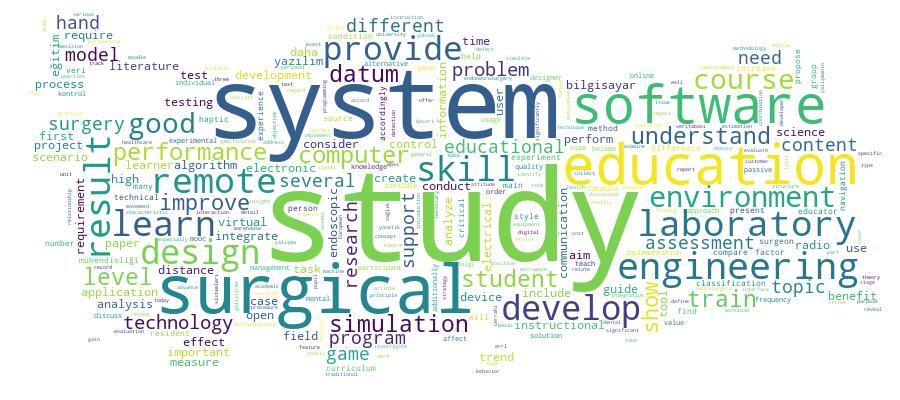
45 results
Scholarly Output Search Results
Now showing 1 - 10 of 45
Master Thesis Kurumsal Kaynak Planlama Uygulamaları için Esnek Veri Tabanı Tasarımı(2006) Öztürk, Kadir Kansu; Çağıltay, Nergiz ErcilKurumsal Kaynak Planlama (ERP) yazılımı, organizasyonlara islerini ve süreçlerini daha iyi kullanmaları için bir çerçeve sunar. ERP yazılımının uyarlanması süreci, bu çerçevenin organizasyona bagdastırılmasıdır. Bu sebeple, uyarlama süreci, ERP felsefesinin hedefledigi sonuçlara ulasmak için iyi yönetilmelidir. Uyarlama projelerinin kolaylastırmak için, ERP yazılımının, uyarlama alanında ortaya çıkacak ek veri ihtiyaçlarını karsılayabilecek esneklikte olması gerekmektedir. Bu tezde, esnek olmayan tasarımdan kaynaklanan uyarlama problemleri, iki safhalı bir örnek olay kullanılarak sunulmustur. Ayrıca, ERP yazılımına esnek bir yapı kazandırabilmek için veritabanı tasarım alternatifleri sunulmustur. Örnek olayda karsılasılan uyarlama problemleride önerilen tasarım alternatifleriyle degerlendirilmistir. Standart veritabanı tasarım adımlarının esneklik gereksinimlerini dikkate alacak sekilde genisletilmesi gerekliligi gözlenmistir. Keywords: Kurumsal Kaynak Planlama (ERP), Veritabanı Tasarımı, Uygulama Alanı, Uyarlama Alanı, EsneklikArticle SAYISAL KÜTÜPHANELERİN TASARIMINDA SAYISAL NESNELER EĞİTİMİ NASIL DESTEKLENEBİLİR?(2002) Çağıltay, Nergiz; Çağıltay, Kürşat"Tekrar kullanılabilen öğrenme nesenleri" çevrimiçi eğitim dünyasında nesne tabanlı yaklaşımların kullanılması açısından önemli bir gelişmedir. Aynı şekilde, sayısal kütüphane çalışmaları da "sayısal nesenler" olarak adlandırılan nesne tabanlı yaklaşımlardan etkilenmektedir. Bu çalışmanın temel amacı tekrar kullanılabilen öğrenme nesneleri çerçevesinde her iki alandaki gelişmelrin kesiştiği noktayı incelemek ve bu gelişmeler ışığında sayısal kütüphanelerin çevrimiçi eğitim açısından önemini irdelemektir.Article Citation - WoS: 15Citation - Scopus: 21Software Engineering Education: Some Important Dimensions(Taylor & Francis Ltd, 2007) Mishra, Alok; Cagiltay, Nergiz Ercil; Kilic, Ozkan; Ercil Cagiltay, NergizSoftware engineering education has been emerging as an independent and mature discipline. Accordingly, various studies are being done to provide guidelines for curriculum design. The main focus of these guidelines is around core and foundation courses. This paper summarizes the current problems of software engineering education programs. It also proposes some important dimensions as integral parts of software engineering education: interdisciplinary skills, practice experience, communication, skills on continuing education and professionalism. In the current guidelines and studies these dimensions are not addressed specifically. Although there could be other dimensions to be considered in software engineering education, we believe that the proposed ones are very crucial as software engineering is evolving more rapidly than any other engineering discipline. This study also provides a survey of some major universities' undergraduate software engineering programs to evaluate these dimensions.Conference Object An Rfid Based Location Finding and Tracking With Guidance(Ieee, 2008) Oktem, Rusen; Aydin, Elif Uray; Cagiltay, Nergiz ErcilThis paper tackles an RFID based location finding and tracking system. The system is an integral part of a navigation aid being developed for guiding visually disabled people in a store. The aid is composed of a portable hardware interface unit, a standalone RFID unit, and a central processing unit. The units interact via wireless communication to locate the position of the user in a known indoor environment and tracking his/her movement. An active RFID tag helps to estimate the location of a user and the user is guided to follow a route accordingly, via a tactile compass. The system uses RF signal strengths and is based on Bayes Decision Theory. Initial simulation results with the system prove promising for location finding and tracking, especially when the tracked person is guided by a system.Article Requirements for Remote Rf Laboratory Applications: an Educators’ Perspective(IEEE TRANSACTIONS ON EDUCATION, 2009) Çağıltay, Nergiz; Aydın, Elif; Öktem, Ruşen; Kara, Ali; Alexandru, Marian; Reıner, BodoThis paper discusses the results of a study of the requirements for developing a remote RF laboratory. This study draws on the perspectives of educators in university electrical engineering departments and in technical colleges, on the teaching of the radio frequency (RF) domain. The study investigates how these educators would like the technical content of a state of the art RF laboratory to be designed. As far as the authors know, no publication exists in the literature that investigates the requirements and needs of remote laboratories in that particular field. The outcomes of this work are expected to guide remote laboratory platform developers towards the most effective design of their platforms. The analysis of the results showed that educators would like the technical content of the laboratory to cover basic communication techniques, microwave circuits and devices, antennas and propagation, RF technology, and radio system design aspects of modern telecommunication systems. They would therefore like the laboratory instrumentation to be designed to that end. The educators also reported the need for advanced experimental setups which require expensive RF measurement devices. The discrepancy between university and technical college views was also considered in this paper.Article Distance Laboratory Applications ERRL: A Study on Radio Communication in Electronic Field(IEEE, 2008) Aydın, Cansu Çiğdem; Özyurt, E.; Aydın, Elif; Çağıltay, Nergiz; Özbek, Mehmet Efe; Alparslan, Ceren; Kara, AliIn the last decade, the effect of internet usage in education is gradually increased. When we look from academic perspective, the new technologies provided alternatives for students learning. As distance education becomes important everyday, the indispensable elements of teaching and education, laboratories must be reachable via remote connection. Consequently, the education that is going to be given to the students will be more flexible with respect to place and time constraints and students can reach laboratory facilities at any time and anywhere not only in lectures and practical hours. In this study, European Remote Radio Laboratory (ERRL) which is a distance remote Radio Frequency (RF) laboratory designed for electrical-electronics students, is described generally. The software architecture, infrastructure and experiment that can be done with a remote connection have been described.Article Citation - WoS: 24Citation - Scopus: 42Using Learning Styles Theory in Engineering Education(Taylor & Francis Ltd, 2008) Cagiltay, Nergiz ErcilStudies have shown that, while learning different concepts, people sometimes take different approaches (learning styles). Accordingly, their performance reflected differently in their academic studies. With the effect of globalisation to the educational environments, the influence of individual learning styles on educational performance is getting more significant. In this study, a learning style assessment tool was used to examine the relationship between students' learning styles and their performance in engineering education programmes. At the beginning of the programme, 285 students' learning styles were measured using a learning style assessment tool. Four years after the engineering education, their performance in the programme was compared with their individual learning styles. This study shows that most of the students are assimilators. Divergers and convergers follow the assimilators. The number of accommodators is very limited. The relationship between engineering students' learning styles and their performance is found: assimilators and convergers performed better than the divergers and accommodators. The performance difference between assimilators and divergers is statistically significant. The results of this study show that the learning style theory is a potential tool for guiding the design and improvement of courses and helping students to improve their individual performance.Article BİR ELEKTRONİK KÜTÜPHANE PROJESİNE BAŞLARKEN(2001) Çağıltay, NergizBu çalışmanın temel amacı, İndiana Üniversitesi elektronik (sayılsal) kütüphane programında halen yürütülmekta olan çalışmalrı incelemektir. Ayrıca, sunulan bilgiler ışığında bu kapsamda ne tür projeler gerçekleştirildiğini irdeleyerek bir elektronik kütüphane projesine nasıl başlanılması gerektiği ve proje aşamalarında nelere dikkat edilmesi gerektiği gibi konularda bir değerlendirme yapmaktır. Bu çalışmanın, ülkemizde bu konuda yapılmakta olan ve yapılması planlanan benzeri projelere ışık tutması amaçlanmıştır.Article Citation - WoS: 4Citation - Scopus: 8Remote Rf Laboratory Requirements: Engineers' and Technicians' Perspective(Anadolu Univ, 2007) Cagiltay, Nergiz Ercil; Aydin, Elif Uray; Kara, Ali; Department of Electrical & Electronics Engineering; Software EngineeringThis study aims to find out requirements and needs to be fulfilled in developing remote Radio Frequency (RF) laboratory. Remote laboratories are newly emerging solutions for better supporting of e-learning platforms and for increasing their efficiency and effectiveness in technical education. By this way, modern universities aim to provide lifelong learning environments to extend their education for a wider area and support learners anytime and anywhere when they need help. However, as far as the authors concern, there is no study investigating the requirements and needs of remote laboratories in that particular field in the literature. This study is based on electrical engineers' and technicians' perspectives on the requirements of a remote laboratory in RF domain. Its scope covers investigation of the participants' perceptions toward computer mediated communication and it attempts to answer the questions: which studying strategies are preferred by the learners and what kind of RF laboratory content should be provided. The analysis of the results showed that, geographic independence, finding quickly the elements of past communication and temporal independence are declared as the most important advantages of computer-mediated communication. However, reading significant amount of information is a problem of these environments. In the context of how to show the content, respondents want to see shorter text on the screen. Therefore the instructions should include little amount of text and must be supported with figures and interactive elements. The instructional materials developed for such learner groups should support both linear and non-linear instructions. While analyzing the content to be provided, we have seen that, most of the participants do not have access to high level equipments and traditional experiments are considered as the necessary ones for both engineers and technicians.Master Thesis Satır Sayısı, Veri Tabanı Tasarımı ve Yazılımın Maliyet Tahmini İlişkisi Üzerine Bir Araştırma(2008) Yeşiltan, Yelda; Çağıltay, Nergiz ErcilBu çalışma, yazılıma ait satır sayısı ve veri tabanı tasarımı adımları olan kavramsal tasarım ve mantıksal tasarım arasındaki ilişkiyi ve bu ilişkinin yazılım maliyeti hesaplanması için kullanılabilirliğini araştırma amacını taşımaktadır. Yrd. Doç. Dr. Nergiz Ercil Çağıltay tarafından önerilen satır sayısı ve veri tabanı tasarımı ilişkisi, açık kaynaklı Personel Home Pages (PHP) kodu ile geliştirilmiş olan Modular Object-Oriented Dynamic Learning Environment'a (MOODLE) ait 20 alt modülün analizi yapılarak incelenmiştir. MOODLE'a ek olarak, Systems Applications and Products / Advanced Business Application Programming (SAP/ABAP) ile geliştirilmiş olan bir projeye ait 33 alt modülün analizi yapılmıştır.Gerçekleştirilmiş olan çalışmanın sonuçları yazılıma ait satır sayısı ve veri tabanı tasarımı adımları olan kavramsal tasarım ve mantıksal tasarım arasında direkt bir ilişki olduğunu göstermiştir.
