Doruk, Reşat Özgür

Loading...
Profile Picture
Name Variants
R.Ö.Doruk
Reşat Özgür Doruk
D.,Resat Ozgur
R. Ö. Doruk
R., Doruk
Doruk, Resat Ozgur
Doruk,R.O.
R.,Doruk
Doruk R.
D.,Reşat Özgür
özgür Doruk R.
Reşat Özgür, Doruk
R. O. Doruk
Özgür Doruk R.
R.O.Doruk
Doruk,R.Ö.
D., Reşat Özgür
D., Resat Ozgur
Resat Ozgur, Doruk
Doruk,Resat Ozgur
Doruk, Reşat Özgür
Doruk, R. Ozgur
Job Title
Profesör Doktor
Email Address
resat.doruk@atilim.edu.tr
Main Affiliation
Electrical-Electronics Engineering
Status
Website
Scopus Author ID
Turkish CoHE Profile ID
Google Scholar ID
WoS Researcher ID

Sustainable Development Goals

NO POVERTY1
NO POVERTY
0
Research Products
ZERO HUNGER2
ZERO HUNGER
0
Research Products
GOOD HEALTH AND WELL-BEING3
GOOD HEALTH AND WELL-BEING
0
Research Products
QUALITY EDUCATION4
QUALITY EDUCATION
0
Research Products
GENDER EQUALITY5
GENDER EQUALITY
0
Research Products
CLEAN WATER AND SANITATION6
CLEAN WATER AND SANITATION
0
Research Products
AFFORDABLE AND CLEAN ENERGY7
AFFORDABLE AND CLEAN ENERGY
1
Research Products
DECENT WORK AND ECONOMIC GROWTH8
DECENT WORK AND ECONOMIC GROWTH
0
Research Products
INDUSTRY, INNOVATION AND INFRASTRUCTURE9
INDUSTRY, INNOVATION AND INFRASTRUCTURE
0
Research Products
REDUCED INEQUALITIES10
REDUCED INEQUALITIES
0
Research Products
SUSTAINABLE CITIES AND COMMUNITIES11
SUSTAINABLE CITIES AND COMMUNITIES
0
Research Products
RESPONSIBLE CONSUMPTION AND PRODUCTION12
RESPONSIBLE CONSUMPTION AND PRODUCTION
0
Research Products
CLIMATE ACTION13
CLIMATE ACTION
1
Research Products
LIFE BELOW WATER14
LIFE BELOW WATER
0
Research Products
LIFE ON LAND15
LIFE ON LAND
0
Research Products
PEACE, JUSTICE AND STRONG INSTITUTIONS16
PEACE, JUSTICE AND STRONG INSTITUTIONS
0
Research Products
PARTNERSHIPS FOR THE GOALS17
PARTNERSHIPS FOR THE GOALS
0
Research Products
This researcher does not have a Scopus ID.
Documents

20

Citations

87

Scholarly Output

35

Articles

17

Views / Downloads

83/233

Supervised MSc Theses

11

Supervised PhD Theses

7

WoS Citation Count

46

Scopus Citation Count

56

Patents

0

Projects

0

WoS Citations per Publication

1.31

Scopus Citations per Publication

1.60

Open Access Source

12

Supervised Theses

18

JournalCount
Süleyman Demirel Üniversitesi Fen Bilimleri Enstitüsü Dergisi3
Computer Methods and Programs in Biomedicine2
Turkish Journal of Electrical Engineering and Computer Sciences2
Journal of Biological Physics2
Gazi Üniversitesi Mühendislik Mimarlık Fakültesi Dergisi1
Current Page: 1 / 3

Scopus Quartile Distribution

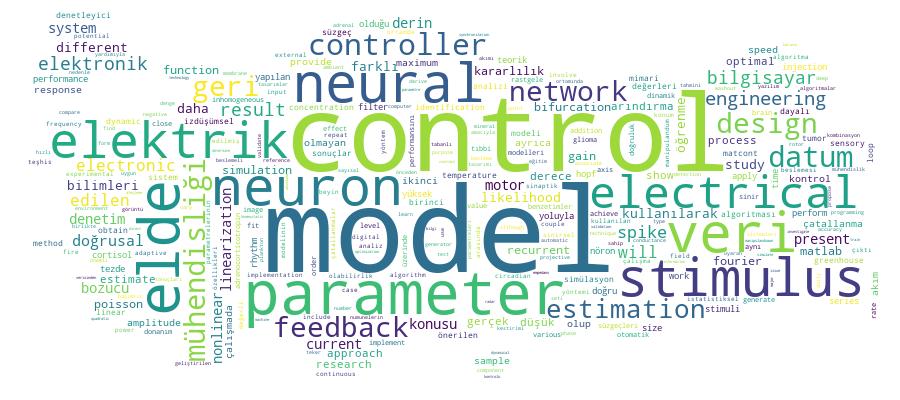
Competency Cloud

GCRIS Competency Cloud

Scholarly Output Search Results

Now showing 1 - 3 of 3
  • Article
    Automatic Control of Hypothalamus-Pituitary Axis Dynamics
    (Elsevier Ireland Ltd, 2019) Doruk, R. Ozgur; Mohsin, Ahmed H.
    Background and Objective: In this study, a presentation is made for the automatic control of the hypothalamus-pituitary-adrenal axis which plays an important role in the immune stress responses and the circadian rhythms of mammalian organisms. Methods: Control approaches are implemented on a novel second order nonlinear system which accepts adrenocorticotropin hormone as an input and models the variation of plasma concentrations of adrenocorticotropin and cortisol respectively. The control methods are based on back-stepping and input-output feedback linearization techniques. The controllers adjust the adrenocorticotropin injection to maintain the daily rhythm of the cortisol concentration. In accordance with the periodicity of biological clock mechanism, we provide a sinusoidally varying cortisol reference to the controllers. Results: Numerical simulations are performed (on MATLAB) to demonstrate the closed loop performance of the controllers. Major concerns in the selection of the control gains are chattering and negative concentration in responses. The simulation results showed that one can successfully find gain levels which do not lead to those issues. However, the gains lie in different ranges for back-stepping and feedback linearization based controllers. Conclusion: The results showed that, both back-stepping and feedback linearization based controllers fulfilled their duty of synchronization of the cortisol concentration to a reference daily periodic rhythm. In addition to that, the risk of negative valued adrenocorticotropin injection can be eliminated by properly choosing the controller gains. (C) 2019 Elsevier B.V. All rights reserved.
  • Article
    Citation - WoS: 7
    Citation - Scopus: 7
    Fitting of Dynamic Recurrent Neural Network Models To Sensory Stimulus-Response Data
    (Springer, 2018) Doruk, R. Ozgur; Zhang, Kechen
    We present a theoretical study aiming at model fitting for sensory neurons. Conventional neural network training approaches are not applicable to this problem due to lack of continuous data. Although the stimulus can be considered as a smooth time-dependent variable, the associated response will be a set of neural spike timings (roughly the instants of successive action potential peaks) that have no amplitude information. A recurrent neural network model can be fitted to such a stimulus-response data pair by using the maximum likelihood estimation method where the likelihood function is derived from Poisson statistics of neural spiking. The universal approximation feature of the recurrent dynamical neuron network models allows us to describe excitatory-inhibitory characteristics of an actual sensory neural network with any desired number of neurons. The stimulus data are generated by a phased cosine Fourier series having a fixed amplitude and frequency but a randomly shot phase. Various values of amplitude, stimulus component size, and sample size are applied in order to examine the effect of the stimulus to the identification process. Results are presented in tabular and graphical forms at the end of this text. In addition, to demonstrate the success of this research, a study involving the same model, nominal parameters and stimulus structure, and another study that works on different models are compared to that of this research.
  • Article
    Citation - WoS: 1
    Citation - Scopus: 1
    Adaptive Stimulus Design for Dynamic Recurrent Neural Network Models
    (Frontiers Media Sa, 2019) Doruk, R. Ozgur; Zhang, Kechen
    We present an adaptive stimulus design method for efficiently estimating the parameters of a dynamic recurrent network model with interacting excitatory and inhibitory neuronal populations. Although stimuli that are optimized for model parameter estimation should, in theory, have advantages over nonadaptive random stimuli, in practice it remains unclear in what way and to what extent an optimal design of time-varying stimuli may actually improve parameter estimation for this common type of recurrent network models. Here we specified the time course of each stimulus by a Fourier series whose amplitudes and phases were determined by maximizing a utility function based on the Fisher information matrix. To facilitate the optimization process, we have derived differential equations that govern the time evolution of the gradients of the utility function with respect to the stimulus parameters. The network parameters were estimated by maximum likelihood from the spike train data generated by an inhomogeneous Poisson process from the continuous network state. The adaptive design process was repeated in a closed loop, alternating between optimal stimulus design and parameter estimation from the updated stimulus-response data. Our results confirmed that, compared with random stimuli, optimally designed stimuli elicited responses with significantly better likelihood values for parameter estimation. Furthermore, all individual parameters, including the time constants and the connection weights, were recovered more accurately by the optimal design method. We also examined how the errors of different parameter estimates were correlated, and proposed heuristic formulas to account for the correlation patterns by an approximate parameter-confounding theory. Our results suggest that although adaptive optimal stimulus design incurs considerable computational cost even for the simplest excitatory-inhibitory recurrent network model, it may potentially help save time in experiments by reducing the number of stimuli needed for network parameter estimation.