
Mıshra, Deepti
Loading...

Profile URL
Name Variants
Deepti, Mıshra
Deepti, Mishra
M.,Deepti
M., Deepti
Mishra,D.
D.,Mıshra
Mishra, Deepti
Mıshra, Deepti
Mıshra,D.
D.,Mishra
D., Mishra
Mıshra, Deeptı
Mishra, D
Deepti, Mishra
M.,Deepti
M., Deepti
Mishra,D.
D.,Mıshra
Mishra, Deepti
Mıshra, Deepti
Mıshra,D.
D.,Mishra
D., Mishra
Mıshra, Deeptı
Mishra, D
Job Title
Doktor Öğretim Üyesi
Email Address
Main Affiliation
Computer Engineering
Status
Former Staff
Website
ORCID ID
Scopus Author ID
Turkish CoHE Profile ID
Google Scholar ID
WoS Researcher ID
Sustainable Development Goals
 1
1NO POVERTY
0
Research Products
 2
2ZERO HUNGER
0
Research Products
 3
3GOOD HEALTH AND WELL-BEING
8
Research Products
 4
4QUALITY EDUCATION
4
Research Products
 5
5GENDER EQUALITY
1
Research Products
 6
6CLEAN WATER AND SANITATION
0
Research Products
 7
7AFFORDABLE AND CLEAN ENERGY
0
Research Products
 8
8DECENT WORK AND ECONOMIC GROWTH
0
Research Products
 9
9INDUSTRY, INNOVATION AND INFRASTRUCTURE
2
Research Products
 10
10REDUCED INEQUALITIES
0
Research Products
 11
11SUSTAINABLE CITIES AND COMMUNITIES
0
Research Products
 12
12RESPONSIBLE CONSUMPTION AND PRODUCTION
3
Research Products
 13
13CLIMATE ACTION
4
Research Products
 14
14LIFE BELOW WATER
4
Research Products
 15
15LIFE ON LAND
0
Research Products
 16
16PEACE, JUSTICE AND STRONG INSTITUTIONS
3
Research Products
 17
17PARTNERSHIPS FOR THE GOALS
1
Research Products

This researcher does not have a Scopus ID.

This researcher does not have a WoS ID.

Scholarly Output
102
Articles
41
Views / Downloads
52/56
Supervised MSc Theses
4
Supervised PhD Theses
1
WoS Citation Count
930
Scopus Citation Count
1312
Patents
0
Projects
0
WoS Citations per Publication
9.12
Scopus Citations per Publication
12.86
Open Access Source
13
Supervised Theses
5
| Journal | Count |
|---|---|
| Acta Polytechnica Hungarica | 4 |
| Computer Standards & Interfaces | 3 |
| Confederated International Workshops and Posters: EI2N plus NSF ICE, ICSP plus INBAST, ISDE, ORM, OTMA, SWWS plus MONET plus SeDeS, and VADER -- OCT 17-21, 2011 -- Hersonissos, GREECE | 3 |
| Tehnicki Vjesnik | 3 |
| Journal of Universal Computer Science | 3 |
Current Page: 1 / 14
Scopus Quartile Distribution
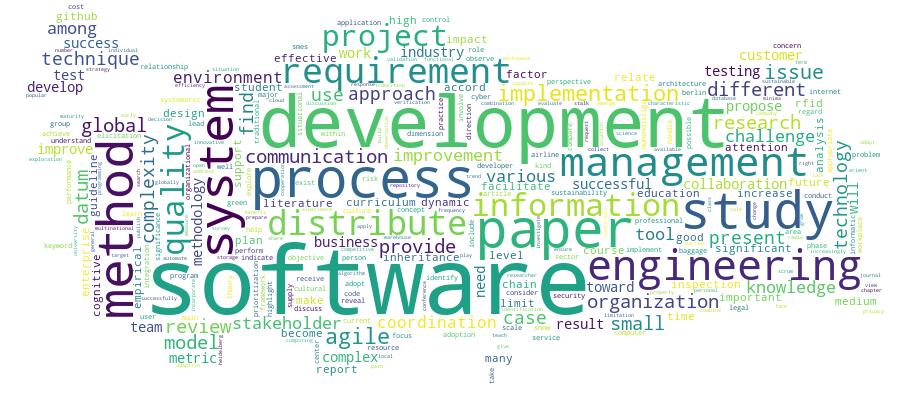
Competency Cloud
102 results
Scholarly Output Search Results
Now showing 1 - 10 of 102
Article Citation - WoS: 18Citation - Scopus: 21Research Trends in Management Issues of Global Software Development: Evaluating the Past To Envision the Future(Taylor & Francis inc, 2011) Mishra, Deepti; Mishra, AlokThis paper presents research trends in management issues (project management, process management, knowledge management, requirements management, configuration management, risk management, quality management) of distributed/global information system development. The main objective is to highlight the current research and practice direction in these areas. The results are based on peer-reviewed conference papers/journal articles, published between 2000 and early 2011. The analysis revealed that most research has been done in project management, process management, knowledge management and requirements management areas while configuration, risk, and quality management issues could get only limited attention in global/distributed information system development. This indicates the need for future research (quantitative and qualitative) in these areas.Conference Object Citation - WoS: 2Object-Oriented Inheritance Metrics: Cognitive Complexity Perspective(Springer-verlag Berlin, 2009) Mishra, Deepti; Mishra, AlokIdentifying high cognitive complexity modules can lead to a better quality software system and can help during maintenance also. It has been found that inheritance has an impact on cognitive complexity of a software system. In this paper, two inheritance metrics based on cognitive complexity, one at class level CCI (Class Complexity due to Inheritance) and another at program level ACI (Average Complexity of a program due to Inheritance), have been proposed for object-oriented software systems. These metrics are also compared with other well known object-oriented inheritance metrics.Conference Object Citation - WoS: 6Software Architecture in Distributed Software Development: a Review(Springer-verlag Berlin, 2013) Mishra, Alok; Mishra, DeeptiThis paper presents a literature review of distributed software development (DSD) or global software development (GSD) and software architecture. The main focus is to highlight the current researches, observations, as well as practice directions in these areas. The results have been limited to peer-reviewed conference papers and journal articles, and analysis reports that major studies have been performed in software architecture and global software development, while the empirical studies of interfacing distributed/global software development and software architecture has only received very little attention among researchers up to now. This indicates the need for future research in these areas.Article Citation - WoS: 22Citation - Scopus: 32Organizational Issues in Embracing Agile Methods: an Empirical Assessment(Springer india, 2021) Mishra, Alok; Abdalhamid, Samia; Mishra, Deepti; Ostrovska, SofiyaThis study provides empirical evidence to the body of knowledge in Agile methods adoption in small, medium and large organizations in international context. This research explores the factors involved in the adoption of Agile methods in software development organizations. A survey was conducted among Agile professionals to gather survey data from 52 software organizations in seven countries across the world. Statistical techniques are applied towards empirical assessment. Organizational culture, team structure and management support are found to be crucial success factors whereas lack of management support, a large organization size and traditional organizational culture are found to be detrimental for the adoption of Agile approach in an organization. The selection of an appropriate Agile method depends on the project size and, for each size, there are specific methods preferred by different enterprises. Providing better control over the work is viewed as the primary advantage of the Agile methods within large and small organizations, while for the medium-size organizations, the priority is switched to coping with changing user requirements. Majority of the respondents did not consider embracing agile methods as a reason for project failure which indicates that Agile methods are, indeed, beneficial.Article Citation - WoS: 34Citation - Scopus: 41A Computationally Efficient Method for Hybrid Eeg-Fnirs Bci Based on the Pearson Correlation(Hindawi Ltd, 2020) Hasan, Mustafa A. H.; Khan, Muhammad U.; Mishra, DeeptiA hybrid brain computer interface (BCI) system considered here is a combination of electroencephalography (EEG) and functional near-infrared spectroscopy (fNIRS). EEG-fNIRS signals are simultaneously recorded to achieve high motor imagery task classification. This integration helps to achieve better system performance, but at the cost of an increase in system complexity and computational time. In hybrid BCI studies, channel selection is recognized as the key element that directly affects the system's performance. In this paper, we propose a novel channel selection approach using the Pearson product-moment correlation coefficient, where only highly correlated channels are selected from each hemisphere. Then, four different statistical features are extracted, and their different combinations are used for the classification through KNN and Tree classifiers. As far as we know, there is no report available that explored the Pearson product-moment correlation coefficient for hybrid EEG-fNIRS BCI channel selection. The results demonstrate that our hybrid system significantly reduces computational burden while achieving a classification accuracy with high reliability comparable to the existing literature.Book Part Citation - Scopus: 1Web Privacy: Issues, Legislations, and Technological Challenges(IGI Global, 2008) Mishra,A.; Mishra,D.People all over the world increasingly are concerned about the privacy issues surrounding the personal information collected by private organizations, governments and employers. Privacy relates to issues regarding collection, secure transmission, storage, authorized access, usage, and disclosure of personal information. This information is used for commercial gain by many organizations. Individual privacy concerns significantly affects consumer willingness to engage in electronic commerce over the Internet. The increased use of the Internet and Web for everyday activities is bringing new threats to personal privacy. This chapter assessed various issues related to individual privacy on the Web, growing concerns among the Web users, technologies employed for collecting and protecting information on the Web, privacy-enhancing technologies and the legal provisions to curb the Web privacy. This chapter also reported detailed discussion about Platform for Privacy Preferences (P3P), its structure, present scenario of its implementation and its future success. Global consistency on Internet privacy protection is important to promote the growth of electronic commerce. To protect consumers in a globally consistent manner, legislation, self-regulation, technical solutions and combination solutions are different ways that can be implemented. © 2008, IGI Global.Article Citation - WoS: 1Citation - Scopus: 1Personal Response Systems Through the Prism of Students' Experiences(Wiley, 2020) Mishra, Deepti; Chew, Esyin; Ostrovska, Sofiya; Wong, JojoPersonal response systems (PRSs) today offer an opportunity to the field of education in terms of improving teaching and learning outcomes through active engagement in classrooms. The present paper investigates students' attitudes to different types of PRSs, namely, Socrative and Clickers. Both qualitative and quantitative data are gathered and classified. The performed thematic analysis reveals major categories within the framework of this study, namely educational efficacy, psychological aspects, technology-related issues, and administrative issues. It has been found that Socrative fares better in the "educational efficacy" and "administrative issues," whereas Clickers outperforms Socrative in the "technological-related issues." It is worth pointing out that both Socrative and Clickers are tantamount in "psychological aspects" yielding no negative experiences. The results of this study reveal that two main factors, cost and technological infrastructure, are determinative in the incorporation and appreciation of such systems in an educational setting.Article Citation - WoS: 20Citation - Scopus: 26Simplified software inspection process in compliance with international standards(Elsevier Science Bv, 2009) Mishra, Deepti; Mishra, AlokA significant amount of software is developed all over the world by small and medium size software organizations. These organizations do not have enough infrastructures and resources to implement an austere quality plan. Software inspection is a fundamental component of the software quality assurance process. Formal review methods are rigorous and their implementation is cumbersome for small and medium enterprises. In this paper, we have presented a new simplified inspection process which is easy to implement. requires fewer resource and almost no documentation. Also, people who are conducting this inspection need not be present at the same place during most stages of the inspection process. We have also compared this process with IEEE and NASA standards for software inspection and found that it meets almost 99% of both standards. While there has been much research on inspection, little attention is paid towards compliance with international standards. These results could be used as a basis for further research in software inspection and process towards aligning with international standards. This process has been successfully implemented in a CMM level 3 software development organization which is striving to accomplish higher maturity levels to establish at the international level. (C) 2008 Elsevier B.V. All rights reserved.Article Citation - WoS: 12Citation - Scopus: 13Assessing Team Work in Engineering Projects(Tempus Publications, 2015) Mishra, Deepti; Ostrovska, Sofiya; Hacaloglu, Tuna; Mathematics; Computer Engineering; Information Systems EngineeringTeam work is considered a valuable teaching technique in higher education. However, the assessment of an individual's work in teams has proved to be a challenging task. Consequently, self-and peer-evaluations are becoming increasingly popular for the assessment of individuals in a team work, though it is essential to determine whether students can judge their own as well as their peer's performance effectively. Self-and peer-evaluations have been applied in different disciplines and their authenticity with regard to teacher's assessment has been evaluated in the literature but this issue has not been investigated in the field of engineering education so far. In this study, a peer-and self-assessment procedure is applied to the evaluation of a project work conducted in teams of 3 or 4 students. The participants were engineering students taking two similar courses related with database design and development. It is found that a majority of the students were unable to assess themselves as objectively as their instructor. Further, it is observed that successful students tend to under-estimate, whereas unsuccessful students tend to over-estimate, their own performance. The paper also establishes that the results of self-assessments are independent from the gender factor.Conference Object Citation - Scopus: 2A Tool To Enhance Cooperation and Knowledge Transfer Among Software Developers(2009) Aydin,S.; Mishra,D.Software developers have been successfully tailoring software development methods according to the project situation and more so in small scale software development organizations. There is a need to share this knowledge with other developers who may be facing the same project situation so that they can benefit from other people experiences. In this paper, an approach to enhance cooperation among software developers, in terms of sharing the knowledge that was used successfully in past projects, is proposed. A web-based tool is developed that can assist in creation, storage and extraction of methods related with requirement elicitation phase. These methods are categorized according to certain criteria which helps in searching a method that will be most appropriate in a given project situation. This approach and tool can also be used for other software development activities. © 2009 Springer Berlin Heidelberg.
