
Mıshra, Deepti
Loading...

Profile URL
Name Variants
Deepti, Mıshra
Deepti, Mishra
M.,Deepti
M., Deepti
Mishra,D.
D.,Mıshra
Mishra, Deepti
Mıshra, Deepti
Mıshra,D.
D.,Mishra
D., Mishra
Mıshra, Deeptı
Mishra, D
Deepti, Mishra
M.,Deepti
M., Deepti
Mishra,D.
D.,Mıshra
Mishra, Deepti
Mıshra, Deepti
Mıshra,D.
D.,Mishra
D., Mishra
Mıshra, Deeptı
Mishra, D
Job Title
Doktor Öğretim Üyesi
Email Address
Main Affiliation
Computer Engineering
Status
Former Staff
Website
ORCID ID
Scopus Author ID
Turkish CoHE Profile ID
Google Scholar ID
WoS Researcher ID
Sustainable Development Goals
 1
1NO POVERTY
0
Research Products
 2
2ZERO HUNGER
0
Research Products
 3
3GOOD HEALTH AND WELL-BEING
8
Research Products
 4
4QUALITY EDUCATION
4
Research Products
 5
5GENDER EQUALITY
1
Research Products
 6
6CLEAN WATER AND SANITATION
0
Research Products
 7
7AFFORDABLE AND CLEAN ENERGY
0
Research Products
 8
8DECENT WORK AND ECONOMIC GROWTH
0
Research Products
 9
9INDUSTRY, INNOVATION AND INFRASTRUCTURE
2
Research Products
 10
10REDUCED INEQUALITIES
0
Research Products
 11
11SUSTAINABLE CITIES AND COMMUNITIES
0
Research Products
 12
12RESPONSIBLE CONSUMPTION AND PRODUCTION
3
Research Products
 13
13CLIMATE ACTION
4
Research Products
 14
14LIFE BELOW WATER
4
Research Products
 15
15LIFE ON LAND
0
Research Products
 16
16PEACE, JUSTICE AND STRONG INSTITUTIONS
3
Research Products
 17
17PARTNERSHIPS FOR THE GOALS
1
Research Products

This researcher does not have a Scopus ID.

This researcher does not have a WoS ID.

Scholarly Output
102
Articles
41
Views / Downloads
52/56
Supervised MSc Theses
4
Supervised PhD Theses
1
WoS Citation Count
930
Scopus Citation Count
1312
Patents
0
Projects
0
WoS Citations per Publication
9.12
Scopus Citations per Publication
12.86
Open Access Source
13
Supervised Theses
5
| Journal | Count |
|---|---|
| Acta Polytechnica Hungarica | 4 |
| Computer Standards & Interfaces | 3 |
| Confederated International Workshops and Posters: EI2N plus NSF ICE, ICSP plus INBAST, ISDE, ORM, OTMA, SWWS plus MONET plus SeDeS, and VADER -- OCT 17-21, 2011 -- Hersonissos, GREECE | 3 |
| Tehnicki Vjesnik | 3 |
| Journal of Universal Computer Science | 3 |
Current Page: 1 / 14
Scopus Quartile Distribution
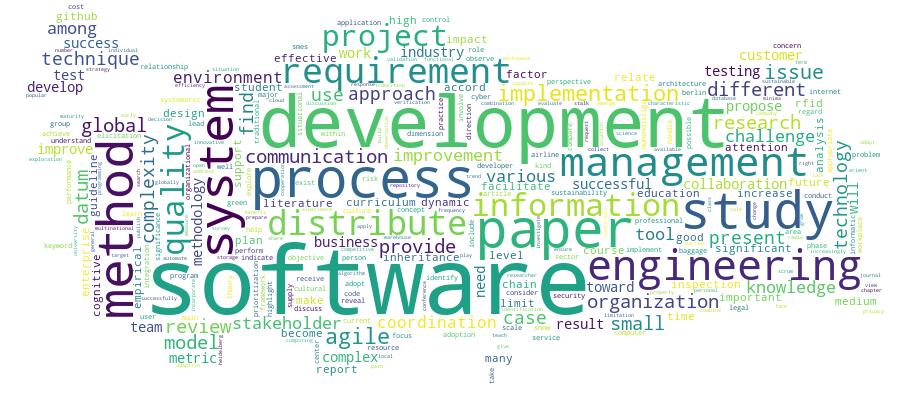
Competency Cloud
9 results
Scholarly Output Search Results
Now showing 1 - 9 of 9
Article Citation - WoS: 5Sustainable Software Engineering Education Curricula Development(Union Scientists Bulgaria, 2020) Mishra, Alok; Mıshra, Alok; Mishra, Deepti; Mıshra, Deepti; Mıshra, Alok; Mıshra, Deepti; Computer Engineering; Software Engineering; Computer Engineering; Software EngineeringClimate change risk and environmental degradation are the most critical issues of our society. Our technology influenced daily life style involves many software and apps which are used by large society and their use is increasing than ever before. Sustainability is a significant topic for future professionals and more so for Information Technology (IT) professionals and software engineers due to its impact on the society. It is significant to motivate and raise concern among students and faculty members regarding sustainability by including it into Software Engineering curriculum.Article Citation - WoS: 11Citation - Scopus: 14Sustainability Inclusion in Informatics Curriculum Development(Mdpi, 2020) Mishra, Deepti; Mishra, Alok(1) Background: Presently, sustainability is a crucial issue for human beings due to many disasters owing to climate change. Information Technology (IT) is now part of everyday life in society due to the proliferation of gadgets such as mobile phones, apps, computers, information systems, web-based systems, etc. (2) Methods: The analysis is based on recent ACM/IEEE curriculum guidelines for IT, a rigorous literature review as well as various viewpoints and their relevance for sustainability-oriented curriculum development; it also includes an assessment of key competencies in sustainability for proposed units in the IT curriculum. (3) Results: Sustainability is a critical subject for prospective IT professionals. Therefore, it is imperative to motivate and raise awareness among students and the faculty community regarding sustainability through its inclusion in the Informatics curriculum. This paper focuses on how sustainability can be included in various courses of the Informatics curriculum. It also considers recent ACM/IEEE curriculum guidelines for IT professionals, which assert that IT students should explore IT strategies required for developing a culture of green and sustainable IT. (4) Conclusions: This paper provides guidelines for IT curriculum development by incorporating sustainable elements in courses, so that future IT professionals can learn and practice sustainability in order to develop a sustainable society.Book Part Citation - Scopus: 12Sustainable Software Engineering: Curriculum Development Based on Acm/Ieee Guidelines(Springer International Publishing, 2021) Mishra,A.; Mishra,D.Climate change risk and environmental degradation are the most critical issues of our society. Our technology-influenced daily lifestyle involves many types of software and apps which are used by society at large, and their use is increasing more than ever before. Sustainability is a significant topic for future professionals and more so for software engineers due to its impact on society. It is crucial to motivate and raise concern among students and faculty members regarding sustainability by including it in the Software Engineering (SE) curriculum. This chapter discusses how sustainability can be included in various courses of the SE curriculum by considering ACM/IEEE curriculum guidelines for the SE curriculum, literature review, and various viewpoints so that SE students can attain knowledge on sustainable software engineering. It also includes an assessment of key competences in sustainability for proposed units in the SE curriculum. © Springer Nature Switzerland AG 2021. All rights reserved.Article Citation - WoS: 4Citation - Scopus: 6Women's Professional Career and Culture: Software Organizations in India(Sage Publications inc, 2022) Mishra, Deepti; Mishra, Sushma; Ostrovska, SofiyaIn this work, we conduct an investigation on perspectives and existing barriers for women trying to pursue a career in the Indian software industry. The study is focused on three dimensions: organizational policies and practices, workplace environment, and social-familial factors. Another goal is to compare the perception of male and female software professionals concerning the impact of these dimensions on the careers of female software professionals. The study reveals that formally organizations provide gender-neutral policies, and currently the emphasis needs to be placed on their implementation. It has been observed that, on the whole, there is a favorable work environment and unbiased attitude toward female software employees. At the same time, we conclude that, despite significant progress, hurdles - mainly coming from the society and family traditions-still exist restraining flourishing careers of women in the software sector.Article Group Discussion in a Blended Environment in Engineering Education(Uikten - Assoc information Communication Technology Education & Science, 2021) Mishra, Deepti; Dalveren, Gonca Gokce Menekse; Volden, Frode S.; Allen, Carly GraceGroup work is a necessary element of engineering education and group members need information about one another, group process, shared attention and mutual understanding during group discussions. There are several important elements for establishing and maintaining a group discussion such as participant's role, seating arrangement, verbal and non-verbal cues, eye gaze, gestures etc. The present study investigates these elements for identifying the behavior of group members in a blend of traditional face-to-face discussion along with computer supported cooperative work (CSCW) setting. The results of this study have shown that, speaking duration is the key factor for identifying the leadership in a group and participants mostly used eye gazes for turn taking. Although this study is a mix of face-to-face and CSCW discussion setting, participants mostly behave like face-to-face group discussion. However, unlike the previous studies involving face-to-face discussion, the relation between seating arrangement and amount of attention is not apparent from the data during this study.Article Citation - WoS: 22Citation - Scopus: 32Organizational Issues in Embracing Agile Methods: an Empirical Assessment(Springer india, 2021) Mishra, Alok; Abdalhamid, Samia; Mishra, Deepti; Ostrovska, SofiyaThis study provides empirical evidence to the body of knowledge in Agile methods adoption in small, medium and large organizations in international context. This research explores the factors involved in the adoption of Agile methods in software development organizations. A survey was conducted among Agile professionals to gather survey data from 52 software organizations in seven countries across the world. Statistical techniques are applied towards empirical assessment. Organizational culture, team structure and management support are found to be crucial success factors whereas lack of management support, a large organization size and traditional organizational culture are found to be detrimental for the adoption of Agile approach in an organization. The selection of an appropriate Agile method depends on the project size and, for each size, there are specific methods preferred by different enterprises. Providing better control over the work is viewed as the primary advantage of the Agile methods within large and small organizations, while for the medium-size organizations, the priority is switched to coping with changing user requirements. Majority of the respondents did not consider embracing agile methods as a reason for project failure which indicates that Agile methods are, indeed, beneficial.Article Citation - WoS: 34Citation - Scopus: 41A Computationally Efficient Method for Hybrid Eeg-Fnirs Bci Based on the Pearson Correlation(Hindawi Ltd, 2020) Hasan, Mustafa A. H.; Khan, Muhammad U.; Mishra, DeeptiA hybrid brain computer interface (BCI) system considered here is a combination of electroencephalography (EEG) and functional near-infrared spectroscopy (fNIRS). EEG-fNIRS signals are simultaneously recorded to achieve high motor imagery task classification. This integration helps to achieve better system performance, but at the cost of an increase in system complexity and computational time. In hybrid BCI studies, channel selection is recognized as the key element that directly affects the system's performance. In this paper, we propose a novel channel selection approach using the Pearson product-moment correlation coefficient, where only highly correlated channels are selected from each hemisphere. Then, four different statistical features are extracted, and their different combinations are used for the classification through KNN and Tree classifiers. As far as we know, there is no report available that explored the Pearson product-moment correlation coefficient for hybrid EEG-fNIRS BCI channel selection. The results demonstrate that our hybrid system significantly reduces computational burden while achieving a classification accuracy with high reliability comparable to the existing literature.Article Citation - WoS: 1Citation - Scopus: 1Personal Response Systems Through the Prism of Students' Experiences(Wiley, 2020) Mishra, Deepti; Chew, Esyin; Ostrovska, Sofiya; Wong, JojoPersonal response systems (PRSs) today offer an opportunity to the field of education in terms of improving teaching and learning outcomes through active engagement in classrooms. The present paper investigates students' attitudes to different types of PRSs, namely, Socrative and Clickers. Both qualitative and quantitative data are gathered and classified. The performed thematic analysis reveals major categories within the framework of this study, namely educational efficacy, psychological aspects, technology-related issues, and administrative issues. It has been found that Socrative fares better in the "educational efficacy" and "administrative issues," whereas Clickers outperforms Socrative in the "technological-related issues." It is worth pointing out that both Socrative and Clickers are tantamount in "psychological aspects" yielding no negative experiences. The results of this study reveal that two main factors, cost and technological infrastructure, are determinative in the incorporation and appreciation of such systems in an educational setting.Article Citation - WoS: 10Citation - Scopus: 14Escaping Local Minima in Path Planning Using a Robust Bacterial Foraging Algorithm(Mdpi, 2020) Abdi, Mohammed Isam Ismael; Khan, Muhammad Umer; Gunes, Ahmet; Mishra, Deepti; Ismael Abdi, Mohammed IsamThe bacterial foraging optimization (BFO) algorithm successfully searches for an optimal path from start to finish in the presence of obstacles over a flat surface map. However, the algorithm suffers from getting stuck in the local minima whenever non-circular obstacles are encountered. The retrieval from the local minima is crucial, as otherwise, it can cause the failure of the whole task. This research proposes an improved version of BFO called robust bacterial foraging (RBF), which can effectively avoid obstacles, both of circular and non-circular shape, without falling into the local minima. The virtual obstacles are generated in the local minima, causing the robot to retract and regenerate a safe path. The proposed method is easily extendable to multiple robots that can coordinate with each other. The information related to the virtual obstacles is shared with the whole swarm, so that they can escape the same local minima to save time and energy. To test the effectiveness of the proposed algorithm, a comparison is made against the existing BFO algorithm. Through the results, it was witnessed that the proposed approach successfully recovered from the local minima, whereas the BFO got stuck.
