Mıshra, Deepti

Loading...
Profile Picture
Name Variants
Deepti, Mıshra
Deepti, Mishra
M.,Deepti
M., Deepti
Mishra,D.
D.,Mıshra
Mishra, Deepti
Mıshra, Deepti
Mıshra,D.
D.,Mishra
D., Mishra
Mıshra, Deeptı
Mishra, D
Job Title
Doktor Öğretim Üyesi
Email Address
Main Affiliation
Computer Engineering
Status
Former Staff
Website
ORCID ID
Scopus Author ID
Turkish CoHE Profile ID
Google Scholar ID
WoS Researcher ID

Sustainable Development Goals

2

ZERO HUNGER
ZERO HUNGER Logo

0

Research Products

11

SUSTAINABLE CITIES AND COMMUNITIES
SUSTAINABLE CITIES AND COMMUNITIES Logo

0

Research Products

14

LIFE BELOW WATER
LIFE BELOW WATER Logo

4

Research Products

6

CLEAN WATER AND SANITATION
CLEAN WATER AND SANITATION Logo

0

Research Products

1

NO POVERTY
NO POVERTY Logo

0

Research Products

5

GENDER EQUALITY
GENDER EQUALITY Logo

1

Research Products

9

INDUSTRY, INNOVATION AND INFRASTRUCTURE
INDUSTRY, INNOVATION AND INFRASTRUCTURE Logo

2

Research Products

16

PEACE, JUSTICE AND STRONG INSTITUTIONS
PEACE, JUSTICE AND STRONG INSTITUTIONS Logo

3

Research Products

17

PARTNERSHIPS FOR THE GOALS
PARTNERSHIPS FOR THE GOALS Logo

1

Research Products

15

LIFE ON LAND
LIFE ON LAND Logo

0

Research Products

10

REDUCED INEQUALITIES
REDUCED INEQUALITIES Logo

0

Research Products

7

AFFORDABLE AND CLEAN ENERGY
AFFORDABLE AND CLEAN ENERGY Logo

0

Research Products

8

DECENT WORK AND ECONOMIC GROWTH
DECENT WORK AND ECONOMIC GROWTH Logo

0

Research Products

4

QUALITY EDUCATION
QUALITY EDUCATION Logo

4

Research Products

12

RESPONSIBLE CONSUMPTION AND PRODUCTION
RESPONSIBLE CONSUMPTION AND PRODUCTION Logo

3

Research Products

3

GOOD HEALTH AND WELL-BEING
GOOD HEALTH AND WELL-BEING Logo

8

Research Products

13

CLIMATE ACTION
CLIMATE ACTION Logo

4

Research Products
This researcher does not have a Scopus ID.
This researcher does not have a WoS ID.
Scholarly Output

101

Articles

41

Views / Downloads

299/547

Supervised MSc Theses

4

Supervised PhD Theses

1

WoS Citation Count

862

Scopus Citation Count

1291

WoS h-index

15

Scopus h-index

17

Patents

0

Projects

0

WoS Citations per Publication

8.53

Scopus Citations per Publication

12.78

Open Access Source

13

Supervised Theses

5

Google Analytics Visitor Traffic

JournalCount
Acta Polytechnica Hungarica4
Journal of Universal Computer Science3
Computer Standards & Interfaces3
Confederated International Workshops and Posters: EI2N plus NSF ICE, ICSP plus INBAST, ISDE, ORM, OTMA, SWWS plus MONET plus SeDeS, and VADER -- OCT 17-21, 2011 -- Hersonissos, GREECE3
Tehnicki Vjesnik3
Current Page: 1 / 14

Scopus Quartile Distribution

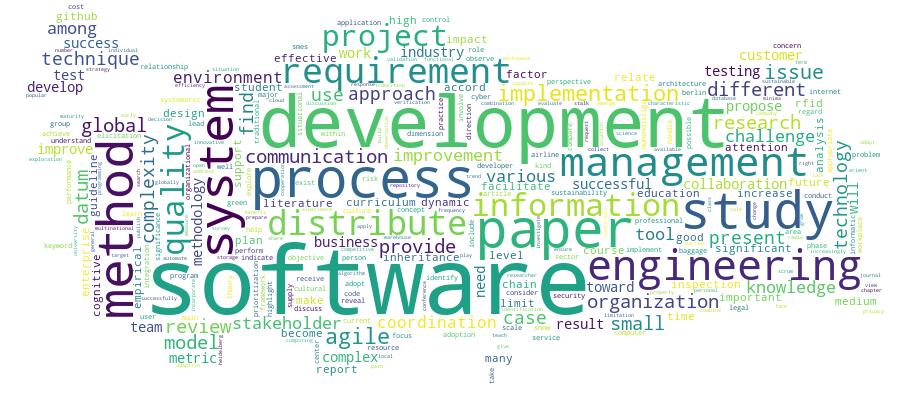
Competency Cloud

GCRIS Competency Cloud

Scholarly Output Search Results

Now showing 1 - 10 of 65
  • Article
    Citation - WoS: 3
    Citation - Scopus: 7
    Erp System Implementation in Fmcg Sector
    (Univ Osijek, Tech Fac, 2010) Mishra, Alok; Mishra, Deepti; Computer Engineering; Software Engineering
    Today's businesses have become extremely complex. Enterprise Resource Planning (ERP) systems can help enterprises to reduce operating costs, generate more accurate forecasts of demand, accelerate production cycles and enhance customer service. This paper reports challenges, opportunities and outcome of ERP implementation in a top Fast Moving Consumer Goods (FMCG) house in South-East Asia with diversified interests in varied businesses. This study will facilitate the understanding of the transition, constraints and implementation of ERP in this sector and also provide guidelines from lessons learned in this regard to researchers and practising managers.
  • Article
    Citation - WoS: 18
    Citation - Scopus: 21
    Research Trends in Management Issues of Global Software Development: Evaluating the Past To Envision the Future
    (Taylor & Francis inc, 2011) Mishra, Deepti; Mishra, Alok
    This paper presents research trends in management issues (project management, process management, knowledge management, requirements management, configuration management, risk management, quality management) of distributed/global information system development. The main objective is to highlight the current research and practice direction in these areas. The results are based on peer-reviewed conference papers/journal articles, published between 2000 and early 2011. The analysis revealed that most research has been done in project management, process management, knowledge management and requirements management areas while configuration, risk, and quality management issues could get only limited attention in global/distributed information system development. This indicates the need for future research (quantitative and qualitative) in these areas.
  • Conference Object
    Citation - WoS: 2
    Object-Oriented Inheritance Metrics: Cognitive Complexity Perspective
    (Springer-verlag Berlin, 2009) Mishra, Deepti; Mishra, Alok
    Identifying high cognitive complexity modules can lead to a better quality software system and can help during maintenance also. It has been found that inheritance has an impact on cognitive complexity of a software system. In this paper, two inheritance metrics based on cognitive complexity, one at class level CCI (Class Complexity due to Inheritance) and another at program level ACI (Average Complexity of a program due to Inheritance), have been proposed for object-oriented software systems. These metrics are also compared with other well known object-oriented inheritance metrics.
  • Conference Object
    Citation - WoS: 3
    Software Architecture in Distributed Software Development: a Review
    (Springer-verlag Berlin, 2013) Mishra, Alok; Mishra, Deepti
    This paper presents a literature review of distributed software development (DSD) or global software development (GSD) and software architecture. The main focus is to highlight the current researches, observations, as well as practice directions in these areas. The results have been limited to peer-reviewed conference papers and journal articles, and analysis reports that major studies have been performed in software architecture and global software development, while the empirical studies of interfacing distributed/global software development and software architecture has only received very little attention among researchers up to now. This indicates the need for future research in these areas.
  • Article
    Citation - WoS: 22
    Citation - Scopus: 31
    Organizational Issues in Embracing Agile Methods: an Empirical Assessment
    (Springer india, 2021) Mishra, Alok; Abdalhamid, Samia; Mishra, Deepti; Ostrovska, Sofiya
    This study provides empirical evidence to the body of knowledge in Agile methods adoption in small, medium and large organizations in international context. This research explores the factors involved in the adoption of Agile methods in software development organizations. A survey was conducted among Agile professionals to gather survey data from 52 software organizations in seven countries across the world. Statistical techniques are applied towards empirical assessment. Organizational culture, team structure and management support are found to be crucial success factors whereas lack of management support, a large organization size and traditional organizational culture are found to be detrimental for the adoption of Agile approach in an organization. The selection of an appropriate Agile method depends on the project size and, for each size, there are specific methods preferred by different enterprises. Providing better control over the work is viewed as the primary advantage of the Agile methods within large and small organizations, while for the medium-size organizations, the priority is switched to coping with changing user requirements. Majority of the respondents did not consider embracing agile methods as a reason for project failure which indicates that Agile methods are, indeed, beneficial.
  • Article
    Citation - WoS: 31
    Citation - Scopus: 38
    A Computationally Efficient Method for Hybrid Eeg-Fnirs Bci Based on the Pearson Correlation
    (Hindawi Ltd, 2020) Hasan, Mustafa A. H.; Khan, Muhammad U.; Mishra, Deepti
    A hybrid brain computer interface (BCI) system considered here is a combination of electroencephalography (EEG) and functional near-infrared spectroscopy (fNIRS). EEG-fNIRS signals are simultaneously recorded to achieve high motor imagery task classification. This integration helps to achieve better system performance, but at the cost of an increase in system complexity and computational time. In hybrid BCI studies, channel selection is recognized as the key element that directly affects the system's performance. In this paper, we propose a novel channel selection approach using the Pearson product-moment correlation coefficient, where only highly correlated channels are selected from each hemisphere. Then, four different statistical features are extracted, and their different combinations are used for the classification through KNN and Tree classifiers. As far as we know, there is no report available that explored the Pearson product-moment correlation coefficient for hybrid EEG-fNIRS BCI channel selection. The results demonstrate that our hybrid system significantly reduces computational burden while achieving a classification accuracy with high reliability comparable to the existing literature.
  • Article
    Citation - WoS: 1
    Citation - Scopus: 1
    Personal Response Systems Through the Prism of Students' Experiences
    (Wiley, 2020) Mishra, Deepti; Chew, Esyin; Ostrovska, Sofiya; Wong, Jojo
    Personal response systems (PRSs) today offer an opportunity to the field of education in terms of improving teaching and learning outcomes through active engagement in classrooms. The present paper investigates students' attitudes to different types of PRSs, namely, Socrative and Clickers. Both qualitative and quantitative data are gathered and classified. The performed thematic analysis reveals major categories within the framework of this study, namely educational efficacy, psychological aspects, technology-related issues, and administrative issues. It has been found that Socrative fares better in the "educational efficacy" and "administrative issues," whereas Clickers outperforms Socrative in the "technological-related issues." It is worth pointing out that both Socrative and Clickers are tantamount in "psychological aspects" yielding no negative experiences. The results of this study reveal that two main factors, cost and technological infrastructure, are determinative in the incorporation and appreciation of such systems in an educational setting.
  • Article
    Citation - WoS: 20
    Citation - Scopus: 26
    Simplified software inspection process in compliance with international standards
    (Elsevier Science Bv, 2009) Mishra, Deepti; Mishra, Alok
    A significant amount of software is developed all over the world by small and medium size software organizations. These organizations do not have enough infrastructures and resources to implement an austere quality plan. Software inspection is a fundamental component of the software quality assurance process. Formal review methods are rigorous and their implementation is cumbersome for small and medium enterprises. In this paper, we have presented a new simplified inspection process which is easy to implement. requires fewer resource and almost no documentation. Also, people who are conducting this inspection need not be present at the same place during most stages of the inspection process. We have also compared this process with IEEE and NASA standards for software inspection and found that it meets almost 99% of both standards. While there has been much research on inspection, little attention is paid towards compliance with international standards. These results could be used as a basis for further research in software inspection and process towards aligning with international standards. This process has been successfully implemented in a CMM level 3 software development organization which is striving to accomplish higher maturity levels to establish at the international level. (C) 2008 Elsevier B.V. All rights reserved.
  • Article
    Citation - WoS: 5
    Citation - Scopus: 11
    Erp Project Implementation: Evidence From the Oil and Gas Sector
    (Budapest Tech, 2011) Mishra, Alok; Mishra, Deepti; Computer Engineering; Software Engineering
    Enterprise Resource Planning (ERP) systems provide integration and optimization of various business processes, which can lead to improved planning and decision quality, and a smoother coordination between business units, resulting in higher efficiency and a quicker response time to customer demands and inquiries. This paper reports the challenges and opportunities and the outcome of an ERP implementation process in the Oil & Gas exploration sector. This study will facilitate the understanding of the transition, constraints, and implementation process of ERP in this sector and will also provide guidelines from lessons learned in this regard.
  • Article
    Citation - WoS: 2
    Citation - Scopus: 5
    E-Learning Experience at Various Universities: Academics Perspective
    (Univ Osijek, Tech Fac, 2011) Mishra, Alok; Mishra, Deepti; Computer Engineering; Software Engineering
    E-learning has become an increasingly popular mode of instruction in higher education all over the world. In spite of proliferation of e-learning, few studies/cases have attempted to investigate the differences in e-learning processes from faculty perspective. This paper presents observations on e-learning experiences at three premier universities which provide online courses for students and professionals. Based on some important characteristics supported by literature review, a comparative view is presented and discussed. Furthermore, suggestions based on the outcome of our study are made for further reference. The objective of this paper is to discuss significant e-learning experiences as current practices at different universities from the perspective of the faculty.