Erden, Abdulkadir

Loading...
Profile Picture
Name Variants
E., Abdulkadir
E.,Abdulkadir
Abdulkadir, Erden
Erden,A.
Erden, Abdulkadir
A., Erden
A.,Erden
Erden, A
Erden, Abdülkadir
Job Title
Profesör Doktor
Email Address
Main Affiliation
Department of Mechatronics Engineering
Status
Former Staff
Website
ORCID ID
Scopus Author ID
Turkish CoHE Profile ID
Google Scholar ID
WoS Researcher ID

Sustainable Development Goals

2

ZERO HUNGER
ZERO HUNGER Logo

0

Research Products

11

SUSTAINABLE CITIES AND COMMUNITIES
SUSTAINABLE CITIES AND COMMUNITIES Logo

0

Research Products

14

LIFE BELOW WATER
LIFE BELOW WATER Logo

0

Research Products

6

CLEAN WATER AND SANITATION
CLEAN WATER AND SANITATION Logo

0

Research Products

1

NO POVERTY
NO POVERTY Logo

0

Research Products

5

GENDER EQUALITY
GENDER EQUALITY Logo

0

Research Products

9

INDUSTRY, INNOVATION AND INFRASTRUCTURE
INDUSTRY, INNOVATION AND INFRASTRUCTURE Logo

8

Research Products

16

PEACE, JUSTICE AND STRONG INSTITUTIONS
PEACE, JUSTICE AND STRONG INSTITUTIONS Logo

0

Research Products

17

PARTNERSHIPS FOR THE GOALS
PARTNERSHIPS FOR THE GOALS Logo

0

Research Products

15

LIFE ON LAND
LIFE ON LAND Logo

0

Research Products

10

REDUCED INEQUALITIES
REDUCED INEQUALITIES Logo

0

Research Products

7

AFFORDABLE AND CLEAN ENERGY
AFFORDABLE AND CLEAN ENERGY Logo

0

Research Products

8

DECENT WORK AND ECONOMIC GROWTH
DECENT WORK AND ECONOMIC GROWTH Logo

0

Research Products

4

QUALITY EDUCATION
QUALITY EDUCATION Logo

0

Research Products

12

RESPONSIBLE CONSUMPTION AND PRODUCTION
RESPONSIBLE CONSUMPTION AND PRODUCTION Logo

0

Research Products

3

GOOD HEALTH AND WELL-BEING
GOOD HEALTH AND WELL-BEING Logo

0

Research Products

13

CLIMATE ACTION
CLIMATE ACTION Logo

0

Research Products
This researcher does not have a Scopus ID.
This researcher does not have a WoS ID.
Scholarly Output

26

Articles

9

Views / Downloads

99/861

Supervised MSc Theses

6

Supervised PhD Theses

1

WoS Citation Count

237

Scopus Citation Count

250

WoS h-index

6

Scopus h-index

5

Patents

0

Projects

0

WoS Citations per Publication

9.12

Scopus Citations per Publication

9.62

Open Access Source

1

Supervised Theses

7

Google Analytics Visitor Traffic

JournalCount
20th Annual International Conference on Mechatronics and Machine Vision in Practice, M2VIP 2013 -- 20th Annual International Conference on Mechatronics and Machine Vision in Practice, M2VIP 2013 -- 20 September 2013 through 20 September 2013 -- Ankara -- 1022763
21st Mechatronics and Machine Vision in Practice, M2VIP 2015 -- 21st Mechatronics and Machine Vision in Practice, M2VIP 2015 -- 7 July 2015 through 9 July 2015 -- Manila -- 1194561
6th International Conference on Computer-Aided Industrial Design and Conceptual Design (CAID&CD) -- MAY 29-JUN 01, 2005 -- Delft Univ Technol, Delft, NETHERLANDS1
8th International Design Conference (DESIGN 2004) -- MAY 17-20, 2004 -- Dubrovnik, CROATIA1
Control Engineering and Applied Informatics1
Current Page: 1 / 4

Scopus Quartile Distribution

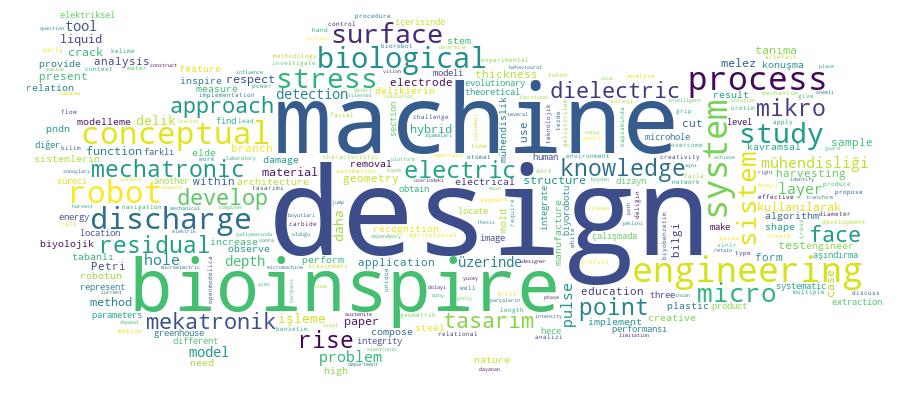
Competency Cloud

GCRIS Competency Cloud

Scholarly Output Search Results

Now showing 1 - 2 of 2
  • Article
    Citation - WoS: 42
    Citation - Scopus: 52
    A Comparative Study on the Surface Integrity of Plastic Mold Steel Due To Electric Discharge Machining
    (Springer, 2005) Ekmekci, B; Elkoca, O; Erden, A
    The violent nature of the electric discharge machining (EDM) process leads to a unique structure. on the surface of a machined part. In this study, the influence of electrode material and type of dielectric liquid on the surface integrity of plastic mold steel samples is investigated. The results have shown that regardless of the tool electrode and the dielectric liquid, the white layer is formed on machined surfaces. This layer is composed of cementite (Fe3C) and martensite distributed in retained austenite matrix forming dendritic structures, due to rapid solidification of the molten metal, if carbon-based dielectric liquid is used. The intensity of cracking increases at high pulse durations and low pulse currents. Cracks on the EDM surfaces have been found to follow the pitting arrangements with closed loops and to cross perpendicularly with radial cracks and continue to propagate when another discharge takes place, in the neighborhood. The amount of retained austenite phase and the intensity of microcracks have found to be much less in the white layer of the samples machined in de-ionized water dielectric liquid. The number of globule appendages attached to the surface increased when a carbon-based tool electrode material or a dielectric liquid was used during machining.
  • Article
    Citation - WoS: 36
    Citation - Scopus: 42
    Geometry and Surface Damage in Micro Electrical Discharge Machining of Micro-Holes
    (Iop Publishing Ltd, 2009) Ekmekci, Buelent; Sayar, Atakan; Opoz, Tahsin Tecelli; Erden, Abdulkadir
    Geometry and subsurface damage of blind micro-holes produced by micro electrical discharge machining (micro-EDM) is investigated experimentally to explore the relational dependence with respect to pulse energy. For this purpose, micro-holes are machined with various pulse energies on plastic mold steel samples using a tungsten carbide tool electrode and a hydrocarbon-based dielectric liquid. Variations in the micro-hole geometry, micro-hole depth and over-cut in micro-hole diameter are measured. Then, unconventional etching agents are applied on the cross sections to examine micro structural alterations within the substrate. It is observed that the heat-damaged segment is composed of three distinctive layers, which have relatively high thicknesses and vary noticeably with respect to the drilling depth. Crack formation is identified on some sections of the micro-holes even by utilizing low pulse energies during machining. It is concluded that the cracking mechanism is different from cracks encountered on the surfaces when machining is performed by using the conventional EDM process. Moreover, an electrically conductive bridge between work material and debris particles is possible at the end tip during machining which leads to electric discharges between the piled segments of debris particles and the tool electrode during discharging.