
Köse, Sevil
Loading...

Profile URL
Name Variants
S.,Kose
Kose,S.
S.,Köse
K., Sevil
S., Kose
Köse,S.
Sevil, Köse
Sevil, Kose
Köse, Sevil
Kose, Sevil
K.,Sevil
Kose, S.
Kose,S.
S.,Köse
K., Sevil
S., Kose
Köse,S.
Sevil, Köse
Sevil, Kose
Köse, Sevil
Kose, Sevil
K.,Sevil
Kose, S.
Job Title
Doktor Öğretim Üyesi
Email Address
sevil.kose@atilim.edu.tr
Main Affiliation
Nutrition and Dietetics
Status
Former Staff
Website
ORCID ID
Scopus Author ID
Turkish CoHE Profile ID
Google Scholar ID
WoS Researcher ID
Sustainable Development Goals
 1
1NO POVERTY
0
Research Products
 2
2ZERO HUNGER
0
Research Products
 3
3GOOD HEALTH AND WELL-BEING
10
Research Products
 4
4QUALITY EDUCATION
0
Research Products
 5
5GENDER EQUALITY
0
Research Products
 6
6CLEAN WATER AND SANITATION
0
Research Products
 7
7AFFORDABLE AND CLEAN ENERGY
0
Research Products
 8
8DECENT WORK AND ECONOMIC GROWTH
0
Research Products
 9
9INDUSTRY, INNOVATION AND INFRASTRUCTURE
0
Research Products
 10
10REDUCED INEQUALITIES
0
Research Products
 11
11SUSTAINABLE CITIES AND COMMUNITIES
0
Research Products
 12
12RESPONSIBLE CONSUMPTION AND PRODUCTION
0
Research Products
 13
13CLIMATE ACTION
0
Research Products
 14
14LIFE BELOW WATER
1
Research Products
 15
15LIFE ON LAND
0
Research Products
 16
16PEACE, JUSTICE AND STRONG INSTITUTIONS
0
Research Products
 17
17PARTNERSHIPS FOR THE GOALS
0
Research Products

This researcher does not have a Scopus ID.

This researcher does not have a WoS ID.

Scholarly Output
18
Articles
10
Views / Downloads
95/0
Supervised MSc Theses
0
Supervised PhD Theses
0
WoS Citation Count
173
Scopus Citation Count
199
Patents
0
Projects
0
WoS Citations per Publication
9.61
Scopus Citations per Publication
11.06
Open Access Source
6
Supervised Theses
0
| Journal | Count |
|---|---|
| Advances in Experimental Medicine and Biology | 4 |
| Stem Cell Research & Therapy | 2 |
| Turkish Journal of Biology | 2 |
| Comparative Kinesiology of the Human Body: Normal and Pathological Conditions | 1 |
| Cytokine | 1 |
Current Page: 1 / 3
Scopus Quartile Distribution
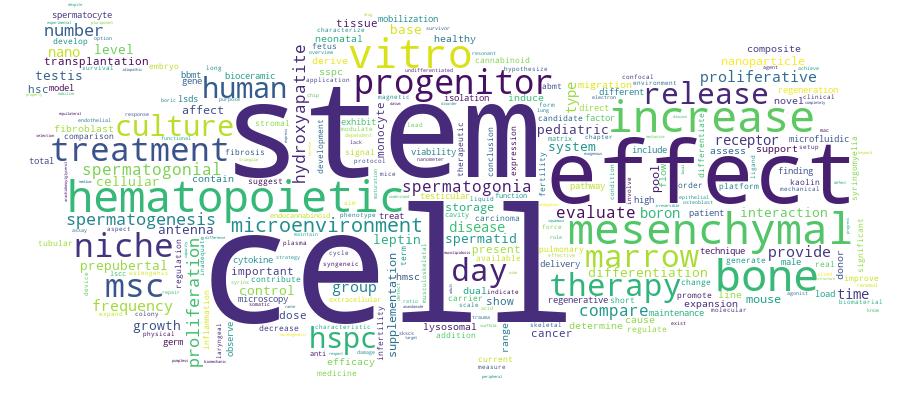
Competency Cloud
6 results
Scholarly Output Search Results
Now showing 1 - 6 of 6
Book Part Citation - WoS: 15Citation - Scopus: 15Comparison of Hematopoietic and Spermatogonial Stem Cell Niches From the Regenerative Medicine Aspect(Springer international Publishing Ag, 2018) Kose, Sevil; Yersal, Nilgun; Onen, Selin; Korkusuz, PetekRecent advances require a dual evaluation of germ and somatic stem cell niches with a regenerative medicine perspective. For a better point of view of the niche concept, it is needed to compare the microenvironments of those niches in respect to several components. The cellular environment of spermatogonial stem cells' niche consists of Sertoli cells, Leydig cells, vascular endothelial cells, epididymal fat cells, peritubular myoid cells while hematopoietic stem cells have mesenchymal stem cells, osteoblasts, osteoclasts, megacaryocytes, macrophages, vascular endothelial cells, pericytes and adipocytes in their microenvironment. Not only those cells', but also the effect of the other factors such as hormones, growth factors, chemokines, cytokines, extracellular matrix components, biomechanical forces (like shear stress, tension or compression) and physical environmental elements such as temperature, oxygen level and pH will be clarified during the chapter. Because it is known that the microenvironment has an important role in the stem cell homeostasis and disease conditions, it is crucial to understand the details of the microenvironment and to be able to compare the niche concepts of the different types of stem cells from each other, for the regenerative interventions. Indeed, the purpose of this chapter is to point out the usage of niche engineering within the further studies in the regenerative medicine field. Decellularized, synthetic or non-synthetic scaffolds may help to mimic the stem cell niche. However, the shared or different characteristics of germ and somatic stem cell microenvironments are necessary to constitute a proper niche model. When considered from this aspect, it is possible to produce some strategies on the personalized medicine by using those artificial models of stem cell microenvironment.Book Part Citation - WoS: 7Citation - Scopus: 11Magnetic-Based Cell Isolation Technique for the Selection of Stem Cells(Humana Press inc, 2019) Korkusuz, Petek; Kose, Sevil; Yersal, Nilgun; Onen, SelinMagnetic-activated cell sorting (MACS) is the technology that is recently used as a magnetic-based cell isolation/purification technique. This technique enables the isolation and selection of germ, hematopoietic, and somatic stem cells including skin stem cells (SkSCs). Here, we have tried to describe the isolation of stem cells by MACS using CD34 antigen for SkSCs, again CD34 for hematopoietic stem cells (HSCs) and Thy-1 for spermatogonial stem cells (SpSCs). MACS allowed the isolation of CD34+, CD34+, and Thy-1+ human SkSCs, HSCs, and SpSCs with minimum 98% purity.Book Part Citation - WoS: 3Citation - Scopus: 4Stem Cell Applications in Lysosomal Storage Disorders: Progress and Ongoing Challenges(Springer international Publishing Ag, 2021) Kose, S.; Aerts-Kaya, F.; Cetinkaya, D. Uckan; Korkusuz, P.; Uçkan Çetinkaya, DuyguLysosomal storage disorders (LSDs) are rare inborn errors of metabolism caused by defects in lysosomal function. These diseases are characterized by accumulation of completely or partially degraded substrates in the lysosomes leading to cellular dysfunction of the affected cells. Currently, enzyme replacement therapies (ERTs), treatments directed at substrate reduction (SRT), and hematopoietic stem cell (HSC) transplantation are the only treatment options for LSDs, and the effects of these treatments depend strongly on the type of LSD and the time of initiation of treatment. However, some of the LSDs still lack a durable and curative treatment. Therefore, a variety of novel treatments for LSD patients has been developed in the past few years. However, despite significant progress, the efficacy of some of these treatments remains limited because these therapies are often initiated after irreversible organ damage has occurred. Here, we provide an overview of the known effects of LSDs on stem cell function, as well as a synopsis of available stem cell-based cell and gene therapies that have been/are being developed for the treatment of LSDs. We discuss the advantages and disadvantages of use of hematopoietic stem cell (HSC), mesenchymal stem cell (MSC), and induced pluripotent stem cell (iPSC)-related (gene) therapies. An overview of current research data indicates that when stem cell and/or gene therapy applications are used in combination with existing therapies such as ERT, SRT, and chaperone therapies, promising results can be achieved, showing that these treatments may result in alleviation of existing symptoms and/or prevention of progression of the disease. All together, these studies offer some insight in LSD stem cell biology and provide a hopeful perspective for the use of stem cells. Further development and improvement of these stem cell (gene) combination therapies may greatly improve the current treatment options and outcomes of patients with a LSD.Book Part Citation - WoS: 13Citation - Scopus: 14Neurological Regulation of the Bone Marrow Niche(Springer international Publishing Ag, 2020) Aerts-Kaya, Fatima; Ulum, Baris; Mammadova, Aynura; Kose, Sevil; Aydin, Gozde; Korkusuz, Petek; Uckan-Cetinkaya, DuyguThe bone marrow (BM) hematopoietic niche is the microenvironment where in the adult hematopoietic stem and progenitor cells (HSPCs) are maintained and regulated. This regulation is tightly controlled through direct cell-cell interactions with mesenchymal stromal stem (MSCs) and reticular cells, adipocytes, osteoblasts and endothelial cells, through binding to extracellular matrix molecules and through signaling by cytokines and hematopoietic growth factors. These interactions provide a healthy environment and secure the maintenance of the HSPC pool, their proliferation, differentiation and migration. Recent studies have shown that innervation of the BM and interactions with the peripheral sympathetic neural system are important for maintenance of the hematopoietic niche, through direct interactions with HSCPs or via interactions with other cells of the HSPC microenvironment. Signaling through adrenergic receptors (ARs), opioid receptors (ORs), endocannabinoid receptors (CRs) on HSPCs and MSCs has been shown to play an important role in HSPC homeostasis and mobilization. In addition, a wide range of neuropeptides and neurotransmitters, such as Neuropeptide Y (NPY), Substance P (SP) and Tachykinins, as well as neurotrophins and neuropoietic growth factors have been shown to be involved in regulation of the hematopoietic niche. Here, a comprehensive overview is given of their role and interactions with important cells in the hematopoietic niche, including HSPCs and MSCs, and their effect on HSPC maintenance, regulation and mobilization.Book Part Citation - WoS: 18Citation - Scopus: 23Stem Cell and Advanced Nano Bioceramic Interactions(Springer-verlag Singapore Pte Ltd, 2018) Kose, Sevil; Kankilic, Berna; Gizer, Merve; Dede, Eda Ciftci; Bayramli, Erdal; Korkusuz, Petek; Korkusuz, Feza; Ciftci Dede, EdaBioceramics are type of biomaterials generally used for orthopaedic applications due to their similar structure with bone. Especially regarding to their osteoinductivity and osteoconductivity, they are used as biodegradable scaffolds for bone regeneration along with mesenchymal stem cells. Since chemical properties of bioceramics are important for regeneration of tissue, physical properties are also important for cell proliferation. In this respect, several different manufacturing methods are used for manufacturing nano scale bioceramics. These nano scale bioceramics are used for regeneration of bone and cartilage both alone or with other types of biomaterials. They can also act as carrier for the delivery of drugs in musculoskeletal infections without causing any systemic toxicity.Book Part Morphogenesis and Biomechanics of the Human Embryo and Fetus(Elsevier, 2020) Köse,S.; Baykal,B.; Korkusuz,F.; Korkusuz,P.Human embryo begins moving at tissue, cell and sub-cellular levels long before the mother emotionally feels the movement of the fetus. The human embryo and fetus not only develop in a mechanical environment but they exaggerate mechanical forces on themselves and their surroundings. Mechanical forces in example influence embryonic musculoskeletal development. In this chapter, the development and morphogenesis of human musculoskeletal system will be overviewed with their molecular aspects and the biomechanics of embryo and fetus will be discussed. © 2020 Elsevier Inc. All rights reserved.
