Emin, Ali

Loading...
Profile Picture
Name Variants
E., Ali
Ali, Emin
A.,Emin
E.,Ali
Emin,A.
Ali Emin
A., Emin
Emin,Ali
Emin, Ali
Job Title
Doktor Öğretim Üyesi
Email Address
ali.amini@atilim.edu.tr
Main Affiliation
Automotive Engineering
Status
Website
Scopus Author ID
Turkish CoHE Profile ID
Google Scholar ID
WoS Researcher ID

Sustainable Development Goals

2

ZERO HUNGER
ZERO HUNGER Logo

0

Research Products

11

SUSTAINABLE CITIES AND COMMUNITIES
SUSTAINABLE CITIES AND COMMUNITIES Logo

0

Research Products

14

LIFE BELOW WATER
LIFE BELOW WATER Logo

0

Research Products

6

CLEAN WATER AND SANITATION
CLEAN WATER AND SANITATION Logo

0

Research Products

1

NO POVERTY
NO POVERTY Logo

0

Research Products

5

GENDER EQUALITY
GENDER EQUALITY Logo

0

Research Products

9

INDUSTRY, INNOVATION AND INFRASTRUCTURE
INDUSTRY, INNOVATION AND INFRASTRUCTURE Logo

0

Research Products

16

PEACE, JUSTICE AND STRONG INSTITUTIONS
PEACE, JUSTICE AND STRONG INSTITUTIONS Logo

0

Research Products

17

PARTNERSHIPS FOR THE GOALS
PARTNERSHIPS FOR THE GOALS Logo

0

Research Products

15

LIFE ON LAND
LIFE ON LAND Logo

0

Research Products

10

REDUCED INEQUALITIES
REDUCED INEQUALITIES Logo

0

Research Products

7

AFFORDABLE AND CLEAN ENERGY
AFFORDABLE AND CLEAN ENERGY Logo

4

Research Products

8

DECENT WORK AND ECONOMIC GROWTH
DECENT WORK AND ECONOMIC GROWTH Logo

0

Research Products

4

QUALITY EDUCATION
QUALITY EDUCATION Logo

0

Research Products

12

RESPONSIBLE CONSUMPTION AND PRODUCTION
RESPONSIBLE CONSUMPTION AND PRODUCTION Logo

0

Research Products

3

GOOD HEALTH AND WELL-BEING
GOOD HEALTH AND WELL-BEING Logo

0

Research Products

13

CLIMATE ACTION
CLIMATE ACTION Logo

0

Research Products
Documents

21

Citations

610

h-index

11

Documents

19

Citations

527

Scholarly Output

8

Articles

6

Views / Downloads

37/6568

Supervised MSc Theses

1

Supervised PhD Theses

0

WoS Citation Count

71

Scopus Citation Count

82

WoS h-index

4

Scopus h-index

4

Patents

0

Projects

3

WoS Citations per Publication

8.88

Scopus Citations per Publication

10.25

Open Access Source

3

Supervised Theses

1

Google Analytics Visitor Traffic

JournalCount
2024 International Mechanical Engineering Congress and Exposition-IMECE -- NOV 17-21, 2024 -- Portland, OR1
Actuators1
Energies1
International Journal of Thermal Sciences1
Journal of Energy Storage1
Current Page: 1 / 2

Scopus Quartile Distribution

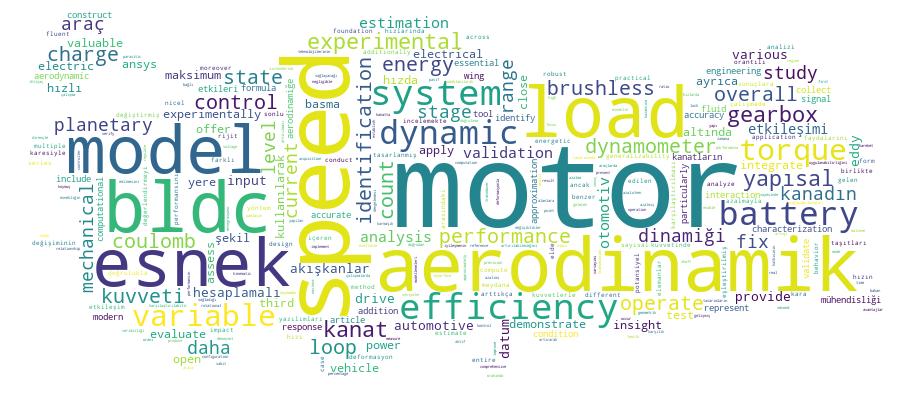
Competency Cloud

GCRIS Competency Cloud

Scholarly Output Search Results

Now showing 1 - 6 of 6
  • Article
    Citation - WoS: 19
    Citation - Scopus: 18
    Experimental and Numerical Analysis of a Helically-Coiled Solar Water Collector at Various Angular Placements
    (Elsevier France-editions Scientifiques Medicales Elsevier, 2023) Variyenli, Halil Ibrahim; Amini, Ali; Tuncer, Azim Dogus; Khanlari, Ataollah; Kolay, Sahin
    Solar water collectors are widely utilized for providing hot water to be used in different applications. In this work, a solar water collector with a helically coiled absorber has been designed, fabricated, and examined at different test conditions to specify its overall performance. One of the major goals of using a tube-type absorber is to upgrade the thermal efficiency of the collector by providing a perpendicular angle between the absorber and incident solar rays. Also, using a helically-coiled structure make it possible to increase the absorber surface in a relatively small volume in comparison to conventional solar water collectors. In the first step of this research, the designed helically-coiled solar collector has been simulated using a solar radiation model. In the next step, the manufactured helically-coiled solar collector has been experimentally tested at three different inclination angles and various water flow rates. According to the experimental results, mean thermal efficiencies of horizontal, vertical, and angular helically-coiled collectors were obtained in the ranges of 29.48-48.23%, 27.17-47.03%, and 32.50-52.71%, respectively. In addition, sustainability index values for horizontal, vertical and angular helically-coiled collectors were achieved between the ranges of 1.0041-1.0091, 1.0039-1.0087, and 1.0043-1.0102, respectively. Moreover, the maximum deviation between numerical and experimental findings was calculated as 14%.
  • Article
    Experimental Investigation of Energy Efficiency, SOC Estimation, and Real-Time Speed Control of a 2.2 kW BLDC Motor with Planetary Gearbox under Variable Load Conditions
    (MDPI, 2025) Abouseda, Ayman Ibrahim; Doruk, Resat; Emin, Ali; Lopez-Guede, Jose Manuel
    This study presents a comprehensive experimental investigation of a 2.2 kW brushless DC (BLDC) motor integrated with a three-shaft planetary gearbox, focusing on overall energy efficiency, battery state of charge (SOC) estimation, and real-time speed control under variable load conditions. In the first stage, the gearbox transmission ratio was experimentally verified to establish the kinematic relationship between the BLDC motor and the eddy current dynamometer shafts. In the second stage, the motor was operated in open loop mode at fixed reference speeds while variable load torques ranging from 1 to 7 N.m were applied using an AVL dynamometer. Electrical voltage, current, and rotational speed were measured in real time through precision transducers and a data acquisition interface, enabling computation of overall efficiency and SOC via the Coulomb counting method. The open loop results demonstrated that maximum efficiency occurred in the intermediate-to-high-speed region (2000 to 2800 rpm) and at higher load torques (5 to 7 N.m) while locking the third gearbox shaft produced negligible parasitic losses. In the third stage, a proportional-integral-derivative (PID) controller was implemented in closed loop configuration to regulate motor speed under the same variable load scenarios. The closed loop operation improved the overall efficiency by approximately 8-20 percentage points within the effective operating range of 1600-2500 rpm, reduced speed droop, and ensured precise tracking with minimal overshoot and steady-state error. The proposed methodology provides an integrated experimental framework for evaluating the dynamic performance, energy efficiency, and battery utilization of BLDC motor planetary gearbox systems, offering valuable insights for electric vehicle and hybrid electric vehicle (HEV) drive applications.
  • Article
    Citation - WoS: 8
    Citation - Scopus: 8
    Parameter Identification and Speed Control of a Small-Scale BLDC Motor: Experimental Validation and Real-Time PI Control with Low-Pass Filtering
    (MDPI, 2025) Abouseda, Ayman Ibrahim; Doruk, Resat Ozgur; Amini, Ali
    This paper presents a structured and experimentally validated approach to the parameter identification, modeling, and real-time speed control of a brushless DC (BLDC) motor. Electrical parameters, including resistance and inductance, were measured through DC and AC testing under controlled conditions, respectively, while mechanical and electromagnetic parameters such as the back electromotive force (EMF) constant and rotor inertia were determined experimentally using an AVL dynamometer. The back EMF was obtained by operating the motor as a generator under varying speeds, and inertia was identified using a deceleration method based on the relationship between angular acceleration and torque. The identified parameters were used to construct a transfer function model of the motor, which was implemented in MATLAB/Simulink R2024b and validated against real-time experimental data using sinusoidal and exponential input signals. The comparison between simulated and measured speed responses showed strong agreement, confirming the accuracy of the model. A proportional-integral (PI) controller was developed and implemented for speed regulation, using a low-cost National Instruments (NI) USB-6009 data acquisition (DAQ) and a Kelly controller. A first-order low-pass filter was integrated into the control loop to suppress high-frequency disturbances and improve transient performance. Experimental tests using a stepwise reference speed profile demonstrated accurate tracking, minimal overshoot, and robust operation. Although the modeling and control techniques applied are well known, the novelty of this work lies in its integration of experimental parameter identification, real-time validation, and practical hardware implementation within a unified and replicable framework. This approach provides a solid foundation for further studies involving more advanced or adaptive control strategies for BLDC motors.
  • Article
    Citation - WoS: 13
    Citation - Scopus: 16
    Developing an Infrared-Assisted Solar Drying System Using a Vertical Solar Air Heater With Perforated Baffles and Nano-Enhanced Black Paint
    (Pergamon-elsevier Science Ltd, 2023) Tuncer, Azim Dogus; Amini, Ali; Khanlari, Ataollah
    In the present study, it is aimed to improve the performance of a solar drying system (SDS) utilizing ZnO nano-enhanced absorber coating and infrared heating system. In the first stage of this work, different geometrical configurations of the main heating system of the SDS which is a vertical solar air heater (VSH) have been numerically analyzed. According to the numerical findings, VSH with perforated type baffles gave the best performance results. Then, the determined configuration has been manufactured and combined with a drying chamber. Moreover, two other modifications have been applied to the system including an infrared heater and nano-enhanced black paint. In other words, the experimental part of this research contains three SDS types including a conventional SDS, a SDS with infrared heater and a SDS with infrared heater and ZnO nano-enhanced absorber coating (combined usage of two modifications). The mean thermal and exergetic efficiencies of the VSH analyzed within the scope of this work were attained between 53.54-65.12% and 9.94-14.32%, respectively. Moreover, combined use of infrared heater and nano-enhanced absorber coating material in the VSH decreased the drying time period as 43.75% when compared to the unmodified SDS.
  • Article
    Citation - WoS: 3
    Citation - Scopus: 4
    Modeling, Dynamic Characterization, and Performance Analysis of a 2.2 kW BLDC Motor Under Fixed Load Torque Levels and Variable Speed Inputs: An Experimental Study
    (MDPI, 2025) Abouseda, Ayman Ibrahim; Doruk, Resat; Emin, Ali; Akdeniz, Ozgur
    Accurate modeling and performance analysis of brushless DC (BLDC) motors are essential for high-efficiency control in modern drive systems. In this article, a BLDC motor was modeled using system identification techniques. In addition, experimental data were collected from the BLDC motor, including its speed response to various input signals. Using system identification tools, particularly those provided by MATLAB/Simulink R2024b, an approximation model of the BLDC motor was constructed to represent the motor's dynamic behavior. The identified model was experimentally validated using various input signals, demonstrating its accuracy and generalizability under different operating conditions. Additionally, a series of mechanical load tests was conducted using the AVL eddy-current dynamometer to evaluate performance under practical operating conditions. Fixed load torques were applied across a range of motor speeds, and multiple torque levels were tested to assess the motor's dynamic response. Electrical power, mechanical power, and efficiency of the entire system were computed for each case to assess overall system performance. Moreover, the real-time state of charge (SOC) of Lithium-ion (Li-ion) battery was estimated using the Coulomb counting method to analyze the impact of Li-ion battery energy level on the BLDC motor efficiency. The study offers valuable insights into the motor's dynamic and energetic behavior, forming a foundation for robust control design and real-time application development.
  • Article
    Citation - WoS: 28
    Citation - Scopus: 36
    Experimental and Transient Cfd Analysis of Parallel-Flow Solar Air Collectors With Paraffin-Filled Recyclable Aluminum Cans as Latent Heat Energy Storage Unit
    (Elsevier, 2023) Tuncer, Azim Dogus; Amini, Ali; Khanlari, Ataollah
    In the present study, it is aimed to improve the overall performance of a parallel-flow solar air collector (PSC) using phase change material (PCM)-based latent heat energy storage unit and recyclable materials. In the simulation part of this work, two PSCs including a collector without modification and a collector equipped with PCM filled aluminum cans have been analyzed. The simulation part of the current work is handling the flow of air through the collectors and melting-solidification of PCM material inside the aluminum cans. Considering the simulation study results, three different PSC configurations have been manufactured including an unmodified PSC, a PSC with PCM-filled aluminum cans on the front side of the absorber and a PSC with PCM-filled aluminum cans on both sides (back and front) of the absorber surface. According to the results of the analyses, utilizing PCM-filled aluminum cans in both surfaces of the absorber plate of the PSC improved numerically and experimentally obtained exergetic efficiency values as 61.70% and 74.03%, respectively. Moreover, enviro-economic analysis has been conducted within the scope of this work. The payback periods of the analyzed systems were between 2.17 and 2.43 years. Employing PCM in the both sides of the absorber surface decreased the payback time of the system as 10.69% in comparison to the conventional PSC. Moreover, using PCMs on the single and double side of the absorber plate improved the annual carbon dioxide savings as 22.68% and 35.42%, respectively.