
Özen, Hayriye
Loading...

Profile URL
Name Variants
Ozen, Hayriye
Hayriye, Özen
Hayriye, Ozen
H.,Özen
Ö.,Hayriye
O.,Hayriye
Ozen,H.
Özen,H.
Özen, Hayriye
H., Ozen
O., Hayriye
H.,Ozen
Hayriye, Özen
Hayriye, Ozen
H.,Özen
Ö.,Hayriye
O.,Hayriye
Ozen,H.
Özen,H.
Özen, Hayriye
H., Ozen
O., Hayriye
H.,Ozen
Job Title
Doçent Doktor
Email Address
Main Affiliation
Department of Public Administration and Political Science
Status
Former Staff
Website
ORCID ID
Scopus Author ID
Turkish CoHE Profile ID
Google Scholar ID
WoS Researcher ID
Sustainable Development Goals
5
GENDER EQUALITY

1
Research Products
14
LIFE BELOW WATER

0
Research Products
10
REDUCED INEQUALITIES

1
Research Products
3
GOOD HEALTH AND WELL-BEING

0
Research Products
2
ZERO HUNGER

0
Research Products
9
INDUSTRY, INNOVATION AND INFRASTRUCTURE

0
Research Products
16
PEACE, JUSTICE AND STRONG INSTITUTIONS

1
Research Products
11
SUSTAINABLE CITIES AND COMMUNITIES

0
Research Products
8
DECENT WORK AND ECONOMIC GROWTH

1
Research Products
13
CLIMATE ACTION

0
Research Products
4
QUALITY EDUCATION

0
Research Products
6
CLEAN WATER AND SANITATION

0
Research Products
1
NO POVERTY

0
Research Products
15
LIFE ON LAND

0
Research Products
17
PARTNERSHIPS FOR THE GOALS

2
Research Products
7
AFFORDABLE AND CLEAN ENERGY

2
Research Products
12
RESPONSIBLE CONSUMPTION AND PRODUCTION

0
Research Products

This researcher does not have a Scopus ID.

This researcher does not have a WoS ID.

Scholarly Output
22
Articles
15
Views / Downloads
3/0
Supervised MSc Theses
7
Supervised PhD Theses
0
WoS Citation Count
163
Scopus Citation Count
183
WoS h-index
6
Scopus h-index
7
Patents
0
Projects
0
WoS Citations per Publication
7.41
Scopus Citations per Publication
8.32
Open Access Source
4
Supervised Theses
7
Google Analytics Visitor Traffic
| Journal | Count |
|---|---|
| Alternatif Politika | 1 |
| Amme Idaresi Dergisi | 1 |
| Amme İdaresi Dergisi | 1 |
| Ankara Üniversitesi SBF Dergisi | 1 |
| Current Sociology | 1 |
Current Page: 1 / 3
Scopus Quartile Distribution
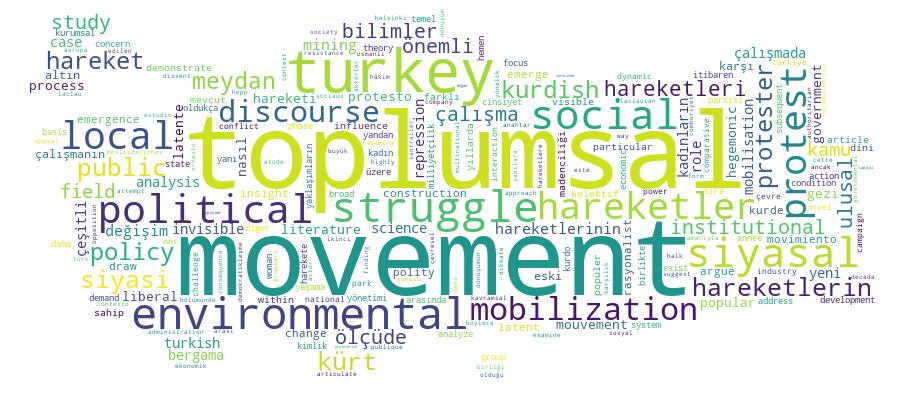
Competency Cloud
22 results
Scholarly Output Search Results
Now showing 1 - 10 of 22
Review Moral Movements and Foreign Policy(San Diego State Univ, 2011) Ozen, Hayriye[No Abstract Available]Article Citation - WoS: 38Citation - Scopus: 43An Unfinished Grassroots Populism: the Gezi Park Protests in Turkey and Their Aftermath(Routledge Journals, Taylor & Francis Ltd, 2015) Ozen, HayriyeFocusing on the Gezi protests, this study addresses two questions: How did a particular struggle against the demolition of a park spontaneously turn into nationwide mass protests? And why was this mobilisation unable to transform itself into a popular counter-hegemonic movement? Drawing on the Laclauian concept of populism, I demonstrate that Gezi mobilised various groups by turning into a symbol of the repressive responses of the hegemonic power to various social demands. This popular mobilisation could not go beyond a conjunctural experience due to its inability to unify heterogeneous protesters and to respond effectively to the counter-strategies of the hegemonic power.Article Citation - WoS: 11Citation - Scopus: 16Overcoming Environmental Challenges by Antagonizing Environmental Protesters: the Turkish Government Discourse Against Anti-Hydroelectric Power Plants Movements(Routledge Journals, Taylor & Francis Ltd, 2014) Ozen, HayriyeDue to the growing public importance of environmental concerns in the contemporary world, governments that prioritize economic interests over environmental concerns may try to counter environmental challenges not by openly declaring that they do not want to consider environmental demands, but by attempting to antagonize the protesters who voice such demands. This essay explores such a governmental response by analyzing the discourse articulated by the Turkish Government against movements that oppose the construction of hydroelectric power plants (HEPPs) on environmental grounds. In particular, the analysis focuses on how HEPPs, environmental claims and demands of movements, and environmental protesters are represented within the pro-HEPP discourse, and in what ways these representations appeal to popular perceptions. It is demonstrated that the discourse of the government attempts to counter the challenges of protesters by establishing an antagonist relation between the protesters and society by representing HEPPs as crucial for the economic development and, therefore, as compatible with the interests of society as a whole. Moreover, it also attempts to achieve this through portraying the protesters as criminals and terrorists who block the economic development of the country and pose significant threats to the commonwealth, not for legitimate environmental concerns but for some dubious motives and incentives. It is concluded that, with this approach, the government has managed to gain popular consent not only for the construction of HEPPs, but also for the repression of such movements.Article Citation - WoS: 6Citation - Scopus: 4Latent Dynamics of Movement Formation: the Kurdish Case in Turkey (1940s-1960s)(Sage Publications Ltd, 2015) Ozen, HayriyeThe attention of social movement studies has so far tended to focus on visible phases of movements, neglecting latent ones. This study argues that invisible mobilizations may be critical in preparing the groundwork of public mobilizations, particularly in authoritarian contexts. Using a process-oriented constructivist account of mobilization which incorporates insights from resistance studies, this article analyzes the Kurdish case in Turkey in the authoritarian 1940s and semi-authoritarian 1950s. Based on in-depth interviews, memoirs, newspaper reports, and official documents, it is demonstrated that a latent Kurdish dissent emerged in this period through the constitution of a sense of shared grievance and common identity both in hidden ways within the submerged networks of Kurdish students and professionals, and in public and visible, yet disguised, ways. Incubating the movement out of the gaze of the authorities within the authoritarian context, this latent dissent formed the groundwork of public acts of defiance and mobilization which emerged towards the end of the 1950s as the political changes encouraged Kurdish dissenters to publicly declare their opposition, and expanded in the more liberal context of the 1960s. Resume Les etudes des mouvements sociaux ont eu tendance jusqu'a present a privilegier les phases visibles de ces mouvements, negligeant les stades latents. Cette etude soutient que les mobilisations invisibles peuvent etre essentielles pour preparer le terrain des mobilisations publiques, en particulier dans un contexte autoritaire. En s'appuyant sur une interpretation constructiviste, axee sur le processus de mobilisation et reunissant des idees tirees des etudes des mouvements de resistance, cet article analyse le cas kurde dans la Turquie autoritaire des annees quarante et semi-autoritaire des annees cinquante. Fonde sur des entretiens approfondis, des biographies, des articles de journaux et des documents officiels, ce travail met en evidence l'apparition au cours de cette periode d'une dissidence kurde latente grace a la constitution d'un sentiment partage de mecontentement et d'identite commune au sein des reseaux secrets des etudiants et professionnels kurdes, de facon a la fois invisible et publique, mais dissimulee. Couvant a l'abri des regards des gouvernements autoritaires, cette dissidence latente a pose les bases des manifestations publiques de defiance et de mobilisation qui sont apparues a la fin des annees cinquante a l'occasion des changements politiques ayant encourage les dissidents kurdes a declarer publiquement leur opposition et favorise les mouvements sociaux dans le contexte plus liberal des annees soixante. Resumen La atencion de los estudios sobre movimientos sociales hasta ahora ha tendido a centrarse en las fases visibles de los movimientos, dejando de lado los latentes. Este estudio sostiene que las movilizaciones invisibles pueden ser centrales para la preparacion de las bases de movilizaciones publicas, en particular en contextos autoritarios. A partir de un relato constructivista orientado a los procesos de movilizacion que incorpora perspectivas de estudios de resistencia, este trabajo analiza el caso kurdo en Turquia en la decada autoritaria de 1940 y semi-autoritaria de 1950. Sobre la base de entrevistas en profundidad, memorias, informes de prensa y documentos oficiales, se demuestra que una disidencia kurda latente surgio en este periodo a traves de la constitucion de un sentimiento de agravio compartida y de identidad comun tanto en formas ocultas dentro de las redes sumergidas de estudiantes y profesionales kurdos, asi como de maneras publicos y visibles, aunque disfrazadas. Incubando el movimiento fuera de la mirada de las autoridades en el contexto autoritario, esta disidencia latente formo las bases del acto publico de rebeldia y movilizacion que surgio a finales de la decada de 1950 como los cambios politicos alentados disidentes kurdos para declarar publicamente su oposicion, y ampliado en el contexto mas liberal de la decada de 1960.Article Toplumsal Hareketlerin 'siyasal' Rolü: Rasyonalist Yaklaşımların Eleştirel Bir Değerlendirmesi(2013) Özen, HayriyeToplumsal hareketler yazınında son yıllarda hâkim bir konum edinerek pek çok toplumsal hareket analizine yön veren rasyonalist yaklaşımlar, toplumsal hareketlerin mevcut toplumsal yapıları nasıl değiştirdiği veya değiştirebileceği konusunda dikkate değer bir suskunluk sergilerler. Bu çalışma rasyonalist yaklaşımların bu suskunluğunun toplumsal hareketlerin ‘siyasal’ rollerini kavramsallaştıramamaları ile ilgili olduğunu tartışıyor. Çalışmada öncelikle, çağdaş siyasi düşüncede toplumsalı değiştirip dönüştüren moment ile kurumsallaşmış siyasi pratikler arasında kavramsal bir ayrım yapmak üzere Claude Lefort, Chantal Mouffe ve Ernesto Laclau tarafından kullanılan ‘siyasal’ ve ‘siyaset’ kavramları ile Jacques Ranciére tarafından kullanılan ‘siyaset’ ve ‘polis’ kavramları ele alınmaktadır. Rasyonalist toplumsal hareket yaklaşımlarının bu ayrım ekseninde incelendiği ikinci bölümde ise bu yaklaşımların toplumsal hareketleri tamamen kurumsal siyasetin alanına hapsederek siyasal rollerini göz ardı ettikleri ve böylece toplumsal yapıları nasıl değiştirip dönüştüreceklerini kavramsallaştırmakta oldukça yetersiz kaldıkları gösterilmektedir. Çalışma rasyonalist yaklaşımların bu yetersizliğinin çeşitli analitik sorunlar doğurmanın yanı sıra önemli siyasi sonuçları olduğuna da dikkat çekerek sonlanmaktadır.Article YERELLİK-POPÜLERLİK EKSENİNDE TÜRKİYE’DE ÇEVRE MÜCADELELERİ(2018) Özen, HayriyeTüm dünyada olduğu gibi Türkiye’de de son yıllarda çevre mücadelelerinde dikkate değer bir artış yaşandı. 1990’ların hemen başından itibaren doğmaya başlayan ve altın madenciliği, hidroelektrik santraller, termik santraller ve nükleer santraller gibi projelere olumsuz çevresel etkileri nedeniyle karşı çıkan bu mücadeleler, 2000’li yıllarda belirgin bir ivme kazanarak ülkenin hemen tüm bölgelerine yayıldılar. Bu makale Doğu Karadeniz bölgesinde HES projelerine karşı ve Ege ve Güney Marmara bölgelerinde altın madenciliği projelerine karşı 2000’li yıllarda doğan protesto hareketlerine odaklanarak şu soruya yanıt arıyor: HES ve altın madenciliğine karşı yerelde doğan çeşitli protesto hareketleri bölgesel veya ulusal ölçekte etkili olabilecek kolektif bir siyasal özneye ya da, diğer bir deyişle, karşı-hegemonik bir popüler harekete dönüşme potansiyeline ne ölçüde sahip oldular? Bu soruya cevaben hem altın madenciliği hem de HES karşıtı mücadelelerin, yerelliği aşan bir karaktere bürünmelerine karşın popüler hareketlere dönüşemedikleri tartışılıyor. Her iki mücadele de, yereldeki altın madenciliği ve HES projelerine karşıtlığın ötesine geçen bir söylem inşa ettiler ve yerelin yanı sıra yerelin dışından da çeşitli toplumsal grupları harekete geçirdiler. Bununla birlikte, her iki mücadele de harekete geçirdiği heterojen grupları kolektif bir kimlik etrafında bütünleştirerek ulusal ölçekte etkili olabilecek popüler bir siyasal özneye dönüşemedi. Çalışmada söz konusu mücadelelerin kolektif bir kimlik inşa edememesinin nedenlerine ilişkin olarak dört faktörün öne çıktığı ileri sürülüyor: yerelliğin süregiden baskısı; parlamenter temsiliyetin eksikliği, protestocuların mevcut kimlik ve aidiyetlerinin hakimiyeti; ve, iktidar blokunun protesto hareketlerini yönetmek ve kontrol etmek üzere geliştirdiği dil ve pratikler. Çalışma, yerellik ile popülerlik arasında bir nitelik kazanan çevre mücadelelerinin oldukça önemli kazanımlarına rağmen, neoliberal rasyonaliteyle şekillendirilen kamu politikalarının içerdiği çevresel tehditler karşısında güçlü bir itiraza dönüşemediklerine işaret ederek sonlanıyor.Article Citation - WoS: 34Citation - Scopus: 37Peasants Against Mncs and the State: the Role of the Bergama Struggle in the Institutional Construction of the Gold-Mining Field in Turkey(Sage Publications Ltd, 2009) Ozen, Sukru; Ozen, HayriyeIn this article, we argue that the emergent literature that integrates the neo-institutional and social movement theories for a better understanding of institutional change offers a partial picture concerning the roles of the state and society in institutional wars due to its preoccupation with the liberal polities prevalent in the Anglo-Saxon countries. We suggest that the macro-institutional perspective that recognizes the influences of varied polities should be introduced to this emergent literature, if it is to provide a full picture. Incorporating the macro-institutional insights into the integrative approach, we examine a struggle between a group of protesters, a multinational gold-mining company and governmental actors regarding an environmental issue in Bergama, Turkey, where a statist polity mediates worldwide currents towards the neo-liberal order. The findings indicate that the Turkish state repressed the mobilizations against the neo-liberal construction of the mining field and reinforced the existing neo-liberal logic in the mining field through introducing a new regulatory framework. On the basis of the findings, we suggest that both the trajectory and consequences of institutional wars are influenced by the kind of polity in which they take place.Master Thesis Türkiye'de İslamcı Hareket: Gelişimi, İlişkileri, Ayrılıkları ve Dönüşümü(2011) Uzun, Necmi; Özen, HayriyeTürkiye'de İslamcılık düşüncesi, Osmanlı Devleti'nin Batı'nın gerisinde kalması ve yanlış Batılılaşma yapıldığı gerekçesiyle devleti kurtarmak adına bir grup İslamcı aydın tarafından geliştirilmiştir. Osmanlı Devletinin yıkılmasıyla onun mirası üzerinde kurulan yeni Türkiye Cumhuriyeti'nin kurucu kadroları devleti laik esaslar üzerine kurduklarından dini kamusal alandan çıkarmışlardır. Bu kadrolar, laik reformları gerçekleştirmek için İslamcıların muhalefetini önlemek amacıyla sert yasal tedbirler almışlar, dini yaşam biçimlerine ve dini sembollere yasaklar getirmişler ve topluma milli bir din dayatmışlardır. Buna karşılık İslamcılar, bu uygulamalara yerel düzeyde karşılık vermişler ancak başarılı olamamışlardır.1924-1950 arası dönemde hemen tüm dini yaşam alanları kısıtlandığından İslamcı aktörler geri çekilmişler ve informal yollarla özellikle dini eğitim ve kültürel alanda gizli faaliyetlerde bulunmuşlardır. Bu dönemde özellikle Nurculuk ve Süleymancılık hareketleri halk tabanında karşılık bularak cemaat oluşumu sürecini başlatmışlardır. Türkiye'nin 1945'ten itibaren çok partili sisteme geçmesiyle oluşan nisbi özgürlük ortamından yararlanan İslamcı aktörler, faaliyetlerini artırarak güçlenmeye başlamışlardır. Gazete ve dergilerle başlayan bu süreç, 1960'ların sonlarından itibaren müstakil bir İslamcı partinin kurulmasıyla siyasal, sosyal, ekonomik ve kültürel alanda yaygınlaşmıştır.İslamcılık, 1950'den sonra uluslar arası İslamcı hareketlerden de etkilenerek, çeşitlenmiş ve güçlenmiştir. Siyasal İslamcılığın çekim merkezi oluşturduğu bu süreçte cemaat ve tarikat ağları ile radikal İslamcılık arasında geniş bir düzleme oturan İslamcı aktörler hem sistemle hem de kendi aralarında uzlaşma ve çatışmalar yaşamışlardır. İslamcı hareketi, ideolojik merkezinin en büyük tehlikesi olarak gören Kemalist'ler ise onu durdurmak için birçok kez hukuksuz yollara başvurmuşlardır.Sonuçta İslamcı hareket, ulusal ve uluslar arası gelişmelere paralel olarak ve toplumsal dinamiklere göre büyük bir değişim ve dönüşüm yaşamıştır. Bu çalışmada, İslamcı hareketin sebep-sonuç ilişkisi içinde ve toplumsal hareket yaklaşımları çerçevesinde gelişim nedenleri, önemli aktörleri, sistemle ve kendi aralarındaki ilişkileri, ittifakları, çatışmaları ve etkileşimleri araştırılmıştır.Anahtar Sözcükler1.İslamcılık2.Kemalizm3.İslamcı Hareket4.Çatışma5.DönüşümArticle Citation - WoS: 3Citation - Scopus: 4Public Policies and Social Movements: The Implications of Protest Movements on Mining Policy in Turkey(Ankara Haci Bayram veli Univ, 2010) Ozen, Hayriye; Ozen, Suekrue; Department of Public Administration and Political ScienceThis article proposes that public policy and social movements literatures can help each one another achieve for a better understanding of the role of social movements in the process of public policy formation. In order to illustrate this suggestion, taking insights from both types of literatures, we investigate how and to what extent the anti-gold-mining protest movements in Izmir-Bergama, Usak-Esme, Izmir-Efemcukuru, and Canakkale-Balikesir have influenced the mining policy in Turkey since 1985. The results indicate that a centralized policy-making tradition can influence atin what stage of the policy-making process protest movements emerge, and what kindssorts of tactics are pursued. The results also show that the repressive attitude against the protest movements adopted by an advocacy coalition formed between the governments and multinational companies to further enforce the existing policy, can lead to the growth of thegrowing opposition against the existing policy through the emergence of new protest movements.Article Meydan Hareketleri ve Eski' ve Yeni' Toplumsal Hareketler(2015) Özen, HayriyeFarklı coğrafyalarda bulunan çeşitli toplumlar son bir kaç yılda belli başlı meydanların işgalini temel kolektif eylem olarak benimseyen sistem karşıtı popüler hareketlerin doğuşuna tanıklık etti. İspanya İndignados hareketi, Yunanistan Aganaktismenoi hareketi, Arap Baharı olarak adlandırılan popüler hareketler, Avrupa ve Amerika Birleşik Devletlerindeki İşgal hareketleri ve Türkiyenin deneyimlediği Gezi hareketi gibi hareketleri kapsayan bu meydan hareketleri, kolektif eylemler ve toplumsal hareketlerde niteliksel bir değişim ve dönüşümün ifadesi olarak görülebilirler mi? Bu hareketler, toplumsal hareketler literatüründe genel olarak eski ve yeni toplumsal hareketler olarak kategorize edilen ve birbirinden oldukça farklı özellikler taşıyan hareketler ile ne tür devamlılıklara ve farklılıklara sahiptir? Toplumsal hareketlerin analizi için önerilen ana akım kuramlar meydan hareketlerini anlamamızda yeterli bir kılavuz olabilirler mi? Mevcut çalışma bu soruları ele alıyor. Meydan hareketlerinin niteliğini ortaya koymak üzere bu hareketler ile eski ve yeni toplumsal hareketler arasındaki süreklilik/kopuş ilişkilerine odaklanan çalışmanın ilk bölümünde, meydan hareketlerinin her iki tür hareketle önemli paralellikler taşımakla birlikte, aynı zamanda her iki hareket türünden de önemli ölçüde farklılaştığı gösteriliyor. Bu hareketler, eski toplumsal hareketlere benzer bir şekilde hâkim siyasi ve ekonomik yapılara yönelik kararlı bir direnişi ifade etmekle birlikte, eski toplumsal hareketlerden farklı olarak ne belli bir sınıfsal aidiyete sahip özgürleştirici bir toplumsal ajan olma iddiasını taşımakta, ne de bununla da ilintili olarak taleplerini ve karşı çıktıkları mevcut düzenin yerine getirmek istedikleri düzeni eski hareketler gibi net bir şekilde formüle etmekteler. Diğer taraftan, geniş hegemonik yapılara itirazla sınırlı kalmayıp, çok çeşitli toplumsal huzursuzluk ve talepleri dile getirmeleri ve sınıfsal aidiyetin dışında farklı aidiyetlere sahip toplumsal grupları içermeleri bakımından yeni toplumsal hareketlere benzemekteler. Ancak, yeni toplumsal hareketlerin aksine yalnızca tikel taleplerin etrafında örgütlenen tikel mücadelelere dönüşmemekte ve böylece kurumsal sistemin kendilerini kolaylıkla absorbe etmesine izin vermemekteler. Meydan hareketlerini karakterize eden en önemli özelliklerden birisi, hem eski hem de yeni toplumsal hareketlerin tersine, çok çeşitli toplumsal talepleri dile getirme ve böylelikle oldukça heterojen kitleleri harekete geçirme kabiliyetine sahip olmalarıdır. Meydan hareketlerinin nasıl analiz edilebileceği sorusuna odaklanan çalışmanın ikinci bölümünde, toplumsal hareket literatürüne hâkim toplumsal hareket kuramlarının meydan hareketleri gibi mevcut hegemonik yapılara karşı çıkan ve birbirinden farklı pek çok toplumsal grubu içeren hareketlerin dinamiklerini anlamamamızı sağlayacak kavramsal araçlara sahip olmadığı tartışılıyor. Ardından, Ernesto Laclau tarafından son yıllarda geliştirilen popülizm kavramsallaştırmasının, meydan hareketlerinin analizine, bu hareketlerin kendine özgü dinamiklerini anlamamız açısından, önemli katkılarda bulunacağı gösteriliyor.

- «
- 1 (current)
- 2
- 3
- »