
Şaşmazel, Hilal Türkoğlu
Loading...
Profile URL
Name Variants
S.,Hilal Turkoglu
Sasmazel, Hilal Tuerkoglu
Sasmazel, Hilal Turkoglu
H. T. Şaşmazel
Turkoglu Sasmazel H.
Sasmazel,H.T.
Şaşmazel,H.T.
Hilal Türkoğlu, Şaşmazel
H., Sasmazel
Şasmazel H.
S., Hilal Turkoglu
Ş.,Hilal Türkoğlu
Ş., Hilal Türkoğlu
Turkoğlu Şaşmazel H.
Hilal Turkoglu, Sasmazel
H.T.Sasmazel
H.T.Şaşmazel
Sasmazel H.
Sasmazel, H. T.
Türkoglu, H
Turkoglu, Hilal
Sasmazel, H. Turkoglu
Sasmazel, Hilal T.
H. T. Sasmazel
Şaşmazel, Hilal Türkoğlu
H.,Şaşmazel
Şaşmazel H.
Sasmazel, H. Tuerkodlu
Türkoǧlu Şaşmazel,H.
Şaşmazel, Hilal
Sasmazel, Hilal Tuerkoglu
Sasmazel, Hilal Turkoglu
H. T. Şaşmazel
Turkoglu Sasmazel H.
Sasmazel,H.T.
Şaşmazel,H.T.
Hilal Türkoğlu, Şaşmazel
H., Sasmazel
Şasmazel H.
S., Hilal Turkoglu
Ş.,Hilal Türkoğlu
Ş., Hilal Türkoğlu
Turkoğlu Şaşmazel H.
Hilal Turkoglu, Sasmazel
H.T.Sasmazel
H.T.Şaşmazel
Sasmazel H.
Sasmazel, H. T.
Türkoglu, H
Turkoglu, Hilal
Sasmazel, H. Turkoglu
Sasmazel, Hilal T.
H. T. Sasmazel
Şaşmazel, Hilal Türkoğlu
H.,Şaşmazel
Şaşmazel H.
Sasmazel, H. Tuerkodlu
Türkoǧlu Şaşmazel,H.
Şaşmazel, Hilal
Job Title
Profesor Doktor
Email Address
hilal.sasmazel@atilim.edu.tr
Main Affiliation
Metallurgical and Materials Engineering
Status
Website
ORCID ID
Scopus Author ID
Turkish CoHE Profile ID
Google Scholar ID
WoS Researcher ID
Sustainable Development Goals
14
LIFE BELOW WATER

1
Research Products
2
ZERO HUNGER

0
Research Products
11
SUSTAINABLE CITIES AND COMMUNITIES

0
Research Products
1
NO POVERTY

0
Research Products
12
RESPONSIBLE CONSUMPTION AND PRODUCTION

0
Research Products
7
AFFORDABLE AND CLEAN ENERGY

0
Research Products
5
GENDER EQUALITY

0
Research Products
3
GOOD HEALTH AND WELL-BEING

27
Research Products
9
INDUSTRY, INNOVATION AND INFRASTRUCTURE

0
Research Products
13
CLIMATE ACTION

0
Research Products
6
CLEAN WATER AND SANITATION

1
Research Products
10
REDUCED INEQUALITIES

0
Research Products
4
QUALITY EDUCATION

0
Research Products
15
LIFE ON LAND

0
Research Products
16
PEACE, JUSTICE AND STRONG INSTITUTIONS

0
Research Products
17
PARTNERSHIPS FOR THE GOALS

0
Research Products
8
DECENT WORK AND ECONOMIC GROWTH

0
Research Products

Documents
45
Citations
1387
h-index
20

Documents
50
Citations
1276

Scholarly Output
55
Articles
38
Views / Downloads
9/0
Supervised MSc Theses
10
Supervised PhD Theses
0
WoS Citation Count
968
Scopus Citation Count
1022
WoS h-index
18
Scopus h-index
18
Patents
0
Projects
0
WoS Citations per Publication
17.60
Scopus Citations per Publication
18.58
Open Access Source
11
Supervised Theses
10
Google Analytics Visitor Traffic
| Journal | Count |
|---|---|
| Journal of Nanoscience and Nanotechnology | 4 |
| Bio-Medical Materials and Engineering | 3 |
| International Journal of Biological Macromolecules | 2 |
| Molecules | 2 |
| Nanomaterials | 2 |
Current Page: 1 / 7
Scopus Quartile Distribution
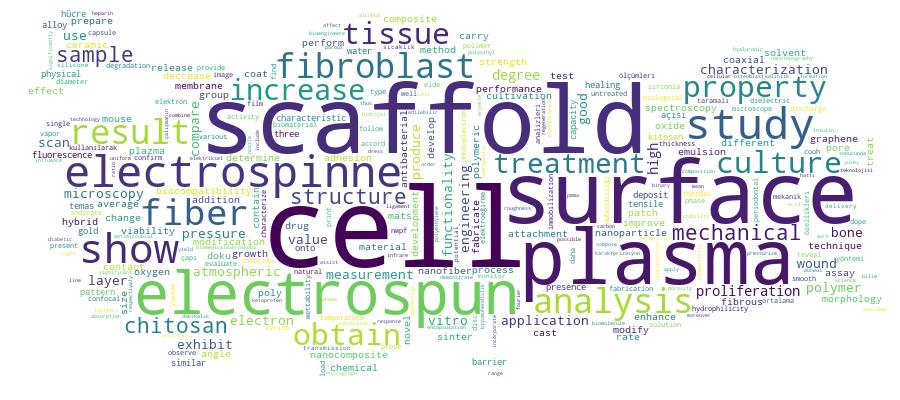
Competency Cloud
26 results
Scholarly Output Search Results
Now showing 1 - 10 of 26
Article Citation - WoS: 11Development of Antibacterial Composite Electrospun Chitosan-Coated Polypropylene Materials(Amer Scientific Publishers, 2018) Gozutok, Melike; Basar, Ahmet Ozan; Sasmazel, Hilal TurkogluIn this study, a natural antibacterial substance chitosan was coated with/without potassium sorbate (KS) (0.8% (w/w) of KS, 8% (w/v) chitosan) onto the polypropylene (PP) film by using electrospinning technique to obtain novel antibacterial composite materials for various applications such as wound dressing, tissue engineering, drug delivery and food packaging. Atmospheric pressure plasma surface treatment was applied onto polypropylene films in order to increase its wettability thus enhancing the adhesion capacity of the films and the optimum CA value was determined as 42.75 +/- 0.80 degrees. Scanning Electron Microscope (SEM) and X-ray Photoelectron Spectroscopy (XPS) analyses were realized to observe the morphological changes and chemical properties of the samples, respectively. Contact angle measurements, tensile testing, oxygen and water vapor transmission rate analyses were performed to obtain wettability values, mechanical properties and WVTRs, respectively. The WVTR was increased by plasma treatment and addition of KS (from 14.264 +/- 0.214% to 21.020 +/- 0.659%). The desired antibacterial performance of the samples was assessed with Staphylococcus aureus and Escherichia coli by inhibition ratio calculation and disc diffusion assay. The highest inhibition ratios were found as 64% for S. aureus and 92% for E. coli for plasma-treated CS-KS-PP films.Correction Influence of Water/O2 Plasma Treatment on Cellular Responses of Pcl and Pet Surfaces (vol 21, Pg 123, 2011)(Ios Press, 2011) Sasmazel, Hilal Turkoglu; Aday, Sezin; Manolache, Sorin; Gumusderelioglu, Menemse[No Abstract Available]Article Citation - WoS: 45Citation - Scopus: 46Novel Hybrid Scaffolds for the Cultivation of Osteoblast Cells(Elsevier, 2011) Sasmazel, Hilal TurkogluIn this study, natural biodegradable polysaccharide, chitosan, and synthetic biodegradable polymer, poly(epsilon-caprolactone) (PCL) were used to prepare 3D, hybrid polymeric tissue scaffolds (PCL/chitosan blend and PCL/chitosan/PCL layer by layer scaffolds) by using the electrospinning technique. The hybrid scaffolds were developed through HA addition to accelerate osteoblast cell growth. Characteristic examinations of the scaffolds were performed by micrometer, SEM, contact angle measurement system, ATR-FTIR, tensile machine and swelling experiments. The thickness of all electrospun scaffolds was determined in the range of 0.010 +/- 0.001-0.012 +/- 0.002 mm. In order to optimize electrospinning processes, suitable bead-free and uniform scaffolds were selected by using SEM images. Blending of PCL with chitosan resulted in better hydrophilicity for the PCL/chitosan scaffolds. The characteristic peaks of PCL and chitosan in the blend and layer by layer nanofibers were observed. The PCL/chitosan/PCL layer by layer structure had higher elastic modulus and tensile strength values than both individual PCL and chitosan structures. The layer by layer scaffolds exhibited the PBS absorption values of 184.2; 197.2% which were higher than those of PCL scaffolds but lower than those of PCL/chitosan blend scaffolds. SaOs-2 osteosarcoma cell culture studies showed that the highest ALP activities belonged to novel PCL/chitosan/PCL layer by layer scaffolds meaning better cell differentiation on the surfaces. (C) 2011 Elsevier B.V. All rights reserved.Article Citation - WoS: 58Citation - Scopus: 77Electrospun Oxygen Scavenging Films of Poly(3-Hydroxybutyrate) Containing Palladium Nanoparticles for Active Packaging Applications(Mdpi, 2018) Cherpinski, Adriane; Gozutok, Melike; Sasmazel, Hilal Turkoglu; Torres-Giner, Sergio; Lagaron, Jose M.This paper reports on the development and characterization of oxygen scavenging films made of poly(3-hydroxybutyrate) (PHB) containing palladium nanoparticles (PdNPs) prepared by electrospinning followed by annealing treatment at 160 degrees C. The PdNPs were modified with the intention to optimize their dispersion and distribution in PHB by means of two different surfactants permitted for food contact applications, i.e., hexadecyltrimethylammonium bromide (CTAB) and tetraethyl orthosilicate (TEOS). Analysis of the morphology and characterization of the chemical, thermal, mechanical, and water and limonene vapor barrier properties and the oxygen scavenging capacity of the various PHB materials were carried out. From the results, it was seen that a better dispersion and distribution was obtained using CTAB as the dispersing aid. As a result, the PHB/PdNP nanocomposites containing CTAB provided also the best oxygen scavenging performance. These films offer a significant potential as new active coating or interlayer systems for application in the design of novel active food packaging structures.Master Thesis Grafen Oksit (go) Modifiye Elektroeğrilmiş Poli (ε-kaprolakton) (pcl) Nanomalzemeler(2019) Başar, Ahmet Ozan; Şaşmazel, Hilal TürkoğluÇalışmanın amacı, sentetik biyobozunur polimer poli(ε-kaprolakton) (PCL) ve grafen oksit (GO) birleşiminin elektroeğrilmesiyle üç boyutlu, kompozit bir doku iskelesi elde etmektir. Ayrıca, kompozit PCL/GO yapılarının Gly-Arg-Gly-Asp-Ser-Pro (GRGDSP) ve/veya tiyofen (Th) (PCL/GO, PCL/GO-GRGDSP, PCL/GO-Th, PCL/GO-GRGDSP-Th) ile birlikte etkileşimleri incelenmiştir. Toz GO örneklerinin karakterizasyon özellikleri ATR-FTIR ve Raman analizleri ile tayin edilmiştir. Elektroeğrilmiş doku iskelelerinin karakterizasyon özellikleri ise; kalınlık ölçümleri, taramalı elektron mikroskobu (SEM), yüzey temas açısı (CA) ölçümleri, X-ışını fotoelektron spektroskopi (XPS), termogravimetrik analiz (TGA), iletkenlik ölçümleri, PBS şişme ve büzüşme davranış testleri, in vitro degradasyon (bozunma) çalışmaları ve mekanik testleri ile yapılmıştır. Bu analizler sonucunda, bütün doku iskelelerinde eşdağılımlı homojen morfoloji gözlemlenmiştir. GO eklenmesiyle PCL/GO doku iskelelerinde daha iyi hidrofilisite ve yaklaşık 5° temas açısı düşüşü gözlenmiştir. PCL ve GO birleşimi ile elektriksel iletkenlikte artış gözlenmiş ve ölçülen en yüksek değer PCL/GO-GRGDSP-Th (2%) için bulunmuştur (15.06 μS.cm-1). Doku iskelelerinin mekanik performansı ise iyi disperse (dağılmış) olmuş GO'nun PCL matriksine eklenmesiyle artmıştır. Ayrıca, üretilen doku iskelelerinin hücre-materyal etkileşimleri MG-63 hücre hattı kullanılarak; MTT tayini, ALP aktivitesi, Alizarin red boyaması, Floresan ve SEM analizleri ile incelenmiştir. Yapılan hücre kültürü çalışmaları sonucunda, GO'nun ileri düzey özellikleri ve biyolojik arayüzleri sayesinde PCL/GO-GRGDSP-Th (0.5%) doku iskelesi en yüksek biyouyumluluk (saf PCL doku iskelesine kıyasla 1.87 kat daha fazla MTT absorbansı) göstermiştir.Article Citation - WoS: 124Citation - Scopus: 130Novel Poly(ε-caprolactone)/Gelatin Wound Dressings Prepared by Emulsion Electrospinning With Controlled Release Capacity of Ketoprofen Anti-Inflammatory Drug(Elsevier, 2017) Basar, A. O.; Castro, S.; Torres-Giner, S.; Lagaron, J. M.; Sasmazel, H. TurkogluIn the present study, a single and binary Ketoprofen-loaded mats of ultrathin fibers were developed by electrospinning and their physical properties and drug release capacity was analyzed. The single mat was prepared by solution electrospinning of poly(e-caprolactone) (PCL) with Ketoprofen at a weight ratio of 5 wt%. This Ketoprofen-containing PCL solution was also used as the oil phase in a 7:3 (wt/wt) emulsion with gelatin dissolved in acidified water. The resultant stable oil-in-water (O/W) emulsion of PCL-in-gelatin, also containing Ketoprofen at 5 wt%, was electrospun to produce the binary mat. Cross-linking process was performed by means of glutaraldehyde vapor on the electrospun binary mat to prevent dissolution of the hydrophilic gelatin phase. The performed characterization indicated that Ketoprofen was successfully embedded in the single and binary electrospun mats, i.e. PCL and PCL/gelatin, and both mats showed high hydrophobicity but poor thermal resistance. In vitro release studies interestingly revealed that, in comparison to the single PCL electrospun mat, the binary PCL/gelatin mat significantly hindered Ketoprofen burst release and exhibited a sustained release capacity of the drug for up to 4 days. In addition, the electrospun Ketoprofen-loaded mats showed enhanced attachment and proliferation of L929 mouse fibroblast cells, presenting the binary mat the highest cell growth yield due to its improved porosity. The here-developed electrospun materials clearly show a great deal of potential as novel wound dressings with an outstanding controlled capacity to release drugs.Article Citation - WoS: 18Citation - Scopus: 19Effects of Nozzle Type Atmospheric Dry Air Plasma on L929 Fibroblast Cells Hybrid Poly (ε-caprolactone)/Chitosan (ε-Caprolactone) Scaffolds Interactions(Soc Bioscience Bioengineering Japan, 2016) Ozkan, Ozan; Sasmazel, Hilal TurkogluIn the study presented here, in order to improve the surface functionality and topography of poly (epsilon-caprolactone) (PCL)/chitosan/PCL hybrid tissue scaffolds fabricated layer by layer with electrospinning technique, an atmospheric pressure nozzle type plasma surface modification was utilized. The optimization of the plasma process parameters was carried out by monitoring the changes in surface hydrophilicity by using contact angle measurements. SEM, AFM and XPS analyses were utilized to observe the changes in topographical and chemical properties of the modified surfaces. The results showed that applied plasma modification altered the nanotopography and the functionality of the surfaces of the scaffolds. The modification applied for 9 min from a distance of 17 cm was found to provide the possible contact angle value (75.163 +/- 0.083) closest to the target value which is the value of tissue culture polystyrene (TCPS) petri dishes (similar to 49.7 degrees), compared to the unmodified samples (84.46 +/- 3.86). In vitro cell culture was carried out by L929 mouse fibroblast cell line in order to examine the effects of plasma surface modification on cell material interactions. Standard MIT assay showed improved cell viability on/within modified scaffolds confirmed with the observations of the cell attachment and the morphology by means of SEM, fluorescence and confocal imaging. The experiments performed in the study proved the enhanced biocompatibility of the nozzle type dry air plasma modified scaffolds. (C) 2016, The Society for Biotechnology, Japan. All rights reserved.Article Citation - WoS: 17Citation - Scopus: 16Novel thin films deposited on electrospun PCL scaffolds by atmospheric pressure plasma jet for L929 fibroblast cell cultivation(Iop Publishing Ltd, 2016) Gozutok, M.; Baitukha, A.; Arefi-Khonsari, F.; Sasmazel, H. TurkogluThis paper reports on the deposition of PCL homopolymers and poly epsilon-caprolactone-polyethylene glycol (PCL-PEG) copolymers by atmospheric pressure plasma jet (APPJ) onto electrospun PCL scaffolds for improving L929 fibroblast cell growth. Polymer deposited scaffolds showed better stability as well as lower CA as compared to those treated with APPJ in Ar alone used as the carrier gas to introduce the precursors due to the formation of polar groups generated during the plasma treatment, such as -OH and/or -COO. Average fiber and porosity sizes were calculated by using SEM photographs and the ImageJ Launcher Software program and higher values were observed for both PCL and PCL-PEG deposited scaffolds than the untreated electrospun PCL scaffolds. XPS analysis showed that C1s% content decreased for PCL deposited (from 82.4% to 71.0%) and PCL-PEG deposited (from 82.4% to 57.7%) and O1s% composition increased for PCL deposited (from 17.6% to 29.0%) and PCL-PEG deposited (from 17.6% to 42.3%) compared to the untreated one. XPS results proved more incorporation of oxygen moieties on the deposited surfaces than the untreated samples giving rise to more hydrophilic surfaces to the deposited ones. Standard in vitro MTT test, Giemsa staining, fluorescence and CLSM imaging techniques were used for the determination of cell viability, adhesion and proliferation. Cell culture experiments showed that PCL-PEG deposited electrospun PCL scaffolds had the most promising cell adhesion, proliferation and growth among the treated scaffolds. The increased average fiber diameter caused by deposition as well as oxygen containing polar groups formed on the surfaces due to the radicals present in the plasma atmosphere provided higher surface area and functionality, respectively, for cells to attach, yielding better biocompatibility performance.Article Citation - Scopus: 5Influence of Water/O2 Plasma Treatment on Cellular Responses of Pcl and Pet Surfaces(IOS Press, 2011) Türkoǧlu Şaşmazel,H.; Aday,S.; Manolache,S.; Gumusderelioglu,M.In this study, low pressure water/O2 plasma treatment was performed in order to obtain COOH functionalities on the surface of poly-ε-caprolactone (PCL) membranes as well as non-woven polyester fabric (NWPF) discs. The plasma treatments were performed in a cylindrical, capacitively coupled RF-plasma-reactor and then following steps were performed: in situ (oxalyl chloride vapors) gas/solid reaction to convert -OH functionalities into -COCl groups; and hydrolysis under open laboratory conditions using air moisture for final-COOH functionalities. COOH and OH functionalities on modified surfaces were detected quantitatively by using fluorescent labeling technique and an UVX 300G sensor. Electron spectroscopy for chemical analysis (ESCA) was used to evaluate the relative surface atomic compositions and the carbon and oxygen linkages located in non-equivalent atomic positions of untreated and modified surfaces. Atomic force microscope (AFM) analysis showed that nanoscale features of the PCL surfaces are dramatically changed during the surface treatments. Scanning electron microscopy (SEM) results indicated the changes in the relatively smooth appearance of the untreated NWPF discs after the plasma treatment. Periodontal ligament (PDL) fibroblasts were used in cell culture studies. Cell culture results showed that plasma treated PCL membranes and NWPF discs were favorable for the PDL cell spreading, growth and viability due to the presence of functional groups and/or nanotopographies on their surfaces. © 2011 - IOS Press and the authors. All rights reserved.Article Tıpta Plazma Teknolojisi(İz Dergisi, 2015) Şaşmazel, Hilal; Sürücü, SedaPlazma sözcüğünü fizik dünyasına yazılı olarak sunan ilk kişi Langmuir’dir. Langmuir 1929 yılında gaz deşarj tüpleri üzerine yaptığı çalışmalarda plazmanın bir canlı gibi davrandığını düşünmüş ve iyonlaşmış gaz topluluğuna daha çok yakışacağını düşündüğü plazma adını vermiş. Plazma, içerisinde yüksüz türleri, negatif ve pozitif yüklü elektronları içeren iyonlaşmış gaz halidir. Evrenin % 99’u plazma durumunda, geriye kalan % 1’in bir bölümü katı, çok küçük bir bölümü de sıvı durumunda. Kuşkusuz, gaz durumundaki her ortamı plazma olarak tanımlayamayız. Ancak kozmik koşullar altında, soğuk yıldız atmosferleri plazma özelliği sergiler. Evrende hali hazırda var olan astro-plazmanın yanısıra, laboratuvarda oluşturulan plazma iki ana gruba ayrılabilir; yüksek sıcaklık veya füzyon plazma ve düşük sıcaklık veya gaz-yük boşalım plazması. Sıcak plazmaya örnek olarak güneş sistemi verilebilir. Soğuk plazma ise laboratuvar koşullarında elektriksel boşalım veya ışık kaynaklarıyla oluşturulabilir.

- «
- 1 (current)
- 2
- 3
- »