Darama, Yakup

Loading...
Profile Picture
Name Variants
D., Yakup
Yakup Darama
Yakup, Darama
Darama,Y.
Darama Y.
Y., Darama
D.,Yakup
Darama,Yakup
Darama, Yakup
Y.,Darama
Darama, Y.
Job Title
Profesör Doktor
Email Address
yakup.darama@atilim.edu.tr
Main Affiliation
Civil Engineering
Status
Website
Scopus Author ID
Turkish CoHE Profile ID
Google Scholar ID
WoS Researcher ID

Sustainable Development Goals

2

ZERO HUNGER
ZERO HUNGER Logo

1

Research Products

11

SUSTAINABLE CITIES AND COMMUNITIES
SUSTAINABLE CITIES AND COMMUNITIES Logo

4

Research Products

14

LIFE BELOW WATER
LIFE BELOW WATER Logo

0

Research Products

6

CLEAN WATER AND SANITATION
CLEAN WATER AND SANITATION Logo

5

Research Products

1

NO POVERTY
NO POVERTY Logo

0

Research Products

5

GENDER EQUALITY
GENDER EQUALITY Logo

0

Research Products

9

INDUSTRY, INNOVATION AND INFRASTRUCTURE
INDUSTRY, INNOVATION AND INFRASTRUCTURE Logo

0

Research Products

16

PEACE, JUSTICE AND STRONG INSTITUTIONS
PEACE, JUSTICE AND STRONG INSTITUTIONS Logo

0

Research Products

17

PARTNERSHIPS FOR THE GOALS
PARTNERSHIPS FOR THE GOALS Logo

0

Research Products

15

LIFE ON LAND
LIFE ON LAND Logo

0

Research Products

10

REDUCED INEQUALITIES
REDUCED INEQUALITIES Logo

0

Research Products

7

AFFORDABLE AND CLEAN ENERGY
AFFORDABLE AND CLEAN ENERGY Logo

2

Research Products

8

DECENT WORK AND ECONOMIC GROWTH
DECENT WORK AND ECONOMIC GROWTH Logo

0

Research Products

4

QUALITY EDUCATION
QUALITY EDUCATION Logo

0

Research Products

12

RESPONSIBLE CONSUMPTION AND PRODUCTION
RESPONSIBLE CONSUMPTION AND PRODUCTION Logo

0

Research Products

3

GOOD HEALTH AND WELL-BEING
GOOD HEALTH AND WELL-BEING Logo

0

Research Products

13

CLIMATE ACTION
CLIMATE ACTION Logo

2

Research Products
Documents

12

Citations

196

h-index

9

Documents

9

Citations

96

Scholarly Output

12

Articles

6

Views / Downloads

100/623

Supervised MSc Theses

5

Supervised PhD Theses

0

WoS Citation Count

69

Scopus Citation Count

95

WoS h-index

5

Scopus h-index

5

Patents

0

Projects

0

WoS Citations per Publication

5.75

Scopus Citations per Publication

7.92

Open Access Source

3

Supervised Theses

5

Google Analytics Visitor Traffic

JournalCount
Natural Hazards2
Environmental Earth Sciences1
Hydrological Research Letters1
IOP Conference Series: Materials Science and Engineering -- 3rd International Conference on Sustainable Engineering Techniques, ICSET 2020 -- 15 April 2020 -- Baghdad, Vitrual -- 1622331
Journal of Hydrologic Engineering1
Current Page: 1 / 2

Scopus Quartile Distribution

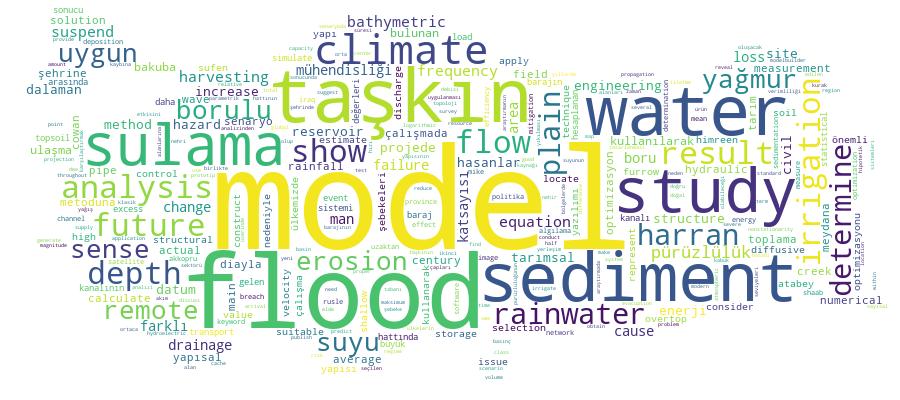
Competency Cloud

GCRIS Competency Cloud

Scholarly Output Search Results

Now showing 1 - 6 of 6
  • Article
    Citation - WoS: 13
    Citation - Scopus: 16
    Determination of Sediment Deposition of Hasanlar Dam Using Bathymetric and Remote Sensing Studies
    (Springer, 2019) Darama, Yakup; Selek, Zeliha; Selek, Bulent; Akgul, Mehmet Ali; Dagdeviren, Murat
    Hasanlar Dam and Hydroelectric Power Plant are located on Kucuk Melen Creek in the Western Black Sea Basin of Turkey. The dam was constructed in 1974 to provide domestic water needs of the Duzce Province, to supply irrigation water need, to control and mitigate floods and to produce hydroelectric power. This dam has been subjected to severe sedimentation since its construction in 1974. Therefore, bathymetric field survey studies were conducted to determine storage loss in the Hasanlar Dam reservoir by sedimentation. Bathymetric survey data from the reservoir site of the Hasanlar Dam were obtained in 1979, 1999 and 2014. Analysis of the bathymetric data, GIS and remotes sensing techniques showed that storage loss in reservoir active volume between 1974 and 1999 was 24% and between 1974 and 2014 storage loss was 26%. Analysis of the bathymetric maps also showed that sediment accumulation is severe near and around the dam body and the spillway whose discharge capacity was decreased by sediment accumulation. This is extremely critical because the flood of May 1998 caused the high risk of collapse of dam due to reduced capacity of the spillway. Remote sensing technique was used to determine the future deposition of sediment in the reservoir. For this purpose, 35 points in the reservoir area were determined by comparing the relative water depths and actual water depths using satellite image of the bathymetry in July 2017 and Lake Observation Station. High correlation (R-2=0.833) was calculated by using logarithmic nonlinear regression analysis between actual and relative water depths for those 35 control points. The average of absolute values of differences between the estimated and actual water depths was found as 1.06m, and RMSE was calculated as 1.25m. This analysis shows that in the future, remote sensing data can be used in the studies of determining the depth of water and the total sediment thickness. In addition, the volume of the entire reservoir can be predicted by measuring the actual water depth only at those 35 control points without making a bathymetric map of the whole dam reservoir.
  • Article
    Citation - WoS: 9
    Citation - Scopus: 10
    Land Degradation by Erosion Occurred After Irrigation Development in the Harran Plain, Southeastern Turkey
    (Springer, 2021) Darama, Yakup; Yilmaz, Kutay; Melek, A. Berhan
    A study was made to determine the erosion problem and determine the amount of suspended sediment transport in the drainage channels of the Harran Plain by conducting periodic suspended sediment sampling and discharge measurements in the field between 1997 and 2017. When irrigation in the Harran Plain started in 1990, the production of the agricultural goods quadrupled within a few years. Unfortunately, excessive amounts of irrigation water supplied to irrigate crops also led to the erosion of the soil in the fields by surface runoff. Furthermore, the mixture of clay, silt, and fine sand in the topsoil from certain areas accumulated in the tertiary and secondary drainage systems and reduced the effectiveness of the drainage system. Analysis of the suspended sediment measurements between 1997 and 2017 showed that the yearly averaged sediment transported to Syria by the main drainage canal of the Harran Plain varied between 128 ton.day(-1) to 1268 ton.day(-1), and the average of the 21-year measurement is about 682 ton.day(-1). The logarithmic plot of the suspended sediment rating curve showed that as the discharge of the Cullap Creek increases, the sediment transport rate also increases linearly. It means excess furrow irrigation could cause substantial topsoil loss. Sediment erosion resulting from rainfall events in the Harran Plain is also computed using Revised Universal Soil Loss Equation (RUSLE). The results showed that rainfall erosion from the Harran Plain is 131.5 ton.day(-1). A comparison of this value with the 21-year value of average sediment erosion by irrigation shows that approximately 20% of sediment erosion from the Harran Plain was caused by rainfall events, and the remaining 80% was caused by excess irrigation water in the area. A 2D numerical model was constructed with MIKE 21 software applying Van Rijn Method to calculate suspended sediment load due to irrigation, and it allowed to calculate the load with a 6.47% error. Grouping the irrigated and non-irrigated periods and applying independent t test, a statistical approach constituted and resulted in 79.2% of suspended sediment load is caused by irrigation. The numerical model and statistical analysis supported the findings of field data and RUSLE Model results. The study showed that the main reason of the topsoil loss in the Harran Plain is the excess furrow irrigation.
  • Article
    Citation - WoS: 10
    Citation - Scopus: 9
    Current Issues in and an Emerging Method for Flood Frequency Analysis Under Changing Climate
    (Jshwr, Jagh, Jahs, Jsph, 2017) Kavvas, M. Levent; Ishida, Kei; Trinh, Toan; Ercan, Ali; Darama, Yakup; Carr, Kara J.
    In this study several issues with the standard flood frequency analysis are discussed in the context of a changing hydro-climate in the 21st century. Among these issues the loss of statistical equilibrium in the hydro-climate of a studied region during the 21st century has serious implications on the standard frequency analysis that is discussed in some detail. An alternative method to flood frequency analysis within the framework of a changing climate based on ensemble of future climate projections is reported and demonstrated by a numerical application to a target watershed.
  • Article
    Borulu Sulama Şebekeleri Optimizasyonu
    (Turkish Chamber Civil Engineers, 2018) Marım, Gökhan; Darama, Yakup; Bozkuş, Zafer
    Borulu sulama şebekeleri ülkelerin tarımsal ürün yetiştirmesinde ve su tasarrufunda enönemli sistemlerdir. Günümüzde tarımsal amaçlı sulama, su tüketiminin en yüksek olduğusektördür. Ülkemizde tarım sektörünün kullandığı su miktarı su potansiyelimizin %73oranındadır. Ülkemizde ve genelde Dünyada nüfus artışı nedeniyle tarımsal üretimde sutalebinin artması ve su kaynaklarımızın sınırlı olması nedeniyle sürdürülebilir su kaynaklarıyönetimi zorunlu olmaktadır. Son yıllarda ülkemizde yapılan sulama sistemleri yatırımlarınınbüyük bir çoğunluğunu, su kaybını ve tarımsal su kullanımını azaltan modern borulu sulamaşebekeleri yatırımları oluşturmaktadır. Bu çalışma borulu sulama şebekelerinintasarımlarının maliyet ve istenen işletme basınçları açısından optimum koşullara ulaşmasınaodaklanmıştır. Optimizasyon problemi çözümünde heuristik tabanlı dinamik programlamaile birlikte doğrusal programlama yöntemi olan “Simplex” metodu kullanılmış olup, buoptimizasyon yazılımı DSİ borulu sulama şebekeleri için uygulanmıştır.
  • Article
    Citation - WoS: 25
    New Methodology To Develop Future Flood Frequency Under Changing Climate by Means of Physically Based Numerical Atmospheric-Hydrologic Modeling
    (Asce-amer Soc Civil Engineers, 2016) Trinh, T.; Ishida, K.; Fischer, I.; Jang, S.; Darama, Y.; Nosacka, J.; Kavvas, M. L.
    Effect of climate change on hydrologic flow regimes, particularly extreme events, necessitates modeling of future flows in order to best inform water resources management. This study simulated future flows in the Cache Creek watershed in California over the 21st century using a hydro-climate model (Watershed Environmental Hydrology Hydro-Climate Model; WEHY-HCM) forced by future climate projections. The future climate projections, based on four emission scenarios simulated by two global climate models (GCMs), the fifth-generation atmospheric global climate model and third-generation community climate model (ECHAM5 and CCSM3), under several initial conditions, were dynamically-downscaled using the fifth-generation mesoscale atmospheric model (MM5), a regional climate model. The downscaled future precipitation data were bias-corrected before being input into the WEHY model to simulate the detailed flow at hourly intervals along the main Cache Creek branch and its tributaries during 2010-2099. The results suggest an increasing trend in flood magnitudes and their intensities at the outlet of the study region throughout the 21st century. Similarly, estimates of the 100-year and 200-year floods increased throughout the study period. The observed differences in the estimated future flood frequencies between the first half and the second half of 21st century may be an evidence of the nonstationarity in the 21st century hydrological regime over the study region.
  • Article
    Citation - WoS: 12
    Citation - Scopus: 12
    Assessment of Flood Hazards Due To Overtopping and Piping in Dalaman Akkopru Dam, Employing Both Shallow Water Flow and Diffusive Wave Equations
    (Springer, 2023) Yilmaz, Kutay; Darama, Yakup; Oruc, Yunus; Melek, A. Berhan
    This study was carried out to determine flood propagation using shallow water equations (SWEs) and diffusive wave equations (DWEs) to reveal how the flood modeling results differ in terms of flow depth, flow velocity, and hazard level. The solution methods were tested based on the hypothetical failure of the Dalaman Akkopru Dam resulting from two failure mechanisms: overtopping (OT) and piping (PP). A 2D hydraulic model was constructed using HEC-RAS to determine the propagation of flood waves due to the failure of the dam by the mechanisms selected. Froehlich equations were applied to predict the breaching parameters of the dam. After calibration, the hydraulic model was run to determine the possible flooding magnitude in the towns of Ortaca, Dalaman, and Dalyan. The flood arrival times, maximum flow depths, flow velocities, and hazard classes were obtained for the Dalaman, Ortaca, and Dalyan city centers, and the Dalaman International Airport from the hydraulic model results. The modeling results showed that the inundated area is similar for both the SWEs and DWEs solutions, while the flow depth and velocity results are significantly different due to the neglected convective acceleration terms of the SWEs when deriving the DWEs. Considering the modeling results, even though the DWEs provide a computational cost advantage, the reliability of the solutions should be examined against the SWEs. Hazard maps were generated for both solution methods and failure mechanisms. The results revealed that most of the settlements in the basin have H5 and H6 hazard classes with a high risk of structural damage. Therefore, the installation of early warning systems and evacuation of district centers were suggested as mitigation measures. A feasible evacuation plan for the neighborhoods, taking into account the flood arrival time of the failure scenarios, is needed.