
Davut, Kemal
Loading...

Profile URL
Name Variants
Davut, K.
K.,Davut
K., Davut
Davut,K.
D., Kemal
Davut, Kemal
D.,Kemal
Kemal, Davut
K.,Davut
K., Davut
Davut,K.
D., Kemal
Davut, Kemal
D.,Kemal
Kemal, Davut
Job Title
Doktor Öğretim Üyesi
Email Address
kemal.davut@atilim.edu.tr
Main Affiliation
Department of Metallurgical and Materials Engineering
Status
Former Staff
Website
ORCID ID
Scopus Author ID
Turkish CoHE Profile ID
Google Scholar ID
WoS Researcher ID
Sustainable Development Goals
 1
1NO POVERTY
0
Research Products
 2
2ZERO HUNGER
0
Research Products
 3
3GOOD HEALTH AND WELL-BEING
1
Research Products
 4
4QUALITY EDUCATION
0
Research Products
 5
5GENDER EQUALITY
0
Research Products
 6
6CLEAN WATER AND SANITATION
0
Research Products
 7
7AFFORDABLE AND CLEAN ENERGY
0
Research Products
 8
8DECENT WORK AND ECONOMIC GROWTH
0
Research Products
 9
9INDUSTRY, INNOVATION AND INFRASTRUCTURE
11
Research Products
 10
10REDUCED INEQUALITIES
0
Research Products
 11
11SUSTAINABLE CITIES AND COMMUNITIES
0
Research Products
 12
12RESPONSIBLE CONSUMPTION AND PRODUCTION
0
Research Products
 13
13CLIMATE ACTION
0
Research Products
 14
14LIFE BELOW WATER
0
Research Products
 15
15LIFE ON LAND
0
Research Products
 16
16PEACE, JUSTICE AND STRONG INSTITUTIONS
0
Research Products
 17
17PARTNERSHIPS FOR THE GOALS
0
Research Products

This researcher does not have a Scopus ID.

This researcher does not have a WoS ID.

Scholarly Output
32
Articles
21
Views / Downloads
54/98
Supervised MSc Theses
6
Supervised PhD Theses
0
WoS Citation Count
433
Scopus Citation Count
467
Patents
0
Projects
0
WoS Citations per Publication
13.53
Scopus Citations per Publication
14.59
Open Access Source
14
Supervised Theses
6
| Journal | Count |
|---|---|
| Journal of Materials Research and Technology | 4 |
| Materials Testing | 2 |
| Hittite Journal of Science and Engineering | 2 |
| 8th International Advances in Applied Physics and Materials Science Congress and Exhibition (APMAS) -- APR 24-30, 2018 -- Fethiye, TURKEY | 2 |
| Materials Characterization | 2 |
Current Page: 1 / 4
Scopus Quartile Distribution
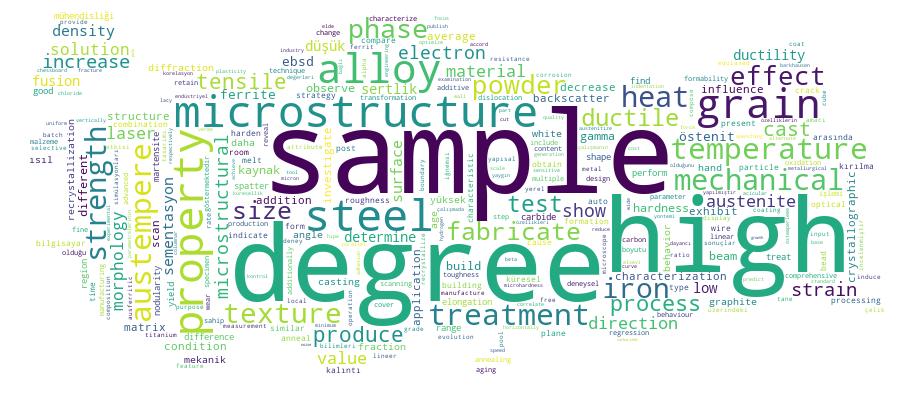
Competency Cloud
21 results
Scholarly Output Search Results
Now showing 1 - 10 of 21
Article Citation - WoS: 2Citation - Scopus: 2Chemical Composition Optimization and Isothermal Transformation of Δ-Transformation Plasticity Steel for the Third-Generation Advanced High-Strength Steel Grade(Wiley-v C H verlag Gmbh, 2024) Okur, Onur; Davut, Kemal; Palumbo, Gianfranco; Nalcaci, Burak; Guglielmi, Pasquale; Yalcin, Mustafa Alp; Erdogan, MehmetA new low-manganese transformation-induced plasticity steel is designed with optimized nickel content to achieve superior strength and ductility while minimizing the use of expensive nickel. The steel is optimized using JMatPro software, then cast, and hot rolled. To assess the effect of intercritical annealing on austenite (martensite at room temperature) volume fraction and carbon content, hot-rolled steel samples quenched from different annealing temperatures (680-1100 degrees C) are used. Additionally, hot-rolled steel coupons are intercritically annealed at about 50% austenite formation temperature (740 degrees C) and then subjected to isothermal treatments at 300-425 degrees C for varying times (10-90 min). After optimizing these treatments to maximize retained austenite (RA), tensile specimens are heat-treated first at 740 degrees C and then isothermally at 325 degrees C. Thermodynamic calculations suggest that aluminum combined with silicon may lead to the delta ferrite formation, and even minimal nickel content can stabilize a considerable amount of austenite. In the experimental studies, it is shown that lower-temperature bainitic holding enhances austenite stability by enriching the carbon content. Optimized two-stage heat treatments yield up to 25.8% RA, with a tensile strength of 867.2 MPa and elongation of 40.6%, achieving a strength-elongation product of 35.2 GPax%, surpassing the third-generation advanced high-strength steel grades minimum requirement of 30 GPax%.Article Citation - WoS: 51Citation - Scopus: 54Recrystallization and Grain Growth Kinetics of In718 Manufactured by Laser Powder Bed Fusion(Elsevier, 2022) Dogu, Merve Nur; Davut, Kemal; Obeidi, Muhannad Ahmed; Yalcin, Mustafa Alp; Gu, Hengfeng; Low, Thaddeus Song En; Brabazon, DermotThe recrystallization and grain growth behaviour of IN718 alloy additively manufactured by laser powder bed fusion (L-PBF) is presented herein. The effects of three different temperatures (1050, 1150 and 1250 degrees C) and holding times (15, 45 and 90 min) were investigated. The texture evolution of the samples was recorded via electron backscatter diffraction (EBSD). The as-built sample is composed of bowl-shaped melt pools, a chessboard-like grain pattern and has a cube texture {100}<001>. Recrystallized grains were observed in the samples treated at 1150 degrees C for 15 min, as well as the samples treated for longer periods and at higher temperatures. Recrystallization was observed to start from high dislocation density regions, including the overlapping melt pools and the borders of the chessboard-like pattern. The initial cube texture transforms into a first-generation cube-twin texture {122}<212> via a twinning-assisted recrystallization mechanism. Then, those recrystallization nuclei sweep through the high defect density matrix; during which almost no new twins are formed. The samples treated at 1250 degrees C are almost completely recrystallized, which forms a weaker cube texture and a stronger P-orientation {011}<112>. However, the growth of recrystallized grains is very limited due to the presence of non-coherent precipitates. (C) 2022 The Author(s). Published by Elsevier B.V.Article Citation - WoS: 25Citation - Scopus: 28Effect of Solution Heat Treatment on the Microstructure and Crystallographic Texture of In939 Fabricated by Powder Bed Fusion-Laser Beam(Elsevier, 2023) Dogu, Merve Nur; Ozer, Seren; Yalcin, Mustafa Alp; Davut, Kemal; Bilgin, Guney Mert; Obeidi, Muhannad Ahmed; Brabazon, DermotThe effect of various solution heat treatment temperatures (i.e., 1120, 1160, 1200 and 1240 & DEG;C) on the microstructure, grain morphology and crystallographic texture of IN939 fabricated by powder bed fusion-laser beam (PBF-LB) was investigated. Microstructural analyses showed that the high-temperature gradient and rapid solidification of the PBF-LB processing caused different resulting microstructures compared to conventionally pro-duced counterparts. The melt pool morphologies and laser scanning paths were examined in the as-fabricated samples in the XZ-and XY-planes, respectively. After the application of solution heat treatment at 1120 & DEG;C, the as-fabricated PBF-LB initial microstructure was still apparent. For solution heat treatments of 1200 & DEG;C and above, the melt pool and scanning path morphologies disappeared and converted into a mixture of columnar grains in the XZ-plane and equiaxed grains in the XY-plane. On the other hand, large equiaxed grains were observed when the samples were solutionized at 1240 & DEG;C. Additionally, g' phase precipitated within the matrix after all solution heat treatment conditions, which led to increase in the microhardness values. According to electron backscatter diffraction (EBSD) analyses, both as-fabricated and solution heat-treated samples had intense texture with {001} plane normal parallel to the building direction. The first recrystallized grains began to appear when the samples were subjected to the solution heat treatment at 1160 & DEG;C and the fraction of the recrystallized grains increased with increasing temperature, as supported by kernel average misorientation (KAM) and grain spread orientation (GOS) analyses.& COPY; 2023 The Author(s). Published by Elsevier B.V. This is an open access article under the CC BY license (http://creativecommons.org/licenses/by/4.0/).Article Strain Hardening Behavior Characterization of Dual Phase Steels(2018) Davut, Kemal; Şimşir, Caner; Çetin, BarişThe requirements for higher passenger safety, improved fuel economy and weight reductionin automobile industry necessitates the usage of advanced high strength steel (AHSS)grades. Dual phase (DP) steels are the most widely used one among AHSS. DP steels becomeincreasingly popular, since they provide a combination of sufficient formability at room temperatureand tensile strength over 1000 MPa. The current standards for DP steels only specifiesyield and tensile strength. Steels from various producers have considerably different compositionand microstructure; however they still have the same grade name. Combined withthe inherited heterogeneous microstructure, those steels exhibit different strain hardeningbehavior. The aim of this study is to evaluate the strain hardening behavior of DP800 steels,obtained from different vendors and thus having different compositions and microstructures.The strain hardening behavior was characterized with tensile tests performed along rollingand transverse directions. The microstructure has been characterized with optical andscanning electron microscopes. The martensite fraction, grain size of ferrite and chemicalcomposition has been correlated to the strain hardening behavior. The results show thatthe steel with more micro-alloying addition has finer ferritic grain size, which cause higherinitial strain hardening rate. The steel with higher Mn and Cr has higher martensite fraction,which cause strain hardening rate to be higher at higher strain levels.Article Citation - WoS: 9Citation - Scopus: 9Elektrik Direnç Punta Kaynağı ile Birleştirilen %15 Deforme Edilmiş Twıp Çeliğinde Kaynak Akımının Mikroyapı ve Mekanik Özellikler Üzerindeki Etkisi(Gazi Univ, Fac Engineering Architecture, 2020) Aydın, Hakan; Tutar, Mümin; Davut, Kemal; Bayram, AliÇalışmada, %15 deforme edilmiş TWIP saclarının elektrik direnç punta kaynağıyla birleştirmelerindekaynak akımının mikroyapı ve mekanik özellikler üzerindeki etkisi incelenmiştir. Mikroyapıkarakterizasyonunda optik mikroskop, taramalı elektron mikroskobu (SEM), SEM/Enerji dağılımlı X-ışınıSpektroskopisi (SEM-EDS) ve SEM/Elektron Geri Saçılım Kırınımı (SEM-EBSD) teknikleri kullanılmıştır.Mekanik özelliklerin belirlenmesinde, mikrosertlik ölçümleri ve çekme testleri yapılmıştır. Kaynak akımıartışı ile erime bölgesindeki kaynak boşlukları azalırken, çekirdek çapı, çökme miktarı ve ısı tesiri altındakibölge (ITAB) genişliği yaklaşık lineer bir şekilde artmıştır. Kaynak bölgesinde deformasyon ikizleri ortadankalkarken, ITAB’da iri tavlama ikizleri ortaya çıkmıştır. Ayrıca, kaynak akımı artışıyla ITAB’daki taneirileşmesi ve ikiz kalınlıkları artmıştır. Ancak, kaynak işlemi kaynak bölgesinde herhangi bir fazdönüşümüne neden olmamıştır. Bu sebeple, kaynak bölgesi sertlik değerleri temel malzemenin sertlikdeğerlerinden oldukça düşük kalmıştır. Genel itibariyle, en düşük sertlikler ITAB’da gözlenmiştir. Kaynakakımı ile kaynak bölgesi sertlik değerleri arasında herhangi bir korelasyon elde edilmemiştir. Kopma yükükaynak akımı ile artmıştır: En yüksek kopma yükü 10 kA kaynak akımında elde edilmiştir. Düşük kaynakakımlarında aryüzey tipi kırılma meydana gelirken yüksek kaynak akımlarında buton çekirdek tipi kırılmalarortaya çıkmıştır. Kırılma karakteristikleri genel itibariyle gevrek-sünek karışımıdır. Daha yüksekmukavemete sahip numunelerde gevrek-sünek kırılma bölgesinde sünek kırılma, gevrek kırılma bölgesindeise trans-granular kırılma karakteristikleri artış göstermiştir.Article Citation - WoS: 11Citation - Scopus: 12Influence of the Heat Treatment on the Microstructure, Mechanical and High-Temperature Oxidation Behavior of Hastelloy X Alloy Fabricated Via Laser Powder Bed Fusion(Elsevier Science Sa, 2025) Ozer, Seren; Yalcin, Mustafa Alp; Bilgin, Gueney Mert; Davut, Kemal; Esen, Ziya; Dericioglu, Arcan F.The effect of building direction and heat treatment on the microstructure, mechanical properties, and high- temperature oxidation behavior of Hastelloy X (HX) alloy fabricated by the laser powder bed fusion (L-PBF) method was studied. Electron backscatter diffraction analyses revealed that the development of textured columnar grains with varying average grain sizes, boundary fractions, and dislocation densities induced the mechanical anisotropy observed in both horizontally and vertically fabricated samples. The yield strength (YS) values of the horizontally and vertically as-fabricated samples were determined as 605.7 +/- 15.9 MPa and 552.3 +/- 8.5 MPa, respectively. The post-processing heat treatment increased the ductility remarkably and reduced YS value down to similar to 445 MPa for all samples by the elimination of microstructural anisotropy and increased grain size subsequent to recrystallization. Oxidation tests conducted at 900 degrees C up to 100 h on as- fabricated samples exhibited severe intergranular oxidation, which was accompanied by the formation of large voids and microcracks as well as spallation of the oxide layer. In contrast, the heat-treatment improved the oxidation resistance of the alloy possibly due to the formation of uniform and dense Cr2O3 layer on the substrate surface.Article Citation - WoS: 35Citation - Scopus: 36Friction Stir Processing of Dual Phase Steel: Microstructural Evolution and Mechanical Properties(Elsevier Science inc, 2019) Aktarer, S. M.; Kucukomeroglu, T.; Davut, K.The influence of friction stir processing (FSP) on the microstructure and mechanical properties of a DP 600 steel has been studied. The microstructure evolution during the FSP has been characterized using electron back scatter diffraction (EBSD) technique and scanning and transmission electron microscopes. Standard tension and hardness tests were used to characterize the mechanical properties. The results show that the FSP produced a refined microstructure composed of ferrite, bainite, martensite, and tempered martensite which in turn increased the hardness and strength magnitudes by a factor of 1.5. The initially 2.83 mu m average grain size of ferrite has decreased to 0.79 mu m in the pin effected zone of (PE-SZ-I) of the processed region. Both EBSD and TEM observations showed regions with high dislocation density and sub-structures region in the processed zone. The grain size became coarser, the density of both dislocations and low-angle grain boundaries decrease, away from the processed zone. Moreover, phase fractions and hardness values were predicted using CALPHAD thermodynamic based software based on commercial material properties. Although the prediction does not take into consideration the influence of severe plastic deformation, the results were within 10% uncertainties of the experimental findings. The present study demonstrates that an ultra-fine grained structure can be obtained through the thickness of a 1.5 mm thick D P600 steel sheet via FSP. FSP can produce a range of different hardness and strength values; which can also be predicted successfully by inputting the composition and local temperatures reached during the FSP.Article Citation - WoS: 8Effect of Austenitizing Temperatures on the Microstructure and Mechanical Properties of Aisi 9254 Steel(Walter de Gruyter Gmbh, 2021) Murathan, Omer Faruk; Davut, Kemal; Kilicli, VolkanIn this study, the effect of austenitizing temperatures and low-temperature isothermal heat treatment (below martensite start temperature) on the microstructure and mechanical properties of AISI 9254 high silicon spring steel has been investigated. Experimental studies show that ultra-fine carbide-free bainite, tempered martensite and carbon enriched retained austenite could be observed in isothermally heat-treated samples where the as-received sample consisted of fine pearlite. A high tensile strength of similar to 2060 MPa, a total elongation of similar to 8 %, and absorbed energy of 105 J were achieved in a commercial high-Si steel by austempering below the Ms temperature. A good combination of strength and ductility has been obtained in prolonged austempering below the martensite start temperature (225 degrees C) from an austenitizing temperature of 870 degrees C.Article Citation - Scopus: 7Development and Properties of Austempered Low Alloyed White Cast Iron(Walter de Gruyter GmbH, 2021) Erdogan,M.; Davut,K.; Kilicli,V.This study examined the response of low-alloy white cast iron to austempering heat treatment. In addition, it investigated the microstructure and mechanical properties of austempered low-alloy white cast iron. The low-alloy white cast iron specimens were austenitized at 900 °C, followed by quick quenching into a salt bath at 375 °C, and held there for 15 to 120 minutes for austempering heat treatment. Microstructural features were studied by optical, scanning electron microscopes, and XRD analysis. The mechanical properties were determined by hardness and unnotched Charpy impact toughness tests. As a function of those austempering times, a microstructural map was constructed to show how the transformation products develop, quantitatively. The experimental results showed that the austempering heat treatment produced a microstructure consisting of eutectic carbides + ausferritic structure in low-alloy white cast iron. It can be concluded that the low-alloy white cast iron can be austempered, similar to ductile cast irons. Improved hardness and impact toughness values have been obtained in austempered low-alloy white cast iron. © 2021 Walter de Gruyter GmbH, Berlin/Boston, Germany.Article Investigations on the Effect of Secondary Treatments on Ti48Al2Cr2Nb Alloy Manufactured by Electron Beam Powder Bed Fusion Method(Elsevier Sci Ltd, 2025) Bilgin, Guney Mert; Ozer, Seren; Davut, Kemal; Esen, Ziya; Dericioglu, Arcan F.As-built Ti48Al2Cr2Nb alloy samples produced by electron beam powder bed fusion (PBF-EB) exhibited notable brittleness. The low ductility was attributed to coarse gamma bands aligned perpendicular to the building and tensile direction. Additionally, variations in aluminum content and hardness between the coarse colonies and fine gamma/alpha(2) lamellae contribute to this phenomenon. Electron backscattered diffraction (EBSD) studies revealed a higher amount of dislocation density and inherent strain after PBF-EB manufacturing. Hence, usage of Ti48Al2Cr2Nb alloy in the as-built condition in aviation applications with high loads and demanding environments is not found to be viable. To eliminate these negative aspects and make PBF-EB produced Ti48Al2Cr2Nb alloy available for demanding applications, two distinct post-processing heat treatments; namely, hot isostatic pressing (HIP) and annealing heat treatment (HT) were employed at 1200 degrees C. A comprehensive characterization covering microstructure analysis, EBSD, fracture surface examination, as well as room and high-temperature tensile tests allowed determination of the effect of post-processes. HIPing altered the banded structure observed in the as-built samples by increasing the amount of alpha(2) phase and grain size. On the other hand, HT made the banded structure more pronounced without significantly increasing the amount of alpha(2) phase. HT also strengthened the <001> texture, while HIPing introduced randomization of grains. On the other hand, complete recrystallization is achieved as a result of HT at 1200 degrees C for 2 h, whereas HIPing at the same temperature for 2 h induced only 80.5 % recrystallization. In both post-processes, dislocation density and inherent strain were reduced. Room temperature and high-temperature tensile tests demonstrated that both HIPing and HT eliminated the extreme brittleness of the as-built samples.

- «
- 1 (current)
- 2
- 3
- »