
Davut, Kemal
Loading...

Profile URL
Name Variants
Davut, K.
K.,Davut
K., Davut
Davut,K.
D., Kemal
Davut, Kemal
D.,Kemal
Kemal, Davut
K.,Davut
K., Davut
Davut,K.
D., Kemal
Davut, Kemal
D.,Kemal
Kemal, Davut
Job Title
Doktor Öğretim Üyesi
Email Address
kemal.davut@atilim.edu.tr
Main Affiliation
Department of Metallurgical and Materials Engineering
Status
Former Staff
Website
ORCID ID
Scopus Author ID
Turkish CoHE Profile ID
Google Scholar ID
WoS Researcher ID
Sustainable Development Goals
 1
1NO POVERTY
0
Research Products
 2
2ZERO HUNGER
0
Research Products
 3
3GOOD HEALTH AND WELL-BEING
1
Research Products
 4
4QUALITY EDUCATION
0
Research Products
 5
5GENDER EQUALITY
0
Research Products
 6
6CLEAN WATER AND SANITATION
0
Research Products
 7
7AFFORDABLE AND CLEAN ENERGY
0
Research Products
 8
8DECENT WORK AND ECONOMIC GROWTH
0
Research Products
 9
9INDUSTRY, INNOVATION AND INFRASTRUCTURE
11
Research Products
 10
10REDUCED INEQUALITIES
0
Research Products
 11
11SUSTAINABLE CITIES AND COMMUNITIES
0
Research Products
 12
12RESPONSIBLE CONSUMPTION AND PRODUCTION
0
Research Products
 13
13CLIMATE ACTION
0
Research Products
 14
14LIFE BELOW WATER
0
Research Products
 15
15LIFE ON LAND
0
Research Products
 16
16PEACE, JUSTICE AND STRONG INSTITUTIONS
0
Research Products
 17
17PARTNERSHIPS FOR THE GOALS
0
Research Products

This researcher does not have a Scopus ID.

This researcher does not have a WoS ID.

Scholarly Output
32
Articles
21
Views / Downloads
54/98
Supervised MSc Theses
6
Supervised PhD Theses
0
WoS Citation Count
433
Scopus Citation Count
467
Patents
0
Projects
0
WoS Citations per Publication
13.53
Scopus Citations per Publication
14.59
Open Access Source
14
Supervised Theses
6
| Journal | Count |
|---|---|
| Journal of Materials Research and Technology | 4 |
| Materials Testing | 2 |
| Hittite Journal of Science and Engineering | 2 |
| 8th International Advances in Applied Physics and Materials Science Congress and Exhibition (APMAS) -- APR 24-30, 2018 -- Fethiye, TURKEY | 2 |
| Materials Characterization | 2 |
Current Page: 1 / 4
Scopus Quartile Distribution
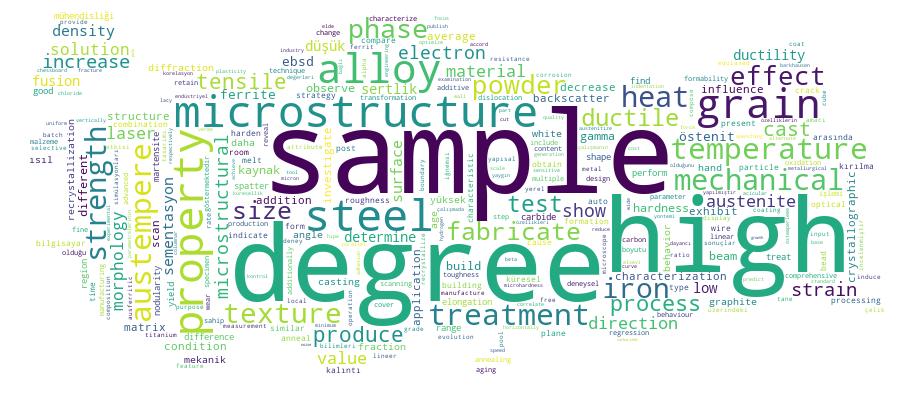
Competency Cloud
13 results
Scholarly Output Search Results
Now showing 1 - 10 of 13
Master Thesis Sementasyon ve Takip Eden Su-verme İşlemlerinin Süreç Tasarımı ve Kalite Değerlendirmesine Yönelik Malzeme Karakterizasyon Çalışmaları(2017) Yıldız, Seçil; Davut, Kemal; Şimşir, CanerSementasyon ve su-verme ısıl işlemi; aşınma ve yorulma dayancı özelliklerini iyileştirmek için düşük karbonlu çelik parçalara uygulanan bir yüzey sertleştirme işlemidir. Çarpılma, çatlak, sertlik veya sertlik derinliğinde yetersizlik bu işleme bağlı olarak en sık karşılaşılan sorunlardır. Son yirmi yılda, bu sorunları tahmin etmek ve engellemek için, analitik ve deneme-yanılma gibi geleneksel yöntemler yerine bilgisayar simülasyonları daha popüler hale gelmiştir. Bilgisayar destekli ısıl işlem simülasyonları sorunları çözmenin dışında istenilen mikroyapı ve kalıntı gerilme dağılımını sağlayan en uygun proses parametrelerinin belirlenmesini ve bu sayede parça performansının artırılmasını sağlamaktadır. Bu çalışmanın birinci amacı, DIN 22NiCrMo2-2 (SAE 8620H) çeliğine uygulanan sementasyon ve su-verme işlemlerinin simülasyonu için gerekli malzeme veri setinin geliştirilerek hesaplamalı malzeme mühendisliği yöntemlerini tamamlamaktır. Bu amaçla öncelikle, hesaplama tekniklerine gerekli girdiyi sağlamak için, kimyasal ve mikroyapısal olarak ham malzeme karakterizasyonu yapılmıştır. Ardından, su-verme aşamasında faz dönüşümleri üzerinde önemli derecede etkisi olan östenit büyüme kinetiği araştırılmıştır. Son olarak, kritik sıcaklıklar ve dönüşüm kinetiği belirlenerek, TTT ve CCT diyagramları şeklinde sunulmuştur. Ham malzeme karakterizasyon çalışmalarıyla kütüklerin makro segregasyon içermediği, eşeksenli ferritik/perlitik bantlaşmış ve homojen dağılımlı tane yapısına sahip olduğu ve bu nedenlerle proses ve doğrulama çalışmaları için uygun olduğu tespit edilmiştir. Ayrıca, deneysel ve hesaplamalı yöntemlerle belirlenen CCT diyagramlarının birbirleriyle uyumlu olduğu görülmektedir. Deneysel ve hesaplamalı yöntemlerle belirlenen TTT diyagramları arasındaki en büyük farklılık, yerel kimyasal kompozisyon ve yerel östenit tanesi boyutu gibi kontrol edilmesi zor olan faktörlere karşı daha hassas olan beynitik faz dönüşümünde gözlenmektedir. Bu çalışmanın ikinci amacı, aynı proje kapsamında yürütülen tamamlayıcı bilgisayar simülasyonları çalışmalarının geçerliliğinin belirlenmesi ve sementasyon ısıl işleminin kalite değerlendirmesi için içyapı incelemeleri yapmaktır. Bahsi geçen tamamlayıcı çalışmaların birinde, endüstriyel prosesteki değişkenliği en aza indirgemek için DIN 22NiCrMo2-2 ve DIN 16MnCr5 çeliklerinden imal edilen miller üzerinde Taguchi metodu kullanılarak Deney Tasarımı (DoE) yapılarak endüstriyel koşullarda sementasyon deneyleri yapılmıştır. Diğer tamamlayıcı çalışmada ise, aynı Deney Tasarımı (DoE) bilgisayar simülasyonu çalışmalarıyla incelenmiştir. Bu tez çalışmasında ise, içyapı ve sertlik dağılımlarının belirlenmesiyle belirtilen diğer çalışmalar tamamlanmaktadır. Elde edilen sonuçlar bilgisayar simülasyonları ve deneysel sonuçların birbirine uyumlu olduğunu göstermektedir. Sonuçların uyumu beynit dönüşüm kinetiğinin gerilim, yerel tane boyutu ve yerel kimyasal kompozisyona bağlılığını da dahil eden daha iyi karakterizasyon çalışmalarıyla iyileştirilebilir.Article Strain Hardening Behavior Characterization of Dual Phase Steels(2018) Davut, Kemal; Şimşir, Caner; Çetin, BarişThe requirements for higher passenger safety, improved fuel economy and weight reductionin automobile industry necessitates the usage of advanced high strength steel (AHSS)grades. Dual phase (DP) steels are the most widely used one among AHSS. DP steels becomeincreasingly popular, since they provide a combination of sufficient formability at room temperatureand tensile strength over 1000 MPa. The current standards for DP steels only specifiesyield and tensile strength. Steels from various producers have considerably different compositionand microstructure; however they still have the same grade name. Combined withthe inherited heterogeneous microstructure, those steels exhibit different strain hardeningbehavior. The aim of this study is to evaluate the strain hardening behavior of DP800 steels,obtained from different vendors and thus having different compositions and microstructures.The strain hardening behavior was characterized with tensile tests performed along rollingand transverse directions. The microstructure has been characterized with optical andscanning electron microscopes. The martensite fraction, grain size of ferrite and chemicalcomposition has been correlated to the strain hardening behavior. The results show thatthe steel with more micro-alloying addition has finer ferritic grain size, which cause higherinitial strain hardening rate. The steel with higher Mn and Cr has higher martensite fraction,which cause strain hardening rate to be higher at higher strain levels.Article Citation - WoS: 35Citation - Scopus: 36Friction Stir Processing of Dual Phase Steel: Microstructural Evolution and Mechanical Properties(Elsevier Science inc, 2019) Aktarer, S. M.; Kucukomeroglu, T.; Davut, K.The influence of friction stir processing (FSP) on the microstructure and mechanical properties of a DP 600 steel has been studied. The microstructure evolution during the FSP has been characterized using electron back scatter diffraction (EBSD) technique and scanning and transmission electron microscopes. Standard tension and hardness tests were used to characterize the mechanical properties. The results show that the FSP produced a refined microstructure composed of ferrite, bainite, martensite, and tempered martensite which in turn increased the hardness and strength magnitudes by a factor of 1.5. The initially 2.83 mu m average grain size of ferrite has decreased to 0.79 mu m in the pin effected zone of (PE-SZ-I) of the processed region. Both EBSD and TEM observations showed regions with high dislocation density and sub-structures region in the processed zone. The grain size became coarser, the density of both dislocations and low-angle grain boundaries decrease, away from the processed zone. Moreover, phase fractions and hardness values were predicted using CALPHAD thermodynamic based software based on commercial material properties. Although the prediction does not take into consideration the influence of severe plastic deformation, the results were within 10% uncertainties of the experimental findings. The present study demonstrates that an ultra-fine grained structure can be obtained through the thickness of a 1.5 mm thick D P600 steel sheet via FSP. FSP can produce a range of different hardness and strength values; which can also be predicted successfully by inputting the composition and local temperatures reached during the FSP.Conference Object Citation - WoS: 4Citation - Scopus: 4A Material Perspective on Consequence of Deformation Heating During Stamping of Dp Steels(Iop Publishing Ltd, 2017) Simsir, C.; Cetin, B.; Efe, M.; Davut, K.; Bayramin, B.Recent studies showed that, during stamping of high strength steels at industrially relevant production rates, local temperature in the blank may rise up to 200 degrees C - 300 degrees C due to deformation heating. Moreover, die temperature may also rise up to 100 degrees C - 150 degrees C for progressive stamping dies. Based on the common assumption that the blank softens as the temperature increases, thermal softening creates a margin in Forming Limit Diagram (FLD) and therefore the FLD determined at room temperature can safely be used for those cases. In this article, the validity of this assumption on DP590 steel is questioned by high temperature tensile tests (RT - 300 degrees C) at various strain rates (10(-3) s(-1) - 1 s(-1)). The results indicated a decrease both in uniform and total elongation in 200 degrees C - 300 degrees C range together with several other symptoms of Dynamic Strain Aging (DSA) at all strain rates. Concurrent with the DSA, the simulated FLD confirms the lower formability at high temperature and strain rates. Thus, it is concluded FLD determined at RT may not be valid for the investigated steels.Conference Object Citation - WoS: 3Citation - Scopus: 4A Potential Solution To Mystical Materials in Indentation Test(Elsevier Science Bv, 2017) Billur, E.; Cetin, B.; Music, O.; Simsir, C.; Davut, K.Various methods have been designed to determine the elasto-plastic properties of metals. Instrumented indentation test (IIT) is considered to be a good candidate to determine local properties after manufacturing operations. In order to acquire elastoplastic properties from IIT, either dimensional analysis or inverse analysis of the force-displacement curve is performed. However, the major drawback of those methods is the uniqueness of the solution. Some materials may exhibit almost identical force-depth curves, although they have different elastoplastic properties. Those materials are referred as "mystical materials". In this contribution, topological features of the indentation surfaces, i.e. indent size, pile-up and sink-in behaviour, are investigated to find a differentiating property. According to the results, indent size, pile-up and sink-in behaviour may help to find the unique solution to the inverse problem. (C) 2017 The Authors. Published by Elsevier Ltd. Peer-review under responsibility of the scientific committee of the International Conference on the Technology of Plasticity.Conference Object Investigating the Effect of Auto-Focus and Auto-Threshold Algorithms in Advanced Nodularity Analysis of Austempered Ductile Iron Castings(Polish Acad Sciences inst Physics, 2019) Cetin, B.; Kurtuldu, H.; Durkaya, G.; Davut, K.Austempered ductile iron castings have a wide range of application fields including defense and heavy-duty industries due to their promising mechanical properties. Austempered ductile iron castings could provide excellent combination of high strength, toughness, and wear resistance at the same time. Unlike other spheroidal ductile cast irons, austempered ductile iron castings need to be processed by a special austempering heat treatment which enables the verification of the conformity of the nodularity level after the casting operations. Previous studies have shown that wide area mappings for determining nodularity are crucial to eliminate the representativeness problems. In this sense, some precautions should be taken for the accuracy of results in large scale nodularity examination. In this study, the effect of auto-thresholding and auto-focusing algorithms on the advanced nodularity analysis is investigated. The results suggest that auto-thresholding and auto-focusing methods have significant contributions for determining average nodularity levels and average graphite sizes.Conference Object Citation - WoS: 6Citation - Scopus: 6Influence of Cu and Ni Alloying on the Microstructure and Mechanical Properties of Austempered Ductile Iron Castings(Polish Acad Sciences inst Physics, 2019) Yalcin, M. A.; Cetin, B.; Davut, K.Austempered ductile cast iron (ADI) offers a good combination of high tensile and fatigue strength, good ductility, toughness, wear resistance and damping characteristics, lower density in an economical way. This excellent combination of properties is due to the specific microstructure of ADI; which is composed of spheroidal graphite particles on an ausferritic matrix. The ausferrite consists of acicular ferrite and high carbon retained austenite; which is produced via austempering heat treatment after casting. The alloying additions of Cu or Cu + Ni increases austemperability, which means completely ausferritic structures can be produced on larger cross-sections. In the present study the effect of the alloying additions of Cu and Cu + Ni on mechanical properties and microstructure of ADI was studied. For that purpose, Y-block specimens having a lean composition, 0.8% Cu and 0.8% Cu + 0.4% Ni alloying additions were cast. After austempering treatment, mechanical tests, fractographic and metallographic examinations were performed. The results show that the Cu + Ni alloyed specimen has higher strength and elongation. The lean alloy on the other hand, has the highest nodularity and matrix hardness but the lowest strength and ductility. Those differences in mechanical properties were attributed to the fraction and morphology of the retained austenite regions of the matrix.Article Microstructural Analysis of Austempered Ductile Iron Castings(2016) Çetin, Barış; Meco, Halim; Davut, Kemal; Arslan, Ebru; Uzun?, Mustafa CanAustempered ductile iron (ADI) castings have a wide range of application areas in engineering designs due to their promising mechanical properties and lower cost. ADI has very good strength and toughness values at the same time its ductility is relatively high compared to most of the other cast irons. These promising mechanical properties originate from combination of specific graphite and matrix microstructure. The size, shape and fraction of graphite as well as the matrix microstructure influences the mechanical properties. In this paper the efforts regarding to a localization project of ADI is presented. In a more detailed manner, the first locally produced ADI which cannot satisfy the mechanical properties stated in ISO 17804 is compared with the original sample which is conform with the standard. The two pieces are inspected by mechanically and microstructurally by means of which necessary actions are detected for the local production. In other words the relation between the macro mechanical properties and the microstructural conditions are tried to be clarified.Master Thesis Rulman Çeliklerinin Manyetik Barkhausen Gürültüsü Yöntemi ile Tahribatsız Karakterizasyonu(2017) Arslan, Ebru; Davut, Kemal; Şimşir, Caner100Cr6 çelikleri rulman yapımında yaygın olarak kullanılırlar. Isıl işlem uygulamaları ile değişen iç yapısal özelliklerine bağlı olarak; yüksek gerilimlere karşı dayanımı, yorulma ömrü, tokluğu, sertliği, aşınma direnci gibi özellikleri geliştirilebililir. Bu iç yapısal özelliklerin muayenesi, geleneksel metalografik ve XRD tekniklerinin bir arada kullanılmasıyla yapılabilir. Ancak bu yöntemler numune hazırlama gereksinimi bulunan yöntemlerdir. Bu sebepten; tahribatsız ve hızlı ölçüm alınmasını sağlayan Manyetik Barkhausen gürültüsü (MBN) tekniği, bu geleneksel karakterizasyon yöntemlerine alternatif olarak değerlendirilmiştir. Bu çalışmanın amacı 100Cr6 çeliklerinin MBN yöntemiyle tahribatsız muayene edilebilirliğinin araştırılmasıdır. Bu bağlamda, 100Cr6 çelik numuneler, içerisinde farklı içyapısal özelliklerin oluşturulabilmesi adına farklı sıcaklıklarda östenitlenip oda sıcaklığına ve -130°C'ye hızlı soğutulmuştur. Bu işlemlerin ardından numunelerin sertliği, karbür miktarları, dağılımları, kalıntı östenit miktarları, metalografik ve XRD ölçüm yöntemleriyle belirlenmiştir. Ayrıca, her bir numune MBN yöntemi ile de muayene edilmiştir. Son olarak, elde edilen içyapı sonuçlarıyla MBN sonuçları arasındaki bağlantılar incelenmiştir. MBN tekniğinin, kurulan lineer korelasyonlar kapsamında oda sıcaklığına hızlı soğutulan 100Cr6 çelik numunelerin iç yapısal özellikleriyle korele edilebilir olduğu gözlenmiştir; ancak tahmin aralıklarının oldukça geniş olması sebebiyle, bu numunelerin iç yapısında oluşan sertlik, kalıntı östenit ve karbür miktarıların doğrudan belirlenebilmesi için yeterince hassas olmadığı sonucuna varılmıştır. Birbirlerine bağlı olarak değişen bu özelliklerin MBN ile karakterize edilebilmesi; karbür çözünme kinetiğine bağlı olarak, tüm bu değişkenlerin hem kendi aralarında hem de MBN sinyalleri üzerindeki eş zamanlı etkileri arasında lineer olmayan bir ilişki kurulması ile mümkün olabileceği düşünülmektedir. Bunun haricinde, sıfır altı ısıl işlemine tabi tutulan numunelerde, kalıntı östenitin tamamen yok edilmesi, MBN sinyalleri üzerindeki kalıntı östenit etkisini tamamen ortadan kaldırılmıştır. Bu sebepten hem sertlik ve hem de kardür oranları için kurulan lineer korelasyonlarda belirgin bir iyileşme görülmüştür. Bu korelastonların R² değerleri kabul edilebilir düzeyde olmasına rağmen tüm iç yapısal değişkenlerin MBN sinyalleri üzerindeki eş zamanlı etkisi göz önünde bulundurularak lineer olmayan modeller kurulmasıyla iyileştirilebilinir. Bu doğrultuda, MBN tekniğininin, 100Cr6 çeliğinin iç yapısal karakterizasyonu konusunda, gelecekte yapılacak daha detaylı ve kapsamlı çalışmalar ile geliştirilebilir olduğu düşünülmektedir.Master Thesis Millerin Sementasyon İşleminin Deney Tasarımı Kullanılarak İncelenmesi(2017) Yılmaz, Hasan; Şimşir, Caner; Davut, KemalSementasyon işlemi, mil imalatında yaygın olarak termokimyasal bir ısıl işlemdir. Sementasyon sonrası yetersiz sertlik derinliği, uygunsuz yüzey ve çekirdek sertliği ve çarpılma yaygın hurda ürün sebepleridir. Bundan sebeple, sementasyon sırasında süreç parametrelerinin etkilerinin anlaşılması, kontrolü ve optimizasyonu kayıpların önlenmesi için hayati önem taşımaktadır. Bu çalışmada semenyastasyon parametreleri Taguchi yöntemiyle Deney Tasarımı (DoE) aracılığıyla incelenmiş ve iyileştirilmiştir. İyileştirmenin temel hedefi imalatta değişik fırınların kullanılmasından kaynaklı değişkenliğin azaltılmasıdır. Deneyler iki değişik endüstriyel gaz sementasyon fırınında, iki değişik çelikten (16MnCr5,20NiCrMo2-2) tornalarak üretilmiş düz ve basamaklı millerde gerçekleştirilmiştir. Sementasyon deneylerinden sonar, millerin boyutları Koordinat Ölçüm Makinesi (CMM) ile ölçülürken, karbon ve sertlik dağılımları Optik Yayınım Spektrometresi (OES) ve Vickers sertlik ölçümleriyle belirlenmiştir. Sonuçlar sementasyon gazının karbon potansiyelinin sertlik derinliğindeki ve değişikliğindeki gerek değişkenliği gerek ortalama değeri en çok etkileyen parametre olduğunu göstermektedir. Anahtar Kelimeler: Mil, Sementasyon, Taguchi Yöntemi, Optimizasyon
