
Park, Jongee
Loading...
Profile URL
Name Variants
Jongee Park
P.,Jongee
P., Jongee
J.,Park
Park J.
Park, Jongee
Park,J.
J., Park
Park,Jongee
Jongee, Park
Park, J
P.,Jongee
P., Jongee
J.,Park
Park J.
Park, Jongee
Park,J.
J., Park
Park,Jongee
Jongee, Park
Park, J
Job Title
Profesör Doktor
Email Address
jongee.park@atilim.edu.tr
Main Affiliation
Metallurgical and Materials Engineering
Status
Website
ORCID ID
Scopus Author ID
Turkish CoHE Profile ID
Google Scholar ID
WoS Researcher ID
Sustainable Development Goals
14
LIFE BELOW WATER

0
Research Products
2
ZERO HUNGER

0
Research Products
11
SUSTAINABLE CITIES AND COMMUNITIES

1
Research Products
1
NO POVERTY

0
Research Products
12
RESPONSIBLE CONSUMPTION AND PRODUCTION

0
Research Products
7
AFFORDABLE AND CLEAN ENERGY

12
Research Products
5
GENDER EQUALITY

0
Research Products
3
GOOD HEALTH AND WELL-BEING

2
Research Products
9
INDUSTRY, INNOVATION AND INFRASTRUCTURE

0
Research Products
13
CLIMATE ACTION

0
Research Products
6
CLEAN WATER AND SANITATION

0
Research Products
10
REDUCED INEQUALITIES

0
Research Products
4
QUALITY EDUCATION

0
Research Products
15
LIFE ON LAND

0
Research Products
16
PEACE, JUSTICE AND STRONG INSTITUTIONS

0
Research Products
17
PARTNERSHIPS FOR THE GOALS

0
Research Products
8
DECENT WORK AND ECONOMIC GROWTH

0
Research Products

Documents
53
Citations
927
h-index
19

Documents
50
Citations
890

Scholarly Output
57
Articles
45
Views / Downloads
21/0
Supervised MSc Theses
3
Supervised PhD Theses
0
WoS Citation Count
819
Scopus Citation Count
855
WoS h-index
19
Scopus h-index
19
Patents
0
Projects
1
WoS Citations per Publication
14.37
Scopus Citations per Publication
15.00
Open Access Source
7
Supervised Theses
3
Google Analytics Visitor Traffic
| Journal | Count |
|---|---|
| Ceramics International | 10 |
| Journal of Nanoscience and Nanotechnology | 3 |
| Applied Surface Science | 2 |
| 3rd International Conference on NANOCON -- SEP 21-23, 2011 -- Brno, CZECH REPUBLIC | 2 |
| Advanced Materials Research -- 2012 International Conference on Advances in Materials Science and Engineering, AMSE 2012 -- 9 December 2012 through 10 December 2012 -- Seoul -- 95488 | 2 |
Current Page: 1 / 7
Scopus Quartile Distribution
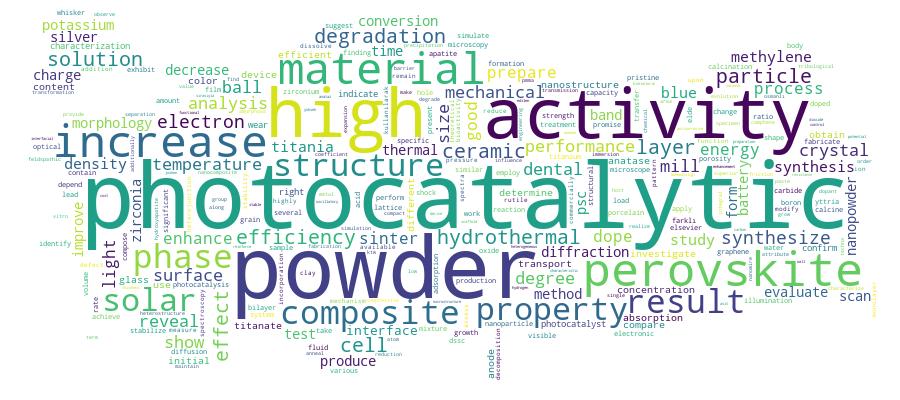
Competency Cloud
14 results
Scholarly Output Search Results
Now showing 1 - 10 of 14
Article Calcium Phosphate Honeycomb Scaffolds With Tailored Microporous Walls Using Phase Separation-Assisted Digital Light Processing(MDPI, 2025) Kim, Gyu-Nam; Park, Jae-Hyung; Song, Jae-Uk; Koh, Young-Hag; Park, JongeeThe present study reports on the manufacturing of biphasic calcium phosphate (BCP) honeycomb scaffolds with tailored microporous walls using phase separation-assisted digital light processing (PS-DLP). To create micropores in BCP walls, camphene was used as the pore-forming agent for preparing BCP suspensions, since it could be completely dissolved in photopolymerizable monomers composed of triethylene glycol dimethacrylate (TEGDMA) and polyethylene glycol diacrylate (PEGDA) and then undergo phase separation when placed at 5 degrees C. Therefore, solid camphene crystals could be formed in phase-separated BCP layers and then readily removed via sublimation after the photopolymerization of monomer networks embedding BCP particles by DLP. This approach allowed for tight control over the microporosity of BCP walls by adjusting the camphene content. As the camphene content increased from 40 to 60 vol%, the microporosity increased from similar to 38 to similar to 59 vol%. Consequently, the overall porosity of dual-scale porosity scaffolds increased from similar to 51 to similar to 67 vol%, while their compressive strength decreased from similar to 70.4 to similar to 13.7 MPa. The mass transport ability increased remarkably with an increase in microporosity.Article A Benchmark of Expert-Level Academic Questions to Assess AI Capabilities(Nature Portfolio, 2026) Phan, Long; Gatti, Alice; Li, Nathaniel; Khoja, Adam; Kim, Ryan; Ren, Richard; Scaramuzza, Davide; Park, JongeeBenchmarks are important tools for tracking the rapid advancements in large language model (LLM) capabilities. However, benchmarks are not keeping pace in difficulty: LLMs now achieve more than 90% accuracy on popular benchmarks such as Measuring Massive Multitask Language Understanding(1), limiting informed measurement of state-of-the-art LLM capabilities. Here, in response, we introduce Humanity's Last Exam (HLE), a multi-modal benchmark at the frontier of human knowledge, designed to be an expert-level closed-ended academic benchmark with broad subject coverage. HLE consists of 2,500 questions across dozens of subjects, including mathematics, humanities and the natural sciences. HLE is developed globally by subject-matter experts and consists of multiple-choice and short-answer questions suitable for automated grading. Each question has a known solution that is unambiguous and easily verifiable but cannot be quickly answered by internet retrieval. State-of-the-art LLMs demonstrate low accuracy and calibration on HLE, highlighting a marked gap between current LLM capabilities and the expert human frontier on closed-ended academic questions. To inform research and policymaking upon a clear understanding of model capabilities, we publicly release HLE at https://lastexam.ai.Article Citation - WoS: 6Citation - Scopus: 6Diethanolamine Modified Perovskite-Substrate Interface for Realizing Efficient Esl-Free Pscs(Mdpi, 2023) Sajid, Sajid; Alzahmi, Salem; Wei, Dong; Ben Salem, Imen; Park, Jongee; Obaidat, Ihab M.Simplifying device layout, particularly avoiding the complex fabrication steps and multiple high-temperature treatment requirements for electron-selective layers (ESLs) have made ESL-free perovskite solar cells (PSCs) attractive. However, the poor perovskite/substrate interface and inadequate quality of solution-processed perovskite thin films induce inefficient interfacial-charge extraction, limiting the power conversion efficiency (PCEs) of ESL-free PSCs. A highly compact and homogenous perovskite thin film with large grains was formed here by inserting an interfacial monolayer of diethanolamine (DEA) molecules between the perovskite and ITO substrate. In addition, the DEA created a favorable dipole layer at the interface of perovskite and ITO substrate by molecular adsorption, which suppressed charge recombination. Comparatively, PSCs based on DEA-treated ITO substrates delivered PCEs of up to 20.77%, one of the highest among ESL-free PSCs. Additionally, this technique successfully elongates the lifespan of ESL-free PSCs as 80% of the initial PCE was maintained after 550 h under AM 1.5 G irradiation at ambient temperature.Article Citation - WoS: 21Citation - Scopus: 25Inorganic Hole Transport Materials in Perovskite Solar Cells Are Catching Up(Elsevier Sci Ltd, 2023) Sajid, Sajid; Alzahmi, Salem; Ben Salem, Imen; Park, Jongee; Obaidat, Ihab M.More research is required to further optimize device efficiency, stability, and reduce the materials cost as perovskite solar cells (PSCs) approach to industrialization. Modulating the optoelectronic features and chemical coupling of the hole transport materials (HTMs) remains a prominent field of study in PSCs due to the significant impact these materials have on the device performance and stability. In order to speed up the commercialization of these cells, it is also important to use cost-effective HTMs in PSCs. InorganicHTMs are superior to other types of HTMs in terms of their advantages in boosting device performance and producing PSCs at a reasonable cost, in addition to their superior charge transport capabilities, desired energy levels, and intrinsic thermal and chemical stability. A detailed overview of inorganicHTMs, including metal oxides, cyanates, phthalocyanines, chalcogenides, nitrides, and carbides, is presented in this review. After briefly discussing the primary physical and optoelectronic characteristics of inorganic-HTMs, the critical functions of the above-mentioned materials as HTMs in PSCs are addressed. This review concludes by offering suggestions for future research that could considerably boost the performance of the PSCs with cost-effective inorganic-HTMs.Article Citation - WoS: 6Citation - Scopus: 7Approximation of Oscillatory Bessel Integral Transforms(Elsevier, 2023) Khan, Suliman; Zaman, Sakhi; Arshad, Muhammad; Alhazmi, Sharifah E.; Khan, Feroz; Park, JongeeThe numerical treatment of oscillatory integrals is a demanding problem in applied sciences, particularly for large-scale problems. The main concern of this work is on the approximation of oscillatory integrals having Bessel-type kernels with high frequency and large interpolation points. For this purpose, a modified meshless method with compactly supported radial basis functions is implemented in the Levin formulation. The method associates a sparse system matrix even for high frequency values and large data points, and approximates the integrals accurately. The method is efficient and stable than its counterpart methods. Error bounds are derived theoretically and verified with several numerical experiments.(c) 2023 International Association for Mathematics and Computers in Simulation (IMACS). Published by Elsevier B.V. All rights reserved.Master Thesis Enjekte Edilebilir Poli (metil Metakrilat) (pmma) Zirkonya Kompozitlerin Hazırlanması ve Karakterizasyonu(2020) Abdullah, Hamad Farhan; Şaşmazel, Hilal Türkoğlu; Park, JongeeÇalışmanın amacı, üç boyutlu (3B) yazıcı ile biyomateryaller üretmektir. PMMA/Zirkonya biyomateryalleri, ağırlıkça farklı zirkonya tozlarının PMMA solüsyonlarına ısıtma ocağı üzerinde manyetik balık ile 75 ˚C karıştırılması ile üretilmiştir. Hazırlanan malzemeler şırınga ile istenilen şekle sokulmuştur ve farklı sinterleme sıcaklıkları ile sinterlenmiştir. PMMA örneklerinin kimyasal yapı analizi ATR-FTIR ile tayin edilmiştir. Hazırlanan örneklerin morfolojik özellikleri taramalı elektron mikroskobu (SEM) ile incelenmiştir. Kristalinite ve faz değişimleri X-ışını Kırınım (XRD) ile tayin edilmiştir. Mekanik testler ise sıkıştırma dayanımı testleri ile gerçekleştirilmiştir. ATR-FTIR analizi sonuçlarına göre PMMA ~ 70% oranında polimer dönüşümü göstermiştir. SEM görüntülerine göre; porozite, PMMA miktarı ile artma, sinterleme sıcaklığı ile ise azalma göstermiştir. Sinterleme sıcaklığına bağlı olarak tanelerde (grain) topaklanma görülmüştür. XRD sonuçlarına göre, sinterleme sıcaklığındaki artış tetragonal fazın yüzde hacminde düşüşe sebep olmuş; malzemenin kristalit boyutunu ise artırmıştır. Mekanik testler sonucunda ise, sıkıştırma dayanımı; sinterleme sıcaklığı ile birlikte artmış, PMMA miktarı ile azalmıştır. Anahtar kelimeler: Biyomalzemeler, üç boyutlu (3B) baskı, PMMA, ZirkonyaArticle First-Principles Investigation of Kaolinite/YSZ Heterostructure for Solar-Driven Photocatalytic Hydrogen Production(Pergamon-Elsevier Science Ltd, 2025) Park, Jongee; Yu, Eunmi; Fatima, Syeda AfrinishThis work employs density functional theory (DFT) to elucidate the structural, electronic, and photocatalytic properties of a kaolinite/yttria-stabilized zirconia (Kaol/YSZ) heterostructure tailored for solar-driven hydrogen generation. The lattice mismatch between Kaol(001) and YSZ(111) was determined to be 4.4 % along the a-axis and 2.2 % along the b-axis. Two interface terminations were modeled: an O-terminated Si-O surface and an OH-terminated Al-OH surface. The OH-terminated interface demonstrated a stronger interfacial binding energy (-9.32 eV per cell) and enhanced thermodynamic stability, indicating its suitability for photocatalytic water splitting. Electronic structure analysis reveals that the Kaol/YSZ heterostructure exhibits a narrowed band gap of 1.46 eV relative to the isolated components, which promotes enhanced visible-light absorption. A type-II band alignment is observed, facilitating photoinduced electron transfer from the conduction band of YSZ to the conduction band of Kaol and promoting efficient charge separation. Hirshfeld charge analysis confirms the existence of a built-in electric field at the interface that further drives charge migration. Calculated optical absorption spectra shows a red shift in the heterostructure's absorption edge, extending its photoresponse into the visible region. Under simulated solar irradiation, photogenerated electrons preferentially migrate to Kaol for proton reduction, while holes remain on the YSZ surface to oxidize water, enabling simultaneous H2 evolution and O2 evolution pathways. These findings highlight the promise of the Kaol/YSZ heterostructure as a robust visible-light photocatalyst for sustainable hydrogen production and environmental remediation.Master Thesis Alumina ve Titanya eş-doplanmış zirkonya seramiklerinin mekanik ve biyolojik özellikleri(2017) Ağaç, Özlem; Park, JongeeGünümüzde daha doğala yakın göründüğünden dolayı zirkonya diş hekimliğinde oldukça yaygın olarak kullanılmaktadır. Ayrıca, zirkonya‟nın yüksek sertliği ve kırılma tokluğu, biyolojik uyumluluğu ve estetik görünümü sebebiyle de en çok tercih edilen seramik malzemelerin arasında yer alır. Bu çalışmada, mekanik öğütme yöntemi ile katkı maddeleri farklı oranlarda (0 ve % 2.0) % 3 mol yttria (Y2O3) içeren zirkonya içerisine sırasıyla katılmıştır. Şekillendirilen numuneler sırasıyla 1350, 1450 ve 1550 °C‟ de 2 saat süresince sinterlenmiş olup, katkı maddelerinin etkilerini gözlemlemek için yoğunluk, sertlik, kırılma tokluğu ve hücre tutunma oranı hesaplanmıştır. Sertlik ve kırılma tokluğu hesapları için Vicker‟s sertlik yöntemi kullanılmıştır. X Ray Kırınım Yöntemi (XRD) ile yalnızca titanya içeren ve hem titanya hem de alumina içeren numunelerin kristal faz analizleri yapılmıştır. Taramalı Elektron Mikroskobu (SEM) kullanılarak numunelerin tane boyutları hesaplanmıştır ve yüzey morfolojisi incelenmiştir. Deney sonuçlarına göre katkı malzemelerinin oranı arttıkça, yoğunluğun düştüğü görülmüştür. Mekanik özellikler göz önünde bulundurulduğunda en yüksek sertlik ve tokluk değerleri % 0.5 TiO2 ve % 1.0 Al2O3 numunelerinde elde edilmiştir. Titanya ve aluminanın zirkonya içerisine katılması faz değişimine sebep olmamıştır ancak tane boyutunu küçültmüştür. Ayrıca, katkı maddeleri numune yüzeyine hücrelerin tutunmasını ve büyümesini de olumlu yönde etkilemiştir.Article Citation - WoS: 10Citation - Scopus: 10Computational Insight of Lithium Adsorption and Intercalation in Bilayer Tic3(Pergamon-elsevier Science Ltd, 2024) Park, Jongee; Fatima, Syeda AfrinishLithium-ion batteries (LIBs) have gained significant attention owing to their long lifespan. However, these batteries offer unmatched energy storage capacity and suffer from restricted lithium-ion mobility within the electrodes. Here, we employ first-principles calculation to investigate the two-dimensional TiC3 bilayer material. The results exhibit a remarkably high specific capacity of 1277 mAh/g and a low diffusion energy barrier of 0.12 eV. The TiC3 bilayer is anticipated to show high electrical conductivity, maintaining its metallicity due to strong bonding with four Li atoms. Additionally, its high thermal and dynamic stabilities are expected to significantly enhance the battery performance. Notably, the AB stacking bilayer TiC3 experiences a mere 6.01 % increase in volume, considerably smaller compared to the 28 % increase observed in the SiC bilayer. This suggests that TiC3 bilayers remain intact even at the highest concentration of lithium adsorptions. We also explored the solidelectrolyte interface (SEI) formation at the outset of battery operation using reactive force field molecular dynamics simulation. The reactive products of SEI are nicely matched with previous experimental and theoretical findings. All these intriguing properties position the TiC3 bilayer as an exceptionally promising material for use in LIBs.Article Citation - WoS: 20Citation - Scopus: 24Lead-Free Perovskite Homojunction-Based Htm-Free Perovskite Solar Cells: Theoretical and Experimental Viewpoints(Mdpi, 2023) Sajid, Sajid; Alzahmi, Salem; Salem, Imen Ben; Park, Jongee; Obaidat, Ihab M.Simplifying the design of lead-free perovskite solar cells (PSCs) has drawn a lot of interest due to their low manufacturing cost and relative non-toxic nature. Focus has been placed mostly on reducing the toxic lead element and eliminating the requirement for expensive hole transport materials (HTMs). However, in terms of power conversion efficiency (PCE), the PSCs using all charge transport materials surpass the environmentally beneficial HTM-free PSCs. The low PCEs of the lead-free HTM-free PSCs could be linked to poorer hole transport and extraction as well as lower light harvesting. In this context, a lead-free perovskite homojunction-based HTM-free PSC was investigated, and the performance was then assessed using a Solar Cell Capacitance Simulator (SCAPS). A two-step method was employed to fabricate lead-free perovskite homojunction-based HTM-free PSCs in order to validate the simulation results. The simulation results show that high hole mobility and a narrow band gap of cesium tin iodide (CsSnI3) boosted the hole collection and absorption spectrum, respectively. Additionally, the homojunction's built-in electric field, which was identified using SCAPS simulations, promoted the directed transport of the photo-induced charges, lowering carrier recombination losses. Homojunction-based HTM-free PSCs having a CsSnI3 layer with a thickness of 100 nm, defect density of 10(15) cm(-3), and interface defect density of 10(18) cm(-3) were found to be capable of delivering high PCEs under a working temperature of 300 K. When compared to formamidinium tin iodide (FASnI(3))-based devices, the open-circuit voltage (V-oc), short-circuit density (J(sc)), fill factor (FF), and PCE of FASnI(3)/CsSnI3 homojunction-based HTM-free PSCs were all improved from 0.66 to 0.78 V, 26.07 to 27.65 mA cm(-2), 76.37 to 79.74%, and 14.62 to 19.03%, respectively. In comparison to a FASnI(3)-based device (PCE = 8.94%), an experimentally fabricated device using homojunction of FASnI(3)/CsSnI3 performs better with V-oc of 0.84 V, J(sc) of 22.06 mA cm(-2), FF of 63.50%, and PCE of 11.77%. Moreover, FASnI(3)/CsSnI3-based PSC is more stable over time than its FASnI(3)-based counterpart, preserving 89% of its initial PCE. These findings provide promising guidelines for developing highly efficient and environmentally friendly HTM-free PSCs based on perovskite homojunction.