
Albostan, Ayhan
Loading...
Profile URL
Name Variants
A., Ayhan
Albostan, Ayhan
A., Albostan
A.,Albostan
Ayhan, Albostan
A.,Ayhan
Albostan,A.
Albostan, Ayhan
A., Albostan
A.,Albostan
Ayhan, Albostan
A.,Ayhan
Albostan,A.
Job Title
Profesor Doktor
Email Address
ayhan.albostan@atilim.edu.tr
Main Affiliation
Energy Systems Engineering
Status
Website
ORCID ID
Scopus Author ID
Turkish CoHE Profile ID
Google Scholar ID
WoS Researcher ID
Sustainable Development Goals
 1
1NO POVERTY
0
Research Products
 2
2ZERO HUNGER
0
Research Products
 3
3GOOD HEALTH AND WELL-BEING
0
Research Products
 4
4QUALITY EDUCATION
0
Research Products
 5
5GENDER EQUALITY
0
Research Products
 6
6CLEAN WATER AND SANITATION
0
Research Products
 7
7AFFORDABLE AND CLEAN ENERGY
9
Research Products
 8
8DECENT WORK AND ECONOMIC GROWTH
1
Research Products
 9
9INDUSTRY, INNOVATION AND INFRASTRUCTURE
1
Research Products
 10
10REDUCED INEQUALITIES
0
Research Products
 11
11SUSTAINABLE CITIES AND COMMUNITIES
2
Research Products
 12
12RESPONSIBLE CONSUMPTION AND PRODUCTION
0
Research Products
 13
13CLIMATE ACTION
3
Research Products
 14
14LIFE BELOW WATER
1
Research Products
 15
15LIFE ON LAND
0
Research Products
 16
16PEACE, JUSTICE AND STRONG INSTITUTIONS
0
Research Products
 17
17PARTNERSHIPS FOR THE GOALS
0
Research Products

Documents
14
Citations
768
h-index
10

Documents
11
Citations
658

Scholarly Output
10
Articles
4
Views / Downloads
7/0
Supervised MSc Theses
0
Supervised PhD Theses
0
WoS Citation Count
635
Scopus Citation Count
729
Patents
0
Projects
0
WoS Citations per Publication
63.50
Scopus Citations per Publication
72.90
Open Access Source
0
Supervised Theses
0
| Journal | Count |
|---|---|
| 4th International Conference on Nuclear and Renewable Energy Resources (NURER) -- OCT 26-29, 2014 -- Antalya, TURKEY | 3 |
| 2nd International Symposium on Materials for Energy Storage and Conversion (mESC-IS) -- SEP 26-28, 2017 -- TURKEY | 1 |
| 3rd International Conference on Nuclear and Renewable Energy Resources (NURER) -- MAY 20-23, 2012 -- Istanbul, TURKEY | 1 |
| 12th International Symposium on Hydrogen Power Theoretical and Engineering Solutions (HYPOTHESIS) -- JUN 28-30, 2017 -- Syracuse, ITALY | 1 |
| Energy Conversion and Management | 1 |
Current Page: 1 / 2
Scopus Quartile Distribution
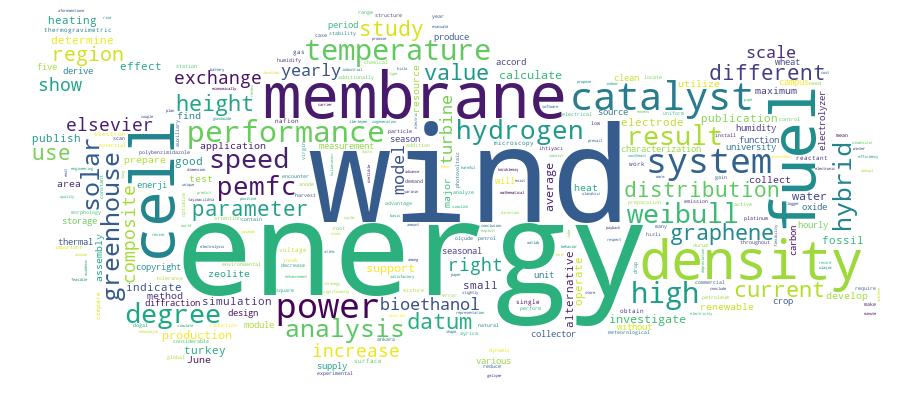
Competency Cloud
6 results
Scholarly Output Search Results
Now showing 1 - 6 of 6
Conference Object Citation - WoS: 76Citation - Scopus: 92Modeling and Simulation of a Hybrid Photovoltaic (pv) Module-Electrolyzer Fuel Cell System for Micro-Cogeneration Applications(Pergamon-elsevier Science Ltd, 2015) Ozgirgin, Ekin; Devrim, Yilser; Albostan, AyhanThe rising cost of energy and power, depreciation of natural resources like fossil fuels and the global warming issues have all led the need for developing advanced clean energy systems. Hydrogen, which is clean energy carrier, can be produced by using solar electric energy from photovoltaic (PV) modules for the water electrolysis without emitting carbon dioxide. Modeling of PV module-electrolyzer hydrogen system is important for their planning and control strategies in many applications. In this respect, high-efficiency cogeneration systems for producing both heat and electricity coupled with clean energy sources such as PVs and fuel cells are gaining more attention, due to their advantages in terms of increasing efficiency and power quality, reducing harmful emissions and flexibility of operation. This study describes the analysis of the PV module-fuel cell hybrid system for house-hold micro co-generation applications. The system consists of PV modules, batteries, proton exchange membrane type water electrolyzer and proton exchange membrane fuel cell (PEMFC). The excess heat of PEMFC was used to supply hot water and/or heating energy of the house. Electrical energy was stored in the batteries. The analysis of the PV-electrolyzer-PEMFC system can be further used for designing co-generation systems for various application optimizing the PV module, electrolyzer and PEMFC sizes. Copyright (C) 2015, Hydrogen Energy Publications, LLC. Published by Elsevier Ltd. All rights reserved.Conference Object Citation - WoS: 82Citation - Scopus: 92Graphene Based Catalyst Supports for High Temperature Pem Fuel Cell Application(Pergamon-elsevier Science Ltd, 2018) Devrim, Yilser; Arica, Elif Damla; Albostan, AyhanIn this study, the effect of graphene nanoplatelet (GNP) and graphene oxide (GO) based carbon supports on polybenzimidazole (PBI) based high temperature proton exchange membrane fuel cells (HT-PEMFCs) performances were investigated. Pt/GNP and Pt/GO catalysts were synthesized by microwave assisted chemical reduction support. X-ray diffraction (XRD), Thermogravimetric analysis (TGA), Brauner, Emmet and Teller (BET) analysis and high resolution transmission electron microscopy (HRTEM) were used to investigate the microstructure and morphology of the as-prepared catalysts. The electrochemical surface area (ESA) was studied by cyclic voltammetry (CV). The results showed deposition of smaller Pt nanoparticles with uniform distribution and higher ECSA for Pt/GNP compared to Pt/GO. The Pt/GNP and Pt/GO catalysts were tested in 25 cm(2) active area single HT-PEMFC with H-2/air at 160 degrees C without humidification. Performance evaluation in HT-PEMFC shows current densities of 0.28, 0.17 and 0.22 A/cm(2) for the Pt/GNP, Pt/C and Pt/GO catalysts based MEAs at 160 degrees C, respectively. The maximum power density was obtained for MEA prepared by Pt/GNP catalyst with H-2/Air dry reactant gases as 0.34, 0.40 and 0.46 W/cm(2) at 160 degrees C, 175 degrees C and 190 degrees C, respectively. Graphene based catalyst supports exhibits an enhanced HT-PEMFC performance in both low and high current density regions. The results indicate the graphene catalyst support could be utilized as the catalyst support for HT-PEMFC application. (C) 2018 Hydrogen Energy Publications LLC. Published by Elsevier Ltd. All rights reserved.Conference Object Citation - WoS: 86Citation - Scopus: 95Enhancement of Pem Fuel Cell Performance at Higher Temperatures and Lower Humidities by High Performance Membrane Electrode Assembly Based on Nafion/Zeolite Membrane(Pergamon-elsevier Science Ltd, 2015) Devrim, Yilser; Albostan, AyhanThis work reports the preparation of Nafion/zeolite composite membranes with different zeolite loading. The structure of the Nafion/zeolite composite membranes are investigated by Scanning Electron Microscopy (SEM), X-Ray Diffraction (XRD) and by thermogravimetric analysis (TGA). The introduction of zeolite particles into the Nafion matrix helps to improve the water uptake, proton conductivity and thermal stability of the nanocomposite membranes compared to the virgin Nafion membrane. The SEM analyses have proved the uniform and homogeneous distribution of zeolite in composite membranes. The composite membranes are tested in a single PEMFC with a 5 cm(2) active area operating at the temperature range of 75-120 degrees C and in humidified under 50% relative humidity (RH) and fully humidified conditions. Single PEMFC tests show that Nafion/zeolite composite membrane is more stable and also performed better than virgin Nafion membrane at low humidity condition. The results indicate the Nafion/zeolite composite membranes could be utilized as the proton exchange membranes for PEMFC. Copyright (C) 2015, Hydrogen Energy Publications, LLC. Published by Elsevier Ltd. All rights reserved.Conference Object Citation - WoS: 65Citation - Scopus: 77Modelling and Simulation of a Hybrid Solar Heating System for Greenhouse Applications Using Matlab/Simulink(Pergamon-elsevier Science Ltd, 2013) Kiyan, Metin; Bingol, Ekin; Melikoglu, Mehmet; Albostan, AyhanSolar energy is a major renewable energy source and hybrid solar systems are gaining increased academic and industrial attention due to the unique advantages they offer. In this paper, a mathematical model has been developed to investigate the thermal behavior of a greenhouse heated by a hybrid solar collector system. This hybrid system contains an evacuated tube solar heat collector unit, an auxiliary fossil fuel heating unit, a hot water storage unit, control and piping units. A Matlab/Simulink based model and software has been developed to predict the storage water temperature, greenhouse indoor temperature and the amount of auxiliary fuel, as a function of various design parameters of the greenhouse such as location, dimensions, and meteorological data of the region. As a case study, a greenhouse located in Sanhurfa/Turkey has been simulated based on recent meteorological data and aforementioned hybrid system. The results of simulations performed on an annual basis indicate that revising the existing fossil fuel system with the proposed hybrid system, is economically feasible for most cases, however it requires a slightly longer payback period than expected. On the other hand, by reducing the greenhouse gas emissions significantly, it has a considerable positive environmental impact. The developed dynamic simulation method can be further used for designing heating systems for various solar greenhouses and optimizing the solar collector and thermal storage sizes. (C) 2013 Elsevier Ltd. All rights reserved.Conference Object Citation - WoS: 98Citation - Scopus: 102Experimental Investigation of Co Tolerance in High Temperature Pem Fuel Cells(Pergamon-elsevier Science Ltd, 2018) Devrim, Yilser; Albostan, Ayhan; Devrim, HuseyinIn the present work, the effect of operating a high temperature proton exchange membrane fuel cell (HT-PEMFC) with different reactant gases has been investigated throughout performance tests. Also, the effects of temperature on the performance of a HT-PEMFC were analyzed at varying temperatures, ranging from 140 degrees C to 200 degrees C. Increasing the operating temperature of the cell increases the performance of the HT-PEMFC. The optimum operating temperature was determined to be 160 degrees C due to the deformations occurring in the cell components at high working temperatures. To investigate the effects of CO on the performance of HT-PEMFC, the CO concentration ranged from 1 to 5 vol %. The current density at 0.6 V decreases from 0.33 A/cm(2) for H-2 to 0.31 A/cm(2) for H-2 containing 1 vol % CO, to 0.29 A/cm(2) for 3 vol % CO, and 0.25 A/cm(2) for 5 vol % CO, respectively. The experimental results show that the presence of 25 vol % CO2 or N-2 has only a dilution effect and therefore, there is a minor impact on the HT-PEMFC performance. However, the addition of CO to H-2/N-2 or H-2/CO2 mixtures increased the performance loss. After longterm performance test for 500 h, the observed voltage drop at constant current density was obtained as similar to 14.8% for H-2/CO2/CO (75/22/3) mixture. The overall results suggest that the anode side gas mixture with up to 5 vol % CO can be supplied to the HT-PEMFC stack directly from the reformer. (C) 2018 Hydrogen Energy Publications LLC. Published by Elsevier Ltd. All rights reserved.Conference Object Citation - WoS: 68Citation - Scopus: 81Seasonal and Yearly Wind Speed Distribution and Wind Power Density Analysis Based on Weibull Distribution Function(Pergamon-elsevier Science Ltd, 2015) Bilir, Levent; Imir, Mehmet; Devrim, Yilser; Albostan, AyhanWind energy, which is among the most promising renewable energy resources, is used throughout the world as an alternative to fossil fuels. In the assessment of wind energy for a region, the use of two-parameter Weibull distribution is an important tool. In this study, wind speed data, collected for a one year period between June 2012 and June 2013, were evaluated. Wind speed data, collected for two different heights (20 m and 30 m) from a measurement station installed in Atihm University campus area (Ankara, Turkey), were recorded using a data logger as one minute average values. Yearly average hourly wind speed values for 20 m and 30 m heights were determined as 2.9859 m/s and 3.3216 m/s, respectively. Yearly and seasonal shape (k) and scale (c) parameter of Weibull distribution for wind speed were calculated for each height using five different methods. Additionally, since the hub height of many wind turbines is higher than these measurement heights, Weibull parameters were also calculated for 50 m height. Root mean square error values of Weibull distribution functions for each height, derived using five different methods, show that a satisfactory representation of wind data is achieved for all methods. Yearly and seasonal wind power density values of the region were calculated using the best Weibull parameters for each case. As a conclusion, the highest wind power density value was found to be in winter season while the lowest value was encountered in autumn season. Yearly wind power densities were calculated as 39.955 (W/m(2)), 51.282 (W/m(2)) and 72.615 (W/m(2)) for 20 m, 30 m and 50 m height, respectively. The prevailing wind direction was also determined as southeast for the region. It can be concluded that the wind power density value at the region is considerable and can be exploited using small scale wind turbines. Copyright (C) 2015, Hydrogen Energy Publications, LLC. Published by Elsevier Ltd. All rights reserved.
