Ekin, Cansu Çiğdem

Loading...
Profile Picture
Name Variants
Aydin, Cansu Cigdem
Cansu Cigdem, Ekin
E.,Cansu Çiğdem
Aydin C.
Ekin, Cansu Cigdem
Ekin, Cansu
Aydin, C. C.
E., Cansu Çiğdem
C. C. Ekin
E., Cansu Cigdem
C.C.Ekin
C.Ç.Ekin
C., Ekin
Ekin, Cansu Çiğdem
C. Ç. Ekin
E.,Cansu Cigdem
Ekin, Cansu C.
Ekin,C.C.
Cansu Çiğdem, Ekin
C.,Ekin
Ekin,C.Ç.
Ekin C.
Aydın, Cansu Ciğdem
Rouyendegh, Babak Daneshvar
Rouyendegh (B Erdebilli), Babak Daneshvar
Job Title
Doçent Doktor
Email Address
cansu.aydin@atilim.edu.tr
Main Affiliation
Computer Engineering
Status
Website
Scopus Author ID
Turkish CoHE Profile ID
Google Scholar ID
WoS Researcher ID

Sustainable Development Goals

5

GENDER EQUALITY
GENDER EQUALITY Logo

0

Research Products

14

LIFE BELOW WATER
LIFE BELOW WATER Logo

1

Research Products

10

REDUCED INEQUALITIES
REDUCED INEQUALITIES Logo

0

Research Products

3

GOOD HEALTH AND WELL-BEING
GOOD HEALTH AND WELL-BEING Logo

2

Research Products

2

ZERO HUNGER
ZERO HUNGER Logo

2

Research Products

9

INDUSTRY, INNOVATION AND INFRASTRUCTURE
INDUSTRY, INNOVATION AND INFRASTRUCTURE Logo

1

Research Products

16

PEACE, JUSTICE AND STRONG INSTITUTIONS
PEACE, JUSTICE AND STRONG INSTITUTIONS Logo

0

Research Products

11

SUSTAINABLE CITIES AND COMMUNITIES
SUSTAINABLE CITIES AND COMMUNITIES Logo

0

Research Products

8

DECENT WORK AND ECONOMIC GROWTH
DECENT WORK AND ECONOMIC GROWTH Logo

0

Research Products

13

CLIMATE ACTION
CLIMATE ACTION Logo

1

Research Products

4

QUALITY EDUCATION
QUALITY EDUCATION Logo

8

Research Products

6

CLEAN WATER AND SANITATION
CLEAN WATER AND SANITATION Logo

0

Research Products

1

NO POVERTY
NO POVERTY Logo

1

Research Products

15

LIFE ON LAND
LIFE ON LAND Logo

0

Research Products

17

PARTNERSHIPS FOR THE GOALS
PARTNERSHIPS FOR THE GOALS Logo

0

Research Products

7

AFFORDABLE AND CLEAN ENERGY
AFFORDABLE AND CLEAN ENERGY Logo

0

Research Products

12

RESPONSIBLE CONSUMPTION AND PRODUCTION
RESPONSIBLE CONSUMPTION AND PRODUCTION Logo

0

Research Products
This researcher does not have a Scopus ID.
Documents

14

Citations

165

Scholarly Output

42

Articles

23

Views / Downloads

4/0

Supervised MSc Theses

4

Supervised PhD Theses

0

WoS Citation Count

563

Scopus Citation Count

646

WoS h-index

15

Scopus h-index

15

Patents

0

Projects

0

WoS Citations per Publication

13.40

Scopus Citations per Publication

15.38

Open Access Source

8

Supervised Theses

4

Google Analytics Visitor Traffic

JournalCount
Tehnicki Vjesnik4
3rd International Conference on Information Management and Evaluation (ICIME) -- APR 16-17, 2012 -- Atilim Univ, Performance Management & Applicat Res Ctr, Ankara, TURKEY3
Journal of Applied Mathematics2
Journal of Systems Architecture2
UBMK 2018 - 3rd International Conference on Computer Science and Engineering -- 3rd International Conference on Computer Science and Engineering, UBMK 2018 -- 20 September 2018 through 23 September 2018 -- Sarajevo -- 1435602
Current Page: 1 / 6

Scopus Quartile Distribution

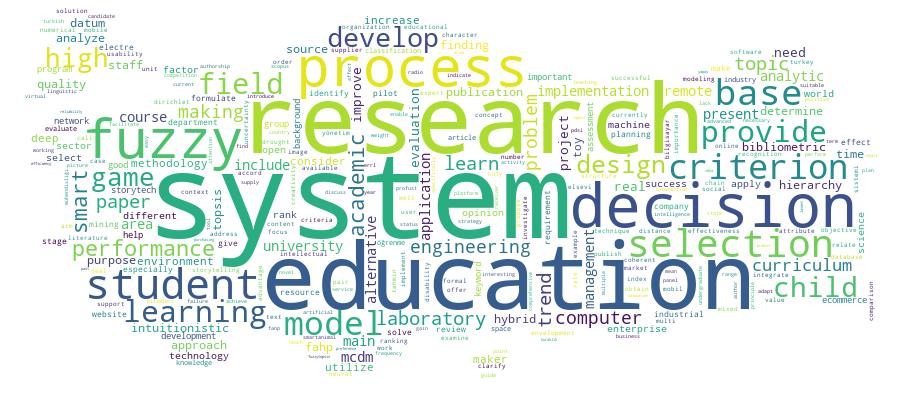
Competency Cloud

GCRIS Competency Cloud

Scholarly Output Search Results

Now showing 1 - 10 of 22
  • Article
    Citation - WoS: 4
    Citation - Scopus: 6
    On Profust Reliability of Coherent Systems: Signature-Based Expressions
    (Sage Publications Ltd, 2013) Eryilmaz, Serkan; Rouyendegh, Babak Daneshvar
    In this article we study profust reliability of non-repairable coherent systems through the concept of system signature. We obtain explicit expressions for the profust reliability and mean time to fuzzy failure of coherent systems. We compute and present mean time to failure and mean time to fuzzy failure of all coherent systems with three and four components. Finally, we illustrate the results for a well known class of coherent systems called m-consecutive-k-out-of-n:F.
  • Article
    Citation - WoS: 29
    Citation - Scopus: 32
    Development of Decision Support Model for Selecting a Maintenance Plan Using a Fuzzy Mcdm Approach: a Theoretical Framework
    (Hindawi Ltd, 2018) Abdulgader, Fathia Sghayer; Eid, Rajeh; Rouyendegh (B Erdebilli), Babak Daneshvar
    In complex decision making, using multicriteria decision-making (MCDM) methodologies is the most scientific way to ensure an informed and justified decision between several alternatives. MCDMs have been used in different ways and with several applications that proved their efficiency in achieving this goal. In this research, the advantages and disadvantages of the different MCDM methodologies are studied, along with the different techniques implemented to increase their accuracy and precision. The main aim of the study is to develop a hybrid MCDM process that combines the strengths of several MCDM methods and apply it to choose the best fit maintenance policy/strategy for industrial application. Moreover, fuzzy linguistic terms are utilized in all of the used MCDM techniques in order to eliminate the uncertainty and ambiguity of the results. Through an extensive literature review performed on studies that have used MCDM methods in a hybrid context and using fuzzy linguistic terms, a model is developed to use fuzzy DEMATEL-AHP-TOPSIS hybrid technique. The model with its application is the first of its kind, which combines the strengths of fuzzy DEMATEL in establishing interrelationships between several criteria, as well as performing a pairwise comparison between the criteria for prioritization using the fuzzy AHP method. Thereafter, the alternatives are compared using fuzzy TOPSIS method by establishing negative and positive solutions and calculating the relative closeness for each of the alternatives. Furthermore, six main criteria, twenty criteria, and five alternatives are selected from the literature for the model application.
  • Article
    Citation - WoS: 10
    Citation - Scopus: 19
    Effectiveness of Smart Toy Applications in Teaching Children With Intellectual Disability
    (Elsevier, 2018) Ekin, Cansu C.; Cagiltay, Kursat; Karasu, Necdet
    Play is an important element in a child's social and intellectual development and toys are indispensable play tools. This study investigates the effectiveness of smart toys in teaching social studies concepts to children with intellectual disability (ID). A single-subject design is used to identify such effects on teaching social studies concepts to children with ID with the help of smart toys developed within this study. The smart toys are also developed within the scope of present work. Three special education teachers and three children with moderate ID participated in the study, which was carried out in two schools in Turkey. According to the results, smart toys have a positive effect in teaching social studies concepts to children with moderate ID which is significant in development of academic and social skills for individuals with ID.
  • Article
    Citation - WoS: 76
    Citation - Scopus: 73
    Measuring the Efficiency of Hospitals: a Fully-Ranking Dea-Fahp Approach
    (Springer, 2019) Rouyendegh, Babak Daneshvar; Oztekin, Asil; Ekong, Joseph; Dag, Ali
    The goal of this study is to present a DEA-based fuzzy multi-criteria decision making model for firms in the health care industry in order to enhance their business performance. The study demonstrates a real-life use of the proposed model, mainly designed for hospitals. Data envelopment analysis enhanced with fuzzy analytic hierarchy process are collectively utilized to quantify the data and structure the model in decision-making. The juxtaposition of the two methods is used to compile a ranked list of multiple proxies containing diverse input and output variables which occur in two stages. This hybrid model provides several benefits, one of which is the ability to make the most appropriate decision considering the value of the weights determined by the data from the hybrid model.
  • Article
    Citation - WoS: 17
    Citation - Scopus: 22
    Seven Principles of Instructional Content Design for a Remote Laboratory: a Case Study on Errl
    (Ieee-inst Electrical Electronics Engineers inc, 2011) Cagiltay, Nergiz Ercil; Aydin, Elif; Aydin, Cansu Cigdem; Kara, Ali; Alexandru, Marian
    This paper discusses the results of a study of the requirements for developing a remote radio frequency (RF) laboratory for electrical engineering students. It investigates students' preferred usage of the technical content of a state-of-the-art RF laboratory. The results of this study are compared to previous findings, which dealt with other user groups (technicians in technical colleges and engineers in the RF domain). Based on the results of these analyses, seven essential principles for designing and developing such a laboratory were identified. As a case study, these principles were then implemented into a remote laboratory system. In this paper, the implementation examples are also provided and discussed. The primary aim of this study is to guide remote laboratory platform developers toward the most effective instructional design. This study also determined, from the remote laboratory system case study, what the requirements are of such a laboratory from the students' perspective.
  • Article
    Citation - WoS: 44
    Citation - Scopus: 70
    Selection of Academic Staff Using the Fuzzy Analytic Hierarchy Process (fahp): a Pilot Study
    (Univ Osijek, Tech Fac, 2012) Rouyendegh, Babak Daneshvar; Erkan, Turan Erman; Industrial Engineering; Computer Engineering
    Evaluating candidates' suitability for a selection of academic staff is an important tool for Human Resources Management (HRM) to select the most suitable candidates for required posts. There are various methods regarding the selection of staff in the field. As there are increasing improvements in the field of education, universities around the world demand high quality and professional academic staffs. The present paper examines a fuzzy Analytic Hierarchy Process (FAHP) for selecting the most suitable academic staff, where five candidates under ten different sub-criteria are evaluated and prioritised. The FAHP method adopted here uses Triangular Fuzzy Numbers (TFN). The inability of AHP to deal with the impression and subjectiveness in the pair-wise comparison process has been improved in the FAHP. Instead of a crisp value, the FAHP generates a range of values to incorporate the decision-makers uncertainty. Also, a real case study is presented.
  • Article
    Citation - WoS: 28
    Citation - Scopus: 36
    Investigating the Activities of Children Toward a Smart Storytelling Toy
    (Natl Yunlin Univ Science & Technology, Taiwan, 2013) Kara, Nuri; Aydin, Cansu Cigdem; Cagiltay, Kursat; Computer Engineering
    This paper introduces StoryTech, a smart storytelling toy that features a virtual space, which includes computer-based graphics and characters, and a real space, which includes plush toys, background cards, and a communication interface. When children put real objects on the receiver panel, the computer program shows related backgrounds and characters on the screen. StoryTech encourages children to produce their own stories. Empirical research with a total of 90 children indicated that StoryTech contributed to narrative activities of children and made a positive impact on their creativity. The paper also focuses on the attributes, design, and development process of StoryTech.
  • Article
    Citation - WoS: 27
    The Dea - Fuzzy Anp Department Ranking Model Applied in Iran Amirkabir University
    (Budapest Tech, 2010) Rouyendegh, Babak Daneshvar; Erol, Serpil
    Proposed in this study is a hybrid model for supporting the department selection process within Iran Amirkabir University. This research is a two-stage model designed to fully rank the organizational departments where each department has multiple inputs and outputs. First, the department evaluation problem is formulated by Data Envelopment Analysis (DEA) and separately formulates each pair of units. In the second stage, the pair-wise evaluation matrix generated in the first stage is utilized to fully rank-scale the units via the Fuzzy Analytical Network Process (FANP). The FANP method adopted here uses triangular fuzzy numbers. ANP equipped with fuzzy logic helps in overcoming the impreciseness in the preferences. DEA-FANP ranking does not replace the DEA classification model; rather, it furthers the analysis by providing full ranking in the DEA context for all departments, efficient and inefficient.
  • Article
    Citation - WoS: 16
    Citation - Scopus: 27
    Design and Development of a Smart Storytelling Toy
    (Routledge Journals, Taylor & Francis Ltd, 2014) Kara, Nuri; Aydin, Cansu Cigdem; Cagiltay, Kursat
    Because computers generally make children passive listeners, new technological devices need to support children's storytelling activities. This article introduces the StoryTech, a smart toy that includes a virtual space comprised of computer-based graphics and characters as well as a real space that involves stuffed animals, background cards and a receiver panel. When children put real objects on the receiver panel, the computer displays related backgrounds and characters. Through this flexible context, children are expected to tell a story about what they see on the screen. The aim of this article is to present the development period of the StoryTech and to provide design principles for smart toy technologies based on the usability study. The article focuses on attributes of new technology and the significance of supporting storytelling activities to find the best combination of and moderation between real and virtual spaces.
  • Article
    Citation - WoS: 13
    Citation - Scopus: 16
    Sector Selection for Erp Implementation To Achieve Most Impact on Supply Chain Performance by Using Ahp-Topsis Hybrid Method
    (Univ Osijek, Tech Fac, 2014) Rouyendegh, Babak Daneshvar; Bac, Ugur; Erkan, Turan Erman; Industrial Engineering; Computer Engineering
    Recently, studies about the Enterprise Resource Planning (ERP) have been increased and this research area has attracted more attention. Especially, in the global competition environment, enterprises have to focus on their Information Systems ( IS) performance to have a competitive advantage; implementing an ERP system and improving the effectiveness of the system is the only way. However every sector reacts to ERP implementation differently. Purpose of this study is to rank the sectors according to their performance increments after successful ERP implementations by using AHP-TOPSIS hybrid method. As a result, general structure of Turkish companies will be pictured and the sectors which have the most chance to improve their performance by utilizing an ERP system will be defined. These findings will help the companies to plan the implementation process more precisely and help the managers of these companies to define their expectations more clearly. A numerical example is given to clarify the main developed result in this paper.