
Kaftanoğlu, Bilgin
Loading...
Profile URL
Name Variants
Bilgin, Kaftanoğlu
Kaftanoglu, Bilgin
Bilgin Kaftanoğlu
K., Bilgin
Kaftanoğlu,B.
Kaftanoğlu, Bilgin
K.,Bilgin
B.,Kaftanoglu
KAFTANOGLU B.
Kaftanoğlu B.
B.,Kaftanoğlu
Kaftanoglu,B.
Bilgin, Kaftanoglu
Kaftanoglu B.
Kaftanoglu,Bilgin
B., Kaftanoğlu
B., Kaftanoglu
Kaftanoglu, B.
Kaftanoglu, Bilgin
Bilgin Kaftanoğlu
K., Bilgin
Kaftanoğlu,B.
Kaftanoğlu, Bilgin
K.,Bilgin
B.,Kaftanoglu
KAFTANOGLU B.
Kaftanoğlu B.
B.,Kaftanoğlu
Kaftanoglu,B.
Bilgin, Kaftanoglu
Kaftanoglu B.
Kaftanoglu,Bilgin
B., Kaftanoğlu
B., Kaftanoglu
Kaftanoglu, B.
Job Title
Profesör Doktor
Email Address
bilgin.kaftanoglu@atilim.edu.tr
Main Affiliation
Manufacturing Engineering
Status
Website
ORCID ID
Scopus Author ID
Turkish CoHE Profile ID
Google Scholar ID
WoS Researcher ID
Sustainable Development Goals
 1
1NO POVERTY
0
Research Products
 2
2ZERO HUNGER
0
Research Products
 3
3GOOD HEALTH AND WELL-BEING
1
Research Products
 4
4QUALITY EDUCATION
0
Research Products
 5
5GENDER EQUALITY
0
Research Products
 6
6CLEAN WATER AND SANITATION
0
Research Products
 7
7AFFORDABLE AND CLEAN ENERGY
2
Research Products
 8
8DECENT WORK AND ECONOMIC GROWTH
0
Research Products
 9
9INDUSTRY, INNOVATION AND INFRASTRUCTURE
4
Research Products
 10
10REDUCED INEQUALITIES
0
Research Products
 11
11SUSTAINABLE CITIES AND COMMUNITIES
1
Research Products
 12
12RESPONSIBLE CONSUMPTION AND PRODUCTION
0
Research Products
 13
13CLIMATE ACTION
0
Research Products
 14
14LIFE BELOW WATER
0
Research Products
 15
15LIFE ON LAND
0
Research Products
 16
16PEACE, JUSTICE AND STRONG INSTITUTIONS
0
Research Products
 17
17PARTNERSHIPS FOR THE GOALS
0
Research Products

This researcher does not have a Scopus ID.

This researcher does not have a WoS ID.

Scholarly Output
49
Articles
25
Views / Downloads
280/2936
Supervised MSc Theses
10
Supervised PhD Theses
5
WoS Citation Count
753
Scopus Citation Count
839
Patents
0
Projects
0
WoS Citations per Publication
15.37
Scopus Citations per Publication
17.12
Open Access Source
9
Supervised Theses
15
| Journal | Count |
|---|---|
| Makina Tasarım ve Imalat Dergisi | 3 |
| International Journal of Thermodynamics | 2 |
| CIRP Annals | 2 |
| Applied Energy | 2 |
| International Journal of Refrigeration | 2 |
Current Page: 1 / 5
Scopus Quartile Distribution
Competency Cloud
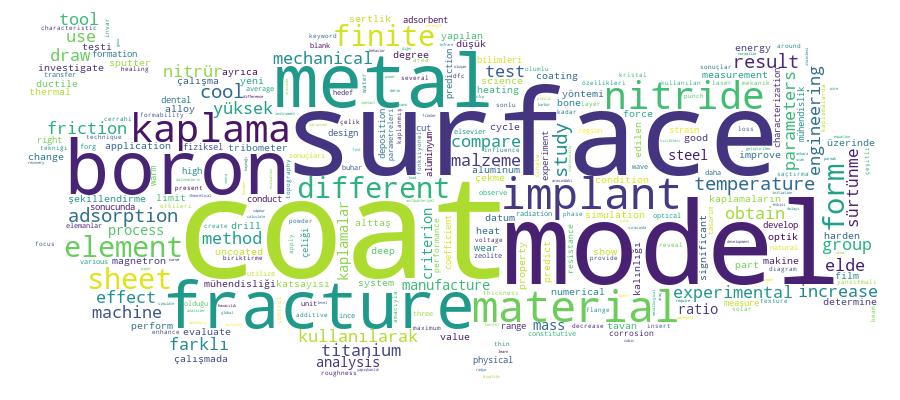
25 results
Scholarly Output Search Results
Now showing 1 - 10 of 25
Article Normalized thermodynamic model for intermittent energy systems and application to solar-powered adsorption cooling systems(2011) Taylan, Onur; Baker, Derek K.; Kaftanoğlu, BilginGenel kesildi enerji sistemlerinin tasanm ve işletmedeki kilit parametreleri değişirken ara ve talep eşzamanlılığını nicelleştirmek ve açıklığa kavuşturmak için bir normalleştirilmiş model geliştirildi. Bu yeni model, güneş ısısı ile beslenen, iç ısı değiştiricin ve iç ısı değiştiricisiz adsorpsiyonlu sistemin mevsimsel değişimlerinin benzetişimin de güneş ısısıyla sağlanan soğutmanın ve soğutma talebinin eşzamanlılığını mevsimsel güneşle besleme payı faktörü ve kayıp faktörü yardımıyla İncelemek için uygulandı. İlaveten sistemin bir grup parametrelerinin değişimiyle temel başarımmdaki değişim eğilimleri incelendi. İnceleme şartlanndaki sonuçlar şunları içermektedir: Depo sığası (kapasitesi) artınca güneş payı faktörü artmakta ve kayıp faktörü azalmaktadır, ve maksimum yatak sıcaklığı artınca her iki faktör de küçülmektedir. Vakum tüplü toplaç için gerekli alan düz levha toplaç için gerekli alandan daha azdır, bunun yam sıra adsorbsiyon için gerekli malzeme kütlesi toplacın ve adsorbsiyon çevriminin tipinden bağımsızdır. Benzetişim sonuçları çalışma şartlarının ve değişik tasanm parametrelerinin sistem C.O.P si (başarım katsayısı) üzerine etkilerini de göstermektedir.Article Havacılık Endüstrisinde Kullanılmak Üzere Alüminyum Malzemelerin Korozyon Direncinin Arttırılması Amacıyla Yüzey Kaplaması Geliştirilmesi(2021) Ceylan, Çağlar; Duran, Bahtiyar; Koçyiğit, Osman; Koçer, Cem; Doğan, Berkay; Hacaloğlu, Tuğçe; Kaftanoğlu, Bilgin; Sengonul, MerihHavacılık endüstrisinde yüksek oranda kullanılan alüminyum alaşımlarını korozyona karşı korumak üzere genellikle kromat (krom VI bazlı) dönüşümlü kaplama (CCC) yöntemleri kullanılmaktadır. Ancak altı değerlikli kromun doğada oluşturduğu zararlı etkilerden dolayı, AB’nin REACH düzenlemeleri ile kullanımı kısıtlanmıştır. Bu çalışma ile krom +6 dönüşümlü kaplamalara alternatif olarak PVD,anodizasyon gibi yöntemlerin de olduğu kaplama çeşitleri araştırılmış ve kaplamaların korozyon dayanımıyla mekanik performansları incelenmiştir.Article Havada Görevlendirilebilen Tekerleksiz Araç Tasarımı – Kişisel Hava Aracı(2022) Küçüköztaş, Korcan; Taşcı, Furkan; Varlı, Hüseyin; Gök, Eren; Kaftanoğlu, Bilgin; Baytaroğlu, ŞakirBu çalışmada, asgari 100kg yük taşıma kapasitesi olan, hafif ve fonksiyonel bir araç tasarımı yapılmıştır. Bu araç, sahip olduğu sekiz pervane sayesinde havada görev görebilirken aynı zamanda yere ve suya dikey iniş de gerçekleştirebilme özelliğine sahiptir. Bu tasarım, kurtarma ekiplerinin ulaşımı, kargo taşımacılığı ve kısa mesafeler içinde, insanların özel ulaşım ihtiyaçlarını karşılayabilmeleri amacı ile tasarlanmıştır. Her pervane motoru tek başına 94kg taşıyabilmekle beraber, aracın toplam taşıyabileceği yük kendi ağırlığıyla birlikte 752kg olmuştur. Proje sürecinde, ön tasarım ve detaylı tasarım süreçleri yürütülmüştür. Tasarımlar, sonlu elemanlar analizleri ve hesaplamalı akışkanlar dinamiği simülasyonlarının sonuçları göz önünde tutularak yapılmıştır. Pervanelerin testi için deneysel iki düzenek tasarlanmıştır. İlk düzenek mekanik bir düzenek olmakla beraber iki taraftan oluşmaktadır. İlk tarafta bir yük hücresi kullanılarak pervanenin itiş gücünün ölçülmesi hedeflenmiştir. İkinci tarafta ise pervanenin dakikada kaç tur attığını ölçmek için bir fotodedektör veya Hall etkisi sensörü kullanılmıştır. İkinci düzenekte bir elektronik hız kontrolcüsü, motoru kontrol etmek için kullanılmıştır. Son olarak, kullanılan yük hücresinin ölçümlemesi için deneysel düzenekler tasarlanmıştır.Article Citation - WoS: 2Performance of Boron Nitride Coated Tools and Dies(Univ Maribor, Fac Mechanical Engineering, 2013) Kaftanoglu, B.; Dokmetas, N.Boron nitride (BN) has been utilized as a significant coating material for cutting tool applications due to its excellent mechanical and chemical properties. Cutting tools, molds and machine parts are coated with BN with the coating system using a sputtering technology - a physical vapour deposition (PVD) process. Design and manufacture of the equipment is made locally. Physical, mechanical and tribological properties such as thickness, friction coefficient, wear, and adhesion are measured by using calotest, tribometer, profilometer, micro and macro scratch test, and nanohardness devices. The results of characterization of the coatings show that wear resistance and hardness increase and BN coatings provide increased efficiency by creating a value-added manufacturing. In this case, the use of BN-coated tools in machining is expected to be one of the best solutions. (C) 2013 PEI, University of Maribor. All rights reserved.Article Citation - WoS: 39Citation - Scopus: 49Focus Variation Measurement and Prediction of Surface Texture Parameters Using Machine Learning in Laser Powder Bed Fusion(Asme, 2020) Ozel, Tugrul; Altay, Ayca; Kaftanoglu, Bilgin; Leach, Richard; Senin, Nicola; Donmez, AlkanThe powder bed fusion-based additive manufacturing process uses a laser to melt and fuse powder metal material together and creates parts with intricate surface topography that are often influenced by laser path, layer-to-layer scanning strategies, and energy density. Surface topography investigations of as-built, nickel alloy (625) surfaces were performed by obtaining areal height maps using focus variation microscopy for samples produced at various energy density settings and two different scan strategies. Surface areal height maps and measured surface texture parameters revealed the highly irregular nature of surface topography created by laser powder bed fusion (LPBF). Effects of process parameters and energy density on the areal surface texture have been identified. Machine learning methods were applied to measured data to establish input and output relationships between process parameters and measured surface texture parameters with predictive capabilities. The advantages of utilizing such predictive models for process planning purposes are highlighted.Article Citation - WoS: 113Citation - Scopus: 147Experiments and Finite Element Simulations on Micro-Milling of Ti-6al Alloy With Uncoated and Cbn Coated Micro-Tools(Elsevier, 2011) Oezel, T.; Thepsonthi, T.; Ulutan, D.; Kaftanoglu, B.; Ozel, T.; Kaftanolu, B.This paper presents experimental investigations and finite element simulations on micro-milling of Ti-6Al-4V alloy with fine grain uncoated and cBN coated micro-end mills. Micro-milling of Ti-6Al-4V using uncoated and cBN coated tungsten carbide micro-end mills are conducted; surface roughness, burr formation and tool wear are measured. Effects of machining parameters on surface roughness, burr formation, and tool wear for uncoated and cBN coated micro-tools are investigated. Finite element modelling is utilized to predict forces, temperatures, and wear rate for uncoated and cBN coated micro-tools. Predicted temperature and tool wear contours for uncoated and cBN coated micro-tool edges reveal advantages of cBN coatings. Optimization studies on the experimental results are also conducted to identify the optimum process parameters which minimize both surface roughness and burr formation concurrently. (C) 2011 CIRP.Article Citation - WoS: 46Citation - Scopus: 50Investigations on Microstructural Changes in Machining of Inconel 100 Alloy Using Face Turning Experiments and 3d Finite Element Simulations(Pergamon-elsevier Science Ltd, 2016) Arisoy, Yigit M.; Guo, Changsheng; Kaftanoglu, Bilgin; Oezel, Tugrul; Ozel, Tugrul; Kaftanoʇlu, BilginNickel-base IN100 alloy is a choice of material for components requiring high strength at elevated temperatures. Machining processes applied to these components affect the microstructure, grain size, and microhardness of the finished surface. This research investigates the effects of tool micro-geometry, coating, and cutting speed on the microstructural changes during machining. 3D customized finite element simulations have been performed to predict the average grain size by implementing modified temperature dependent flow softening based material and Johnson-Mehl-Avrami-Kolmogorov crystallization models. Simulation predictions on the average grain sizes, phase fractions, and resultant microhardness are compared against experimental measurements revealing good agreements. (C) 2016 Elsevier Ltd. All rights reserved.Article Citation - WoS: 58Citation - Scopus: 66Experimental Investigation of a Natural Zeolite-Water Adsorption Cooling Unit(Elsevier Sci Ltd, 2011) Solmus, Ismail; Kaftanoglu, Bilgin; Yamali, Cemil; Baker, DerekIn this study, a thermally driven adsorption cooling unit using natural zeolite-water as the adsorbent-refrigerant pair has been built and its performance investigated experimentally at various evaporator temperatures. The primary components of the cooling unit are a shell and tube adsorbent bed, an evaporator, a condenser, heating and cooling baths, measurement instruments and supplementary system components. The adsorbent bed is considered to enhance the bed's heat and mass transfer characteristics; the bed consists of an inner vacuum tube filled with zeolite (zeolite tube) inserted into a larger tubular shell. Under the experimental conditions of 45 degrees C adsorption, 150 degrees C desorption, 30 degrees C condenser and 22.5 degrees C, 15 degrees C and 10 degrees C evaporator temperatures, the COP of the adsorption cooling unit is approximately 0.25 and the maximum average volumetric cooling power density (SCR,) and mass specific cooling power density per kg adsorbent (SCP) of the cooling unit are 5.2 kW/m(3) and 7 W/kg, respectively. (C) 2011 Elsevier Ltd. All rights reserved.Article Citation - WoS: 7Citation - Scopus: 13Experimental Investigation of Non-Isothermal Deep Drawing of Dp600 Steel(Springer London Ltd, 2018) Kayhan, Erdem; Kaftanoglu, BilginTo increase the limiting drawing ratio (LDR) in deep drawing, experiments are conducted on DP600, IF, and HSLA steels. The flange region of blank is heated up to temperatures in the warm range by inductance heating. During heating, the central portion of blank is cooled by water to prevent the reduction of the strength of the material in the central region. The temperature increase of flange region is observed by two infrared sensors focusing on two different points, one on the blank rim and the other near the die radius. An intensive cooling by cold water is applied to the bottom side of a blank during deep drawing. Increases up to 25.58% on LDR are obtained. There is no significant change in the microstructure of the material due to warm forming. Material characterization is obtained by a Gleeble 3800 thermo-mechanical testing machine for the temperature range 150-300 degrees C.Article Citation - WoS: 17Citation - Scopus: 20Prediction of forming limit curve at fracture for sheet metal using new ductile fracture criterion(Elsevier Science Bv, 2018) Dizaji, Shahram Abbasnejad; Darendeliler, Haluk; Kaftanoglu, BilginThe application of ductile fracture criteria (DFCs) in numerical analysis of sheet metal forming processes can lead to the accurate determination of the fracture initiation. In this study, a new uncoupled ductile fracture criterion (DFC) has been developed which considers the effects of material parameters on the forming limit curves (FLCs) and can be easily implemented in the finite element codes. Two different constitutive models have been employed with the new DFC in order to evaluate the results obtained for fracture prediction. Various experimental tests have been utilized to validate the new criterion and its results are also compared with other well-known uncoupled DFCs. It is observed that the new criterion predicts the ductile fracture for all aluminum, steel and stainless steel materials better than the former criteria.

- «
- 1 (current)
- 2
- 3
- »