
Sönmez, Münevver
Loading...

Profile URL
Name Variants
Münevver, Sönmez
S., Munevver
S.,Munevver
Sonmez M.
S., Münevver
Sönmez,M.
M., Sonmez
Münevver Sönmez
Sonmez,Munevver
S.,Münevver
Munevver, Sonmez
Sonmez,M.
M.,Sonmez
Sonmez, Munevver
M.,Sönmez
Sönmez, Münevver
M., Sönmez
Sonmez, Muenevver
S., Munevver
S.,Munevver
Sonmez M.
S., Münevver
Sönmez,M.
M., Sonmez
Münevver Sönmez
Sonmez,Munevver
S.,Münevver
Munevver, Sonmez
Sonmez,M.
M.,Sonmez
Sonmez, Munevver
M.,Sönmez
Sönmez, Münevver
M., Sönmez
Sonmez, Muenevver
Job Title
Doçent Doktor
Email Address
munevver.sonmez@atilim.edu.tr
Main Affiliation
Nursing
Status
Website
ORCID ID
Scopus Author ID
Turkish CoHE Profile ID
Google Scholar ID
WoS Researcher ID
Sustainable Development Goals
 1
1NO POVERTY
0
Research Products
 2
2ZERO HUNGER
0
Research Products
 3
3GOOD HEALTH AND WELL-BEING
3
Research Products
 4
4QUALITY EDUCATION
5
Research Products
 5
5GENDER EQUALITY
0
Research Products
 6
6CLEAN WATER AND SANITATION
0
Research Products
 7
7AFFORDABLE AND CLEAN ENERGY
0
Research Products
 8
8DECENT WORK AND ECONOMIC GROWTH
0
Research Products
 9
9INDUSTRY, INNOVATION AND INFRASTRUCTURE
0
Research Products
 10
10REDUCED INEQUALITIES
0
Research Products
 11
11SUSTAINABLE CITIES AND COMMUNITIES
0
Research Products
 12
12RESPONSIBLE CONSUMPTION AND PRODUCTION
0
Research Products
 13
13CLIMATE ACTION
0
Research Products
 14
14LIFE BELOW WATER
0
Research Products
 15
15LIFE ON LAND
0
Research Products
 16
16PEACE, JUSTICE AND STRONG INSTITUTIONS
0
Research Products
 17
17PARTNERSHIPS FOR THE GOALS
0
Research Products

Documents
24
Citations
274
h-index
9

Documents
0
Citations
0

Scholarly Output
20
Articles
18
Views / Downloads
135/977
Supervised MSc Theses
1
Supervised PhD Theses
0
WoS Citation Count
74
Scopus Citation Count
79
Patents
0
Projects
0
WoS Citations per Publication
3.70
Scopus Citations per Publication
3.95
Open Access Source
9
Supervised Theses
1
| Journal | Count |
|---|---|
| Journal of Tissue Viability | 7 |
| Balıkesir Sağlık Bilimleri Dergisi (BSBD) | 2 |
| Hacettepe Üniversitesi Sağlık Bilimleri Fakültesi Dergisi | 1 |
| International Wound Journal | 1 |
| Journal of Infusion Nursing | 1 |
Current Page: 1 / 3
Scopus Quartile Distribution
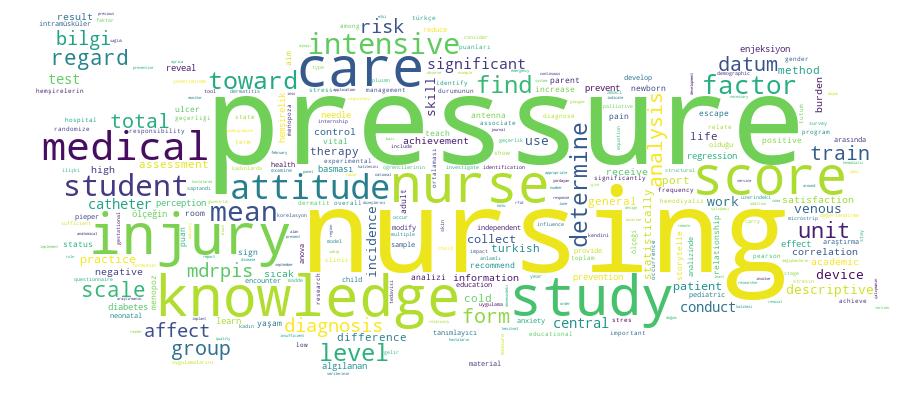
Competency Cloud
5 results
Scholarly Output Search Results
Now showing 1 - 5 of 5
Article Citation - WoS: 3Citation - Scopus: 3Incidence of Medical Device-Related Pressure Injuries and Identification of Risk Factors in the Neonatal Unit(Elsevier Sci Ltd, 2024) Yarkiner, Zalihe; Bahar, Arzu; Sonmez, Munevver; Kapan, Emine; Sahin, Simge; Kostekci, Ezgi; Erdeve, OmerAim: This study was conducted to investigate the incidence of medical device-related pressure injuries (MDRPIs) and the risk factors influencing their occurrence in the neonatal intensive care unit (NICU). Method: This study is a prospective, descriptive study. The research was conducted with 116 newborns between June 1, 2022, and June 1, 2023. Newborns who stayed in the neonatal intensive care unit for at least 24 h were observed daily for medical device-related pressure injuries under and around each medical device throughout their stay in the intensive care unit. The "Case Report Form," "MDRPIs Monitoring Form," "Braden Q scale for children," National Pressure Injury Advisory Panel (NPIAP) Pressure Grading, and Glasgow Coma Scale were used in the research. Results: The incidence of medical device-related pressure injuries is 35.3 % (41/116). It was found that 38.1 % (16/42) of medical device-related pressure injuries developed due to Near-Infrared Spectroscopy (NIRS) probes, and 33.5 % (14/42) developed due to medical devices related to the respiratory system. In terms of anatomical location, 38.1 % occurred on the forehead, and 23.8 % on the arm/leg. The difference between birth weight, gestational age, development of MDRPIs in newborns receiving sedation and inotropes was found to be statistically significant. Regression analysis identified gestational age (p = 0.040, OR = 0.795, 95%CI = [0.632-1.000]) as an independent risk factor for the occurrence of medical device-related pressure injuries. Conclusions: The incidence of medical device-related pressure injuries in newborns was relatively high in this study, with gestational age being the most significant risk factor for MDRPIs formation. It is crucial for neonatal intensive care nurses to consider associated risk factors while providing newborn care and implement appropriate preventive measures to reduce the incidence of MDRPIs.Article Citation - WoS: 11Citation - Scopus: 11The Effect of Knowledge Levels of Intensive Care Nurses About Pressure Injuries on Their Attitude Toward Preventing Pressure Injuries(Elsevier Sci Ltd, 2023) Korkmaz, Serap; Sönmez, Münevver; Sonmez, Munevver; Kisacik, Oznur Gurlek; Sönmez, Münevver; Gürlek Kısacık, Öznur; Nursing; NursingABS T R A C T Aim: The aim of this study was to determine the current knowledge levels of intensive care nurses about pressure injuries and their attitudes toward preventing pressure injuries, and to reveal the relationship between these variables. Materials and methods: This descriptive cross-sectional study was conducted with 152 nurses, working in the Adult Intensive Care Units of a Training and Research Hospital. Data were collected between 10.08.2021 and 31.11.2021 with the Patient Information Form, Modified Pieper Pressure Ulcer Knowledge Test and Attitude toward Pressure Injury Prevention Scale. Frequency analysis, descriptive statistics, multiple logistic regression analysis and the structural equation modeling technique were used in the analysis of the study data. Results: The mean age of the nurses was 25.82 & PLUSMN; 3.42 years, 86.2% of them were female and 67.1% of them had a bachelor's degree. Total mean score of the Modified Pieper Pressure Ulcer Knowledge Test of the intensive care nurses was found to be 32.58 & PLUSMN; 6.58. The knowledge score of 113 out of 152 nurses was & GE;60% or above. The total mean score of the Attitude toward Pressure Injury Prevention Scale was 42.00 & PLUSMN; 5.70 and a total of 76.97% (117 participants) of them were found to score 75% or above on the scale. The results of the regression analysis showed that educational degree, and status of having training about pressure injuries did not affect the total mean score of the Knowledge Test and the Attitude Scale. However, it revealed that the frequency of encoun-tering a patient with pressure injuries in the unit where they work has affected the total mean score of the scales significantly (p < 0.05). As per the results of the structural equation model, the Modified Pieper Pressure Ulcer Knowledge Test scores of the nurses were found to have a statistically significant effect on the scores of the Attitude toward Pressure Injury Prevention Scale (p < 0.05). Conclusion: This study revealed that intensive care unit nurses had a positive attitude toward Pressure Injury Prevention and their knowledge was sufficient and that as the Modified Pieper Pressure Ulcer Knowledge Test scores increase, their positive attitude toward Pressure Injury Prevention also increases.Master Thesis Menopoz Dönemindeki Kadınlarda Algılanan Stresin Sıcak Basması Üzerindeki Etkisi(2025) Namlu, Neslihan; Sönmez, Münevver; Nazik, EvşenBu çalışma, menopozal dönemdeki kadınlarda algılanan stresin sıcak basması üzerindeki etkisini incelemek amacıyla yapılmıştır. Tanımlayıcı ve ilişki arayıcı nitelikte olan bu çalışmaya, bir devlet hastanesinin kadın doğum polikliniğine başvuran 40-60 yaş aralığında, araştırmaya katılmaya gönüllü ve katılım kriterlerine uyan sıcak basması yaşayan menopoz dönemindeki 138 kadın dahil edilmiştir. Veriler Etik Kurul onayının alınmasının ardından 20.01.2024 ile 07.10.2024 tarihleri arasında, Tanıtıcı Bilgi Formu, Menopoza Özgü Sıcak Basması Ölçeği (MÖSBÖ) ve Algılanan Stres Ölçeği (ASÖ) kullanılarak toplanmıştır. Verilerin analizinde tanımlayıcı istatistikler, bağımsız örneklem t testi, One-Way Anova, çoklu doğrusal regresyon analizi, pearson korelasyon testleri ve algılanan stresin sıcak basması üzerindeki etkisini değerlendirmek için Yapısal Eşitlik Modellemesi kullanılmıştır. Araştırmada ASÖ puan ortalaması 30,68±9,47 MÖSBÖ puan ortalaması 56,08±20,76 olarak bulunmuştur. Çalışmaya katılım gösteren kadınların yaş ortalaması 52,61±4,31, menopoza girme yaş ortalaması ise 47,90±3,38 olarak bulunmuştur. Kadınların %94,2'sinin doğal yolla menopoza girdiği belirlenmiştir. Gerçekleştirilen ileri analizlerde algılanan stres puanları üzerinde kahve tüketiminin (β = 1,912, SE = 0,509, t = 3,754, p <0,001), menopoz şikayetlerine yönelik uygulama yapmama durumunun (β = 6,614, SE = 2,144, t = 3,085, p = 0,003) ve menopoz dönemi ile ilgili bilgi almama durumunun (β = 3,519, SE = 1,604, t = 2,194, p = 0,030); menopoza özgü sıcak basması puanları üzerinde menopoz şikayetlerine yönelik herhangi bir uygulama yapma durumunun (B = 17,075, SE = 6,063, z = 2,816, p = 0,005) anlamlı bir artırıcı etkisinin olduğu tespit edilmiştir. Algılanan stres ve sıcak basması faktörleri ile kurulan yapısal eşitlik modeli analizinde ASÖ puanları ile MÖSBÖ ölçüm puanları arasında aynı yönlü bir ilişki bulunduğu belirlenmiştir. Buna göre kadınlarda algılanan stres düzeylerindeki artışın, sıcak basmasını da arttırdığı belirlenmiştir. Araştırmadan elde edilen sonuçlar doğrultusunda, kadınlar için menopoz sürecinde karşılaşabilecekleri semptomlar ve başa çıkma yöntemleri hakkında eğitimler düzenlenmesi önerilmektedir.Article Citation - WoS: 15Citation - Scopus: 15Incidence of medical device-related pressure injuries in the intensive care unit and related risk factors(Elsevier Sci Ltd, 2023) Kudu, Aslihan Aydim; Tasdemir, Nurten; Sonmez, Muenevver; Aydım Kudu, AslıhanAim: At present, physicians employ medical devices extensively in the treatment of numerous diseases and in the care and follow-up of patients. However, these medical devices are a potential cause of pressure injuries.The study aimed to investigate the incidence and affecting risk factors of medical device-related pressure injuries (MDRPIs) in an adult intensive care unit.Materials and methods: This is a longitudinal descriptive/analytical and cross-sectional study. The researchers conducted this study with 213 intensive care patients between 15.06.2021 and 15.12.2021. The skin and mucosa under and around each medical device were observed once a day for MDRPIs during the stay of patients who had been hospitalized in the intensive care unit for at least 24 h. The data were collected using Patient Information Form developed by the researchers based on the literature, Medical Device-Related Pressure Injury Monitoring Form, the Jackson/Cubbin Pressure Area Risk Calculator (Jackson/Cubbin BARHATr)-Turkish Version, the National Pressure Injury Advisory Panel (NPIAP) Pressure Injury Staging System and the Glasgow Coma Scale.Results: The incidence of MDRPIs was 28.6% (61/213). The study revealed that 48.4% (46/95) of these injuries were caused by medical devices for respiratory system, 26.3% (25/95) by devices for gastrointestinal and genitourinary system. The study also revealed that 70.5% of MDRPIs occurred on the skin and 29.5% on the mucosal membrane, and that 82.1% of the MDRPIs occurring on the skin were at Stage 1. In terms of anatomical location, 21.1% of these injuries developed on the fingers and 13.7% on the mouth/lip. In multivariate analysis, parenteral + enteral (p = 0.006, OR = 0.083, 95%CI = [0.014-0.497]) and oral nutrition (p = 0.037, OR = 0.210, 95%CI = [0.049-0.908]), a higher number of devices (nine or more) (p = 0.002, OR = 5.387, 95%CI = [1.840-15.772]) and the duration of device wear (p < 0.05) were identified as independent risk factors for the occurrence of MDRPIs.Conclusions: The study showed that the incidence of MDRPIs was relatively high and was associated with various factors. It is critical for intensive care nurses, who encounter MDRPIs more frequently, to consider these factors while caring for their patients and to take appropriate preventive measures to reduce the incidence of these injuries.Article Citation - WoS: 3Citation - Scopus: 3Turkish Nurses' Knowledge, Attitudes and Practices in the Management of Incontinence Associated Dermatitis: a Descriptive and Cross-Sectional Study(Elsevier Sci Ltd, 2025) Sonmez, Munevver; Kisacik, Oznur Gurlek; Korkmaz, Serap; Gürlek Kısacık, ÖznurObjective: This study aimed to determine nurses' current knowledge, attitudes, and practices in adult intensive care units and palliative care clinics regarding incontinence-associated dermatitis (IAD). Materials and methods: This descriptive cross-sectional study was conducted with 355 nurses in adult intensive care and palliative services at two hospitals. Data were collected between 5.03.2022 and 15.06.2022 using the" Nurse Demographic Form" and the "Knowledge, Attitude and Practice of Nurses in Managing Incontinence- Associated Dermatitis Questionnaire". Results: The nurses' mean scores for "Knowledge of IAD Etiology and Diagnosis" were 19.11 (SD 3.29), mean scores for "Knowledge of IAD Risk Factors" were 23.82 (SD 4.27), mean scores for "Attitude Toward IAD Prevention" were 10.1 (SD 2.49), and mean scores for "Practices for IAD Prevention" were 23.71 (SD 3.97). It was found that nurses who used a risk assessment tool to diagnose IAD (p = 0.001), had a procedure or protocol (p = 0.001), and received training on IAD (p < 0.001) had significantly higher "Attitude Towards Prevention of IAD" scores. There was a positive correlation between the number of patients with IAD cared for by the nurses participating in the study and the scores of "Practices to Prevent IAD"and "Knowledge of IAD Risk Factors", "Knowledge of IAD Etiology and Diagnosis"and "Attitude Towards Preventing IAD"(p < 0.001). Conclusion: This study found that intensive care and palliative care nurses' knowledge, attitudes, and practices regarding IAD were insufficient. Considering that IAD is encountered more frequently in these units, it is essential to provide continuous and practical training to nurses about IAD, use risk assessment tools to prevent and treat IAD, determine protocols, establish clinical guidelines, and implement and standardize them.
