
Erton, Halil İsmail
Loading...

Profile URL
Name Variants
Erton, Ismail
Halil Ismail, Erton
Erton,H.İ.
E., Halil Ismail
H., Erton
Erton, Halil İsmail
Halil İsmail, Erton
Erton,H.I.
E.,Halil İsmail
E.,Halil Ismail
H.I.Erton
H.İ.Erton
Erton, Halil Ismail
H.,Erton
Erton, İsmail
Erton,İ.
Halil Ismail, Erton
Erton,H.İ.
E., Halil Ismail
H., Erton
Erton, Halil İsmail
Halil İsmail, Erton
Erton,H.I.
E.,Halil İsmail
E.,Halil Ismail
H.I.Erton
H.İ.Erton
Erton, Halil Ismail
H.,Erton
Erton, İsmail
Erton,İ.
Job Title
Doçent Doktor
Email Address
ismail.erton@atilim.edu.tr
Main Affiliation
English Translation and Interpretation
Status
Former Staff
Website
ORCID ID
Scopus Author ID
Turkish CoHE Profile ID
Google Scholar ID
WoS Researcher ID
Sustainable Development Goals
5
GENDER EQUALITY

1
Research Products
14
LIFE BELOW WATER

0
Research Products
10
REDUCED INEQUALITIES

0
Research Products
3
GOOD HEALTH AND WELL-BEING

0
Research Products
2
ZERO HUNGER

4
Research Products
9
INDUSTRY, INNOVATION AND INFRASTRUCTURE

0
Research Products
16
PEACE, JUSTICE AND STRONG INSTITUTIONS

0
Research Products
11
SUSTAINABLE CITIES AND COMMUNITIES

0
Research Products
8
DECENT WORK AND ECONOMIC GROWTH

1
Research Products
13
CLIMATE ACTION

0
Research Products
4
QUALITY EDUCATION

2
Research Products
6
CLEAN WATER AND SANITATION

0
Research Products
1
NO POVERTY

0
Research Products
15
LIFE ON LAND

0
Research Products
17
PARTNERSHIPS FOR THE GOALS

0
Research Products
7
AFFORDABLE AND CLEAN ENERGY

0
Research Products
12
RESPONSIBLE CONSUMPTION AND PRODUCTION

0
Research Products

This researcher does not have a Scopus ID.

This researcher does not have a WoS ID.

Scholarly Output
38
Articles
17
Views / Downloads
12/0
Supervised MSc Theses
21
Supervised PhD Theses
0
WoS Citation Count
9
Scopus Citation Count
32
WoS h-index
1
Scopus h-index
2
Patents
0
Projects
0
WoS Citations per Publication
0.24
Scopus Citations per Publication
0.84
Open Access Source
6
Supervised Theses
21
Google Analytics Visitor Traffic
| Journal | Count |
|---|---|
| Journal of Language and Linguistic Studies | 3 |
| Hacettepe Egitim Dergisi | 2 |
| Dil ve Tarih-Coğrafya Fakültesi Dergisi | 1 |
| IOJET | 1 |
| SSRN Electronic Journal | 1 |
Current Page: 1 / 1
Scopus Quartile Distribution
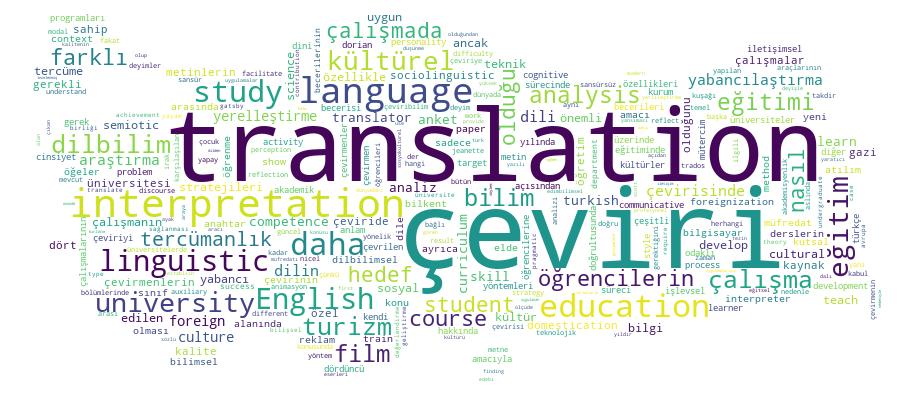
Competency Cloud
17 results
Scholarly Output Search Results
Now showing 1 - 10 of 17
Article Y Kuşağı İle Yaşam(Bilim ve Teknoloji, 2015) Erton, İsmail1965-1979 yılları arasında doğan ve X kuşağı olarak adlandırılan nesil, sadece 10-15 yıl sonra ülkemizi yönetecek olan Y kuşağından oldukça farklı bir yapıya sahip. X Kuşağı; Sabır ve sebat ile birtakım zorlukların üstesinden gelmek için uğraşır. Aidiyet duygusu güçlüdür. Ait olduğu kurum, kuruluş ve camianın kurallarına uyar, potansiyelini mevcut şartlar içerisinde değerlendirir ve geliştirir. Otoriteye (makama) saygılıdır. Ait olduğu kurum, kuruluş veya organizasyonun kural ve kaidelerini benimser, davranışlarını düzenler. Oysa Y kuşağından, yukarıda bahsedilen özellikleri beklemek hem bilimsel olarak bir hatadır hem de ‘tatlı bir hayaldir’! John F. Kennedy’nin meşhur sözünü bu bağlamda hatırlamamız gerekiyor. “Değişim, yaşamın kuralıdır. Sadece geçmişe ya da şimdiki zamana önem verenler geleceği kaçırırlar.” Kalıplaşmış iş kurallarını, gelenekleri, soyal-kültürel olgu ve davranışları, yaşam biçimlerini, gelecek nesillere, yani Y ve Z kuşaklarına dayatmaya kalkmak onları hiçe saymaktır. Hadiseye felsefi bir açıdan bakacak olursak bu, evrensel tekamül yasasına da aykırıdır.Article Üniversitelerde Kalite Yönetimi(Bilim ve Teknoloji, 2013) Erton, İsmailGünümüzün sosyal, ekonomik ve teknolojik gelişmelerine bağlı olarak üniversiteler kimlik değiştirmektedirler. İyi eğitim, bir diğer deyişle eğitimde kalite, yerini üniversitelerde kalite yönetimine bırakmaya başlamıştır. Sadece mevcut fakülte ve bölümlerde, tecrübeli öğretim elemanları ile kurum genelinde kalitenin ve başarının sağlanamayacağını anlayan üniversiteler, aslında son 10-15 yıldır gündemde olan ve tartışılan üniversitelerde kalite yönetimi konusuna daha fazla eğilir olmuşlardır. Bu husus, o üniversitenin ulusal ve uluslararası arenada iyi bir yerinin olması ve işlerin sürdürülebilirliği için zaruri bir hal almıştır. Üniversitelerde kalitenin sağlanması dikkatle ve özenle tatbik edilecek aşamalı bir planı ve süreci gerektirmektedir. Bu sürece etki eden unsurları şöyle sıralayabiliriz.Article Citation - WoS: 8Citation - Scopus: 17Relations Between Personality Traits, Language Learning Styles and Success in Foreign Language Achievement(Hacettepe Univ, 2010) Erton, Ismail; English Translation and InterpretationThe purpose of this paper is to show that the reflections of different personality types can be observed in students' developing different learning styles for themselves. It is hypothesized that personality may be a dominant factor in achieving the educational goals through several learning styles in foreign language achievement. To clarify this relationship, Maudsley's 'Personality' and Barsch's 'Learning Styles' inventories were distributed to Bilkent University Freshman students studying at the Faculty of Engineering, Science, Economics, Fine Arts, and Humanities & Letters, who received the English 101 course in their first year at the university. The results were evaluated statistically and the findings showed that there is not a statistically strong, but a low relationship between the personality traits of the learner, the way he/she establishes the learning styles and reflects these characteristics into success while learning a foreign language.Article Akademik Yazım ve Akademisyenlik(Bilim ve Teknoloji, 2013) Erton, İsmailAkademisyenlik sadece bir meslek değildir. Akademisyenlik bilgiden yola çıkılan ve bilgeliğe doğru adım adım gidilen bir süreçtir. Bu sürecin temelini araştırma yapmak, araştırmalardan sonuç çıkarmak ve bunları toplumun çeşitli katmanlarında yer alan bireylere uygun bir dil ile ifade etmek oluşturur. Bu aktarım bazen sözlü çoğunlukla yazılı bir şekilde olur. Bir akademisyenin başarısı onun bilimine hakim olması, yaratıcı ve eleştirel düşünce ile beslenmesi, yenilikleri takip etmesi ve kendini ifade edebilmesi ile ilişkilidir. “Araştırma, düşünmesini bilenlerin ilk ve son isteğidir” der Samuel Johnson, çünkü bir konu hakkında araştırma yapmak, bilgeliğe giden yolda bırakılan ilk iztir. Montaigne, “Bilgeliğin en sağlam belirtisi, kalıcı bir sevinçtir” der. Akademisyenlik de böyledir. Bir akademisyen bir konu üzerinde araştırma yapıp, bunu tamamlayıp bir sunum veya makale vasıtası ile bunu kitlelere etkin bir şekilde aktarabiliyorsa, bu dünyada ondan daha mutlu bir insan yoktur. Peki, eğer bunları yapamıyorsa?Article Üniversite Düzeyinde Çevirmen Eğitiminde Dilbilimin Önemi(2016) Erton, Halil İsmail; Tanbi, YaseminTranslation studies - that is translation and Interpretation, is a field that evolved as a sub-discipline of Linguistics and its related subjects. In the course of time, it developed as a separate area of study with roots still attached to its origins. Hence, the training of translator and the interpreter cannot be totally separated from linguistics. The view presented in this paper is that linguistic-based courses in Translation and Interpretation departments contribute to the grounding and achievement of the students in translation and interpreting classes in upper-grade levels. To this end, two universities - Atılım University and Bilkent University - have been selected as sources for this study, conducting two surveys among the students studying there. The findings based on the statistical analysis represent the usefulness of linguistic-based courses and their contribution to translation and interpretation studies.Article The Essence of Semiotics as a Mediator of Communication and Cognition(2018) Erton, İsmailStudies in modern linguistic theory to determine the scope and vision of humancommunication have shifted their attention to semiotics, in which actions speak louder thanwords as some say. The semiotic capacity of an individual reflects the effective and efficientusage of pragmatic competence in which the language user has the awareness of socioculturaland anthropological conventions processed and produced in the course of communication.Such a capacity also enables a systematic usage of cognitive skills, thereby developing thevalue of the communicative context and the perception of the individuals in variousdiscourses. This paper attempts to identify, decode, and proceed utterances in a systematicmixture of psychological, physiological, sociological and anthropological procedures, inwhich non-verbal expressions appear as signs and symbols to communicate information. It isalso argued that not only do individuals attain semiotic information naturally, they also do sowith proper curricular semiotic education (especially in language learning & teachingenvironment) and research. In this respect, studies in biosemiotics explore the micro and themacro cosmos of human nature which are in a continuous cycle of interaction to processlanguage. It is further established that the curiosity to discover the value systems in humancommunication through semiotic decoding means more than the mere study of language andits linguistic properties.Article NASIL BİR EĞİTİM VE ARAŞTIRMA?(Bilim ve Teknoloji, 2013) Erton, İsmailBirey, imkan ve şartları doğrultusunda İlkokuldan üniversiteye, üniversiteden doktoraya kadar birçok aşamalardan geçerek kendini bulma ve yaradılışının gayesi hakkında bilgi edinmek için uğraşır. Albert Einstein bu yolun ne kadar çetin olduğunu ve uğraş istediğini şu sözle dile getirir; “Bir kum tanesinin sırrını çözmeyi başarsaydık, bütün dünyanın sırrını öğrenmiş olurduk.” Zira bilgi kutsaldır, çünkü bilgi ancak yaratıcı ve eleştirisel düşünen beyinlerde var olur ve onu doğru ve yerinde tespitlerle kullanan akıllarla taçlanır. “Bilgi ve erdem, öğrenilebilen ve öğretilen bir şeydir” der Aristotales. Akıl ve hikmet insanların karanlıklardan kurtulmasına ve aydınlığa açılan pencerelerle tanışmasına olanak sağlar. Ancak, burada sorulacak soru, bilgiye nasıl ulaşılması gerektiğidir.Article Citation - WoS: 1Citation - Scopus: 1Discourse Analysis in Translation Education at the University Level: an Assessment of Students' Attitudes(Hacettepe Univ, 2014) Erton, Ismail; English Translation and InterpretationTranslator education, as most scholars agree, requires a detailed comprehension of linguistic rules and practices; hence the reason, why within the departments of translation and interpretation, extra importance is given to the discourse analysis course especially in the first two years of the bachelor's programme. The view presented in this paper is that the linguistics based 'discourse analysis' course plays a significant role in translation and interpretation education by strengthening the curriculum and enabling the development of various skills necessary for the translator. To determine the extent and the impact that learning linguistics has on .translator education, eight courses were selected from upper grades (3rd and 4th years) and their relevance with the discourse analysis course was tested by applying a survey to the corresponding students at the end of the academic year. The findings based on the statistical analysis show that improving linguistic competence throughout translator education at the universities result in success in translation and a better understanding of the source text regardless of its type and context.Article Avrupa Birliği Eğitim Politikaları ve Türkiye(Bilim ve Teknoloji, 2014) Erton, İsmailToplumlarda eğitimin önemi bilhassa son 20 yılda bilim, teknoloji ve küresel iletişimin artmasıyla öne çıkmış, bireylerin ve devletlerin hayatlarında bugüne kadar olduğundan çok daha fazla önem kazanmıştır. Dünyadaki siyasi, jeopolitik ve ekonomik gelişmelere bağlı olarak gerekli olan alanlarda nitelikli insan gücünün yetiştirilmesi ve bu gücün o dönemin mevcut konjonktürüne bağlı olarak, Avrupa Birliği (AB) eğitim politikalarında da belirtildiği gibi, „yaşam boyu öğrenme‟ ilkesine dayalı olarak yetiştirilmesi gerekmektedir. Türkiye‟nin de dünyadaki gelişmelere ayak uydurabilmesi için 2000 yılında ortaya konan AB Lizbon Stratejisini benimsemeli ve gerekli adımları ivediyetle atmalıdır. Bu stratejide, AB eğitim programları temelde eğitim-öğretim kalitesinin gelişitirilmesi, bu kalitenin sürdürülebilmesi-mesleki eğitime yansıması ve yaşam boyu öğrenmenin toplumun bir hayat felsefesi haline gelmesi ve toplum bireylerinin kendi kabuklarından çıkarak bilgi çağında dünya toplumları ve kültürleri ile entegrasyonu hedeflenmiştir. Türkiye, bu hedefe göre 2009 yılında, Milli Eğitim Bakanlığı öğretim stratejileri planına bağlı olarak, Hayat Boyu Öğrenme Stratejisi planını hazırlamıştır. Bu planda 16 öncelik belirlenmiş ve plana dahil olan kişiler, kurum ve kuruluşlar için bir acil eylem planı oluşturulmuştur.Article Difficulties in Teaching English Modal Auxiliaries To Turkish Students: a Cognitive Pragmatic Approach(Arab World English Journal, 2018) Erton, IsmailRecently, attention in modern linguistic theory has been shifted to facilitating a broader understanding of the world, in which language is a tool to establish a bridge between the interlocutor and the recipient. To do so, the development of linguistic, communicative and socio-pragmatic competences enriched with socio-cultural inputs in English as a Foreign Language (EFL) or Second Language (L2) teaching and learning contexts have a significant impact on language learners both to develop their perception as native speakers of English and to facilitate the progress of cognitive skills and capabilities. The aim of this paper is to demonstrate a case study to show some of the difficulties in teaching English modal auxiliaries to Turkish students in EFL/L2 contexts which arise not only from structural characteristics, but also from insufficiently developed linguistic, communicative and socio-pragmatic competencies. It is also asserted that only teaching the lexical properties of modal auxiliaries in isolation from their socio-pragmatic and semiotic contexts alone cannot help learners to become successful communicators in the target language as it ends in communication failures, hesitation, a slower L2 progress, fear and misunderstandings. Therefore, role-play activities, doze tests, research assignments, writing tasks and songs can also be integrated into the teaching-learning process to assist learners to become more aware of their actual authentic usages in a wide range of contexts through different activities. On the whole, this would also free language learners to refer to their First Language (L1) input and shape a broader understanding of the Foreign Language (FL) framed with its actual authentic usage.
