Üner, Mehmet Mithat

Loading...
Profile Picture
Name Variants
U.,Mehmet Mithat
Uner, M. Mithat
Üner,M.M.
Uner M.
Mithat Üner M.
Ü., Mehmet Mithat
Uner,M.M.
U., Mehmet Mithat
M.M.Üner
Mithat Üner, M.
M., Uner
Uner, Mithat
Üner, Mehmet Mithat
M.,Üner
Üner M.
Mehmet Mithat, Uner
Ü.,Mehmet Mithat
Üner, M. Mithat
Mithat Uner M.
M. M. Uner
M.M.Uner
Mehmet Mithat, Üner
Uner, Mehmet Mithat
M. M. Üner
Mithat Uner, Mehmet
Üner, Mehmet
Job Title
Profesor Doktor
Email Address
mithat.uner@atilim.edu.tr
Main Affiliation
Business
Status
Website
Scopus Author ID
Turkish CoHE Profile ID
Google Scholar ID
WoS Researcher ID

Sustainable Development Goals

2

ZERO HUNGER
ZERO HUNGER Logo

0

Research Products

14

LIFE BELOW WATER
LIFE BELOW WATER Logo

0

Research Products

17

PARTNERSHIPS FOR THE GOALS
PARTNERSHIPS FOR THE GOALS Logo

8

Research Products

5

GENDER EQUALITY
GENDER EQUALITY Logo

0

Research Products

16

PEACE, JUSTICE AND STRONG INSTITUTIONS
PEACE, JUSTICE AND STRONG INSTITUTIONS Logo

0

Research Products

8

DECENT WORK AND ECONOMIC GROWTH
DECENT WORK AND ECONOMIC GROWTH Logo

6

Research Products

4

QUALITY EDUCATION
QUALITY EDUCATION Logo

3

Research Products

6

CLEAN WATER AND SANITATION
CLEAN WATER AND SANITATION Logo

0

Research Products

7

AFFORDABLE AND CLEAN ENERGY
AFFORDABLE AND CLEAN ENERGY Logo

0

Research Products

10

REDUCED INEQUALITIES
REDUCED INEQUALITIES Logo

2

Research Products

11

SUSTAINABLE CITIES AND COMMUNITIES
SUSTAINABLE CITIES AND COMMUNITIES Logo

0

Research Products

9

INDUSTRY, INNOVATION AND INFRASTRUCTURE
INDUSTRY, INNOVATION AND INFRASTRUCTURE Logo

3

Research Products

1

NO POVERTY
NO POVERTY Logo

0

Research Products

3

GOOD HEALTH AND WELL-BEING
GOOD HEALTH AND WELL-BEING Logo

0

Research Products

12

RESPONSIBLE CONSUMPTION AND PRODUCTION
RESPONSIBLE CONSUMPTION AND PRODUCTION Logo

6

Research Products

13

CLIMATE ACTION
CLIMATE ACTION Logo

0

Research Products

15

LIFE ON LAND
LIFE ON LAND Logo

0

Research Products
Documents

27

Citations

614

h-index

11

Documents

24

Citations

493

Scholarly Output

40

Articles

24

Views / Downloads

19/0

Supervised MSc Theses

10

Supervised PhD Theses

6

WoS Citation Count

351

Scopus Citation Count

419

WoS h-index

9

Scopus h-index

9

Patents

0

Projects

0

WoS Citations per Publication

8.78

Scopus Citations per Publication

10.48

Open Access Source

12

Supervised Theses

16

Google Analytics Visitor Traffic

JournalCount
İşletme Araştırmaları Dergisi3
Thunderbird International Business Review2
International Business Review2
İletişim ve Diplomasi1
International Journal of Contemporary Hospitality Management1
Current Page: 1 / 4

Scopus Quartile Distribution

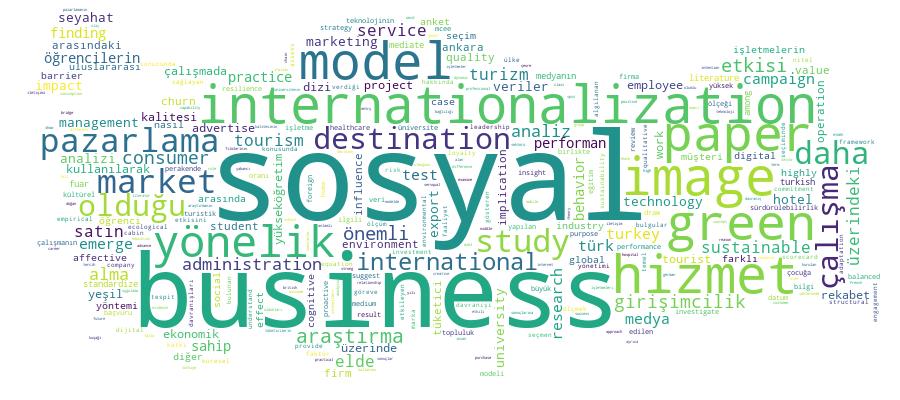
Competency Cloud

GCRIS Competency Cloud

Scholarly Output Search Results

Now showing 1 - 4 of 4
  • Article
    Citation - WoS: 2
    Citation - Scopus: 1
    Is Green Servant Leadership a Stronger Predictor of Green Work Engagement and Task-Related Proactive Behaviour Compared to Green Transformational Leadership
    (Routledge Journals, Taylor & Francis Ltd, 2025) Yorulmaz, Ali Cenk; Uner, M. Mithat; Rescalvo-Martin, Elisa; Karatepe, Tuna; Saydam, Mehmet Bahri; Karatepe, Osman M.
    The pertinent literature is devoid of research regarding the effects of green servant leadership (GSL) and green transformational leadership (GTL) simultaneously on green work engagement (GWE) and task-related pro-environmental behaviour (TPEB) and GWE as a mediator in the previously discussed associations. Therefore, drawing from social exchange and job demands-resources theories, our paper develops and tests a research model that investigates the interrelationships of GSL, GTL, GWE, and TPEB. Data were gathered from hotel employees in Ankara, T & uuml;rkiye. The hypotheses were tested using partial least squares structural equation modelling. The results suggest that the positive influence of GSL on GWE is stronger than the positive influence of GTL on GWE. As expected, GWE mediates the effects of GSL and GTL on TPEB. More importantly, the indirect positive influence of GSL on TPEB via GWE is stronger than the indirect positive influence of GTL.
  • Article
    Citation - WoS: 5
    Citation - Scopus: 5
    Test of a Moderated Serial Mediation Model of Management Commitment To the Ecological Environment
    (Elsevier Sci Ltd, 2024) Karatepe, Tuna; Rescalvo-Martin, Elisa; Kim, Taegoo Terry; Uner, M. Mithat; Ozturen, Ali; Karatepe, Osman M.
    The purpose of our paper is to assess the interrelationships of management commitment to the ecological environment (MCEE), harmonious environmental passion (HEP), task-related and proactive pro-environmental behaviors (PEB), and qualitative job insecurity (QJIS) in a moderated serial mediation model. Data gathered from hotel customer-contact employees were utilized to gauge the aforementioned links. The results from the partial least squares structural equation modeling suggest that HEP and task-related PEB mediate the linkage between MCEE and proactive PEB in a sequential manner. The results further suggest that QJIS mitigates the influence of MCEE on HEP. More importantly, QJIS reduces the indirect positive impact of MCEE on proactive PEB through HEP and task-related PEB such that the indirect positive impact is lower among hotel employees with high QJIS than among hotel employees with low QJIS. Theoretical and practical implications are discussed.
  • Article
    Citation - WoS: 131
    Citation - Scopus: 155
    Management Commitment To the Ecological Environment, Green Work Engagement and Their Effects on Hotel Employees' Green Work Outcomes
    (Emerald Group Publishing Ltd, 2022) Karatepe, Tuna; Ozturen, Ali; Karatepe, Osman M.; Uner, M. Mithat; Kim, Taegoo Terry
    Purpose Using social exchange, signaling, job demands-resources and reformulation of attitude theories, the purpose of this paper is to propose and test a research model in which green work engagement (GWEN) mediates the impact of management commitment to the ecological environment (MCEE) on green creativity, task-related pro-environmental behavior (PEB) and proactive PEB. Design/methodology/approach Data for the paper were obtained from hotel customer-contact employees in Turkey and South Korea. The hypothesized associations were assessed via structural equation modeling. Findings The findings in Studies 1 and 2 supported the viability of the model. Specifically, GWEN partially mediated the effect of MCEE on task-related and proactive PEB, while it fully mediated the influence of MCEE on green creativity. Practical implications Management should invest and/or go on investing in environmental sustainability to send strong signals to employees that the organization really cares about the environment and is highly committed to the preservation and protection of the environment. With green training, empowerment and rewards, management can boost employees' GWEN, which motivates them to engage in environmentally responsible behaviors. Originality/value The paper advances current knowledge by testing the relationship of MCEE, as appraised by employees, to their GWEN and green work outcomes. More importantly, the paper has explored the impact of GWEN in the intermediate relationship between MCEE and critical green work outcomes, such as green creativity, task-related PEB and proactive PEB. Further, the paper adds to the extant research by assessing the antecedents and outcomes of GWEN.
  • Article
    Türkiye’de Yükseköğrenim Başvuru Oranının Belirleyicileri
    (2025) Üner, Mehmet Mithat; Çamalan, Özge; Karatepe, Tuna
    Amaç - Bu araştırma, Türkiye'de 2006-2024 döneminde yükseköğretim kurumlarına başvuru oranlarını etkileyen makro ekonomik faktörleri incelemeyi amaçlamaktadır. Son yıllarda Yükseköğretim Kurumları Sınavı'na (YKS) başvuru sayılarında yaşanan belirgin düşüş, yükseköğretime olan talebin belirleyicilerinin analizini gerekli kılmaktadır. Çalışma, medya tarafından sıklıkla gündeme getirilen yoksulluk, üniversite mezunları arasındaki işsizlik ve maaş farkları gibi makro ekonomik değişkenlerin yükseköğretim talebi üzerindeki etkisini ampirik olarak ortaya koyarak alandaki boşluğu doldurmayı hedeflemektedir. Yöntem- Araştırmada 2006-2024 dönemi yıllık zaman serisi verileri kullanılarak çoklu doğrusal regresyon analizi gerçekleştirilmiştir. Bağımlı değişken olarak yükseköğretim kurumlarına başvuru oranı (YKS başvuru sayısının 15-24 yaş grubu nüfusa oranı), bağımsız değişkenler olarak ise yoksulluk oranı, yükseköğretim mezunu işsizlik oranı (15-24 yaş grubu) ve eğitimin ekonomik getiri oranı (9/1 dereceli memur maaşının net asgari ücrete oranı) kullanılmıştır. Veriler ÖSYM raporları, TÜİK istatistikleri ve Çalışma ve Sosyal Güvenlik Bakanlığı kaynaklarından elde edilmiştir. Bulgular - Regresyon analizi sonuçları, her üç makro ekonomik değişkenin de yükseköğretim başvuru oranları üzerinde istatistiksel olarak anlamlı etkiye sahip olduğunu ortaya koymuştur. Yoksulluk oranı en güçlü belirleyici faktör olarak öne çıkmış (β=-2.524, p<0.001), yoksullukta 1 puanlık artışın başvuru oranını 2,5 puan azalttığı tespit edilmiştir. Üniversite mezunları arasındaki işsizlik oranı da başvuruları olumsuz etkilemekte (β=-0.481, p=0.020), \"diplomalı işsizlik\" olgusunun caydırıcı etkisini göstermektedir. Eğitimin ekonomik getiri oranı ise sınırlı da olsa pozitif etki göstermektedir (β=0.202, p=0.036). Model, yükseköğretim talebindeki toplam değişkenliğin %77,7'sini açıklamaktadır. Tartışma- Araştırma bulguları, yoksulluk oranının yükseköğretim başvuruları üzerinde en güçlü belirleyici etkiye sahip olduğunu göstermektedir. Üniversite mezunları arasındaki işsizlik oranı da başvuruları negatif yönde etkilemektedir. Maaş oranının pozitif ancak sınırlı etkisi bulunmaktadır. Model, Türkiye'de yükseköğretim talebinin makro ekonomik değişkenlerle açıklanabildiğini ortaya koymaktadır.