
Seyidov, Ilgar
Loading...
Profile URL
Name Variants
Seyıdov, İlgar
I.,Seyıdov
I., Seyidov
Seyıdov, Ilgar
Ilgar, Seyıdov
Seyidov,I.
S.,Ilgar
I., Seyıdov
S., Ilgar
Seyıdov,I.
Ilgar, Seyidov
Seyidov, Ilgar
I.,Seyidov
I.,Seyıdov
I., Seyidov
Seyıdov, Ilgar
Ilgar, Seyıdov
Seyidov,I.
S.,Ilgar
I., Seyıdov
S., Ilgar
Seyıdov,I.
Ilgar, Seyidov
Seyidov, Ilgar
I.,Seyidov
Job Title
Doçent Doktor
Email Address
ilgar.seyidov@atilim.edu.tr
Main Affiliation
Public Relations and Advertising
Status
Website
ORCID ID
Scopus Author ID
Turkish CoHE Profile ID
Google Scholar ID
WoS Researcher ID
Sustainable Development Goals
 1
1NO POVERTY
0
Research Products
 2
2ZERO HUNGER
0
Research Products
 3
3GOOD HEALTH AND WELL-BEING
1
Research Products
 4
4QUALITY EDUCATION
0
Research Products
 5
5GENDER EQUALITY
0
Research Products
 6
6CLEAN WATER AND SANITATION
0
Research Products
 7
7AFFORDABLE AND CLEAN ENERGY
0
Research Products
 8
8DECENT WORK AND ECONOMIC GROWTH
0
Research Products
 9
9INDUSTRY, INNOVATION AND INFRASTRUCTURE
0
Research Products
 10
10REDUCED INEQUALITIES
2
Research Products
 11
11SUSTAINABLE CITIES AND COMMUNITIES
0
Research Products
 12
12RESPONSIBLE CONSUMPTION AND PRODUCTION
0
Research Products
 13
13CLIMATE ACTION
0
Research Products
 14
14LIFE BELOW WATER
0
Research Products
 15
15LIFE ON LAND
0
Research Products
 16
16PEACE, JUSTICE AND STRONG INSTITUTIONS
1
Research Products
 17
17PARTNERSHIPS FOR THE GOALS
1
Research Products

This researcher does not have a Scopus ID.

Documents
12
Citations
22

Scholarly Output
21
Articles
16
Views / Downloads
104/247
Supervised MSc Theses
3
Supervised PhD Theses
0
WoS Citation Count
22
Scopus Citation Count
11
Patents
0
Projects
0
WoS Citations per Publication
1.05
Scopus Citations per Publication
0.52
Open Access Source
12
Supervised Theses
3
| Journal | Count |
|---|---|
| Connectist: İstanbul University Journal of Communication Sciences (Online) | 2 |
| Yüzüncü Yıl Üniversitesi Sosyal Bilimler Enstitüsü Dergisi | 2 |
| Communications | 1 |
| Convergence-The International Journal of Research into New Media Technologies | 1 |
| Handbook of Research on New Media Applications in Public Relations and Advertising | 1 |
Current Page: 1 / 3
Scopus Quartile Distribution
Competency Cloud
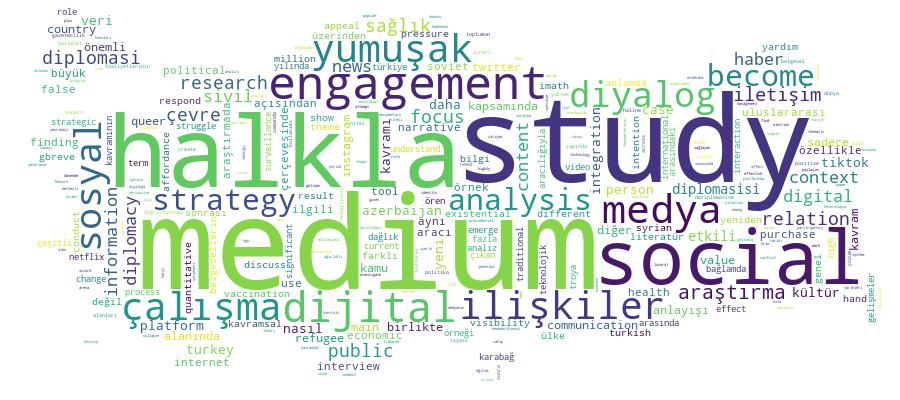
18 results
Scholarly Output Search Results
Now showing 1 - 10 of 18
Article How TikTok Works for Digital Diplomacy During Conflict/War Times: The Cases of Russia-Ukraine and Israel-Gaza Conflicts(Routledge Journals, Taylor & Francis Ltd, 2025) Artan Ozoran, Beris; Seyidov, Ilgar; Erdogan, BurakDuring times of conflict and war, public diplomacy undergoes a significant transformation, with strategic communication shifting from traditional channels to highly visual and participatory digital platforms. Among these, TikTok has emerged as a key arena for states to shape perceptions and mobilize international audiences. This study explores how TikTok is utilized as a tool of digital diplomacy by examining the official accounts of Ukraine and Israel during the Russia - Ukraine war and the Israel - Gaza conflict. Drawing on Strategic Narrative Theory (SNT), the analysis categorizes state-produced content into system, identity, and issue narratives and investigates how these narrative types effect audience engagement on the platform. By integrating narrative analysis with quantitative engagement metrics, this research not only extends SNT into the context of short-form video platforms but also contributes to the growing literature on digital diplomacy in wartime contexts.Article Queer Lives in the Social Media Prism: Precarious LGBTQIA Plus Visibility and Lateral Surveillance in Azerbaijan(Sage Publications Inc, 2025) Seyidov, Ilgar; Pentzold, ChristianIn countries where state institutions and the public largely reject LGBTQIA+ identities and issues, queer people struggle with visibility. Next to governments and technology providers, what queer people do, who they connect to, and how they express themselves is being watched and scrutinized by their families and proximate relations. This lateral surveillance is afforded by social media that establish, as we argue in this article, a prism. Here, LGBTQIA+ lives become refracted as extensive though incoherent patterns of digital traces. How queer people respond to this situation where the binary of visible versus invisible falls apart is poorly understood. To address that gap, we interrogate the precarious management of visibility attempted by LGBTQIA+ people in Azerbaijan with its heteropatriarchal, honor-driven culture. Based on our exploratory interview study, we find that queer Azerbaijanis were confronted with a highly ambivalent scopic setup where context collision loomed large. In effect, they supported LGBTQIA+ visibility but had personally decided not to live or promote it. Yet whilst their attempts to remain opaque may contradict their activistic compliancy, this was a logical reaction to too hard to handle terms of visibility.Book Part Drawing a Portrait of Refugee Representation in Turkish Newspapers: A Framing Analysis of Hürriyet and Sabah(Bloomsbury Publishing Plc., 2020) Özoran, Beris Artan; Seyidov, IlgarArticle Persuasive Appeals, Thematic Content, and Affordances on TikTok: Evidence From the 2023 Turkey Presidential Elections(Routledge Journals, Taylor & Francis Ltd, 2025) Artan Ozoran, Beris; Seyidov, Ilgar; Agaoglu, ErhanTikTok has become a central arena for political communication, especially in engaging younger voters. This study examines how Recep Tayyip Erdo & gbreve;an and Kemal K & imath;l & imath;& ccedil;daro & gbreve;lu employed TikTok during the 2023 Turkish Presidential Election by analysing 265 videos through quantitative content analysis. Rather than directly measuring voter attitudes, we focus on how leaders' use of affordances (association, editability), thematic content, and rhetorical appeals related to audience engagement (likes, comments, shares). Results show that both leaders prominently highlighted the economy and relied on pathos-driven appeals, consistent with personalization in Turkish political campaigning. Regression analyses revealed that K & imath;l & imath;& ccedil;daro & gbreve;lu's 'other' and 'law/justice' themes significantly boosted engagement, while high use of association features (hashtags and mentions) reduced it. In Erdo & gbreve;an's case, ethos and pathos appeals strongly decreased engagement, whereas logos-based messages performed relatively better. For both leaders, longer videos predicted lower engagement. These findings illustrate how affordances and persuasive strategies interact to shape engagement on TikTok.Article Citation - WoS: 3Citation - Scopus: 4As Quiet as a Mouse: Media Use in Azerbaijan(de Gruyter Mouton, 2020) Seyidov, IlgarDuring the Soviet period, the media served as one of the main propagandist tools of the authoritarian regime, using a standardized and monotype media system across the Soviet Republics. After the collapse of the Soviet Union, 15 countries became independent. The transition from Soviet communism to capitalism has led to the reconstruction of economic, socio-cultural, and political systems. One of the most affected institutions in post-Soviet countries was the media. Media have played a supportive role during rough times, when there was, on the one hand, the struggle for liberation and sovereignty, and, on the other hand, the need for nation building. It has been almost 30 years since the Soviet Republics achieved independence, yet the media have not been freed from political control and continue to serve as ideological apparatuses of authoritarian regimes in post-Soviet countries. Freedom of speech and independent media are still under threat. The current study focuses on media use in Azerbaijan, one of the under-researched post-Soviet countries. The interviews for this study were conducted with 40 participants living in Nakhichevan and Baku. In-depth, semi-structured interview techniques were used as research method. Findings are discussed under six main themes in the conclusion.Article İdeal Diyalogtan Sivil Diyaloğa Dönüşüm Üzerine Kavramsal İzdüşüm: Tarihsel Bir İnceleme(2021) Seyıdov, IlgarDiyalog kavramı iletişim alanında en önemli kavramlardan biridir. Genel olarak iki kişi arasında bir iletişim süreci olarak bilinse de, diyalog daha karmaşık bir içeriğe ve bağlama sahiptir. Antik dönemlerle birlikte ortaya çıkan ideal diyalog anlayışı 2000’li yıllarla birlikte sivil diyalog kavramıyla yeniden popüler hale gelmiştir. Sadece iletişim alanında değil, uluslararası ilişikler, sosyoloji, psikoloji ve felsefe gibi çeşitli bilim dallarının da odak kavramı olan diyalog yeterince tanımlanmamış ve ele alınmamıştır. Bu anlamda bu çalışma derinlemesine literatür taraması ile diyalog kavramının tarihsel olarak kavramsal değişimini ve sivil diyalog anlayışının sivil toplumla ilişkisini incelemektedir. Çalışma kapsamında öncelikle ideal diyalog anlayışının felsefi yapısı ve içeriği tartışılacaktır. Daha sonra XIX-XX yüzyılla birlikte kavramsallaşması ele alınacaktır. Daha sonra sivil diyalog kavramı sivil toplum çerçevesinde ele alınarak değerlendirilecektir. İdeal diyalog ile sivil diyalog arasındaki içeriksel benzerlikler ve farklar incelecektir. Sonuç bölümünde sivil toplumun diyalog anlayışı ne kadar yararlı ya da yarasız olduğu tartışılacaktır.Article Citation - WoS: 1İkinci Dağlık Karabağ Savaşı Sonrası Dönemde Medyanın Rolü: Azerbaycan’daki Azadlıqradiosu ve Meydantv Haber Siteleri Örnekleri(Istanbul Univ, Fac Communication, 2023) Seyıdov, Ilgarİkinci Dağlık Karabağ Savaşı ya da diğer adıyla ‘44 Gün Savaşı’ (27.09.2020- 10.11.2020 tarihleri arasında) sona erip ateşkes anlaşması imzalandığında, Dağlık Karabağ bölgesindeki Hankendi merkezli bölge hariç, Ermenistan işgali altındaki diğer bölgeler Azerbaycan’a geri verilmiştir. Hankendi merkezli bölgede ağırlıklı olarak Ermeniler yaşamaktadır ve uluslararası alanda Azerbaycan’ın bir parçası olarak tanınmaktadır. Ancak Artsak Cumhuriyeti isimli bir de-facto yapının kontrolü altındadır. Kafkasya bölgesinde barışın sağlanması ve özellikle iki ülke arasındaki ilişkiler açısından sorun çözülmüş olarak görülse de Ermenilerin yaşadığı bölgenin statüsü ve toplumlar arasındaki sosyal uyum hala sorunlu olmaya devam etmektedir. Temel neden, geçmişteki kötü deneyimler, çatışmalar, savaş ve trajik olaylar sonucunda iki ülke arasında oluşan güven eksikliğidir. Bu bağlamda, çalışma Azerbaycan medyasının bu çatışma sonrası durumu nasıl yansıttığını incelemektedir. Amaçlı örneklem aracılığıyla daha fazla takipçisi olan iki çevrimiçi popüler haber sitesi (MeydanTV ve Azadliqradiosu) seçilmiş ve çatışma sonrası bir yıllık dönemde (10.11.2020-10.11.2021 tarihleri arasında) yayınlanan haberler analiz edilmiştir. Bulgulara göre her iki haber sitesinde de yeniden yapılandırma/negatif barış en fazla öne çıkan tema çerçevesi olurken, rehabilitasyon çerçevesi konuları farklılık göstermiştir. Bu anlamda AzadlıqRadiosu’nda her iki taraftan hikayelere yer verilirken, MeydanTV’de sadece Azerbaycan ile ilgili hikayeler bahsedilmiştir.Article Dijital Heterotopya Olarak Change.org: Foucaultcu Bir Yaklaşım(Ankara Univ, Fac Communication, 2021) Seyıdov, Ilgar; Akçay, EbruTeknolojik gelişmeler ve özellikle İnternet, kültür ve toplum kavrayışını büyük oranda şekillendirmektedir. Dijital kültür ile politika, ekonomi, iktisadi faaliyetler ve ticaretin yeni biçimleri ortaya çıkmaya başlamıştır. Dijital iletişim araçları, sadece kamuların birbirleriyle iletişim kurmaları için değil, aynı zamanda toplumsal sorunlara karşı örgütlenebilmeleri için de etkili platformlar sağlamaktadır. Bu bakımdan, dijital aktivizm fiziksel olmayan toplulukların ve yeni örgütlenme biçimlerinin ortaya çıkabilmesi için imkân sunmaktadır. Çevrimiçi imza kampanyası platformu olan ve dünya çapında birçok kampanyanın başlatıldığı Change.org en etkili dijital aktivist platformların arasında yer almaktadır. Literatürde Change.org’u etkili bir dijital aktivist platform olarak inceleyen birçok araştırma bulunmasına rağmen, söz konusu platformu heterotopik bir alan olarak tanımlayan bir çalışma bulunmamaktadır. Bu bağlamda, bu çalışma Change.org’un Michel Foucault’nun yaklaşımından temellenen bir kavram olan dijital heteretopya olarak nasıl incelenebileceğini ortaya koymaya amaçlamaktadır. Araştırma yöntemi olarak betimsel vaka incelemesi yöntemi kullanılmış ve analiz için dört kategori belirlenmiştir. Çalışma; kendi topluluk kuralları ile birlikte alternatif alanları aynı anda hem yansıtan hem de üreten, farklı alanları, olayları ve konuları tek bir yerde bir araya getiren Change.org’un dijital heterotopya örneği olarak değerlendirilebileceğini ortaya koymuştur.Article Citation - WoS: 2insta-worthiness< of News in New Media Journalism: How To Understand News Values on Instagram(Marmara Univ, Fac Communication, 2020) Seyidov, Ilgar; Ozoran, Beris ArtanThe Internet and Web 2.0 have changed the communication and information systems. Social media has emerged as an alternative or a developed version of traditional media. In this respect, journalism is obliged to keep up with the new technology. Social media has become an effective platform for information and news sharing. Traditional understanding of news values and newsworthiness has been reconstructed within this period. Concepts such as share, like, comment, etc. have become significant for news values and newsworthiness in digital age. In this context, this study aims to find out how news values have changed on social media by focusing on Instagram. To this end, three newspapers, which have highest circulations in Turkey were sampled over a one-month period. Content analysis was selected as research technique. Based on research questions, three-step analysis was conducted. The findings were discussed in the conclusion. A new term - insta-worthiness - is suggested in this study to clarify the main components of news values on Instagram.Article İdeal Diyalogtan Sivil Diyaloğa Dönüşüm üzerine Kavramsal İzdüşüm: Tarihsel bir İnceleme(2021) Seyidov, IlgarDialogue is one of the basic concepts of communication. As the understanding of two-way communication and mutual relations has become important by 2000s, dialogue has also started to be re-embraced within different fields of social sciences. Although it is known as a communication between two individuals, it includes very sophisticated context. The quality of communication is the main point in dialogic communication. Although this concept has been widely used in different research fields such as culture, political communication, religion, sociology and international relations studies, it has not been conceptualized with all aspects. It still lacks of proper conceptualization and profound research. In this vein, the current study aims to explore the historical and conceptual background of dialogue. Based on comprehensive literature review, first, the conceptualization of “ideal” dialogue will be discussed within various philosophical and sociological perspectives. In doing so, the historical context will be taken into account. Then, “civil” dialogue will be examined within the framework of dialogue. It will be focused on its contextual and structural transformation under specific characteristics. In the conclusion, the study will discuss how and why civil society is appropriate to formation of dialogue.
