Sezen, Arda

Loading...
Profile Picture
Name Variants
A., Sezen
A.,Sezen
Sezen,A.
S.,Arda
S., Arda
Arda Sezen
Sezen,Arda
Sezen, Arda
Arda, Sezen
Job Title
Yardımcı Doçent
Email Address
arda.sezen@atilim.edu.tr
Main Affiliation
Computer Engineering
Status
Website
Scopus Author ID
Turkish CoHE Profile ID
Google Scholar ID
WoS Researcher ID

Sustainable Development Goals

SDG data is not available
This researcher does not have a Scopus ID.
This researcher does not have a WoS ID.
Scholarly Output

11

Articles

6

Views / Downloads

58/532

Supervised MSc Theses

4

Supervised PhD Theses

1

WoS Citation Count

7

Scopus Citation Count

36

Patents

0

Projects

1

WoS Citations per Publication

0.64

Scopus Citations per Publication

3.27

Open Access Source

5

Supervised Theses

5

JournalCount
International Journal of Computational and Experimental Science and Engineering3
Bilişim Teknolojileri Dergisi1
Evolutionary Intelligence1
IEEE Access1
Current Page: 1 / 1

Scopus Quartile Distribution

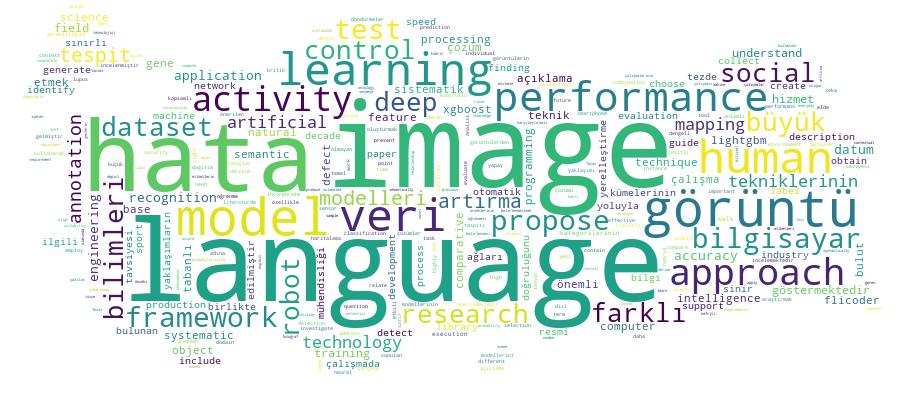
Competency Cloud

GCRIS Competency Cloud

Scholarly Output Search Results

Now showing 1 - 1 of 1
  • Article
    Citation - Scopus: 21
    Comparative Analysis of Programming Languages Utilized in Artificial Intelligence Applications: Features, Performance, and Suitability
    (Prof.Dr. İskender AKKURT, 2024) Sezen, Arda; Türkmen, Güzin; Şengül, Gökhan
    This study presents a detailed comparative analysis of the foremost programming languages employed in Artificial Intelligence (AI) applications: Python, R, Java, and Julia. These languages are analysed for their performance, features, ease of use, scalability, library support, and their applicability to various AI tasks such as machine learning, data analysis, and scientific computing. Each language is evaluated based on syntax and readability, execution speed, library ecosystem, and integration with external tools. The analysis incorporates a use case of code writing for a linear regression task. The aim of this research is to guide AI practitioners, researchers, and developers in choosing the most appropriate programming language for their specific needs, optimizing both the development process and the performance of AI applications. The findings also highlight the ongoing evolution and community support for these languages, influencing long-term sustainability and adaptability in the rapidly advancing field of AI. This comparative assessment contributes to a deeper understanding of how programming languages can enhance or constrain the development and implementation of AI technologies.