
Topallı, Damla
Loading...

Profile URL
Name Variants
D.,Topallı
Topallı,D.
Damla, Topalli
Topalli, D.
D., Topalli
Topallı, Damla
D.,Topalli
T.,Damla
Topalli,D.
Damla, Topallı
D., Topallı
Topalli, Damla
T., Damla
Topallı,D.
Damla, Topalli
Topalli, D.
D., Topalli
Topallı, Damla
D.,Topalli
T.,Damla
Topalli,D.
Damla, Topallı
D., Topallı
Topalli, Damla
T., Damla
Job Title
Doktor Öğretim Üyesi
Email Address
damla.topalli@atilim.edu.tr
Main Affiliation
Information Systems Engineering
Status
Website
ORCID ID
Scopus Author ID
Turkish CoHE Profile ID
Google Scholar ID
WoS Researcher ID
Sustainable Development Goals
 1
1NO POVERTY
0
Research Products
 2
2ZERO HUNGER
0
Research Products
 3
3GOOD HEALTH AND WELL-BEING
0
Research Products
 4
4QUALITY EDUCATION
11
Research Products
 5
5GENDER EQUALITY
0
Research Products
 6
6CLEAN WATER AND SANITATION
0
Research Products
 7
7AFFORDABLE AND CLEAN ENERGY
0
Research Products
 8
8DECENT WORK AND ECONOMIC GROWTH
1
Research Products
 9
9INDUSTRY, INNOVATION AND INFRASTRUCTURE
0
Research Products
 10
10REDUCED INEQUALITIES
0
Research Products
 11
11SUSTAINABLE CITIES AND COMMUNITIES
0
Research Products
 12
12RESPONSIBLE CONSUMPTION AND PRODUCTION
0
Research Products
 13
13CLIMATE ACTION
0
Research Products
 14
14LIFE BELOW WATER
0
Research Products
 15
15LIFE ON LAND
0
Research Products
 16
16PEACE, JUSTICE AND STRONG INSTITUTIONS
0
Research Products
 17
17PARTNERSHIPS FOR THE GOALS
1
Research Products

Documents
14
Citations
266
h-index
6

Documents
0
Citations
0

Scholarly Output
39
Articles
12
Views / Downloads
20/0
Supervised MSc Theses
12
Supervised PhD Theses
4
WoS Citation Count
193
Scopus Citation Count
263
Patents
0
Projects
0
WoS Citations per Publication
4.95
Scopus Citations per Publication
6.74
Open Access Source
5
Supervised Theses
16
| Journal | Count |
|---|---|
| 9th Annual International Conference of Education, Research and Innovation (iCERi) -- NOV 14-16, 2016 -- Seville, SPAIN | 4 |
| 9th International Conference on Education and New Learning Technologies (EDULEARN) -- JUL 03-05, 2017 -- Barcelona, SPAIN | 2 |
| 2016 Medical Technologies National Conference, TIPTEKNO 2016 -- 2016 Medical Technologies National Conference, TIPTEKNO 2016 -- 27 October 2016 through 29 October 2016 -- Antalya -- 126633 | 2 |
| Journal of Eye Movement Research | 2 |
| Medical Technologies National Conference (TIPTEKNO) -- OCT 27-29, 2016 -- Antalya, TURKEY | 2 |
Current Page: 1 / 3
Scopus Quartile Distribution
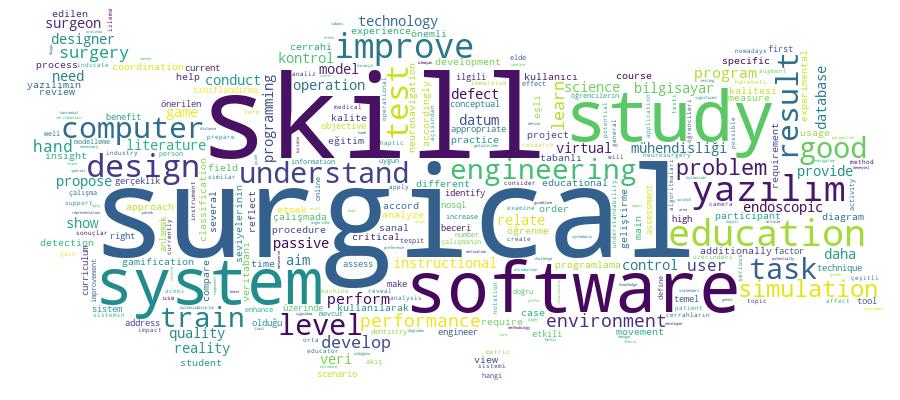
Competency Cloud
10 results
Scholarly Output Search Results
Now showing 1 - 10 of 10
Article Citation - WoS: 3Citation - Scopus: 3Online Learning Perceptions Amid Covid-19 Pandemic: the Engineering Undergraduates' Perspective(Tempus Publications, 2022) Eryilmaz, Meltem; Kalem, Guler; Kilic, Hurevren; Tirkes, Guzin; Topalli, Damla; Turhan, Cigdem; Yazici, Ali; Information Systems Engineering; Computer Engineering; Software EngineeringThe COVID-19 pandemic caused face-to-face education in just about all universities worldwide to shift to online education. For most students, this educational model was a compulsory first experience. In this study, the survey results are analyzed and discussed related to a group of students in the Engineering Faculty of a university in Turkey regarding their online education perceptions. Briefly summarized, the findings of the study indicate that: (a) most of the students still prefer face-to-face learning, which is also favored if accompanied by distance learning; (b) the concentration level of the students has dropped due to the concerns about the COVID-19 pandemic which affects their learning negatively; and (c) around half of the students participating in the study feel that the online exams conducted without a secure exam software, is considered unsafe. Additionally, the study's results were further extended to evaluate the questionnaire results and reported along with the suggestions of necessary actions in emergency online learning (EOL).Article Citation - Scopus: 1A User Task Design Notation for Improved Software Design(PeerJ Inc., 2021) Ozcan,E.; Topalli,D.; Tokdemir,G.; Cagiltay,N.E.System design is recognized as one of the most critical components of a software system that bridges system requirements and coding. System design also has a significant impact on testing and maintenance activities, and on further improvements during the lifespan of the software system. Software design should reflect all necessary components of the requirements in a clear and understandable manner by all stakeholders of the software system. To distinguish system elements, separation of concerns in software design is suggested. In this respect, identification of the user tasks, i.e., the tasks that need to be performed by the user, is not currently reflected explicitly in system design documents. Our main assumption in this study is that software quality can be improved significantly by clearly identifying the user tasks from those that need to be performed by the computer system itself. Additionally, what we propose has the potential to better reflect the user requirements and main objectives of the system on the software design and thereby to improve software quality. The main aim of this study is to introduce a novel notation for software developers in the frame of UML Activity Diagram (UMLAD) that enables designers to identify the user tasks and define them separately from the system tasks. For this purpose, an extension of UML-AD, named UML-ADE (UML-Activity Diagram Extended) was proposed. Afterwards, it was implemented in a serious game case for which the specification of user tasks is extremely important. Finally, its effectiveness was analyzed and compared to UML-AD experimentally with 72 participants. The defect detection performance of the participants on both diagrams with two real-life serious game scenarios was evaluated. Results show a higher level of understandability for those using UML-ADE, which in turn may indicate a better design and higher software quality. The results encourage researchers to develop specific design representations dedicated to task design to improve system quality and to conduct further evaluations of the impact of these design on each of the above mentioned potential benefits for the software systems. © Copyright 2021 Ozcan et al.Article Citation - WoS: 6Citation - Scopus: 6Understanding the Effect of Handedness on Both-Handed Task Performance: an Experimental Study Based on a Haptic-Controlled, Simulation-Based Surgical Skill Training Scenario(Taylor & Francis inc, 2019) Topalli, Damla; Eyuboglu, Burak Gokberk; Cagiltay, Nergiz ErcilUnderstanding the performance on both-handed tasks, such as endoscopic surgery, is critical to better organize and develop appropriate instructional systems to improve the necessary skills of surgeons. However, in the literature, only a limited number of studies have investigated the effect of handedness on both-handed task performance. This study aimed to provide an understanding of the participants' performance differences while performing both-handed tasks through a haptic user interface in a simulated virtual environment specifically developed for surgical training purposes. Twenty-four surgeons attending a medical school in Turkey voluntarily participated in the study. The duration, accuracy, and collision measures were automatically recorded by software. The results revealed that the left-handed participants performed the both-handed tasks (camera: nondominant hand, tool: dominant-hand) in a significantly shorter time than the right-handed participants. This study also showed that haptic-controlled simulation-based surgical skill training systems can potentially provide measures for better understanding the individual behaviors and deliver alternative training environments specific to individual requirements.Article Citation - WoS: 22Citation - Scopus: 37Performing and Analyzing Non-Formal Inspections of Entity Relationship Diagram (erd)(Elsevier Science inc, 2013) Cagiltay, Nergiz Ercil; Tokdemir, Gul; Kilic, Ozkan; Topalli, DamlaDesigning and understanding of diagrammatic representations is a critical issue for the success of software projects because diagrams in this field provide a collection of related information with various perceptual signs and they help software engineers to understand operational systems at different levels of information system development process. Entity relationship diagram (ERD) is one of the main diagrammatic representations of a conceptual data model that reflects users' data requirements in a database system. In today's business environment, the business model is in a constant change which creates highly dynamic data requirements which also requires additional processes like modifications of ERD. However, in the literature there are not many measures to better understand the behaviors of software engineers during designing and understanding these representations. Hence, the main motivation of this study is to develop measures to better understand performance of software engineers during their understanding process of ERD. Accordingly, this study proposes two measures for ERD defect detection process. The defect detection difficulty level (DF) measures how difficult a defect to be detected according to the other defects for a group of software engineers. Defect detection performance (PP) measure is also proposed to understand the performance of a software engineer during the defect detection process. The results of this study are validated through the eye tracker data collected during the defect detection process of participants. Additionally, a relationship between the defect detection performance (PP) of a software engineer and his/her search patterns within an ERD is analyzed. Second experiment with five participants is also conducted to show the correlation between the proposed metric results and eye tracker data. The results of experiment-2 also found to be similar for DF and PP values. The results of this study are expected to provide insights to the researchers, software companies, and to the educators to improve ERD reasoning process. Through these measures several design guidelines can be developed for better graphical representations and modeling of the information which would improve quality of these diagrams. Moreover, some reviewing instructions can be developed for the software engineers to improve their reviewing process in ERD. These guidelines in turn will provide some tools for the educators to improve design and review skills of future software engineers. (c) 2013 Elsevier Inc. All rights reserved.Article Citation - Scopus: 10Eye-Hand Coordination Patterns of Intermediate and Novice Surgeons in a Simulation-Based Endoscopic Surgery Training Environment(International Group for Eye Movement Research, 2018) Topalli,D.; Cagiltay,N.E.Endoscopic surgery procedures require specific skills, such as eye-hand coordination to be developed. Current education programs are facing with problems to provide appropriate skill improvement and assessment methods in this field. This study aims to propose objective metrics for hand-movement skills and assess eye-hand coordination. An experimental study is conducted with 15 surgical residents to test the newly proposed measures. Two computer-based both-handed endoscopic surgery practice scenarios are developed in a simulation environment to gather the participants’ eye-gaze data with the help of an eye tracker as well as the related hand movement data through haptic interfaces. Additionally, participants’ eye-hand coordination skills are analyzed. The results indicate higher correlations in the intermediates’ eye-hand movements compared to the novices. An increase in intermediates’ visual concentration leads to smoother hand movements. Similarly, the novices’ hand movements are shown to remain at a standstill. After the first round of practice, all participants’ eye-hand coordination skills are improved on the specific task targeted in this study. According to these results, it can be concluded that the proposed metrics can potentially provide some additional insights about trainees’ eye-hand coordination skills and help instructional system designers to better address training requirements. © 2018. All Rights Reserved.Article Citation - WoS: 9Eye-Hand Coordination Patterns of Intermediate and Novice Surgeons in a Simulation-Based Endoscopic Surgery Training Environment(int Group Eye Movement Research, 2018) Topalli, Damla; Cagiltay, Nergiz ErcilEndoscopic surgery procedures require specific skills, such as eye-hand coordination to be developed. Current education programs are facing with problems to provide appropriate skill improvement and assessment methods in this field. This study aims to propose objective metrics for hand-movement skills and assess eye-hand coordination. An experimental study is conducted with 15 surgical residents to test the newly proposed measures. Two computer-based both-handed endoscopic surgery practice scenarios are developed in a simulation environment to gather the participants' eye-gaze data with the help of an eye tracker as well as the related hand movement data through haptic interfaces. Additionally, participants' eye-hand coordination skills are analyzed. The results indicate higher correlations in the intermediates' eye-hand movements compared to the novices. An increase in intermediates' visual concentration leads to smoother hand movements. Similarly, the novices' hand movements are shown to remain at a standstill. After the first round of practice, all participants' eye-hand coordination skills are improved on the specific task targeted in this study. According to these results, it can be concluded that the proposed metrics can potentially provide some additional insights about trainees' eye-hand coordination skills and help instructional system designers to better address training requirements.Article Citation - WoS: 137Citation - Scopus: 187Improving Programming Skills in Engineering Education Through Problem-Based Game Projects With Scratch(Pergamon-elsevier Science Ltd, 2018) Topalli, Damla; Cagiltay, Nergiz ErcilNowadays, programming skills are receiving widespread attention for different age groups alongside occupational education programs to better prepare individuals for their future careers. However, introducing programming concepts in an appropriate manner is a challenge in higher education. The main assumption of this study is that enhancing the classical introduction to programming courses through real-life problem-based game development with Scratch programming environment potentially improves the learners' programming skills and motivation. Accordingly, in this study, during one academic semester period, the Introduction to Programming course for engineering students is enriched up to a certain level through real-life game development projects with Scratch. The students are followed within a four-year period starting from freshman until their graduation. The progress of the students who have taken the Introduction to Programming course in enriched or classical form in the fourth year Senior-project course are evaluated. The results show that by slightly improving the course curriculum through real-life game development projects in the Scratch environment, students' performance on the graduation projects improved significantly. As a conclusion, game-based learning, problem-based learning, visual programming and projects are technologies that can potentially help learners to perform better in the introduction to programming course, in turn affecting their performances in projects.Article Citation - WoS: 7Citation - Scopus: 7Classification of Intermediate and Novice Surgeons' Skill Assessment Through Performance Metrics(Sage Publications inc, 2019) Topalli, Damla; Cagiltay, Nergiz ErcilBackground. Endoscopic surgeries have become an alternative for open procedures whenever possible. For such types of operations, surgeons are required to gain several skills, whose development needs hands-on practice. Accordingly, gaining these skills today is a challenge for surgical education programs. Despite the development of several technology-enhanced training environments, there are still problems to better integrate these technologies into educational programs. For an appropriate integration, it is critical to assess the skill levels and adapt the training content according to the trainees' requirements. In the literature, there exist several methods for assessing these skill levels. However, there are still problems in practice for objective and repetitive assessment. Methods. The present study aims to estimate the skill levels of participants in surgical training programs in an objective manner by collecting experimental data from residents in an endoscopic surgical simulation environment and gathering performance metrics. Results. It is shown that, by comparing the results of a number of classification algorithms for the best accuracy estimation and feature set, the "novice" and "intermediate" skill levels can be estimated with an accuracy of 86%. Conclusions. The outcomes help surgical educators and instructional system designers to better assess the skill levels of the trainees and guide them accordingly. In addition, objective assessments as highlighted in this study can be beneficial when designing technology-enhanced adaptive learning environments.Article A User Task Design Notation for Improved Software Design(Peerj inc, 2021) Ozcan, Eda; Topalli, Damla; Tokdemir, Gul; Cagiltay, Nergiz ErcilSystem design is recognized as one of the most critical components of a software system that bridges system requirements and coding. System design also has a significant impact on testing and maintenance activities, and on further improvements during the lifespan of the software system. Software design should reflect all necessary components of the requirements in a clear and understandable manner by all stakeholders of the software system. To distinguish system elements, separation of concerns in software design is suggested. In this respect, identification of the user tasks, i.e., the tasks that need to be performed by the user, is not currently reflected explicitly in system design documents. Our main assumption in this study is that software quality can be improved significantly by clearly identifying the user tasks from those that need to be performed by the computer system itself. Additionally, what we propose has the potential to better reflect the user requirements and main objectives of the system on the software design and thereby to improve software quality. The main aim of this study is to introduce a novel notation for software developers in the frame of UML Activity Diagram (UML-AD) that enables designers to identify the user tasks and define them separately from the system tasks. For this purpose, an extension of UML-AD, named UML-ADE (UML-Activity Diagram Extended) was proposed. Afterwards, it was implemented in a serious game case for which the specification of user tasks is extremely important. Finally, its effectiveness was analyzed and compared to UML-AD experimentally with 72 participants. The defect detection performance of the participants on both diagrams with two real-life serious game scenarios was evaluated. Results show a higher level of understandability for those using UML-ADE, which in turn may indicate a better design and higher software quality. The results encourage researchers to develop specific design representations dedicated to task design to improve system quality and to conduct further evaluations of the impact of these design on each of the above mentioned potential benefits for the software systems.Article Implementation of Topic Study Activities in Engineering Education(2015) Topallı, Damla; Çağıltay, NergizRecent studies have shown that, there is a need to propose new approaches and educational methods in order to address current problems of engineering education programs. This study summarized the implementation of a real life term project and Topic Study concepts in an engineering education course. The curriculum of this course is organized to provide skills on making presentation, research and applying knowledge to solve real-life problems, preparing reports and making discussions on a specific topic. This study describes as a case study how these problems are addressed in an engineering education course namely Data Warehousing and Data Mining. It is aimed to improve students’ motivation and interest to the course as well as to improve their active participation in the course. By this approach it is aimed to help them to construct their own knowledge. This paper also presents the structure of the course and evaluation of grades with the results of a survey on students’ opinion about the real-life term project and Topic Study approaches in this course.
