
Topallı, Damla
Loading...

Profile URL
Name Variants
D.,Topallı
Topallı,D.
Damla, Topalli
Topalli, D.
D., Topalli
Topallı, Damla
D.,Topalli
T.,Damla
Topalli,D.
Damla, Topallı
D., Topallı
Topalli, Damla
T., Damla
Topallı,D.
Damla, Topalli
Topalli, D.
D., Topalli
Topallı, Damla
D.,Topalli
T.,Damla
Topalli,D.
Damla, Topallı
D., Topallı
Topalli, Damla
T., Damla
Job Title
Doktor Öğretim Üyesi
Email Address
damla.topalli@atilim.edu.tr
Main Affiliation
Information Systems Engineering
Status
Website
ORCID ID
Scopus Author ID
Turkish CoHE Profile ID
Google Scholar ID
WoS Researcher ID
Sustainable Development Goals
 1
1NO POVERTY
0
Research Products
 2
2ZERO HUNGER
0
Research Products
 3
3GOOD HEALTH AND WELL-BEING
0
Research Products
 4
4QUALITY EDUCATION
11
Research Products
 5
5GENDER EQUALITY
0
Research Products
 6
6CLEAN WATER AND SANITATION
0
Research Products
 7
7AFFORDABLE AND CLEAN ENERGY
0
Research Products
 8
8DECENT WORK AND ECONOMIC GROWTH
1
Research Products
 9
9INDUSTRY, INNOVATION AND INFRASTRUCTURE
0
Research Products
 10
10REDUCED INEQUALITIES
0
Research Products
 11
11SUSTAINABLE CITIES AND COMMUNITIES
0
Research Products
 12
12RESPONSIBLE CONSUMPTION AND PRODUCTION
0
Research Products
 13
13CLIMATE ACTION
0
Research Products
 14
14LIFE BELOW WATER
0
Research Products
 15
15LIFE ON LAND
0
Research Products
 16
16PEACE, JUSTICE AND STRONG INSTITUTIONS
0
Research Products
 17
17PARTNERSHIPS FOR THE GOALS
1
Research Products

Documents
14
Citations
266
h-index
6

Documents
0
Citations
0

Scholarly Output
39
Articles
12
Views / Downloads
20/0
Supervised MSc Theses
12
Supervised PhD Theses
4
WoS Citation Count
193
Scopus Citation Count
263
Patents
0
Projects
0
WoS Citations per Publication
4.95
Scopus Citations per Publication
6.74
Open Access Source
5
Supervised Theses
16
| Journal | Count |
|---|---|
| 9th Annual International Conference of Education, Research and Innovation (iCERi) -- NOV 14-16, 2016 -- Seville, SPAIN | 4 |
| 9th International Conference on Education and New Learning Technologies (EDULEARN) -- JUL 03-05, 2017 -- Barcelona, SPAIN | 2 |
| 2016 Medical Technologies National Conference, TIPTEKNO 2016 -- 2016 Medical Technologies National Conference, TIPTEKNO 2016 -- 27 October 2016 through 29 October 2016 -- Antalya -- 126633 | 2 |
| Journal of Eye Movement Research | 2 |
| Medical Technologies National Conference (TIPTEKNO) -- OCT 27-29, 2016 -- Antalya, TURKEY | 2 |
Current Page: 1 / 3
Scopus Quartile Distribution
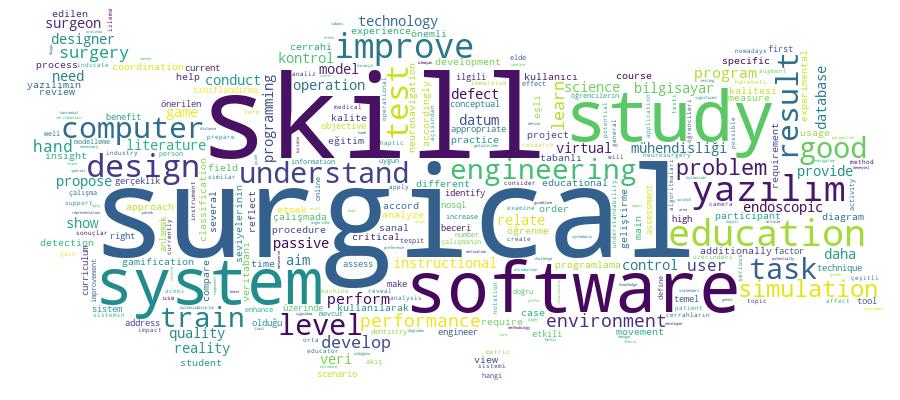
Competency Cloud
20 results
Scholarly Output Search Results
Now showing 1 - 10 of 20
Conference Object Citation - WoS: 1Gamification in Neurosurgery Education(Iated-int Assoc Technology Education & development, 2017) Topalli, Damla; Cagiltay, Nergiz ErcilNowadays, gamification is becoming popular as a new form of education in healthcare applications, due to the need of creating more effective educational practices. Educators in healthcare field are currently applying strategies used in popular games to create more engaging learning environments. Studies in the literature show that, creating learning environments by using gamification leads to better improved learning. The main goal of this approach is to increase the motivation of the participant. Accordingly, this study aims to examine the effect of gamification on learning in neurosurgery education. In order to better understand this effect of gamification on learning, a surgical simulation game "Wire Haptic in Dark" is developed in two versions by applying gamification techniques as a part of Endoneurosurgery Education Project (ECE). The scenario is developed in two versions: one containing some gamification attributes and the other one not including any gamification attributes. The gamification version of the scenario is designed by showing the time passed to perform the task successful, the score of the participant on the screen while playing the game and including sounds in case of the collision during the game, whereas the other version is created without sound, time and score information. The experimental results of this study reveal that gamification enhances the performance as well as the motivation of the participant. As motivation increases, participant performance in a given game task becomes more effective. The results of this study aimed to help the surgical educators and the instructional system designers to improve the benefits of using gamification in learning environments for the surgical education programs.Article Citation - WoS: 6Citation - Scopus: 6Understanding the Effect of Handedness on Both-Handed Task Performance: an Experimental Study Based on a Haptic-Controlled, Simulation-Based Surgical Skill Training Scenario(Taylor & Francis inc, 2019) Topalli, Damla; Eyuboglu, Burak Gokberk; Cagiltay, Nergiz ErcilUnderstanding the performance on both-handed tasks, such as endoscopic surgery, is critical to better organize and develop appropriate instructional systems to improve the necessary skills of surgeons. However, in the literature, only a limited number of studies have investigated the effect of handedness on both-handed task performance. This study aimed to provide an understanding of the participants' performance differences while performing both-handed tasks through a haptic user interface in a simulated virtual environment specifically developed for surgical training purposes. Twenty-four surgeons attending a medical school in Turkey voluntarily participated in the study. The duration, accuracy, and collision measures were automatically recorded by software. The results revealed that the left-handed participants performed the both-handed tasks (camera: nondominant hand, tool: dominant-hand) in a significantly shorter time than the right-handed participants. This study also showed that haptic-controlled simulation-based surgical skill training systems can potentially provide measures for better understanding the individual behaviors and deliver alternative training environments specific to individual requirements.Article Citation - WoS: 22Citation - Scopus: 37Performing and Analyzing Non-Formal Inspections of Entity Relationship Diagram (erd)(Elsevier Science inc, 2013) Cagiltay, Nergiz Ercil; Tokdemir, Gul; Kilic, Ozkan; Topalli, DamlaDesigning and understanding of diagrammatic representations is a critical issue for the success of software projects because diagrams in this field provide a collection of related information with various perceptual signs and they help software engineers to understand operational systems at different levels of information system development process. Entity relationship diagram (ERD) is one of the main diagrammatic representations of a conceptual data model that reflects users' data requirements in a database system. In today's business environment, the business model is in a constant change which creates highly dynamic data requirements which also requires additional processes like modifications of ERD. However, in the literature there are not many measures to better understand the behaviors of software engineers during designing and understanding these representations. Hence, the main motivation of this study is to develop measures to better understand performance of software engineers during their understanding process of ERD. Accordingly, this study proposes two measures for ERD defect detection process. The defect detection difficulty level (DF) measures how difficult a defect to be detected according to the other defects for a group of software engineers. Defect detection performance (PP) measure is also proposed to understand the performance of a software engineer during the defect detection process. The results of this study are validated through the eye tracker data collected during the defect detection process of participants. Additionally, a relationship between the defect detection performance (PP) of a software engineer and his/her search patterns within an ERD is analyzed. Second experiment with five participants is also conducted to show the correlation between the proposed metric results and eye tracker data. The results of experiment-2 also found to be similar for DF and PP values. The results of this study are expected to provide insights to the researchers, software companies, and to the educators to improve ERD reasoning process. Through these measures several design guidelines can be developed for better graphical representations and modeling of the information which would improve quality of these diagrams. Moreover, some reviewing instructions can be developed for the software engineers to improve their reviewing process in ERD. These guidelines in turn will provide some tools for the educators to improve design and review skills of future software engineers. (c) 2013 Elsevier Inc. All rights reserved.Article Citation - Scopus: 10Eye-Hand Coordination Patterns of Intermediate and Novice Surgeons in a Simulation-Based Endoscopic Surgery Training Environment(International Group for Eye Movement Research, 2018) Topalli,D.; Cagiltay,N.E.Endoscopic surgery procedures require specific skills, such as eye-hand coordination to be developed. Current education programs are facing with problems to provide appropriate skill improvement and assessment methods in this field. This study aims to propose objective metrics for hand-movement skills and assess eye-hand coordination. An experimental study is conducted with 15 surgical residents to test the newly proposed measures. Two computer-based both-handed endoscopic surgery practice scenarios are developed in a simulation environment to gather the participants’ eye-gaze data with the help of an eye tracker as well as the related hand movement data through haptic interfaces. Additionally, participants’ eye-hand coordination skills are analyzed. The results indicate higher correlations in the intermediates’ eye-hand movements compared to the novices. An increase in intermediates’ visual concentration leads to smoother hand movements. Similarly, the novices’ hand movements are shown to remain at a standstill. After the first round of practice, all participants’ eye-hand coordination skills are improved on the specific task targeted in this study. According to these results, it can be concluded that the proposed metrics can potentially provide some additional insights about trainees’ eye-hand coordination skills and help instructional system designers to better address training requirements. © 2018. All Rights Reserved.Conference Object Using Intelligent Support Systems for Endoscopic Surgery Training: Analysis of Hand Motion(Iated-int Assoc Technology Education & development, 2017) Topalli, D.; Cagiltay, N. E.The use of simulation techniques in medical education is an emerging topic in surgical training process, and there are limited number of studies found in this field in our country and the world. Recently, using the machine learning techniques in surgical training constitutes a new area of research. By using these techniques, cost-efficient educational tools will be developed in order to improve education efficiency and patient safety. In this scope, it is aimed to develop an intelligent support system by examining the hand movements of the experienced surgeons during a surgical education process and guide less-experienced surgeons. In order to develop this system, previously developed surgical simulation system infrastructure in ECE Project supported by Tubitak-1001 program will be used. The hand movements' data of experts obtained by special tactile devices (haptics) are analyzed with an experimental study. The results of this study aimed to improve the surgical simulation training process with the machine learning algorithm developed and therefore, provide a significant contribution to the surgical training process.Master Thesis Karmaşık Sistemler için Veritabanı Tasarım Yöntemi(2013) Topallı, Damla; Çağıltay, Nergiz ErcilYazılımın kalitesi, kullanıcıların ihtiyaçlarını ve memnuniyetlerini sağlamakla doğrudan ilgilidir. Kullanıcı gereksinimlerini yazılım süreçlerine yansıtmak için, veritabanı modelinin doğru tasarlanması, yazılım geliştirme sürecinde kritik bir aşamayı oluşturur. Veritabanı tasarımı, kullanıcıların veriler ile ilgili tüm gereksinimleri modellemeleri için önemli bir araçtır. Veritabanı tasarımındaki olası hatalı durumlar, tüm yazılım geliştirme süreçlerine yansımaktadır. Olası hatalı durumlar aynı zamanda yazılımda ve amaçlanan sistemin işlevselliğinde sürekli değişimlere de sebep olabilmektedir. Bu durum kullanıcıların memnuniyetsizliğiyle sonuçlanabilir. Bu bağlamda, kullanıcı gereksinimlerini veritabanı modelinde tam olarak yansıtmak ve veritabanının yazılım geliştirme sürecinde yer alan herkes tarafından doğru anlaşılması, yazılım sistemleri geliştirmedeki başarıyı doğrudan etkileyen bir faktördür. Bu çalışmada, karmaşıklık derecesini azaltarak veritabanı modellerinin anlaşılabilirliğini artırmak ve yazılım kalitesini yükseltmek amacıyla iki aşamalı bir kavramsal veri modelleme yöntemi önerilmektedir. Bu çalışmanın başında önerilen iki aşamalı kavramsal veri modelleme anlatılmaktadır. Sonrasında deneysel çalışmalar ve formüller yoluyla, önerilen yöntemin yazılım mühendislerinin kavrayışı üzerindeki etkisi incelenmekte ve sonuçlar değerlendirilmektedir. Bu çalışmanın sonucunda, önerilen iki aşamalı kavramsal modelleme yönteminin yazılım mühendislerinin kavrayışını kolaylaştırdığı ve bu aşamadaki olası hataları önleyebileceği görülmektedir.Conference Object Simulation Based Surgical Education Programs and Hand Performance;(Institute of Electrical and Electronics Engineers Inc., 2017) Eyuboglu,B.G.; Topalli,D.; Cagiltay,N.E.; Tonbul,G.The performance of the left- and right-hands of a person may be different from each other. In general, people use one hand with a superior performance compared to the other hand where that hand is preferred for performing daily activities. It is critical to understand their preference for right or left hand use, especially in cases where the skills should be improved to use both hands precisely in activities required special abilities such as endoscopic surgical operations. A better understanding of these cases will improve the quality of existing surgical education programs, and make a major contribution specifically in designing, improving and managing of simulation-based instructional technologies. In this study, the right- and left-hand preferences (handedness) of people are analyzed from the literature and a simulation-based experimental study is conducted in order to examine the performance differences of the participants while using their right and left hands. The results of this study aimed to guide the curriculum designers and instructional system developers for better designing and developing simulation-based surgical education programs. © 2016 IEEE.Conference Object Citation - WoS: 1Neuronavigation Systems and Passive Usage Problem(Ieee, 2015) Cagiltay, Nergiz; Topalli, Damla; Borcek, Alp Ozgun; Tokdemir, Gul; Maras, Hakan; Tonbul, Gokcen; Aydin, ElifNowadays, neuronavigation systems are used in brain surgery procedures, known as a technology to help the surgeon during the operational period. However, the surgeons have faced several problems with the existing systems. Some of these problems are related to the systems software and user interfaces. In this study, such problems are examined and the "Passive Usage" term is added to the literature by establishing a connection between the problems of endoscopic surgical procedures and similar issues occurred in other domains. The passive usage problem is generalized on different domains for the first time with this study. The results of the study expected to gather up the similar passive usage problems experienced in different domains. Accordingly, the methodologies and studies that are conducted in different research areas may lead to eliminate the Passive Usage problems efficiently.Article Citation - WoS: 9Eye-Hand Coordination Patterns of Intermediate and Novice Surgeons in a Simulation-Based Endoscopic Surgery Training Environment(int Group Eye Movement Research, 2018) Topalli, Damla; Cagiltay, Nergiz ErcilEndoscopic surgery procedures require specific skills, such as eye-hand coordination to be developed. Current education programs are facing with problems to provide appropriate skill improvement and assessment methods in this field. This study aims to propose objective metrics for hand-movement skills and assess eye-hand coordination. An experimental study is conducted with 15 surgical residents to test the newly proposed measures. Two computer-based both-handed endoscopic surgery practice scenarios are developed in a simulation environment to gather the participants' eye-gaze data with the help of an eye tracker as well as the related hand movement data through haptic interfaces. Additionally, participants' eye-hand coordination skills are analyzed. The results indicate higher correlations in the intermediates' eye-hand movements compared to the novices. An increase in intermediates' visual concentration leads to smoother hand movements. Similarly, the novices' hand movements are shown to remain at a standstill. After the first round of practice, all participants' eye-hand coordination skills are improved on the specific task targeted in this study. According to these results, it can be concluded that the proposed metrics can potentially provide some additional insights about trainees' eye-hand coordination skills and help instructional system designers to better address training requirements.Conference Object Simulation Based Surgical Education Programs and Hand Performance(Ieee, 2015) Eyuboglu, Burak Gokberk; Topallı, Damla; Topalli, Damla; Çağıltay, Nergiz; Cagiltay, Nergiz Ercil; Tonbul, Gokcen; Topallı, Damla; Çağıltay, Nergiz; Information Systems Engineering; Software Engineering; Information Systems Engineering; Software EngineeringThe performance of the left-and right-hands of a person may be different from each other. In general, people use one hand with a superior performance compared to the other hand where that hand is preferred for performing daily activities. It is critical to understand their preference for right or left hand use, especially in cases where the skills should be improved to use both hands precisely in activities required special abilities such as endoscopic surgical operations. A better understanding of these cases will improve the quality of existing surgical education programs, and make a major contribution specifically in designing, improving and managing of simulation-based instructional technologies. In this study, the right-and left-hand preferences (handedness) of people are analyzed from the literature and a simulation-based experimental study is conducted in order to examine the performance differences of the participants while using their right and left hands. The results of this study aimed to guide the curriculum designers and instructional system developers for better designing and developing simulation-based surgical education programs.
